

Public policy achieves its purpose when citizens understand it and institutions remain accountable for its implementation. Tax reforms, in particular, depend on public confidence, transparency, and continuous engagement between government and the people they serve.
South Saharan Social Development Organisation (SSDO) strengthens governance systems in Enugu State by designing community-centred accountability frameworks that bridge the gap between public policy and citizen participation.
Through the Strategic Partnership Agreement (SPA II) Project, implemented in partnership with ActionAid Nigeria, SSDO is supporting evidence-driven governance reforms that improve transparency, public accountability, and inclusive decision-making. One of these interventions is the Youth Monitoring of the Nigeria Tax Act 2025, which places young people at the centre of citizen oversight and policy implementation.
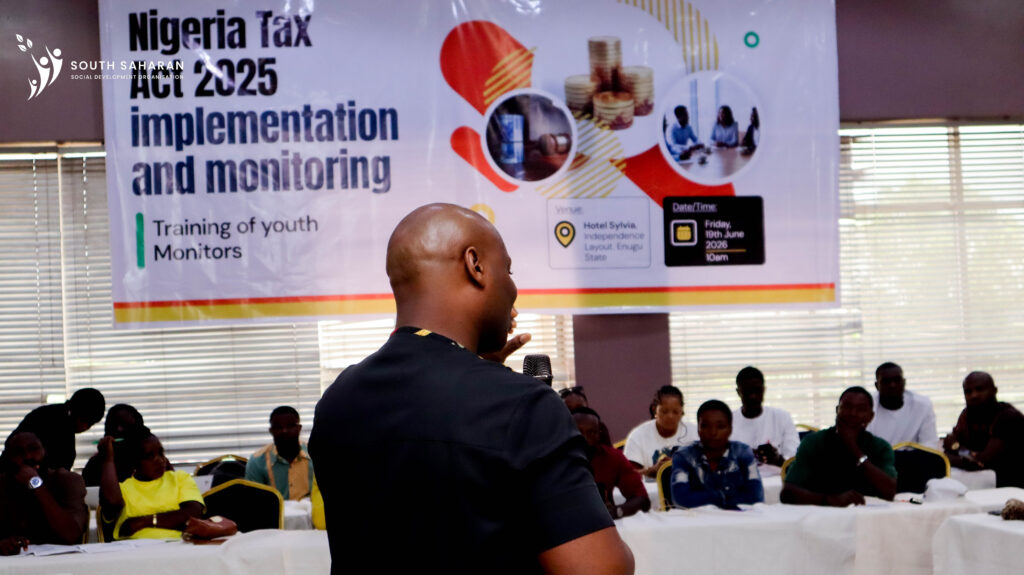
Why the Nigeria Tax Act 2025 Requires Citizen Monitoring
The Nigeria Tax Act 2025 introduces significant reforms aimed at strengthening tax administration, improving compliance, and enhancing domestic revenue mobilisation. While legislative reforms provide the legal framework for change, their effectiveness depends on how well they are understood, implemented, and monitored at the community level.
Many citizens interact with tax policies through local markets, small businesses, and everyday commercial activities. Without adequate public understanding, misconceptions can undermine compliance, while weak implementation can reduce public confidence in government institutions. Structured citizen engagement helps bridge this gap by ensuring that communities not only understand the reforms but also contribute evidence that supports continuous improvement.
Youth Monitoring of the Nigeria Tax Act 2025 Across Enugu State
To strengthen citizen oversight of the new tax framework, SSDO trained and deployed youth monitors representing all 17 Local Government Areas of Enugu State. The initiative equipped participants with practical knowledge of the provisions of the Nigeria Tax Act 2025, taxpayer rights and obligations, accountability mechanisms, and community-based monitoring approaches.
Rather than limiting participation to awareness campaigns, the programme positioned young people as active contributors to governance processes. The youth monitors were prepared to engage directly with citizens while documenting how the reforms are experienced across different communities. This approach transforms young people from policy observers into partners in strengthening public accountability.



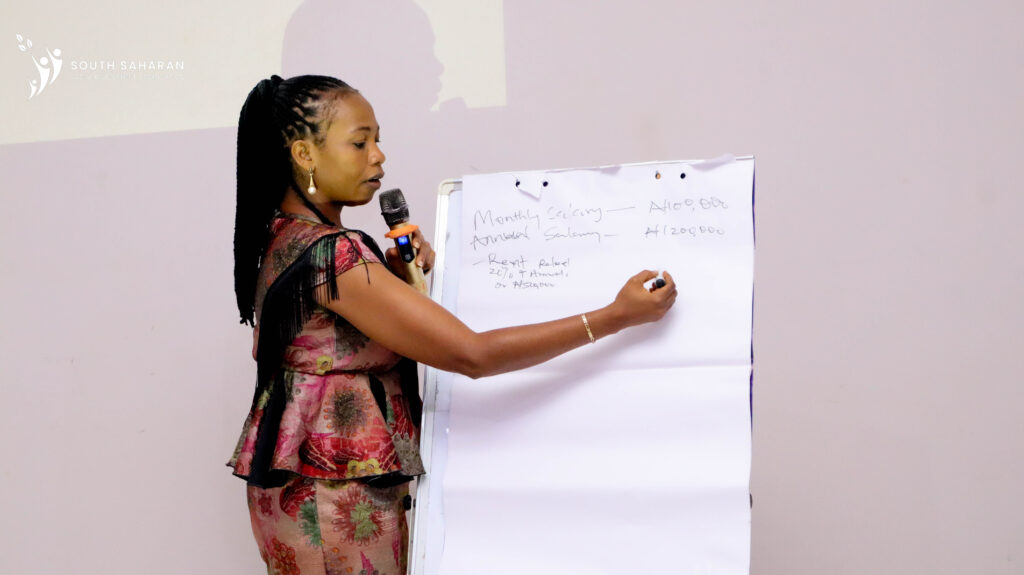
Connecting Communities to Public Institutions
Following the training, the youth monitors began engaging traders, small business owners, and community members across the state. These engagements focused on increasing public understanding of the Nigeria Tax Act 2025 while creating opportunities for citizens to share their experiences with tax administration and service delivery.
The exercise examined how taxpayer protections are being implemented, how communities perceive the reforms, and whether public revenue is translating into visible improvements in essential services. By documenting these experiences, the initiative generates practical evidence that reflects how policy functions beyond government institutions and within everyday community life.
This community-centred approach strengthens trust by creating structured channels through which citizens can contribute to governance while public institutions gain valuable insights for policy refinement.
Strengthening Accountability Through Evidence
Accountability systems become more effective when decision-making is informed by reliable evidence. The Youth Monitoring of the Nigeria Tax Act 2025 extends beyond public sensitisation by generating citizen-led data that can support future policy dialogue with relevant government institutions.
The findings from the monitoring exercise will contribute to discussions on tax administration, implementation challenges, and opportunities for institutional improvement. Evidence collected across the 17 Local Government Areas will also help identify emerging trends that can strengthen transparency, improve taxpayer confidence, and support more responsive governance systems.
By embedding monitoring within community engagement, SSDO is demonstrating how citizen-generated evidence can become a valuable resource for strengthening public institutions.
Advancing Youth Participation in Governance
Youth participation in governance extends beyond representation or consultation. Sustainable governance requires young people to understand public policies, engage constructively with institutions, and contribute meaningfully to accountability processes.
Through the Youth Monitoring of the Nigeria Tax Act 2025, SSDO is strengthening the capacity of young people to educate their communities, monitor policy implementation, and generate evidence that supports governance reform. The initiative reinforces the role of youth as partners in building transparent institutions and improving public service delivery.
As governance systems increasingly rely on evidence to guide reform, community-based monitoring will remain essential to strengthening accountability and public trust. SSDO continues to advance governance interventions that connect citizens with institutions, strengthen policy implementation, and promote more transparent and responsive governance across Enugu State.