The beauty of any initiative is the ability to identify new opportunities that align with its objective to increase impact opportunities. This we constantly strive to do by leveraging avenues to improve socioeconomic and human rights benefits for our project beneficiaries.
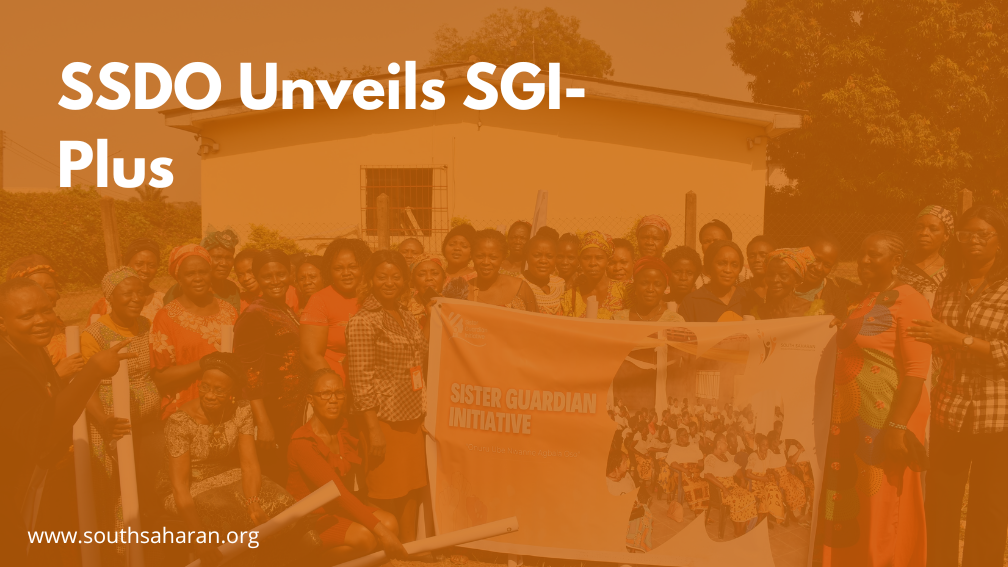
To this end, South Saharan Social Development Organization, SSDO, is expanding the Sister Guardian Initiative, SGI, to SGI-Plus. This new initiative will pursue additional rights issues affecting women at the community level, as we understand that for behavioral change to be effective it must be holistic. The Sister Guardians at the community level will identify, prioritize, and advocate to public and private partners for resolution.
While not neglecting the importance of a livelihood component from which women draw income to pursue their social transformative interventions, the SGI-Plus will introduce the Village Savings and Loans Association, VSLA, component to achieve this aim. The SGI-Plus will kickstart in nine communities in Enugu state and will scale up from there.
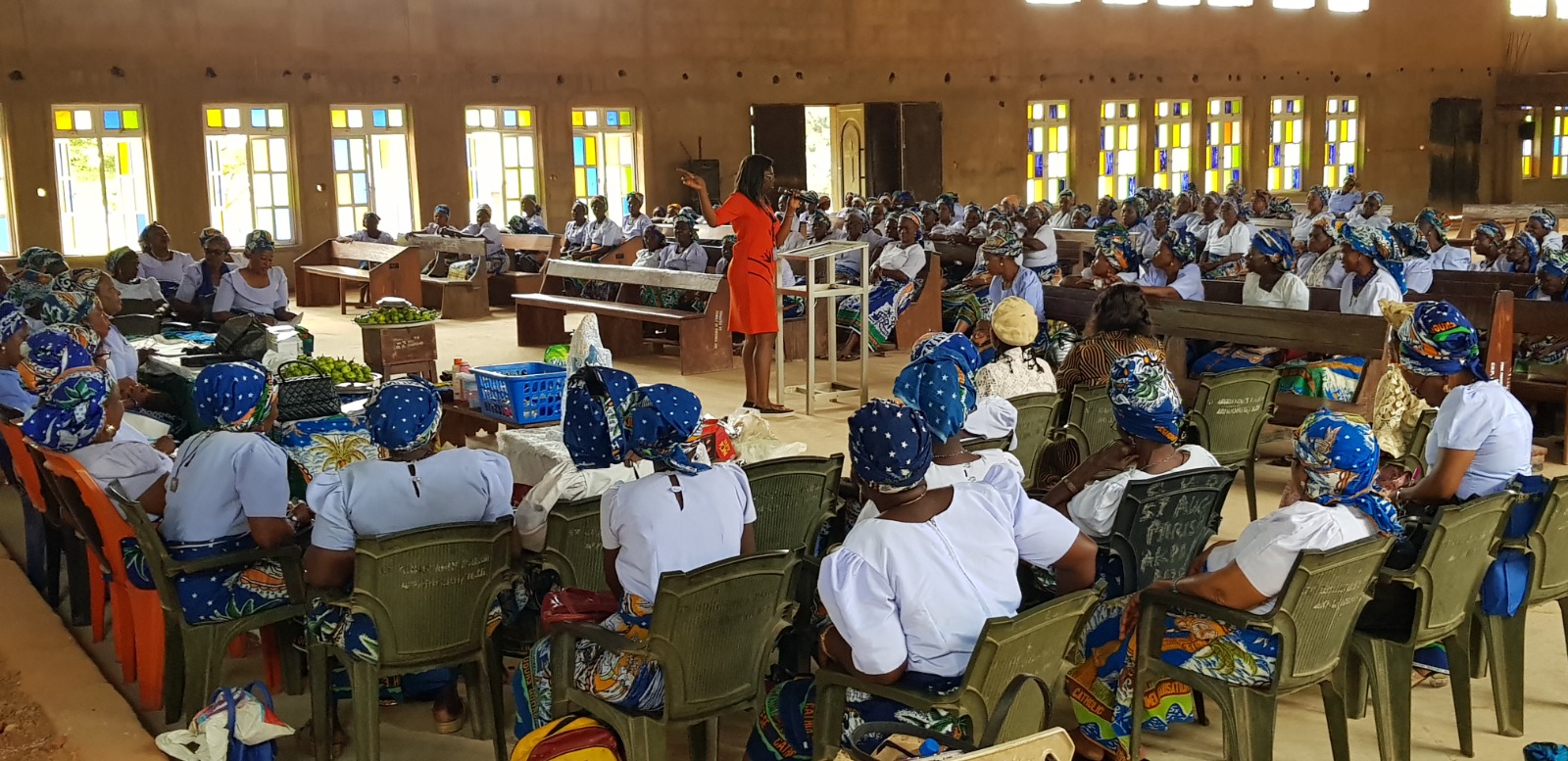
On the 12th of December, SSDO organized a workshop to unveil and introduce SGI-Plus to the Sister Guardian executives and communities. The workshop was an avenue for the SGI executives to give a progress report. They were tasked to identify three most pressing problems in their communities that will be tackled going forward. This participatory measure will guarantee a human rights-based approach and form the crux of issues that will be addressed.
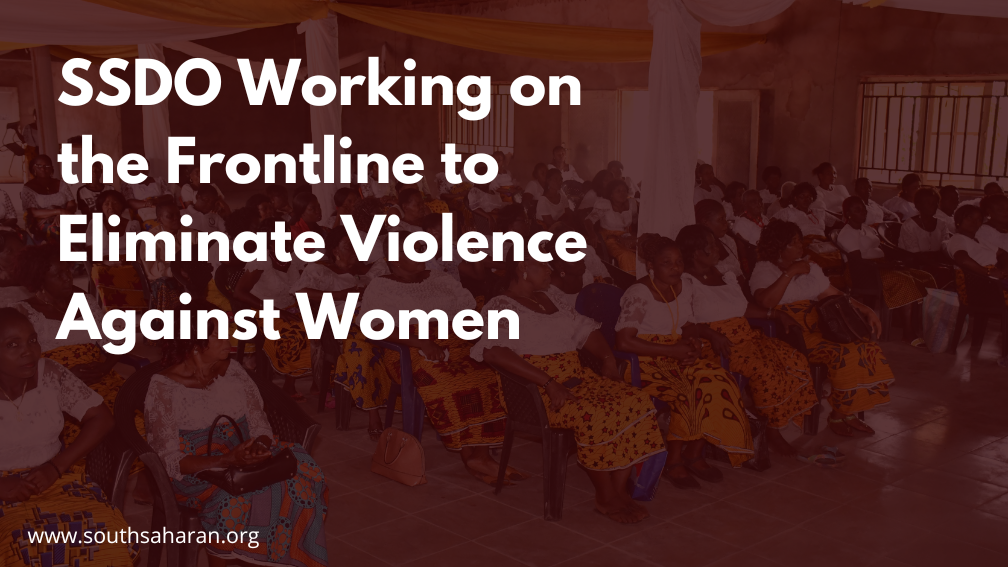
In our society, cultural beliefs often perpetuate barriers that treat women as unequal to their male counterparts. These norms and practices have created a gap that subjects women to unending violence. Recent times have exacerbated risk factors for Violence Against Women and Girls (VAWG). Issues such as food shortages, unemployment, economic insecurity, and social unrest have contributed to an alarming increase in various forms of violence.
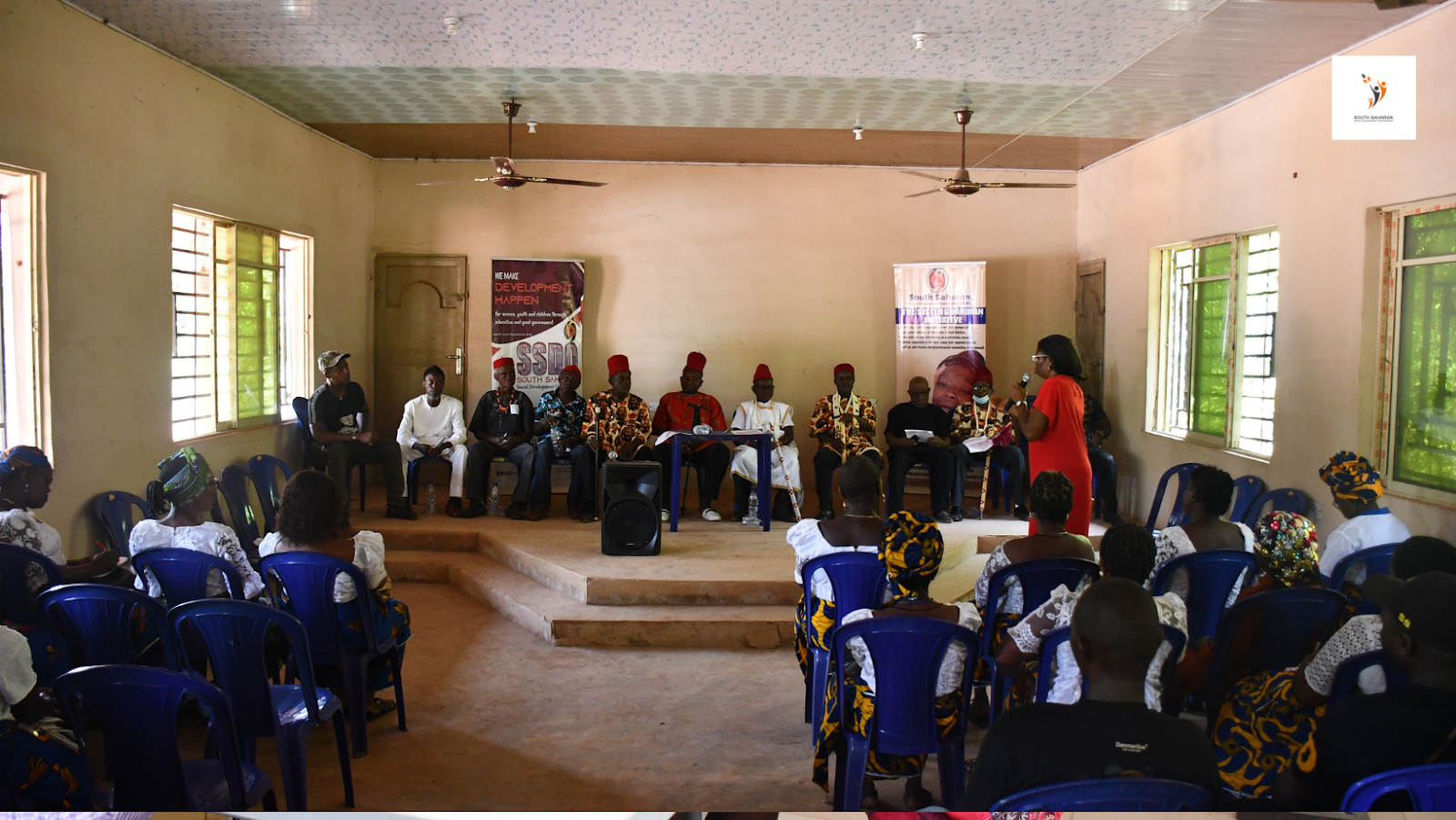
We recognize the urgency to address these challenges and work collectively to eliminate gender-based violence. To commemorate the International Day for the Elimination of Violence Against Women and contribute its quota to eliminating gender-based violence, South Saharan Social Development Organization, through its Sister Guardian Initiative, organized a workshop in Eke community, Udi LGA, to sensitize stakeholders and the community at large on GBV, including how to prevent and report it.
Our event seeks to address and dismantle these harmful cultural norms, hence the need to involve key community figures such as the traditional ruler, President Generals, SGI chapter members, community members, the police, religious leaders, security outfits, and town union leaders. This will help guarantee sustainable solutions. One of which includes the community developing an action plan to ensure women and girls are more protected.
As we mark the International Day for Elimination of Violence Against Women which kickstarts the #16days of activism aimed at advocating for human rights, it is important that this issue is brought to the front burner. It is our desire to see a society where women’s right is protected, women are empowered and can be all they want to be.
The Mother’s Congress, popularly known as August Meeting in Igbo land, is a time when Igbo women from the cities and diaspora return to lend helping hands to their communities. They embark on projects to improve healthcare, peacebuilding, and educate the community.
To show solidarity in projecting and supporting the roles women play in family and community development, South Saharan Social Development Organization, through her Sister Guardian Initiative project, visited three communities to commemorate this year’s August meeting with them. They include; Ibutenze in Udi LGA, Awha Ndiagu in Ezeagu LGA in Enugu state and Omor in Ayamelu LGA in Anambra state.
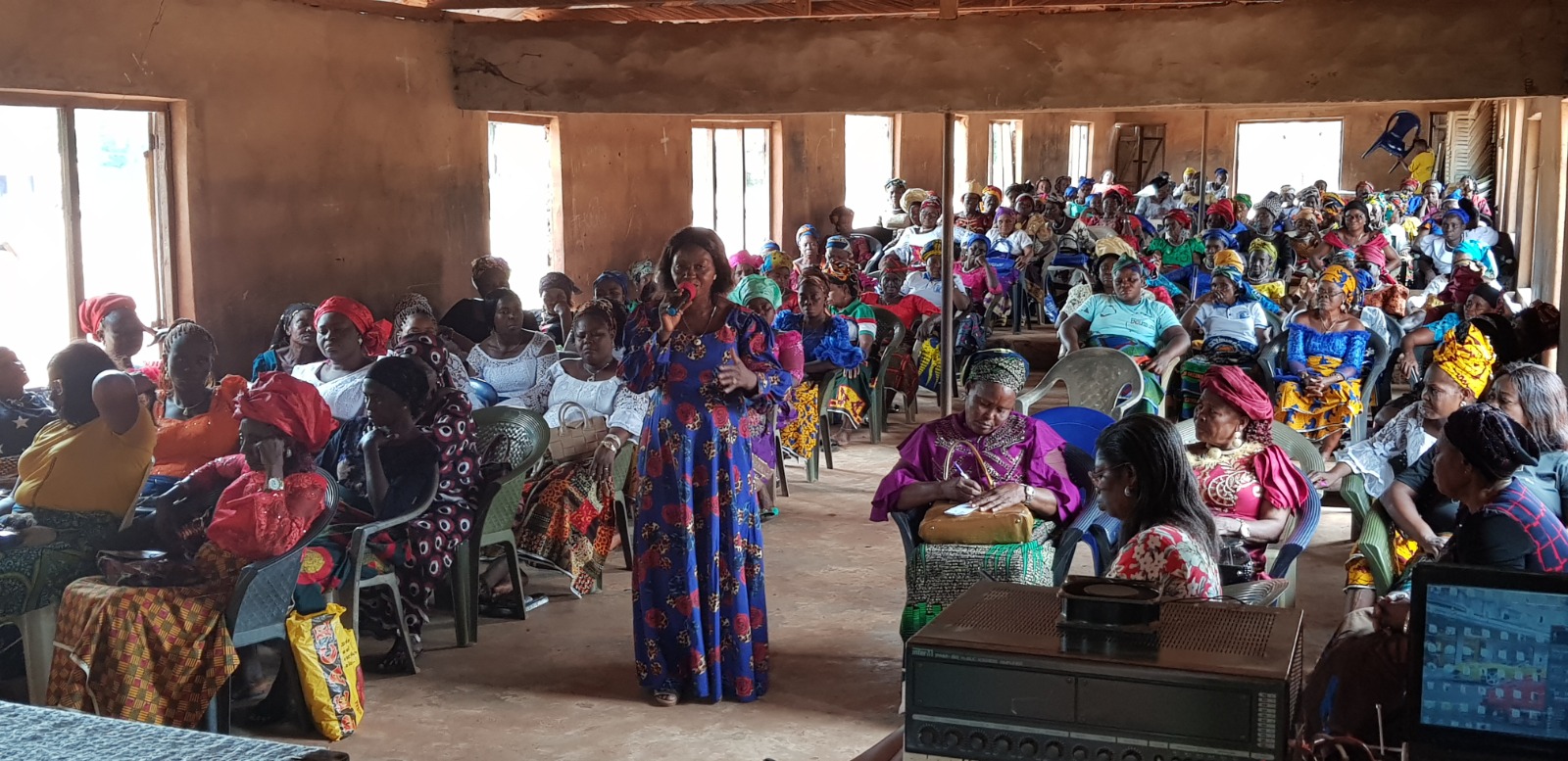
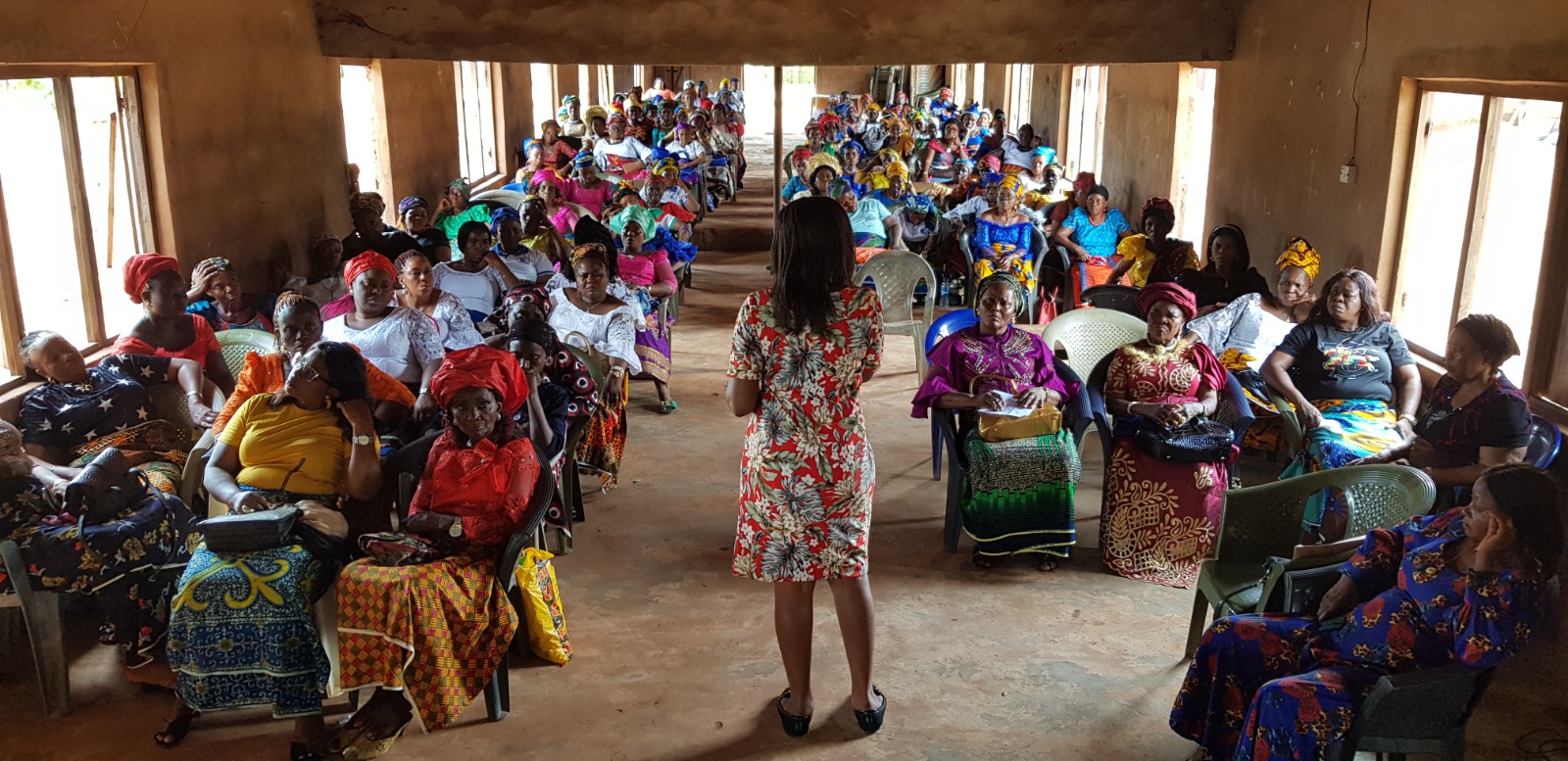
SSDO Gender and Protection Programme Lead, Blessing Uchendu, and Jacob’s Well Project Officer, Stella Ani, built the capacity of the women on causes and effects of domestic violence against women and girls, how to report it, where to report it and how to follow it up. The team used the medium to create and intensify awareness of women’s rights and the law.
Other pressing issues discussed during the capacity-building event include economic empowerment, political inclusion, violence against women, female genital mutilation, and advocacy. The team also sensitized the women on how to leverage Jacob’s Well platform to grow their businesses. At the end of the training, the women were enlightened on handling issues around gender-based violence.
Land is one of the most fiercely contested resources in the world over. And Nigeria isn’t any different. This resource has constantly been a cause for dispute and conflicts nationwide. Lands are a source of livelihood, survival and wealth creation, hence the constant need to acquire and possess. At the community level, it is a source of socioeconomic empowerment and carries some form of identity and symbolic association with family lineage.
In the South West, we often see disputes between land grabbers, communities, and supposed private individuals who have purchased these properties. Up North and the southeast, there are clashes between farmers and herders who compete for the earth’s resources to fuel their livelihood. But beyond the farmer-herder clash in the southeast, there is also the challenge of erosion, which further exacerbates land scarcity and reduces arable land.
Gender Imbalance and Disparity
However, more pressing is the effect of cultural norms and practices, which places women at a disadvantage when it comes to land usage and ownership. Disinheritance of landed properties is one of the most prevalent forms of gender-based violence (GBV) in the southeast and has affected many widows across the region. The inability of women to access these landed properties due to cultural norms in a patriarchal society has led to abuse, trauma, and impoverishment.
Women in rural areas in Southeast Nigeria, who comprise over 67 percent of the region’s labor for subsistence and commercial agriculture, depend on the indigenous lands to sustain their livelihood, despite owning only about 10 percent of the land. This shows a huge gender imbalance and disparity in land ownership in the southeast.
Research from USAID shows that gendered power imbalances affect women’s ability to access, use, control and benefit from land. This reality limits women’s economic empowerment and perpetuates poverty. For rural communities, discrimination can be even more pronounced, meaning they have even fewer rights and less access to land than their male counterparts.
Ignorance of the Law, a Punishment for Rural Women
Nigeria has legal mechanisms in place to protect the rights of these women, like the Nigerian Marriage Act and the Nigerian Administration of Estate Act, which guarantee women’s access to land resources. However, women in rural communities are unaware of these laws and how they protect them. A typical case of being in the midst of plenty and still dying of hunger.
“Nothing in the world is more dangerous than sincere ignorance….” – Martin Luther King Jr.
Their absence from decision-making spaces like the traditional ruling councils where land disputes are first adjudicated and the absence of land activists to advocate for their rights limits access to these resources.
SSDO’S Impact
Understanding how these factors affect women in rural communities, South Saharan Social Development Organization, SSDO, is raising awareness about women’s rights to own landed properties and helping them seek redress on land grabbing through the Sister Guardian Initiative in communities across the southeast. The Sister Guardian Initiative (SGI) is SSDO’s flagship on reducing violence against women at the community level. The SSDO-funded project institutes community-based women groups -SGI Chapters, to advocate against GBV and provide immediate survivor-centered support to survivors through counselling, temporary shelters, and referrals.
The program also builds the capacity of law enforcement and health officials to respond to GBV cases according to international best practices; and support traditional leaders to institutionalize by-laws against GBV. It is currently being implemented in 19 communities in Enugu and Anambra states.
The Sister Guardian Initiative is playing its part in changing the narrative, one community at a time. So far, the SGI has supported over 3,000 women, ensured the inclusion of women in the traditional ruling council of six communities and successfully introduced by-laws criminalizing GBV in four communities.
Helping Alice Recover Her Land
The SGI chapter in Ihenyi community, Isi-Uzo LGA, Enugu, recently helped a widow, Ogbuebor Alice, reclaim her land after much tussle with her husband’s brother. The Gender Protection Lead for SSDO, Blessing Uchendu, spoke about the intervention by the SGI. Blessing recalled, “The land tussle started over thirty years ago when Alice’s husband passed on and her kids were still little. Her husband’s brother laid claim over the piece of land as the rightful owner as opposed to the norm, which was supposed to be Alice’s kids.”
This struggle continued, and the uncle resurfaced three years ago. But by this time, Alice was aware of the existence of the SGI chapter in Ihenyi community. She reported the case, and the group mediated. Only for the uncle to return this year and dispose them off the land.
“The case was reported to me that Alice’s husband’s brother was back making an ownership claim of the parcel of land. The SGI intervened again but, this time, swiftly moved the case to the Igwe’s cabinet for further adjudication. Members of the Igwe’s cabinet then divided the land equally among both parties, but he still went back on the decision and took the land for himself.”
Ogbuebor Emeka, Alice’s younger son, shares more insight. “In the scuffle for the land, he arrested me and put me behind bars for three days until my family met the bail conditions. He threatened us never to set foot on the land again.”
Blessing Uchendu confirmed that after many threats, the case was charged to the court. “On the first hearing, Alice’s husband’s brother didn’t show up, and the case was adjourned. On the second hearing, he still didn’t show up, and the court dismissed the case.”
Alice and her family can now resume farming activities to guarantee their livelihood courtesy of the SGI intervention. Many women still suffer from discriminatory norms, ignorance of their rights, as well as from power imbalances in the community. SSDO is ever committed to reducing gender imbalances and power disparities as it concerns land tenure and ownership.
One of the reasons why the rate of gender-based violence is higher in communities is that most rural communities in Nigeria do not have structures to support women facing domestic violence. The little support that exists – pro bono legal services and safe houses can only be accessed in the state capitals.
Understanding these concerns and needs, South Saharan Social Development Organization, SSDO, is implementing the Sister Guardian Initiative to reduce violence at the community level. The program is currently being implemented in 19 Enugu and Anambra state communities. The initiative provides psychosocial support to women and makes referrals to other relevant agencies where necessary.
In March, the Gender Officer and Jacob’s Well Project Officer visited Orokoro community in Isi Uzo LGA to provide technical assistance and supervision. These visits would help monitor the initiative’s progress, build the capacity of the Sister Guardians, and conduct a need assessment evaluation to strengthen the initiative in the target communities.
The women were also sensitized on effective loan repayment strategies and how to scale their businesses. They were educated on how to identify new opportunities for expansion and how to position their businesses to leverage opportunities. The visit was also an avenue for the Gender Officer to mediate and counsel a couple. Helping to broker peace in the family.