“I was young when I met my husband. He was loving and kind. We got married not long after. Then he changed.” Blessing said.
Blessing’s husband is the main provider of the family. She also supports the family with proceeds from her foodstuff business. From time to time, she joins her mother on the farm to uproot cassava and make gari.
“When we started together, he was caring. I didn’t have to pay for things,” she noted.
He made it his responsibility to take care of her from when they met and even throughout her pregnancies. Their relationship was a sweet affair until two years ago when everything went sour.
“He stopped providing for the family. Anytime I ask for money for upkeep, he will become angry and ask me to use my money,” she said.
At the slightest provocation or argument, he hits her. Blessing didn’t take this lightly, as every time he hits her she will retaliate.
“I always fight with my husband because he is always hitting me,” she said.
But being stronger, he overpowers and beats her. Many times the thought of leaving crossed her mind. She always waded it off, thinking of the shame and stigma. The income from her foodstuff business could not take care of her and her three kids. This coupled with her little education effectively knocked off the idea of moving. Blessing knew her livelihood was tied to her husband.
Sadly, the beatings and maltreatment didn’t stop rather it became more frequent. When it became unbearable and looked like she may lose her life, she moved back to her parent’s house.
“He started beating me so much, I had to run for my life with my kids,” she said.
Weeks after, her husband came to her parent’s house and demanded that the kids be handed over to him. She refused this request. It led to a heated argument that spiraled into something far worse. He pounced on her and beat her right in her parent’s house. Her mother on hearing the chaos rushed to the scene to mediate. But she was on the receiving end of things as he hit her with his elbow and shoved her away. All the while her three children watched in horror.
Her mother’s eye instantly swelled and became teary. She struggled to see and had to be rushed to the hospital. She sustained a serious injury to the eye from the collision that led to a discharge, leaving her very uncomfortable.
Her mother was taken to the hospital for treatment, but they couldn’t pay the ₦60,000 bill. All efforts to reach her husband to cover the bill were futile. The family had to borrow the funds to save her mother’s life.
“You’d expect that after he hurt my mother, the least he should do as a sign of remorse was to foot the medical expenses. But he never showed up. I was afraid that I might lose her. Her eyes kept bringing out mucus.” she said.
The family could barely survive, talk less of paying the medical expenses from the treatment. Blessing said that after the money was borrowed, debtors were on their necks for a refund.
“After the eye treatment, the lenders wanted their money back. We had no way to pay. Different people spoke to him but he kept sending them away, refusing to foot the bill.”
A friend of hers later informed her of the presence of Sister Guardian in Omor community. She reported the matter to the group, and they intervened. The case was brought before the panel of elected women leaders. They heard from both parties and mandated the man to cover the medical expenses.
Blessing affirmed that this decision made her family feel relief from the lenders’ pressure and her husband’s maltreatment stopped. The husband also promised not to beat her anymore. The intervention also provided counseling services for Blessing seeing as she agreed to give the relationship another chance.
“I am thrilled that the Sister Guardian was able to intervene. He doesn’t beat me anymore, he respects me more now.”
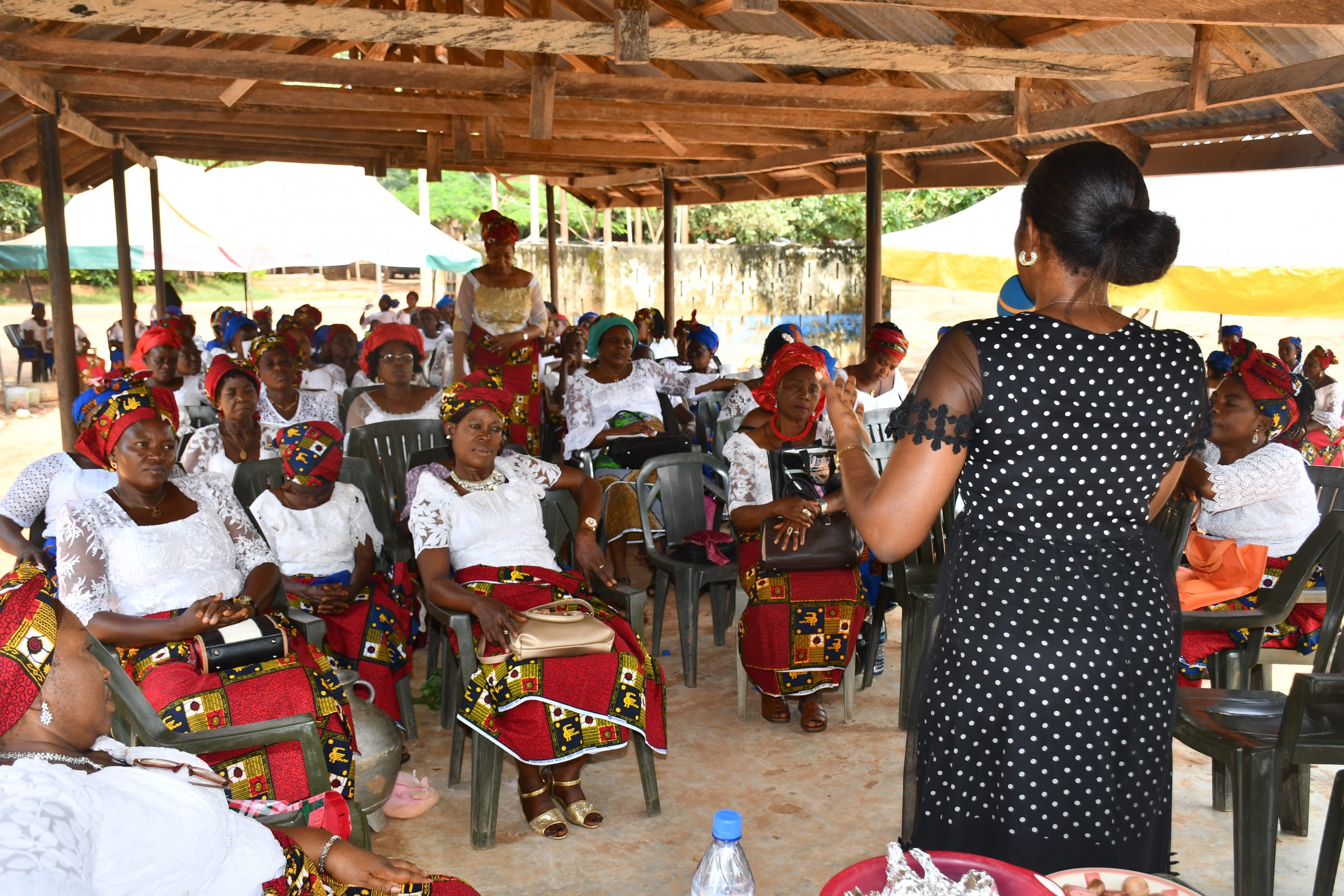
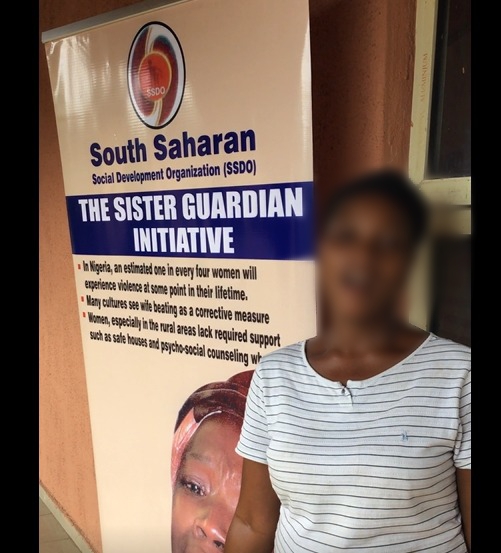
As part of South Saharan Social Development Organization’s (SSDO) commitment to the reduction of gender-based violence at the community level, it implemented the Sister Guardian Initiative in 16 communities in Enugu and Anambra. This initiative taps into existing community-based women’s groups to identify women who will stand in the gap and advocate for other women.
Blessing Uchendu, the Gender Officer for the organization who spearheads the initiative and interacts with the Sister Guardian (SG) group sheds more light on the impact of the group.
“The beauty of the group is the unique setup that enables it to tackle different violence-based issues. The SG provides immediate support such as safety, referral, and mediation with husbands and families. The group also has a working relationship with the village rulers, police, and courthouses. This gives the group its potency.”
“Studies from World Health Organization (WHO) show that 30 percent of women have been subjected to physical or sexual violence. The risk of anxiety and problem drinking is two times higher for abused women. That is why the SGI’s support for women is so important.”
Gender-based violence, also known as violence against women and girls, is one of the most prevalent issues facing women yet the least visible. It affects the health, security, dignity of the victims. Victims suffer sexual and reproductive health issues such as unwanted pregnancies, traumatic disorders, and sexually transmitted infections. SSDO is one of the leading organizations in Nigeria working to improve gender equality and women empowerment. SSDO’s program offers psychosocial support, micro-credit loans, and promotes the rights of women to live an abuse-free life.
Mrs. Uchendu also stated that one reason for prolonged gender-based violence and fear of reporting is economic dependence on the man. She also shed light on what SSDO is doing.
“You will observe that violence is condoned because of the family’s economic dependence on the man. SSDO is providing micro-credit facilities for abused women, to empower them and make them more self-reliant.”
Over the course of the initiative, over 300 women have benefitted from the micro-credit schemes.