SSDO

A Mother’s Resilience: Juliet’s Journey to Reunite with Her Children

Gender-based violence (GBV) remains a pervasive issue in Nigeria, affecting countless women and girls across the country. Despite ongoing efforts to combat this scourge, many continue to suffer in silence, enduring physical, emotional, and psychological abuse. The effects of GBV on victims are profound, often leading to long-term trauma, health complications, and a pervasive sense of fear and helplessness. In addition to the immediate harm inflicted, victims frequently face societal stigmatization, further isolating them and complicating their paths to recovery and justice.

In the face of such adversity, the story of Juliet Ngene stands out as a poignant example of resilience and the transformative power of dedicated support systems. Juliet, a mother of five, endured relentless abuse and unfounded accusations from her husband. Her journey, marked by separation from her children and prolonged suffering, highlights the critical role that organizations like the South Saharan Social Development Organization (SSDO) and the National Agency for the Prohibition of Trafficking in Persons (NAPTIP) play in supporting victims of GBV. 

Through their efforts, Juliet was ultimately reunited with her children, showcasing a powerful narrative of hope and recovery amidst the pervasive issue of gender-based violence in Nigeria.

Juliet Ngene is a devoted mother of five and is a tailor. Her husband who is supposed to be the family’s breadwinner is a bricklayer, whose job is seasonal. To make ends meet and support her family, she travels to Onitsha to buy materials which she resells in Enugu. From her proceeds, she caters to feeding and also pays the house rent. Sometimes, she also loans her husband money to help him sort out other bills. 

Things took a harrowing turn when Juliet’s husband’s attitude changed towards her. He became abusive and leveled unfounded accusations against her. 

Due to the nature of her job, she had to make several trips to purchase materials. And as a result on some occasions won’t be able to make it back home. On those occasions, she’d stay with her sister in Onitsha.

“He kept accusing me of sleeping with other people. And he knows I have to make those trips to support the family. I will explain myself to him and that in itself will be a precursor for slaps and heavy beatings,” 

“I have told him that anytime I can’t make it home I’d stay at my sister’s, then come to Enugu the next day. That didn’t seem to help. If I come home late due to the distance, he would insult me that I have gone out with my lovers. I couldn’t do anything right in his eyes,” 

 “No matter what I said, he never believed me. Going home after work became a nightmare,” she shared. His accusations were a pretext for driving Juliet out of their home in Enugu.

The husband reported the case to the kinsmen who summoned the wife and her sister to the meeting. She gave her side of the story which the elders fact-checked with the sister. Despite her honest explanations and the corroboration from her sister, who confirmed she stayed with her during late returns from business trips, her husband remained unyielding. 

Desperate to sever ties, Juliet’s husband took drastic measures. He seized control of the properties, most of which Juliet had purchased, and took their children away. He dispersed the children among his relatives, sending three to Abuja and the two girls, Blessing, 16, and Divine, 11, to his sister in Ngwo, Enugu. For months, Juliet was cut off from her children, unable to contact them or ensure their well-being.

Lost and confused, she decided to visit her husband’s village to complain about his actions. And to also make inquiries and find out where are kids are But this yielded no results.  

Determined to reunite with her children, Juliet traveled to Ngwo upon learning that two of her children were there. What she found was heartbreaking: her daughters were malnourished and poorly cared for. When she attempted to take them with her, her husband threatened her, stating, “If I ever see you close to this place, I will deal with you.”

To worsen matters, she realized that her husband’s sister who had custody of the girls sent one to go and live with someone else in Anambra. SSDO’s Gender Officer discovered this while interviewing the older girl Blessing, “I would have run away from my aunt’s house, but I couldn’t because I didn’t know where my sister was taken to. I was scared and worried for her.” 

Despite the threats, Juliet persisted. Her search for assistance led her to SSDO. The Gender Protection Lead at SSDO connected her with NAPTIP, and together they began the arduous process of reuniting Juliet with her children. By May 23, their relentless efforts bore fruit, and custody of her children was restored to Juliet. 

Juliet’s prolonged struggle was exacerbated by her health issues, which left her bedridden and unable to search for her children sooner. “I was very ill and couldn’t move for days. It was only after my recovery that I could start looking for my children,” she explained.

After two grueling years of separation, malnourishment, and emotional pain, Juliet was finally reunited with her daughters, thanks to the unwavering support of SSDO and NAPTIP. Overwhelmed with gratitude, Juliet expressed, “I cannot appreciate SSDO enough for their efforts. Only God can repay you back. I am very happy and grateful.”

Juliet Ngene’s story underscores the critical role of organizations like SSDO in combating gender-based violence and advocating for the rights and well-being of vulnerable individuals. Her journey from despair to reunion is a powerful reminder of the resilience of the human spirit and the profound impact of compassion and advocacy in transforming lives. 

SSDO ESTABLISHES VSLA IN IBUTE-NZE COMMUNITY

We understand that poverty lies at the heart of unreported cases of Gender-based violence (GBV). Most women are often afraid they will lose their economic support if they report. Women have a huge role to play in nation-building. Gender inequality, unpaid care, and a largely unskilled women’s group are some issues to name a few that hold them back.

Women’s empowerment is one of the practical solutions to reducing the cases of violence against women. Understanding this, South Saharan Social Development Organization, through its Sister Guardian Initiative is empowering women in Ibute-Nze community by establishing a Village Savings and Loans Association. 

VSLA is a self-select savings group that uses members savings to lend to each other so they can grow their businesses. VSLAs offer a community-based financial platform that empowers women to invest in sustainable businesses. Through these community-driven financial solutions, women can secure the necessary funds to grow their enterprise. 

The VSLA in Ibute-Nze has been successfully set up and women trained in financial literacy and entrepreneurship. The group has selected its executives and is fully operational. The group will be monitored to proffer technical assistance and guarantee the sustainability and effectiveness of the VSLA operations.

SSDO ESTABLISHES VSLA IN AWHA-NDI AGU COMMUNITY

We understand that poverty lies at the heart of unreported cases of Gender-based violence (GBV). Most women are often afraid they will lose their economic support if they report. Women have a huge role to play in nation-building. Gender inequality, unpaid care, and a largely unskilled women’s group are some issues to name a few that hold them back.

Women’s empowerment is one of the practical solutions to reducing the cases of violence against women. Understanding this, South Saharan Social Development Organization, through its Sister Guardian Initiative is empowering women in Awha-Ndi Agu community by establishing a Village Savings and Loans Association. 

VSLA is a self-select savings group that uses members savings to lend to each other so they can grow their businesses. VSLAs offer a community-based financial platform that empowers women to invest in sustainable businesses. Through these community-driven financial solutions, women can secure the necessary funds to grow their enterprise. 

The VSLA in Awha-Ndi Agu has been successfully set up and women trained in financial literacy and entrepreneurship. The group has selected its executives and is fully operational. The group will be monitored to proffer technical assistance and guarantee the sustainability and effectiveness of the VSLA operations.

SSDO COMMEMORATES INTERNATIONAL WOMEN’S DAY 2024

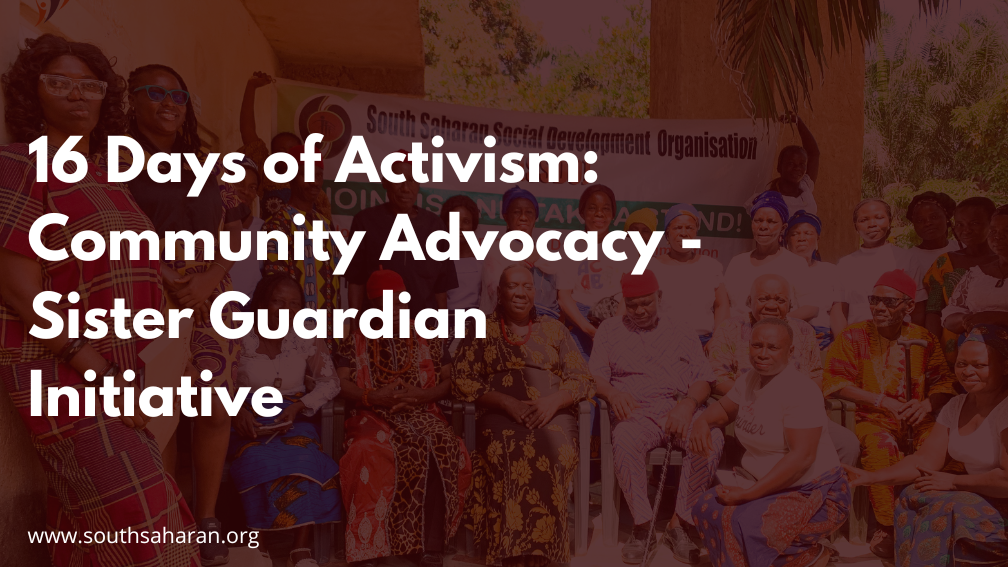
The Sister Guardian Initiative (SGI) is a South Saharan Social Development Organization‘s flagship project on reducing violence against women at the community level. The initiative provides the immediate support that female victims of violence require— safety, counseling, mediation, and referrals to other relevant agencies as the case may demand. The SGI is presently in 19 communities across Enugu and Anambra states. 

International Women’s Day is a global day to celebrate women’s socioeconomic, cultural, and political achievement. It is also a unique opportunity for women to rally and advocate for equal treatment and representation. Since the inception of the SGI in 2016, SSDO has organized an educational event geared towards women’s empowerment. This year’s theme is “Inspire Inclusion” and “Invest in Women: Accelerate Progress.”

To commemorate the IWD celebration, South Saharan Social Development Organisation organized a radio sensitization program to celebrate the wins of Sister Guardians, to share their stories, challenges, and journey since they were elected to the traditional ruling councils in their communities. As well as to create awareness on the need for this to become the norm in other communities. The guest on the show were Mrs Roseline Egwuatu from Ihenyi community in IsiUzo LGA and Mrs Anthonia Anike from Umuode community in Nkanu East LGA, who are both part of the traditional ruling councils in their communities as a result of the efforts of SSDO through the Sister Guardian Inititaive project. 

The women discussed how challenging it was before SSDO came in, how they struggled to be heard, and how women didn’t have an opinion on matters that affected their wellbeing. 

“Women were always subjugated and relegated to the backgrounds through bad stereotypes and cultural norms that affected them. During disagreements, men take advantage of norms to ban women out of the home for as long as they want by barricading their kitchen with palm fronds which is a taboo in my community. This was put to a stop when women became elected to the traditional ruling council.” Mrs Roseline shared.

Mrs Anthonia explained, “Before now, we could not assess our palm kernel farm or either use the proceeds, the men would always collect it from us, but through the advocacy of the Sister Guardian Initiative this has stopped.”

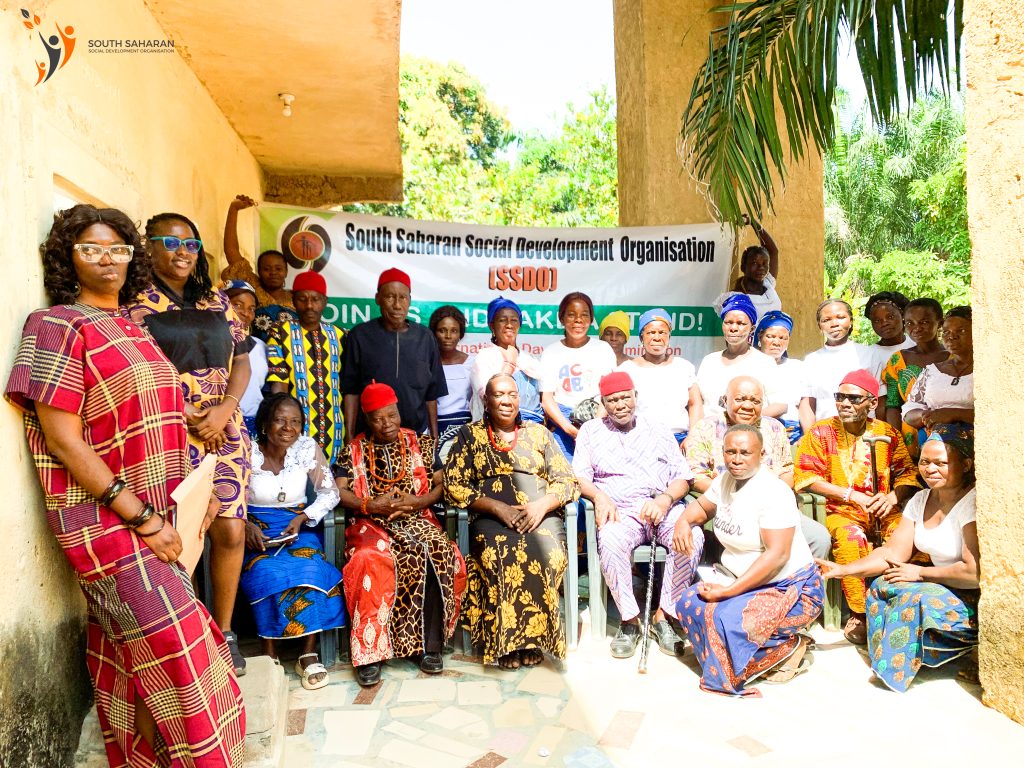
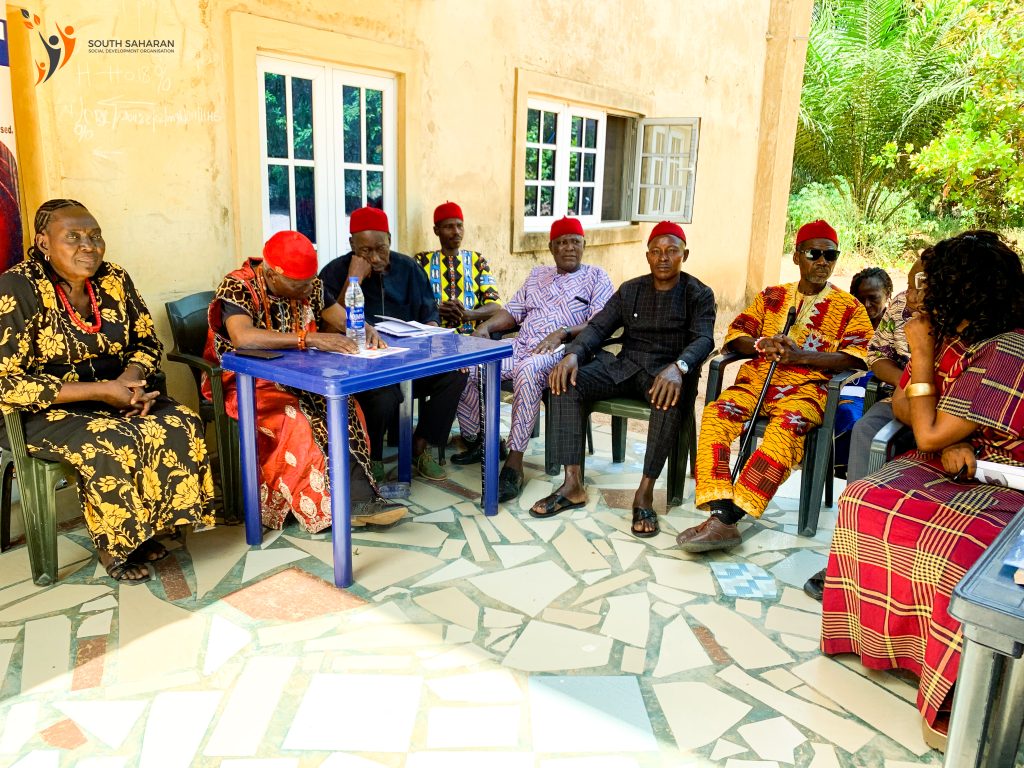
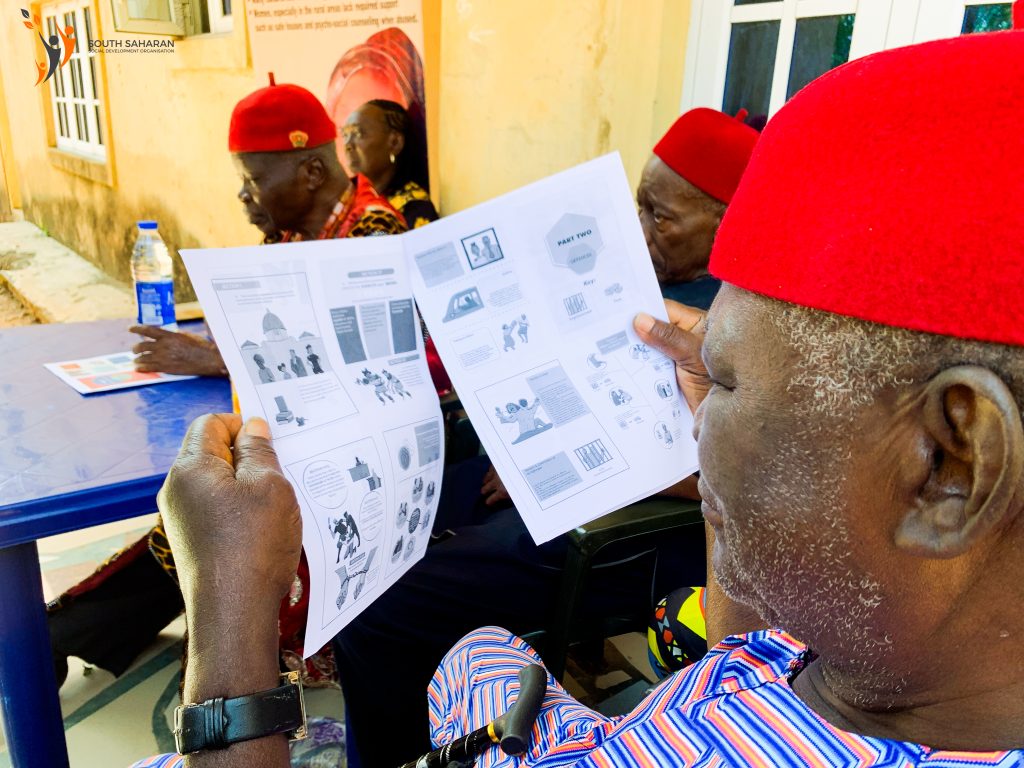
This year’s commemoration also served as an avenue to create more awareness on the year’s theme, on the need to increase women’s participation and diversify leadership, and rally relevant stakeholders on the need to enforce GBV laws.This was done through a community stakeholder engagement workshop held in Ezi-Nze community in Udi LGA. The workshop featured participants drawn from three communities– Ibute-Nze, Ezi-Nze, and Akpakwume community, Udi LGA Enugu State–where the initiative has been executed. They include traditional rulers, President Generals, women leaders, and community members.

Blessing Uchendu, Gender Protection Lead explained the importance and the need for increased inclusion and investment in women, particularly in the promotion of diversity in leadership and decision-making positions. “Women, especially those belonging to underrepresented groups, continue to face barriers when seeking leadership roles. By championing inclusion, organizations and communities can harness the full potential of diverse perspectives, leading to better decision-making and innovation.”

Studies have shown that increased women’s representation in leadership positions as helped to reduce marginalization and discrimination as women in power can better advocate and present the needs of other women. Understanding this fact, SSDO, has been working tirelessly to increase the number of women in the traditional ruling councils in project communities. So far, nine communities have included women in their traditional ruling councils. While not resting on our oars, the team is striving to see improved inclusion and women empowerment, hence the need for this workshop. 

“Women face discrimination, harassment, inequality, and oppression. SSDO addresses all these and more through the guardians instituted in the communities. SSDO also strengthens these established institutions by building their capacity and financing them to carry out their programmatic activities. With more women in the cabinet in these communities, these incidences will be further ameliorated” 

Jacob’s Well Project Officer, Stella Ani, also highlighted the importance of access to opportunities such as financial instruments as a viable way to invest in women. “We realize that marginalization and oppression lie at the heart of women’s poverty. This is why we introduced the micro-credit facility. To help women access loans, accelerate progress, and achieve financial independence.”

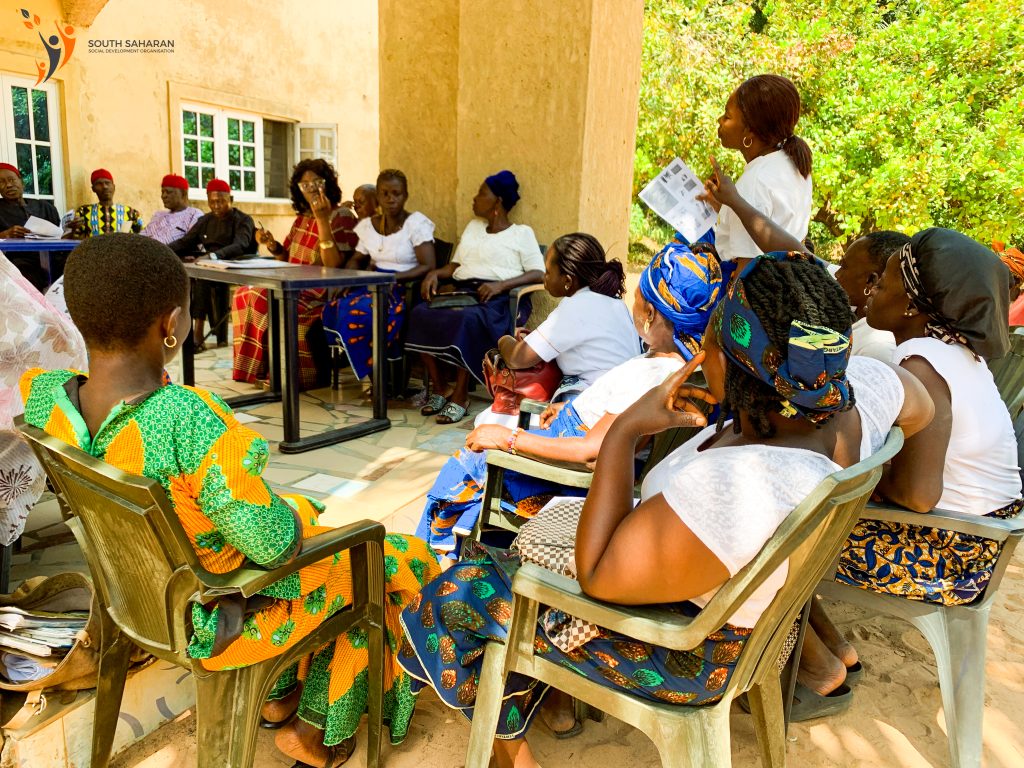
Having sensitized participants and stakeholders on the need for increased women’s participation and increased inclusion in decision-making processes at the community level, the team facilitated a breakout session where traditional rulers and Sister Guardians (women leaders) from the same community discussed and chose the three most pressing challenges that have plagued women the most in their communities.

Esther Ani, a participant shared, “I am excited about this workshop. The fact that we could sit with our traditional rulers and tell them our struggles and needs was important. Now we can plan and implement the solutions identified.”

These identified problems will be form the basis for intervention in the communities going forward. The women will advocate to public and private partners for speedy resolutions.

Transformative Empowerment: A Tale of Resilience and Progress 

This piece delves into the poignant narrative of a community grappling with the multifaceted impact of poverty on its women. It unfolds the pressing need for empowerment, as the women yearned for opportunities that would break the shackles of financial deprivation and dismantle the barriers restricting their potential. In the face of these challenges, the community found an unexpected ally in South Saharan Social Development Organization, SSDO, an organization that became a beacon of hope, introducing the transformative Sister Guardian Initiative and Economic Empowerment. This is a tale of dreams taking flight, a community transcending adversity, and the remarkable journey toward empowerment that has forever altered the landscape of the community.

In the heart of Umuode community, Nkanu East where the echoes of hardship reverberated through every humble dwelling, the story of resilience and triumph unfolded. For the women of this close-knit community, poverty cast a long shadow, and the societal roots of gender-based discrimination deepened their struggle. As the oppressive forces of economic hardship and unequal opportunities took their toll, a collective call for change emerged from the hearts of the women in Umuode. 

In the not-so-distant past, the Chizaram Farmers Multipurpose Cooperative Umuode, nestled in the Nkanu East Local Government Area of Enugu State, grappled with the harsh realities of poverty. Mrs. Ani Faithful, a member of the cooperative, vividly recounts the challenging times when meager livelihoods were sustained through small businesses, mere tables, and kiosks acting as the stage for their economic pursuits. 

“Many of us struggled to raise funds to grow our businesses. We knew what we wanted and where we saw ourselves but the limiting factor was money. Rather than stay idle, I started by selling provisions in a small kiosk, hoping to raise enough money to go into rice farming.” 

Adding to their struggles was a deeply ingrained societal bias that denied women access to land, exacerbating the cycle of poverty and inequality. 

“In our community, women are not given land to farm like the men. This was a huge challenge to my goal of becoming a rice farmer. And this worsened an already dire situation.” 

Women’s Empowerment, The Way Forward

Recognizing the dire need for change, the call for women’s empowerment resonated profoundly within the cooperative. The oppressive grip of poverty, coupled with gender-based discrimination, spurred a collective desire for transformation. It was against this backdrop that SSDO, a beacon of hope for marginalized communities, stepped in with the Sister Guardian Initiative and Economic Empowerment through Jacob’s Well project.

In 2020, SSDO, through its Jacob’s Well Officer, Stella Ani, and Gender Protective Lead, Blessing Uchendu, introduced the initiatives to Chizaram Farmers Multipurpose Cooperative Umuode. The initiative aimed to address both the immediate economic challenges faced by the women and the underlying societal issues perpetuating gender inequality. 

Women working on their rice plantation

Advocacy for Women’s Rights

Stella Ani and Blessing Uchendu became catalysts for change, utilizing advocacy as a powerful tool to dismantle barriers. They engaged with key stakeholders, including the Igwe and his Cabinet, the President General, and other influential figures, and sought to challenge the status quo. They advocated passionately for women’s right to land and their rightful place in decision-making bodies, igniting a spark of change in the community’s consciousness.

“We understand that for any community to fully thrive, there’s must be a deliberate effort to liberate and empower the women to not just be backbenchers but active contributors to the economy. This was our focus with our initiatives,” Blessing shared. 

Now the community is more inclusive and a more adequate representation of what a thriving society should be — one with ample opportunities for women.  

Stella Ani paying a supervisory visit to the rice plantation

Dream Becomes Reality

Having addressed flaws in ideologies, norms, and beliefs, it was time to empower the women with capital to achieve their goals of becoming rice farmers. SSDO further supported the cooperative with over 2 million naira to help the female farmers purchase equipment, cultivate, and grow rice. SSDO’s involvement also helped the cooperative secure a partnership with the International Fund for Agricultural Development, IFAD. This helped them secure farm inputs and cassava processing plant that has drastically improved their productivity and yield.

Woman standing next to the processing plant provided by IFAD. 

Here are some of the wins of the Sister Guardian and Jacob’s Well endeavors in the community: :

  •  Land Allocation:

   The community responded to the call for equality by allocating 15 acres of land to the women, unlocking a realm of possibilities for farming and economic ventures.

  • Inclusion in Leadership:

   The once marginalized women now hold esteemed positions, with three members of the Sister Guardian Initiative serving in the Igwe’s Cabinet and two contributing actively to the Town Union.

  •  Respect and Recognition:

   The societal shift is palpable, with women no longer relegated to the shadows; they bask in newfound respect and recognition, transforming not only their individual lives but also the community’s perception of gender roles.

  • Business Evolution:

   Breaking free from the constraints of table and kiosk businesses, the women have evolved into successful rice farmers, marking a tangible shift from subsistence to sustainable entrepreneurship.

  • Business Literacy:

   The initiative instilled essential business literacy skills, equipping the women with the knowledge to manage and grow their enterprises. Business record-keeping has become second nature, empowering them to make informed decisions for sustained growth.

  • Familial Harmony:

   As the women prosper, the positive ripple effect extends to familial harmony, creating an environment conducive to personal and collective growth.

Female Farmers of Chizaram Multipurpose Cooperative during harvesting season

The Power of Social Development Initiative 

The journey from adversity to achievement in Chizaram Farmers Multipurpose Cooperative and for women at large in Umuode showcases the transformative impact of strategic social development initiatives. South Saharan’s unwavering commitment to women’s empowerment has not only broken the shackles of poverty and gender-based discrimination but has also sown the seeds of lasting change within the fabric of the community. As the women stand tall, proud, and empowered, their success story resonates as a beacon of hope for other marginalized communities yearning for transformation.