International Women’s Day is a global day to celebrate women’s socioeconomic, cultural, and political achievements. It is also a unique opportunity for women to rally and advocate for equal treatment and representation.
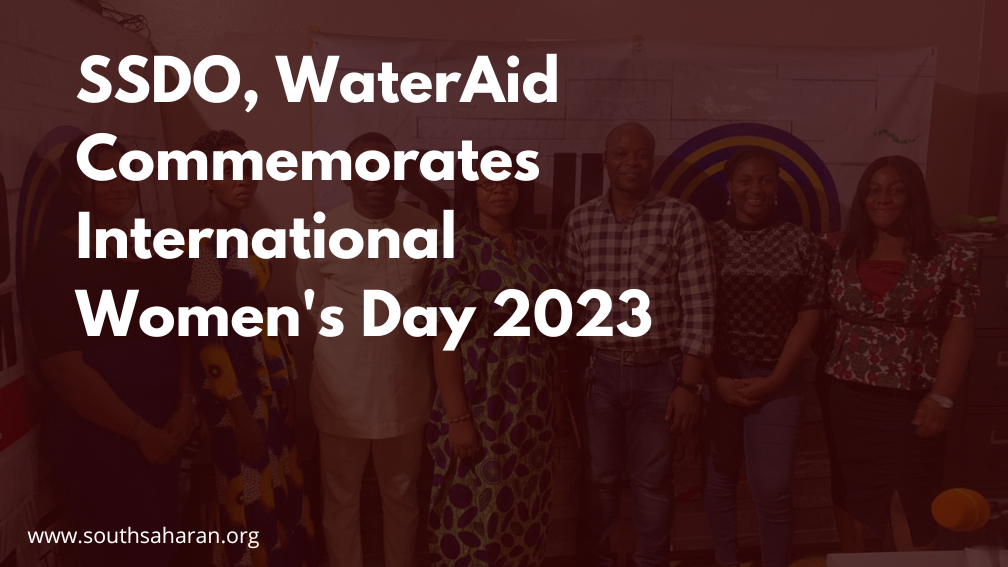
South Saharan Social Development Organization, SSDO, in partnership with WaterAid Nigeria, commemorated International Women’s Day through a radio sensitization and advocacy engagement. The topic of discussion was women’s role in managing Water, sanitation, and hygiene (WASH) Facilities at the community level.
The guests on the show were – Society for Water and Sanitation (NEWSAN) Enugu Coordinator, Ms. Enwelum Ogechukwu, Sanitation Officer, Small Towns Unit – Ministry of Water Resources, Iyiodo Juliet, SSDO’s Head of Programs, Udochukwu Egwim, and SSDO’s WASH Officer, Obianuju Ezeike.
They all critically analyzed and discussed the topic extensively, highlighting the impact of poor access to WASH facilities on women. As well as how the lack of water in rural communities affects the girl child.
This radio sensitization served as an avenue to enlighten the public on the need for the government to build the capacity of more women in the construction and technical aspect of the water sector. And also to include more women in the management of water facilities, as this has been shown to yield better results.
Through years of working on projects at the community level, we realize that women and girls are hugely disadvantaged. They have often been marginalized and segregated to the background on so many fronts in society.
One of the primary reasons for marginalization is the inequality between men and women in accessing and controlling resources.
And as such South Saharan Social Development Organization, in partnership with ActionAid Nigeria, seeks to foster women’s empowerment through peer education. This initiative aims to advocate for women’s rights and bridge women’s capacity deficiency at the community level.
The program was facilitated by the Project’s Lead, Perpetual Njoku, SSDO’s Gender Officer, Blessing Uchendu, and SSDO’s Good Governance Lead, Nkem Awachie. The training was executed using the Women Peer Education Resource Kit.
It covered essential areas such as personal development, hygiene, livelihood, nutrition, and inclusion. The women were taught how to mobilize and organize for collective actions, rights and responsibilities, family and community relationships, and well-being.
Studies from the Nigerian Economic Summit Group revealed that 91 million Nigerians live below the poverty line. With an additional, eight million people pushed into poverty in 2021. Interestingly, about 60 percent of people living below the poverty line are women. Unemployment, unpaid labor, gender discrimination, and marginalization are mostly responsible for it.
In many communities, women are largely dependent on their spouses for their financial needs. This dependence is one reason why women fail to report gender-based violence. They fear they’d lose their financial support and become stranded.
This dependency also means that these women are largely unbanked and would be next to impossible to access loans from traditional institutions. Their lack of access to assets of their own also means they don’t have any form of capital that can suffice as collateral. In our line of work, we’ve seen that this economic disparity engenders gender-based violence.
Understanding these peculiar challenges, South Saharan Social Development Organization empowers them to be financially independent, thus reducing poverty and dependency.
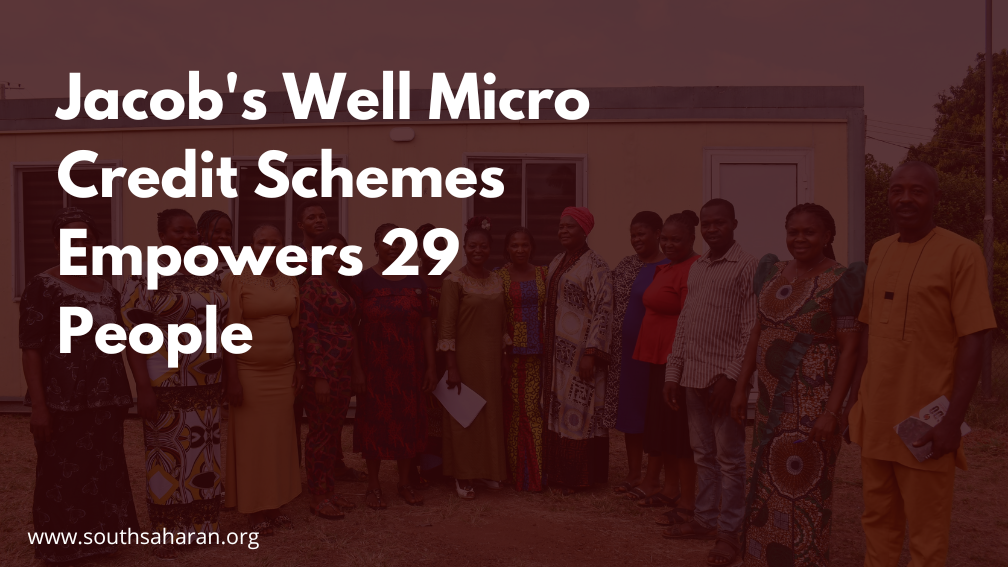
One such way we do this is through Jacob’s Well micro-credit scheme. SSDO makes loans available to women in a cooperative at low-interest rates to start or sustain their businesses. The organization empowers these women with no collateral required leveraging the social trust within the cooperative mechanism to ensure compliance across the board.
In November, 29 loan collectors across three registered cooperatives got loans to grow their businesses. They were trained in financial literacy, risk management, savings culture, business and cooperative management to help sustain and grow the venture.
A sum of 2.85 million naira was disbursed to these women with no collateral required leveraging the social trust within the cooperative mechanism to ensure compliance across the board.
One reason why violence against women, especially at the community level, seems to be a non-ending cycle is that often, the perpetrators of these heinous acts are not made to face the wrath of the law. The victims or the community sometimes protect them. And in other cases, victims don’t know how to protect themselves under the purview of the law.
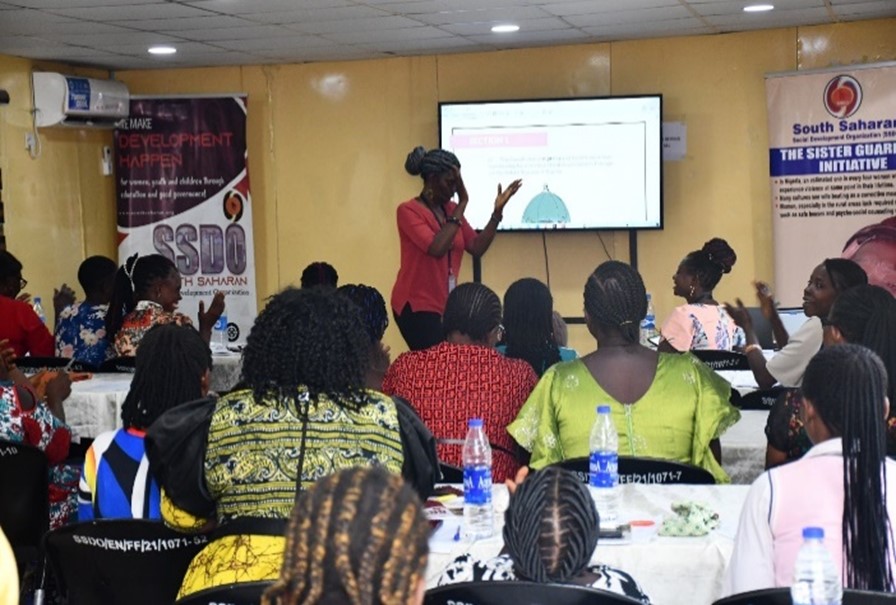
Understanding the place of the law and people knowing their rights in curbing gender-based violence, South Saharan Social Development Organization conducted a one-day workshop for 37 women of the Sister Guardian executives from the 19 communities where the project is currently running. The women comprised the presidents and secretaries of each chapter of the initiative.
The workshop aimed to build the capacity of the Sister Guardians on the provision of the constitution on violence against women and the associated punishment. The Sister Guardian toolkit was also reviewed and unanimously validated for adoption. The Violence Against Persons Prohibition (VAPP) law was also reviewed to help the women be well-rounded in tackling gender-based violence cases.
It also focused on the following:
To incorporate the knowledge in the course of their work in the community and also step down their learnings to community members
The documentation of the cases adjudicated in the case registers provided by SSDO
Going forward, this workshop will better serve the Sister Guardians to better advocate, mediate, and proffer solutions to gender-based violence cases they deal with.
Achievements:
l Built the capacity of 37 executive members of the Sister Guardian women (presidents and secretaries) on the aims and objectives of the SGI, rationale behind the selection of communities and composition of the executive membership and its work in relation to knowledge and access to human rights
l Reviewed the Sister Guardian Toolkit document to unanimously validate it for adoption
l General review of the VAPP law as enshrined in the 1999 Nigeria constitution as amended
l Practical revision on the documentation of the Sister Guardian case register
Challenges:
The women complained that one of the difficulties they face in functioning effectively in their different communities is the inability to involve the police in some of the matters they adjudicate on that needs police attention.
Recommendations:
During the review of the Sister Guardian Toolkit, the women made the following recommendations on chapter 4 [Conflict Resolution] page 10 on the section that talks about “matters Sister Guardian can mediate on”. The women identified cases they adjudicate which were not captured in the Toolkit, and they include:
Human trafficking
The threat of murder from the spouse
Parental murder
Young men impregnating young women and refusing to marry them
The burden of women catering to the family alone cause hitches in the marriage
Disallowing women to see their children during separation
The Sister Guardian Initiative (SGI) is a South Saharan Social Development Organization’s flagship on reducing violence against women at the community level. The Sister Guardian Initiative, which is currently implemented in 19 communities in Enugu and Anambra State, taps into existing community-based women groups to identify women, referred to as Sister Guardians (SG), who are willing to stand in the gap and advocate for other women facing different kinds of abuse. They are majorly drawn from the circle of influential women in the community for instance: the Traditional rulers wives, Political women leaders, Religious women leaders, Umuada women leaders, Market women leaders
The initiative provides immediate support to female victims of violence – safety, counseling, and mediation with the husband and family members and when it is necessary for the cases to be referred to the police and other relevant agencies for the women, they support the women in prosecuting their case either at the community level with the extended family and village authorities, or the police and courts as the case may be, ensuring the women are never alone. In addition, they advocate against violence against women (VAW) at the community level and also educate women and the community at large on their civic responsibilities.
It also advocates against violence against women at the community level and educates women and the community on their civic rights and responsibilities.
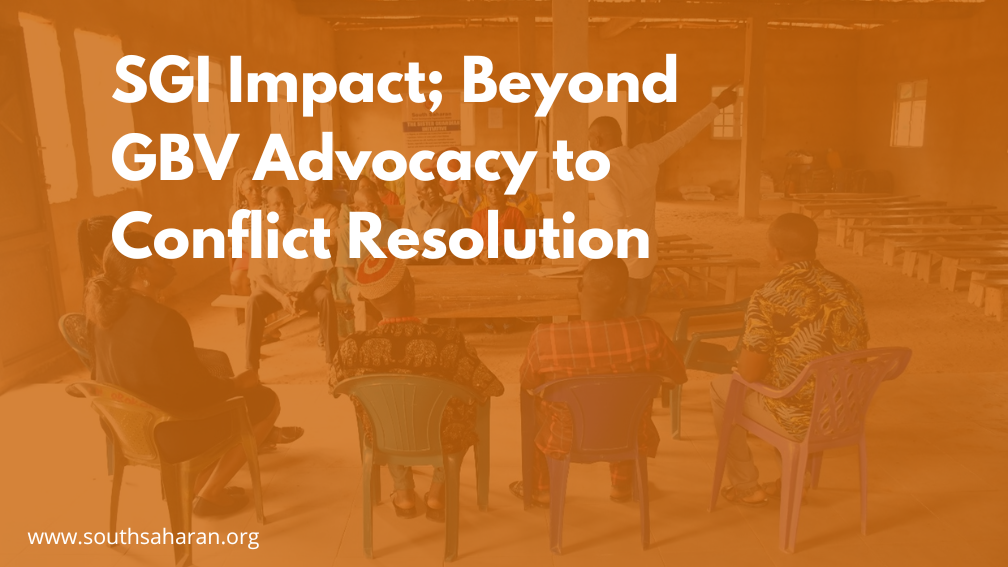
Beyond this, the initiative also helps with conflict resolution among community members. In September, the SGI Project lead mediated between a contractor and Orokoro community over equipment supply. Ultimately, an agreement was brokered on the way forward between both parties.
The project lead had a series of meetings with the contractor and community separately and then organized a meeting between both parties to reach a truce and proffer a solution that would lead to the electrification of the community.
The community engaged a contractor to help as an expert to liaise with EEDC on how to power Orokoro community. The contractor was paid and was not heard from for a long time. During this period, the community assumed that the contractor had eloped with their money. And sought the help of the Sister Guardian Initiative.
After a series of inquiries, the project lead reached the contractor and met with him to find out his side of the story. He stated he has been executing the task for which he was paid. Having heard his side of the story, the project lead arranged a meeting with the community members and the Igwe to resolve the issue and broker a way forward peacefully.
The contractor showed documents of payment to the EEDC and explained how far he had gone with the job. He promised to complete the job in a few weeks and deliver on the agreement with the community.
The community members were happy with the outcome of the meeting, and a member of the community echoed this. “I am happy that Sister Guardian was able to intervene. Because for a long time we didn’t hear from him and it seemed like we had been cheated. SSDO, through the Sister Guardian, was able to arrange a meeting and help us know what was happening to the project.”