SSDO

International Day of The Girl Child

International Day of The Girl Child

The girl child faces different challenges associated with their gender and age. In many developing countries, the girl child is often at a huge disadvantage. Data from UNICEF shows that 6.3 million girls in Nigeria are out of school. UNESCO indicates that less than 40% of countries worldwide provide girls and boys with equal access to information. 

The longer girls are out of school, the higher the probability of child marriages and violence against children. Educating the girl child improves their earning potential and helps them have a say in decisions that affect their future. It improves the economy and reduces inequality. 

The better-educated girls are, the better their family and the community becomes, as they will be direct beneficiaries of the skills they will contribute to society. 

What Is The Day About?

The International Day of the Girl Child is a day set aside by the United Nations to raise awareness of the challenges that girls face all around the world. It is also a time to celebrate the wins and reinforce the achievements of girls the world over. 

When Is It Celebrated?

It holds every year, October 11.  

Why Do We Celebrate The International Day of The Girl Child?

Educating the girl child isn’t just about access to schools, but helping them feel safe and showing them how to navigate their way around their chosen professions. Sadly, in Nigeria, 30% of girls aged 9-12 have never been to school at all. The nation also accounts for about 45% of the out-of-school children in West Africa. 

The International Day of the Girl Child is a good time to remind us that issues like poverty, child marriage, and gender-based violence, which are underlying causes, are still far from being subjugated in Nigeria. 

History of the International Day of The Girl Child

On December 19, 2011, the United Nations General Assembly reached a resolution to make October 11 the International Day of the Girl Child to recognize girls’ rights and the unique challenges the girl child faces around the world. The aim is to gather worldwide support for goals that will help better the lives of girls, provide leadership opportunities and help them reach their full potential. 

The team for the observance has a new theme each year:

2012 – Ending Child Marriage

2013 – Innovating for girls education

2014 – Empowering Adolescent Girls: Ending the Cycle of Violence. 

2015 – The Power of Adolescent Girls: Visions for 2030. 

2016 – Girls Progress = Goals Progress: What Counts For Girls. 

2017 – Empower Girls: Before, During, and After Crisis. 

2018 – With Her; A Skilled Girl Force. 

2019 – Girl Force: Unscripted and Unstoppable.

2020 – My Voice, Our Equal Future. 

2021 – Digital Generation, Our Generation.   

Impact That Matters

South Saharan Social Development Organization (SSDO) is playing its part and through the Orphaned and Vulnerable Children (OVC) project, 75 girls have been enrolled in school. Providing an opportunity for them to reach their full potential. This has been one of our key focus areas as an organization. Ensuring the development of women and children through our various projects. 

SSDO Kids and Adolescent Club Helps Girls Stay in School

SSDO runs a kids’ club in some catchment areas where we work, Nkanu East, Nkanu West, and Enugu South LGAs. These clubs help the kids know more about their rights, share experiences, and talk about issues that bother them in a non-hostile environment. 

The club also helps them build leadership capacity and learn how to take responsibility. This way, they know when to speak up at home, school, or the community. The kids learn basic life skills necessary for surviving in different spheres of life. They learn time management, how to effectively balance chores and studies, creating a to-do list and a work timetable. 

The club presents an opportunity for the facilitators to correct wrong gender notions, such as gender role bias. Teaching the kids that any ambition or career path they choose is valid. Facilitators show them the practical side of their chosen career through games and illustrations. Importantly, they learn about their rights, child abuse, how and where to report these issues should they arise. 

The aim of the club is to groom children who know their rights and are equipped with important life skills, such as critical thinking, perspective-taking, handling challenges, and maintaining good health. 
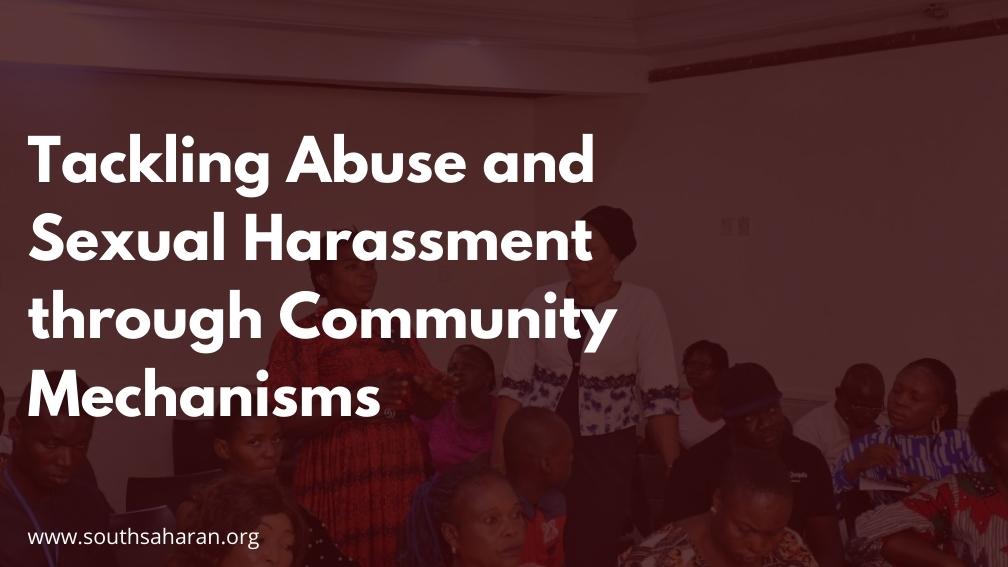
Tackling Child Abuse and Sexual Harassment through community mechanisms

Research carried out by UNICEF in 2015 shows that 1 in 4 girls and 1 in 10 boys in Nigeria have experienced sexual violence before the age of 18. With the drastic increase in the rate of violence against women and girls during the lockdown, you can be sure these numbers have increased. Before the pandemic, one in three women experiences physical violence by a partner. 

According to a report by the Center for Global Development, violence against women and children quadrupled during the pandemic. Children have always been a target for pedophiles because of their innocence and vulnerability. Often, these predators ride on the naivety of the children and compel them not to talk. Many of who live with the guilt for the rest of their life. 

Sometimes, the children blame themselves for the incident or, in some other cases, care for their abusers and do not want them to get into trouble. It is imperative that parents and guardians are very observant and pay close attention to behavioral patterns in their wards. Signs to look out for include children being aggressive, withdrawn, clingy, or having difficulties sleeping. 

Some children suddenly become very wary and avoid specific people for no obvious reason. Others might illicit inappropriate sexual behaviors not expected of someone of that age. The child might also sustain a physical injury in the genital area. Children who are experiencing neglect and disabled children are at a higher risk of being abused.  

These experiences result in guilt, anxiety, fear, and depression that could have a lasting effect on their future if not well handled. Understanding this situation, South Saharan Social Development Organization (SSDO) in partnership with Caritas Nigeria under the OVC project created a Child Protection Committee (CPC).

This committee comprises lawyers, social workers, healthcare officials, police officers, case managers, and children. The community-based committee works to protect the rights of children and is equipped to address issues of child rights violations. In the case of any violation, they’re on hand in the community to take up such cases and ensure the child gets the best attention. The unique composition of the group makes them sufficient to tackle various issues. 

When abused children need psychological support, the social workers are on hand to provide it. In the instance of physical altercations, the healthcare officials take over. And when abusers need to be dealt with according to the law, law enforcement officials and lawyers are also a part of the committee and do just that. 

For efficient role delivery, SSDO organized training sessions on sexual exploitation and child abuse management. Subject experts enlightened the professionals on how best to prevent child sexual abuse and how to effectively work seamlessly as a team to manage any such issues.   

The Need for the Child Protection Committee

Education on Sexuality

The committee members are trained on a range of topics that will make them effective first responders. They were trained on how to identify vulnerable children, how to be of help, and how to appropriately escalate issues. In this way, they will be better positioned to help parents understand the need to teach their wards sex education. This way, kids know the danger signs and can react accordingly. Abusers thrive on the naivety of the kids. If kids are taught how to respond, perpetrators’ activities will reduce. 

Accelerated Child Abuse Litigation

Evil thrives when the culprit assumes they will get away with the act. When abusers are prosecuted immediately after been convicted, it will serve as a deterrent to those who might be nursing such evil ambition. This is one thing, the committee looks to provide. With proper legal representation by lawyers, identified cases will be immediately handed over to the security officials and followed up to ensure justice is served. 

Offers Professional Help

Victims usually repress thoughts of the abuse. For some, this often leads to depression or aggressive behavior towards the opposite gender. Some suffer from post-traumatic stress disorder. However, with the right professional guidance by the team of social workers, and healthcare officials, children can look to have a better future. 

Education At The Core

The committee is designed to help raise awareness on child abuse and sexual harassment. This way, in the long run, such cases can be prevented. Affording children the opportunity to grow up in a safe environment. They are also equipped to handle issues when they arise. Helping the kids live life the best way possible barring any health or mental issues that may mar their future.  

For many of these kids, they need to be guided to channel their energy to more rewarding and satisfying activities such as sports, exercise, and extra-curricular activities. And in the fullness of time, their past will truly become history. Then they can live out their full potential.   

SGI & August Meeting: The Intersection between Women’s Rights and Community Development

The mother’s congress, popularly known as August Meeting, is officially recognized in Igboland as a time when Igbo women in the diaspora and different parts of the federation return to their indigenous communities. It is a time earmarked for community development. Women embark on different community projects such as healthcare outreaches and sensitization. 

Beyond community development, this meeting has provided an opportunity for these women to tackle more pressing issues that affect women such as conflict management, human development, and women’s inclusion in politics. Over the years, the August Meeting has been a viable avenue for community impact. 

In a bid to show solidarity in projecting and supporting the roles women play in family and community development, South Saharan Social Development Organization (SSDO) through her Sister Guardian Initiative (SGI) project will visit 5 communities where it is currently working to sensitize women during their August Meeting. These communities are Umuode, Ibute-Nze, Awha, Afa, and Ezi-Nze.

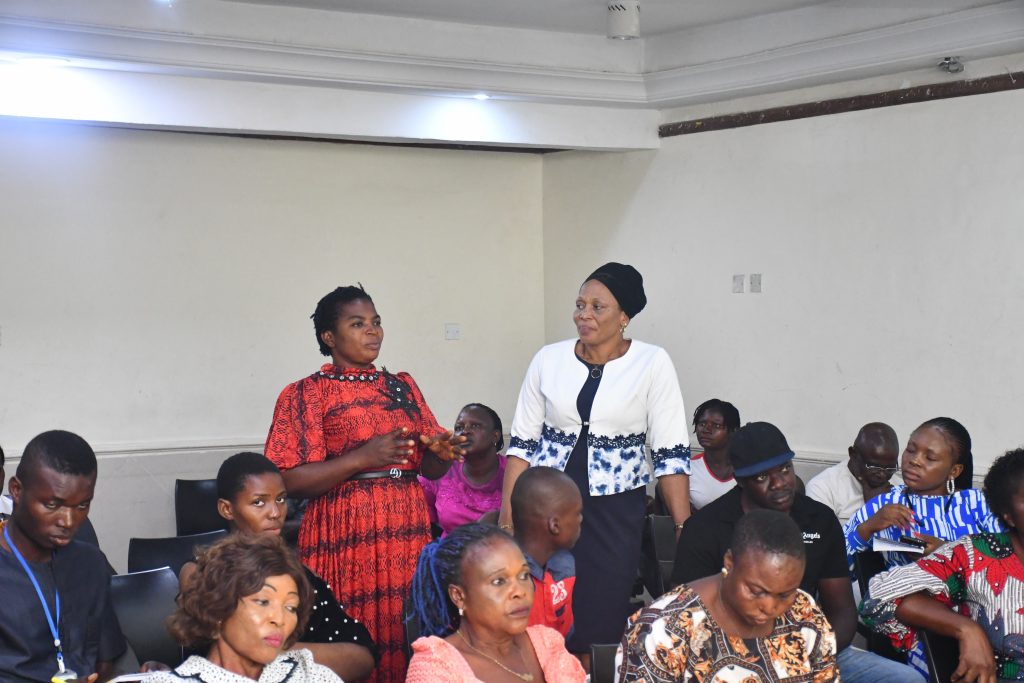
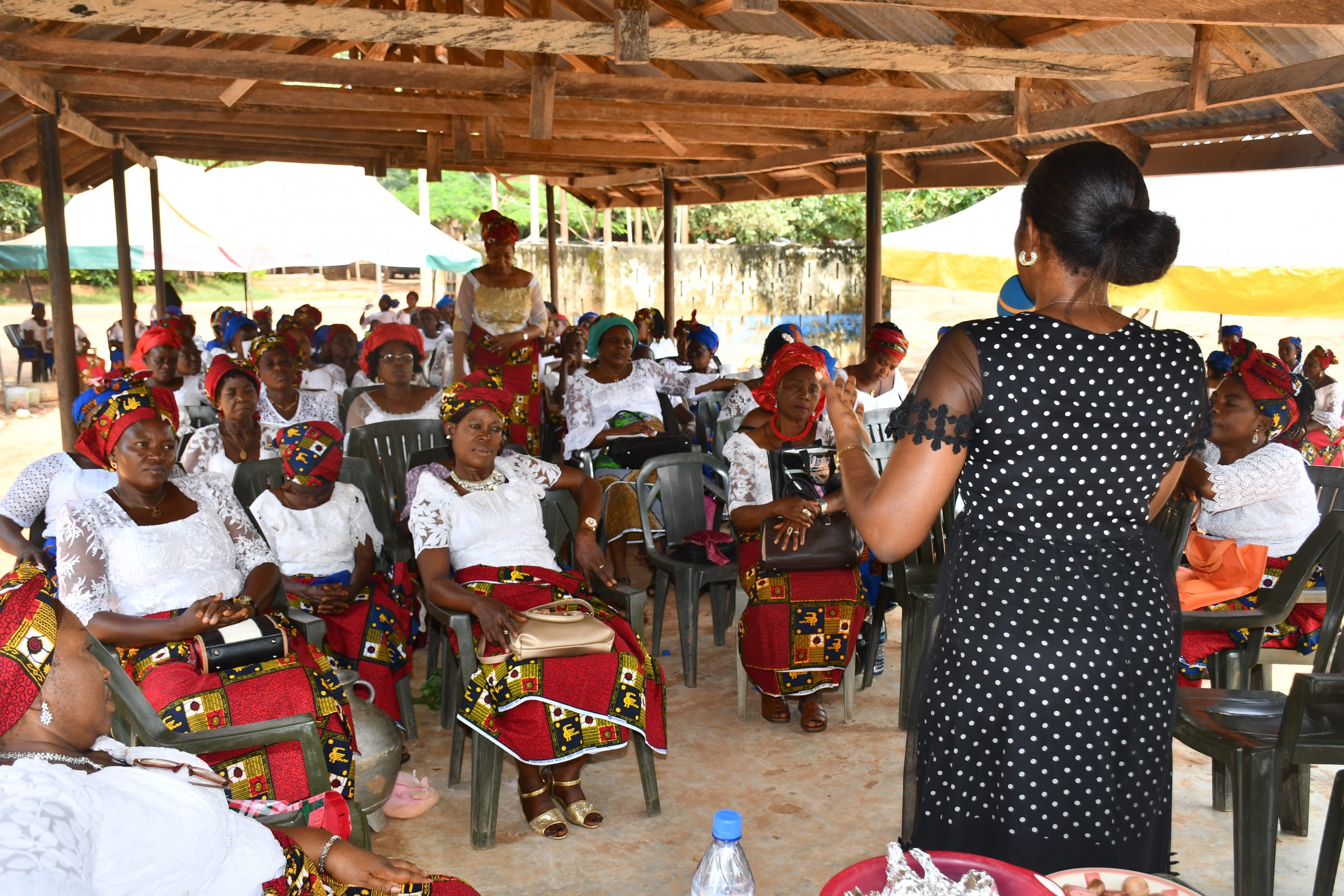
The first of this trip was to Umuode community. The women were sensitized on the importance of women’s rights, how to handle violence against women and children, and political inclusion. Emphasizing representation and active participation in decision-making in the home and community. 

A research carried out by the United Nations in Nigeria shows that 30 percent of women and girls aged 15 to 49 have experienced sexual abuse. Victims also have difficulty accessing healthcare as there are few referral centers around. Fear of stigma and discrimination has also made it difficult for women to report these issues. 

This is one of such reasons SSDO established the SGI. It offers a safe space where abused women can seek counseling, safety, and support. 

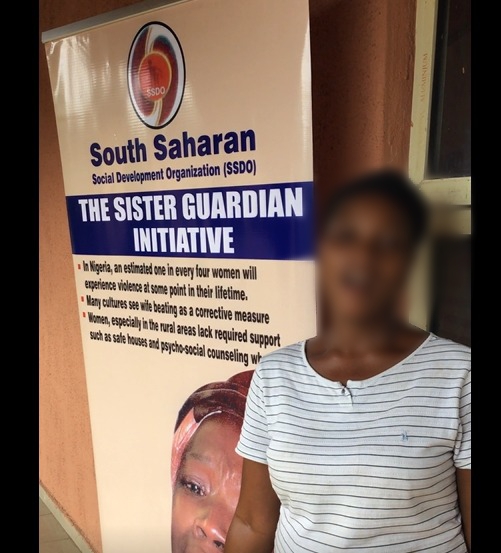
The Sister Guardian Initiative is a flagship aimed at reducing violence against women at the community level. It taps into existing based women community groups to identify women willing to stand in the gap (Sister Guardians) and advocate for other women facing different abuse.  

The beauty of the group is the unique setup that enables it to tackle different violence-based issues. Sister Guardian provides immediate support such as safety, referral, and mediation with husbands and families. The group also has a working relationship with the village rulers, police, and courthouses. This gives the group its potency.  

The women were also enlightened about female genital mutilation and its physiological and psychological effect. There were also facilitators from the organization on ground to train the women on leadership, advocacy, and economic empowerment.

The Project lead also used this opportunity to introduce the Sister Guardians executives to the August Meeting. This will facilitate easy access to the group. 

“The primary reason violence goes unreported is because of the stigma and discrimination the women suffer. Introducing the SGI executives to the community helps the women know the right individuals to meet,” she says.

“Another reason women do not speak about violence is that they solely depend on their abusive partners for their financial needs. They fear they will lose economic support. We understand this and that is why we introduced the Jacob’s Well Initiative to the community.”

Financial dependence on a spouse can be inhibition and a reason an abused partner would not speak up. SSDO understands this factor and has also made a provision by creating the Jacob’s Well Initiative. 

SSDO through its Jacob’s Well initiative aims at improving the quality of life for women in Enugu state by providing micro-credit facilities. The aim of the project is to empower women to gain financial independence, reduce poverty and over-dependency. 

Since the inception of the initiative, the organization has reached over 300 beneficiaries and given out loans to the tune of ₦22 million. This credit facility has made it possible for these women to grow their businesses from small scale to large scale. 

Providing Safe Spaces for Survivors of Gender-Based Violence

“I was young when I met my husband. He was loving and kind. We got married not long after. Then he changed.” Blessing said.

Blessing’s husband is the main provider of the family. She also supports the family with proceeds from her foodstuff business. From time to time, she joins her mother on the farm to uproot cassava and make gari.

“When we started together, he was caring. I didn’t have to pay for things,” she noted. 

He made it his responsibility to take care of her from when they met and even throughout her pregnancies. Their relationship was a sweet affair until two years ago when everything went sour. 

“He stopped providing for the family. Anytime I ask for money for upkeep, he will become angry and ask me to use my money,” she said. 

At the slightest provocation or argument, he hits her. Blessing didn’t take this lightly, as every time he hits her she will retaliate. 

“I always fight with my husband because he is always hitting me,” she said.

But being stronger, he overpowers and beats her. Many times the thought of leaving crossed her mind. She always waded it off, thinking of the shame and stigma. The income from her foodstuff business could not take care of her and her three kids. This coupled with her little education effectively knocked off the idea of moving. Blessing knew her livelihood was tied to her husband. 

Sadly, the beatings and maltreatment didn’t stop rather it became more frequent. When it became unbearable and looked like she may lose her life, she moved back to her parent’s house.

“He started beating me so much, I had to run for my life with my kids,” she said. 

Weeks after, her husband came to her parent’s house and demanded that the kids be handed over to him. She refused this request. It led to a heated argument that spiraled into something far worse. He pounced on her and beat her right in her parent’s house. Her mother on hearing the chaos rushed to the scene to mediate. But she was on the receiving end of things as he hit her with his elbow and shoved her away. All the while her three children watched in horror. 

Her mother’s eye instantly swelled and became teary. She struggled to see and had to be rushed to the hospital. She sustained a serious injury to the eye from the collision that led to a discharge, leaving her very uncomfortable.    

Her mother was taken to the hospital for treatment, but they couldn’t pay the ₦60,000 bill. All efforts to reach her husband to cover the bill were futile. The family had to borrow the funds to save her mother’s life. 

“You’d expect that after he hurt my mother, the least he should do as a sign of remorse was to foot the medical expenses. But he never showed up. I was afraid that I might lose her. Her eyes kept bringing out mucus.” she said. 

The family could barely survive, talk less of paying the medical expenses from the treatment. Blessing said that after the money was borrowed, debtors were on their necks for a refund. 

“After the eye treatment, the lenders wanted their money back. We had no way to pay. Different people spoke to him but he kept sending them away, refusing to foot the bill.” 

A friend of hers later informed her of the presence of Sister Guardian in Omor community. She reported the matter to the group, and they intervened. The case was brought before the panel of elected women leaders. They heard from both parties and mandated the man to cover the medical expenses. 

Blessing affirmed that this decision made her family feel relief from the lenders’ pressure and her husband’s maltreatment stopped. The husband also promised not to beat her anymore. The intervention also provided counseling services for Blessing seeing as she agreed to give the relationship another chance.   

“I am thrilled that the Sister Guardian was able to intervene. He doesn’t beat me anymore, he respects me more now.”

As part of South Saharan Social Development Organization’s (SSDO) commitment to the reduction of gender-based violence at the community level, it implemented the Sister Guardian Initiative in 16 communities in Enugu and Anambra. This initiative taps into existing community-based women’s groups to identify women who will stand in the gap and advocate for other women.  

Blessing Uchendu, the Gender Officer for the organization who spearheads the initiative and interacts with the Sister Guardian (SG) group sheds more light on the impact of the group.

“The beauty of the group is the unique setup that enables it to tackle different violence-based issues. The SG provides immediate support such as safety, referral, and mediation with husbands and families. The group also has a working relationship with the village rulers, police, and courthouses. This gives the group its potency.”  

“Studies from World Health Organization (WHO) show that 30 percent of women have been subjected to physical or sexual violence. The risk of anxiety and problem drinking is two times higher for abused women. That is why the SGI’s support for women is so important.” 

Gender-based violence, also known as violence against women and girls, is one of the most prevalent issues facing women yet the least visible. It affects the health, security, dignity of the victims. Victims suffer sexual and reproductive health issues such as unwanted pregnancies, traumatic disorders, and sexually transmitted infections. SSDO is one of the leading organizations in Nigeria working to improve gender equality and women empowerment. SSDO’s program offers psychosocial support, micro-credit loans, and promotes the rights of women to live an abuse-free life.  

Mrs. Uchendu also stated that one reason for prolonged gender-based violence and fear of reporting is economic dependence on the man. She also shed light on what SSDO is doing. 

“You will observe that violence is condoned because of the family’s economic dependence on the man. SSDO is providing micro-credit facilities for abused women, to empower them and make them more self-reliant.”  

Over the course of the initiative, over 300 women have benefitted from the micro-credit schemes.