SSDO

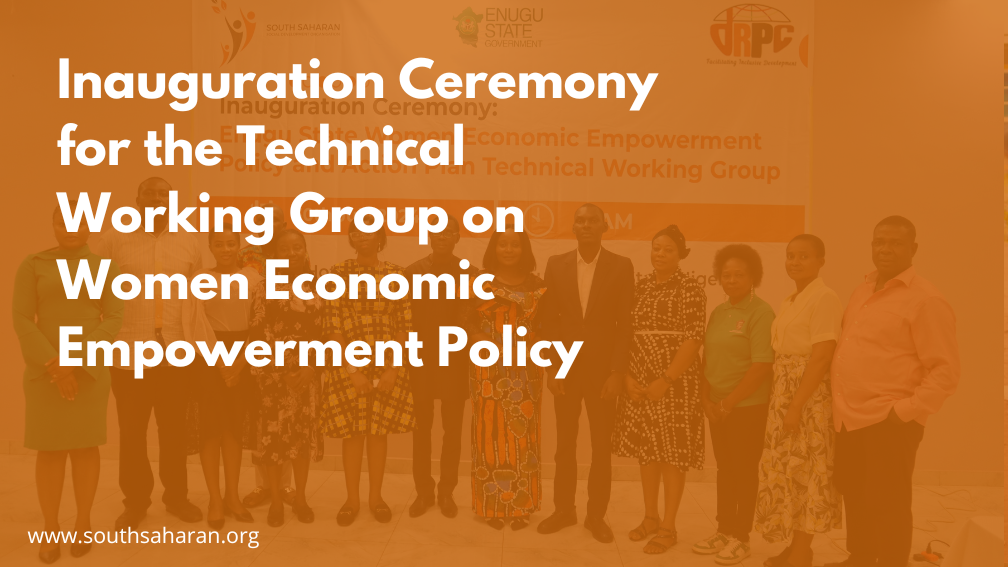
Inauguration Ceremony of the Enugu Technical Working Group for the Development of the Women’s Economic Empowerment Policy

The disparity between men and women in economic participation remains a significant global challenge. Research from the World Economic Forum’s Global Gender Gap Report positions Nigeria at 130th on the Global Gap index, highlighting the pressing need for enhanced gender equality. Furthermore, World Bank statistics reveal a stark contrast in entrepreneurial participation, with women owning only 34% of businesses compared to 66% owned by men. 

Recognizing these challenges, South Saharan Social Development Organization (SSDO), in collaboration with the Development Research and Projects Centre (dRPC) and the Enugu State Government, has embarked on a crucial initiative to domesticate the National Women Economic Empowerment (WEE) Policy for Enugu State. This policy is designed to provide a comprehensive framework to address the needs of vulnerable women, serving as a vital planning tool for coordinating women-focused programs, projects, and activities under a unified umbrella.

The Significance of Women Economic Empowerment Policy

The National Women Economic Empowerment Policy offers a robust template to meet the diverse needs of women, particularly those in vulnerable situations. Its domestication in Enugu State is a significant step towards creating a more inclusive and supportive environment for women entrepreneurs. The policy aims to streamline efforts, ensuring that all initiatives aimed at empowering women are cohesive and efficiently managed.

By bringing various women-focused programs under one roof, the policy facilitates better planning, coordination, and implementation. This holistic approach is essential in addressing the multifaceted challenges that women face in the economic landscape, ranging from access to finance and markets to skills development and legal support.

The Inauguration Ceremony: A Key Chapter for Women Empowerment

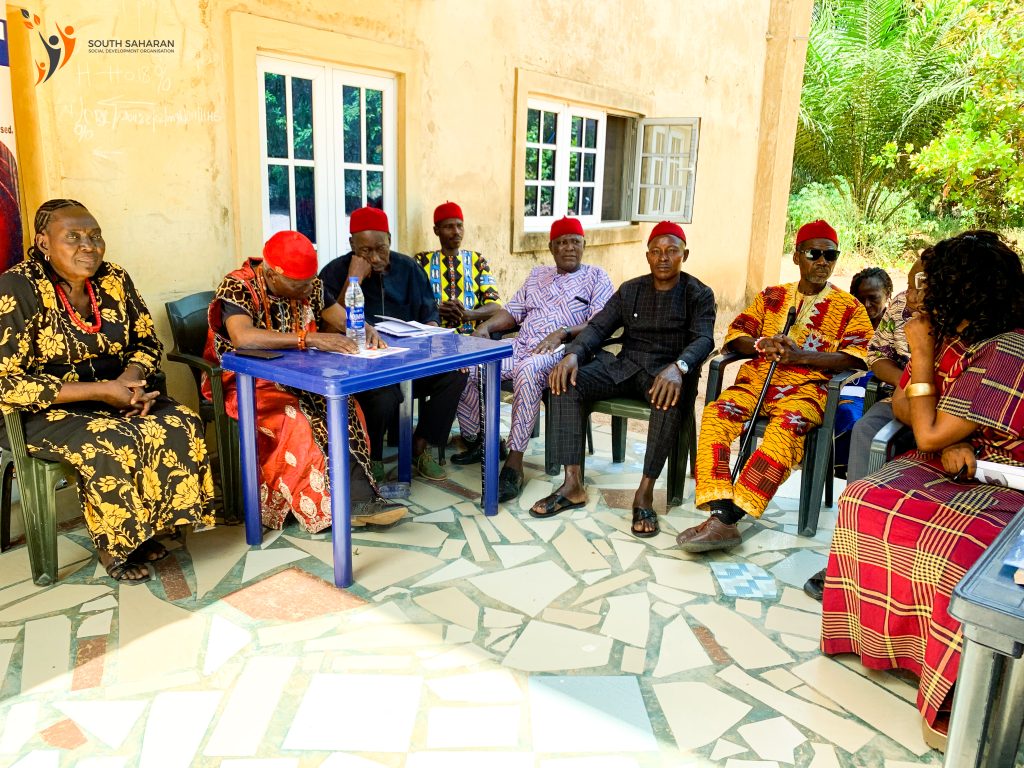
The journey to domesticate the WEE Policy in Enugu State began with the inauguration ceremony of the Technical Working Group (TWG) on July 30th, 2024. This event marked the commencement of a pivotal chapter in women empowerment in the region. The ceremony was attended by key stakeholders, including representatives from the Ministry of Child, Gender, and Social Development, the Enugu State Bureau of Statistics, and the Ministry of Trade and Investment, among others.

The formation of the TWG is a strategic move to ensure that the domestication process is inclusive, comprehensive, and well-coordinated. The group comprises experts and stakeholders from various sectors, all dedicated to developing and implementing policies that will significantly enhance the economic empowerment of women in Enugu State.

Moving Forward: Expectations and Impact

The inauguration of the TWG sets the stage for a series of strategic actions aimed at tailoring the national policy to fit the unique context of Enugu State. This includes conducting thorough assessments of the current economic landscape for women, identifying key areas of intervention, and developing actionable plans that address the identified gaps.

The impact of a successfully domesticated WEE Policy cannot be overstated. It promises to create a more enabling environment for women entrepreneurs, boost their economic participation, and ultimately contribute to closing the gender gap in the region. Enhanced economic empowerment for women leads to broader societal benefits, including improved family welfare, increased community development, and overall economic growth.

Conclusion

The inauguration of the Enugu Technical Working Group for the development of the Women Economic Empowerment Policy represents a significant milestone in the quest for gender equality and economic empowerment in Nigeria. The collaborative efforts of SSDO, dRPC, and the Enugu State Government underscore the importance of partnerships in driving meaningful change.

As the TWG embarks on this transformative journey, the anticipation is high for the positive outcomes that will emerge. Through dedicated efforts and strategic planning, Enugu State is poised to become a beacon of women economic empowerment, setting an example for other regions to follow.

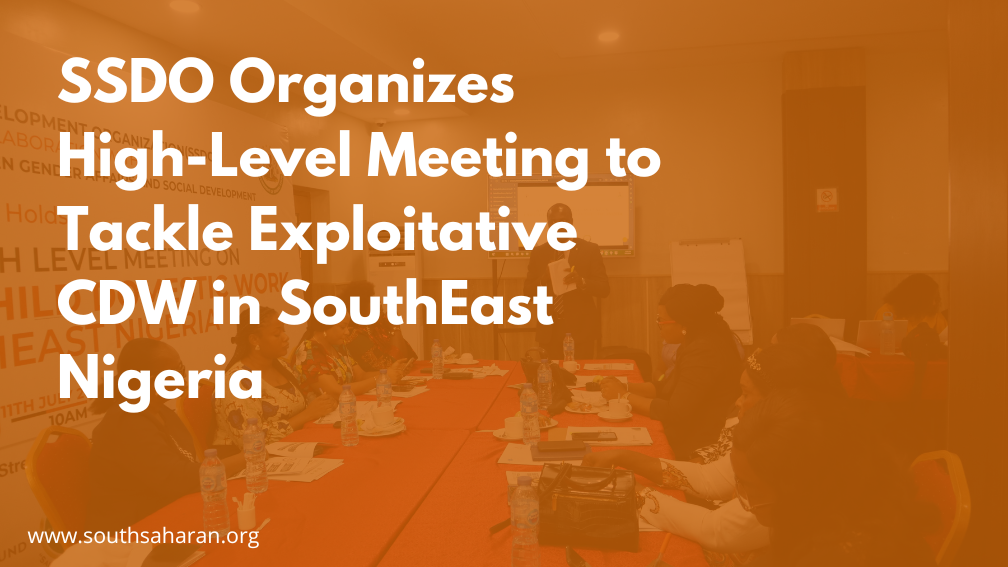
SSDO Organizes High-Level Meeting To Tackle Exploitative Child Domestic Work In South East Nigeria

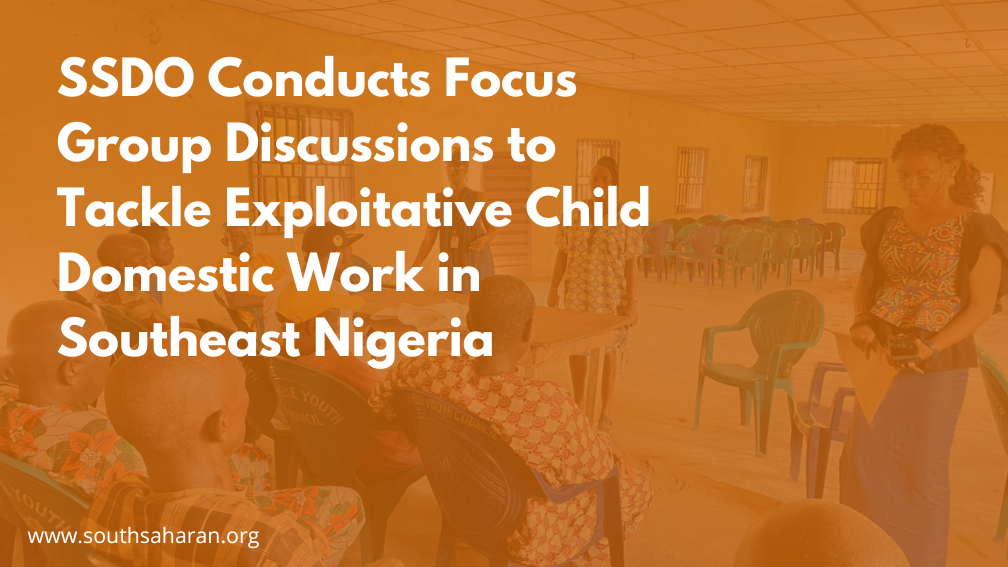
Research by The Freedom Fund shows that 89% of children work in conditions that violate one or more of the Child Rights Act and 35 % enter domestic work before the age of 10. Studies from the International Labour Organization also show that Southeast Nigeria has the highest percentage of child labour in the country at 49.9 %. All these further indicate how serious this challenge is and the need to take action. 

Understanding the severity of this issue, South Saharan Social Development Organization, SSDO, in collaboration with the Enugu State Ministry of Children, Gender Affairs, and Social Development organized a high-level meeting to tackle exploitative child domestic work in southeast Nigeria. 

The meeting was an avenue to discuss actionable solutions and develop a structured framework for interstate collaboration on exploitative child domestic work and broader child protection measures.

The meeting saw key stakeholders including Commissioners of Gender, Police, Justice, and State House Committee Chairmen on Gender from states around the southeast deliberate and proffer solutions to curbing exploitative Child Domestic Work in the region. 

There was also a breakout session that enabled participants to brainstorm solutions that will be developed into a communique and form a road map for improved care for children. 

Aside from the research listed above that formed the basis for the conversation, SSDO also unveiled its research work, “Child Domestic Work in Southeast Nigeria: Legal Frameworks and Policy Recommendations” which highlighted flaws in legislations and marquee areas for capacity strengthening especially in the judicial sector regarding CDWs in southeast Nigeria. 

A Mother’s Resilience: Juliet’s Journey to Reunite with Her Children

Gender-based violence (GBV) remains a pervasive issue in Nigeria, affecting countless women and girls across the country. Despite ongoing efforts to combat this scourge, many continue to suffer in silence, enduring physical, emotional, and psychological abuse. The effects of GBV on victims are profound, often leading to long-term trauma, health complications, and a pervasive sense of fear and helplessness. In addition to the immediate harm inflicted, victims frequently face societal stigmatization, further isolating them and complicating their paths to recovery and justice.

In the face of such adversity, the story of Juliet Ngene stands out as a poignant example of resilience and the transformative power of dedicated support systems. Juliet, a mother of five, endured relentless abuse and unfounded accusations from her husband. Her journey, marked by separation from her children and prolonged suffering, highlights the critical role that organizations like the South Saharan Social Development Organization (SSDO) and the National Agency for the Prohibition of Trafficking in Persons (NAPTIP) play in supporting victims of GBV. 

Through their efforts, Juliet was ultimately reunited with her children, showcasing a powerful narrative of hope and recovery amidst the pervasive issue of gender-based violence in Nigeria.

Juliet Ngene is a devoted mother of five and is a tailor. Her husband who is supposed to be the family’s breadwinner is a bricklayer, whose job is seasonal. To make ends meet and support her family, she travels to Onitsha to buy materials which she resells in Enugu. From her proceeds, she caters to feeding and also pays the house rent. Sometimes, she also loans her husband money to help him sort out other bills. 

Things took a harrowing turn when Juliet’s husband’s attitude changed towards her. He became abusive and leveled unfounded accusations against her. 

Due to the nature of her job, she had to make several trips to purchase materials. And as a result on some occasions won’t be able to make it back home. On those occasions, she’d stay with her sister in Onitsha.

“He kept accusing me of sleeping with other people. And he knows I have to make those trips to support the family. I will explain myself to him and that in itself will be a precursor for slaps and heavy beatings,” 

“I have told him that anytime I can’t make it home I’d stay at my sister’s, then come to Enugu the next day. That didn’t seem to help. If I come home late due to the distance, he would insult me that I have gone out with my lovers. I couldn’t do anything right in his eyes,” 

 “No matter what I said, he never believed me. Going home after work became a nightmare,” she shared. His accusations were a pretext for driving Juliet out of their home in Enugu.

The husband reported the case to the kinsmen who summoned the wife and her sister to the meeting. She gave her side of the story which the elders fact-checked with the sister. Despite her honest explanations and the corroboration from her sister, who confirmed she stayed with her during late returns from business trips, her husband remained unyielding. 

Desperate to sever ties, Juliet’s husband took drastic measures. He seized control of the properties, most of which Juliet had purchased, and took their children away. He dispersed the children among his relatives, sending three to Abuja and the two girls, Blessing, 16, and Divine, 11, to his sister in Ngwo, Enugu. For months, Juliet was cut off from her children, unable to contact them or ensure their well-being.

Lost and confused, she decided to visit her husband’s village to complain about his actions. And to also make inquiries and find out where are kids are But this yielded no results.  

Determined to reunite with her children, Juliet traveled to Ngwo upon learning that two of her children were there. What she found was heartbreaking: her daughters were malnourished and poorly cared for. When she attempted to take them with her, her husband threatened her, stating, “If I ever see you close to this place, I will deal with you.”

To worsen matters, she realized that her husband’s sister who had custody of the girls sent one to go and live with someone else in Anambra. SSDO’s Gender Officer discovered this while interviewing the older girl Blessing, “I would have run away from my aunt’s house, but I couldn’t because I didn’t know where my sister was taken to. I was scared and worried for her.” 

Despite the threats, Juliet persisted. Her search for assistance led her to SSDO. The Gender Protection Lead at SSDO connected her with NAPTIP, and together they began the arduous process of reuniting Juliet with her children. By May 23, their relentless efforts bore fruit, and custody of her children was restored to Juliet. 

Juliet’s prolonged struggle was exacerbated by her health issues, which left her bedridden and unable to search for her children sooner. “I was very ill and couldn’t move for days. It was only after my recovery that I could start looking for my children,” she explained.

After two grueling years of separation, malnourishment, and emotional pain, Juliet was finally reunited with her daughters, thanks to the unwavering support of SSDO and NAPTIP. Overwhelmed with gratitude, Juliet expressed, “I cannot appreciate SSDO enough for their efforts. Only God can repay you back. I am very happy and grateful.”

Juliet Ngene’s story underscores the critical role of organizations like SSDO in combating gender-based violence and advocating for the rights and well-being of vulnerable individuals. Her journey from despair to reunion is a powerful reminder of the resilience of the human spirit and the profound impact of compassion and advocacy in transforming lives. 

SSDO PARTICIPATES AND FACILITATES AT GENDER STAKEHOLDER AND SENSITIZATION PROGRAM

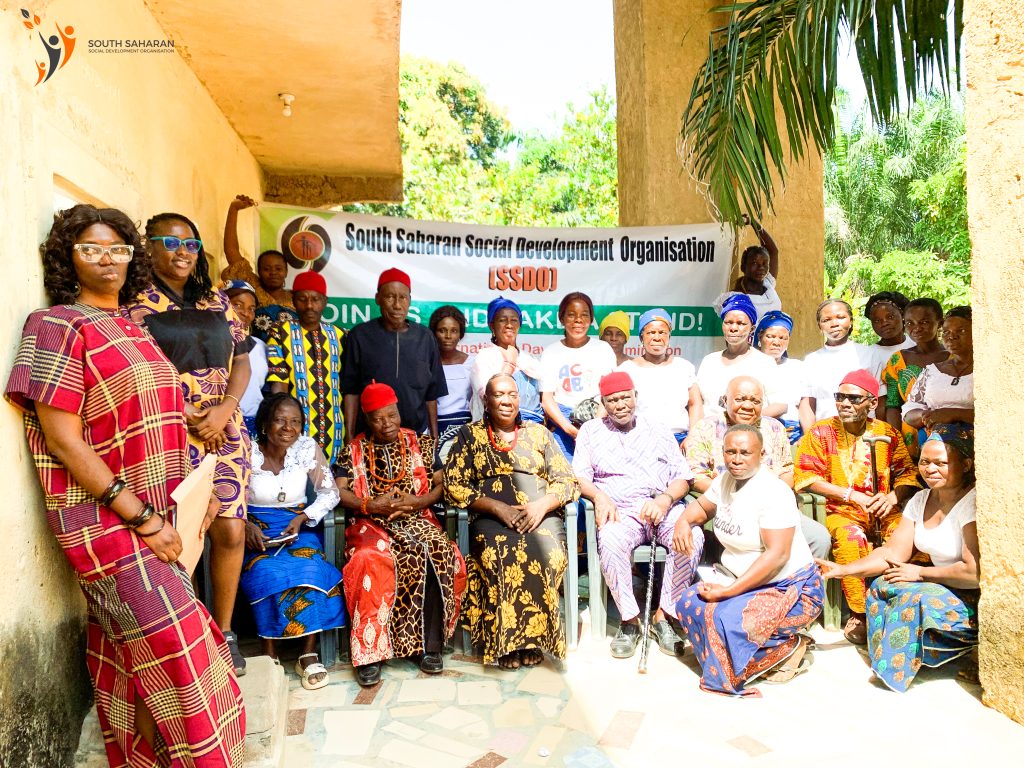
South Saharan Social Development Organization participated in a stakeholder meeting and sensitization visit organized by The Ministry of Gender Affairs and Social Development Enugu for Enugu West Senatorial District to deliberate on and map out ways to eliminate Gender Base Violence, Child Abuse and Trafficking and Promotion of Child Education in Enugu State.

SSDO’s Executive Director, Dr. Stanley Ilechukwu, at the stakeholder meeting highlighted the need to engage the local government more on policy reform and formulation as they’re the closest governing body to the people. He emphasized the need to domesticate gender policies by tailoring them for better applicability to suit the needs of rural communities. 

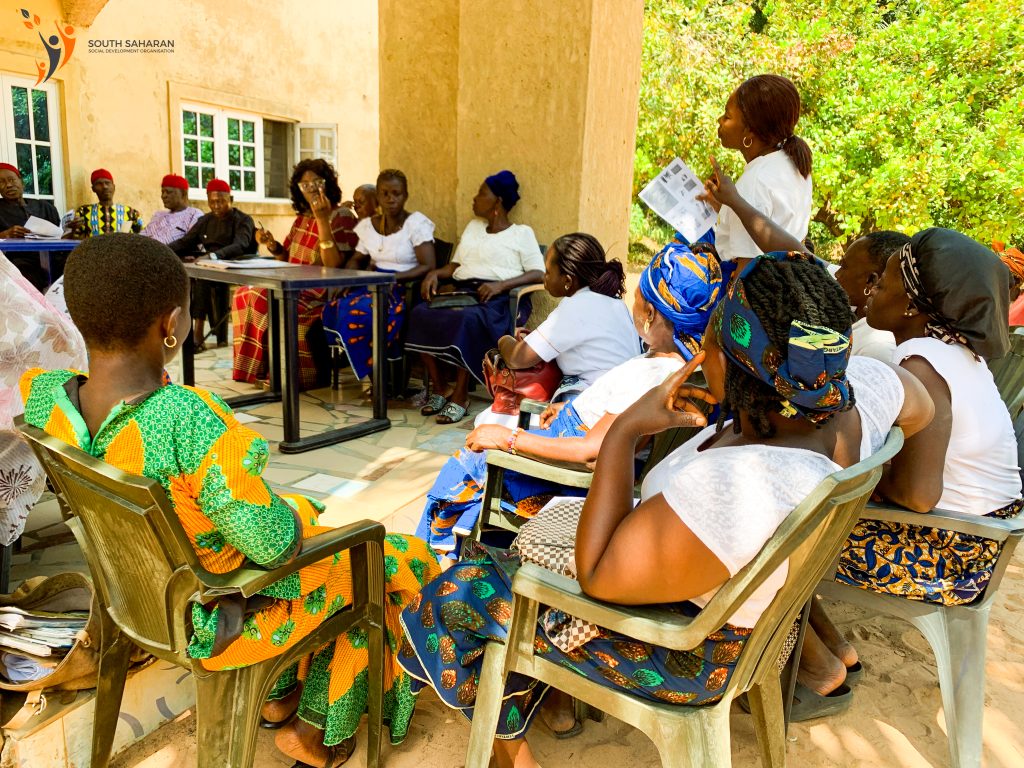
The sensitization visit to Udi LGA was an opportunity to build the capacity of the community on rape, child defilement, Female Genital Mutilation (FGM), and how to report cases of abuse. SSDO’s Gender Programme Lead, Blessing Uchendu, facilitated a session to educate the community on Female Genital Mutilation, its effects, how to report it, and the need for it to be clamped out in its totality. 

Other stakeholders present at the stakeholder meeting include civil society organizations and security agencies.

SSDO Commemorates August Meeting In Three Communities In Enugu And Anambra State. 

The Mother’s Congress, popularly known as August Meeting in Igbo land, is a time when Igbo women from the cities and diaspora return to lend helping hands to their communities. They embark on projects to improve healthcare, peacebuilding, and educate the community.

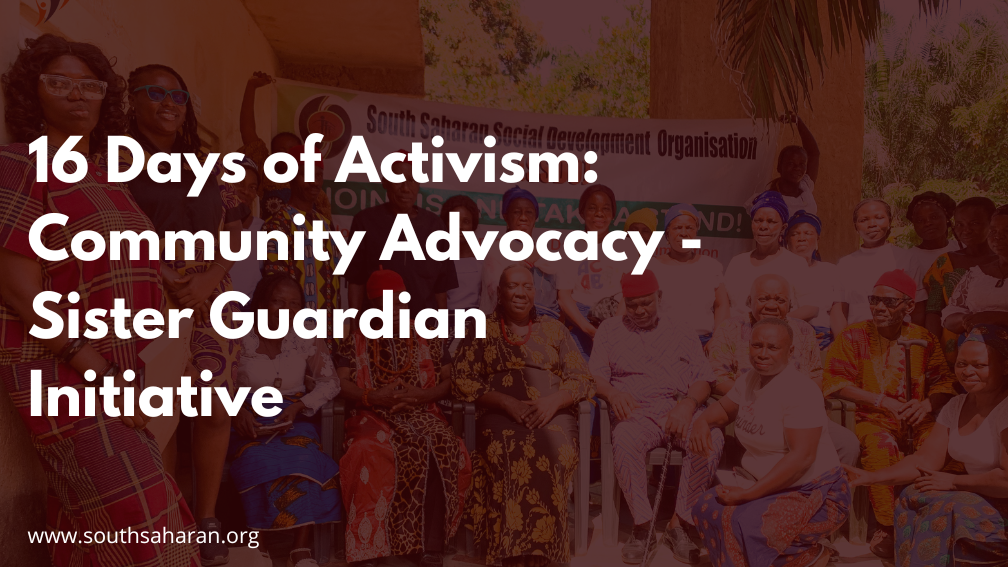
To show solidarity in projecting and supporting the roles women play in family and community development, South Saharan Social Development Organization, through her Sister Guardian Initiative project, visited three communities to commemorate this year’s August meeting with them. They include; Ibutenze in Udi LGA, Awha Ndiagu in Ezeagu LGA in Enugu state and Omor in Ayamelu LGA in Anambra state.

SSDO Gender and Protection Programme Lead, Blessing Uchendu, and Jacob’s Well Project Officer, Stella Ani, built the capacity of the women on causes and effects of domestic violence against women and girls, how to report it, where to report it and how to follow it up. The team used the medium to create and intensify awareness of women’s rights and the law.

Other pressing issues discussed during the capacity-building event include economic empowerment, political inclusion, violence against women, female genital mutilation, and advocacy. The team also sensitized the women on how to leverage Jacob’s Well platform to grow their businesses. At the end of the training, the women were enlightened on handling issues around gender-based violence.