SSDO

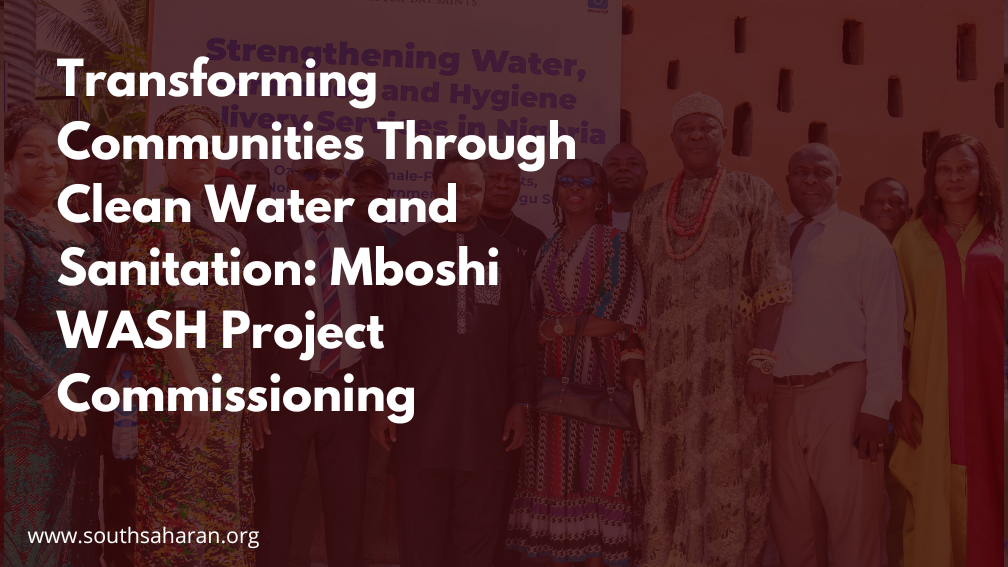
Transforming Communities Through Clean Water and Sanitation: Mboshi WASH Project Commissioning

On September 26, 2024, South Saharan Social Development Organization (SSDO), in partnership with WaterAid and the Church of Jesus Christ of Latter-Day Saints, successfully commissioned and handed over key water and sanitation facilities to the communities of Mboshi-Aji and Eke-Ozzi in Igbo-eze North LGA, Enugu State. This significant milestone marks a pivotal moment in the journey toward improving public health, access to clean water, and better sanitation standards in the region.

A Joint Effort to Improve WASH Standards

Access to clean water and adequate sanitation is not just a basic human right but a cornerstone of community health and development. For many rural communities in Enugu State, access to these essential services has remained a challenge for decades, contributing to waterborne diseases, poor hygiene, and a disproportionate burden on women and children. 

The LDSC III Project, implemented by SSDO in collaboration with WaterAid and the Church of Jesus Christ of Latter-Day Saints, was designed to address these issues head-on by providing sustainable WASH (Water, Sanitation, and Hygiene) solutions. The newly commissioned facilities are part of a broader effort to promote better health, enhance dignity, and empower women and children, who are often the most affected by inadequate water and sanitation.

Key Facilities Commissioned

At the heart of the project are the following life-changing facilities, which were officially handed over to the Mboshi-Aji and Eke-Ozzi communities:

– A 20,000-liter motorized borehole in Mboshi-Aji: This facility will provide clean and safe drinking water to hundreds of families, reducing the time and effort required to access water and minimizing the risk of waterborne diseases.

– Two female-friendly toilet blocks at Eke Ozzi Market: Designed to address the specific sanitation needs of women and girls, these toilets offer a safe, clean, and dignified space, reducing the public health risks associated with open defecation and improving safety for women in public spaces.

– A solar-powered motorized borehole at Eke Ozzi Market: Harnessing the power of renewable energy, this borehole ensures a consistent and sustainable water supply, even during power outages. The use of solar energy reflects the project’s commitment to environmental sustainability and the efficient use of resources.

A Day of Celebration and Commitment

The commissioning event, held in Igboeze North LGA, was attended by key government officials, community leaders, civil society representatives, and local residents. Distinguished guests included:

– Dr. Felix Nnamani, Honorable Commissioner, Ministry of Water Resources

– Mrs. Chika Mbah, Senior Special Assistant to the Governor on WASH

– Hon. Prince Oguama Solomon, President, Church of Jesus Christ of Latter-Day Saints

– Mr. Solomon Akpanufot, representing WaterAid’s Country Director

– Dr. Stanley Ilechukwu, Executive Director, SSDO

– Traditional leaders and community members, including women, children, and elders.

The day’s events began with a solemn opening prayer, followed by lively performances from local schoolchildren and heartfelt goodwill messages from attending dignitaries. The enthusiasm of the community was palpable as they celebrated the provision of safe water and proper sanitation, resources that will undoubtedly improve their daily lives.

During the site visits, the technical intricacies of the newly installed facilities were explained by project leaders, giving the community a deeper understanding of how to manage and maintain these vital resources. Each handover was marked by a ceremonial transfer of the project keys, symbolizing the community’s ownership of these facilities and their responsibility for sustaining them.

A Broader Impact on Community Health and Gender Equality

While the commissioning of these facilities is a significant milestone, the long-term impact of the LDSC III Project goes beyond just access to infrastructure. The provision of clean water and sanitation is a key factor in improving community health, reducing the incidence of diseases such as cholera, dysentery, and typhoid, which are often linked to poor water quality and sanitation practices.

Moreover, the introduction of female-friendly toilets is particularly impactful for women and girls in the community. These facilities not only promote hygiene and public health but also enhance safety and dignity, particularly for women in public spaces like markets. By addressing their unique needs, the project takes a vital step toward gender equity in WASH service delivery.

A Commitment to Sustainability

A core aspect of the LDSC III Project is its focus on sustainability. The solar-powered borehole at Eke Ozzi Market exemplifies this, using renewable energy to guarantee a reliable water supply without relying on traditional power sources. Additionally, the community’s involvement in the commissioning process ensures that they take full responsibility for the maintenance and upkeep of these facilities.

Dr. Stanley Ilechukwu, Executive Director of SSDO, emphasized the importance of community ownership:  

“These projects are not just about infrastructure. They are about empowering communities to take charge of their health, their water, and their future. By working together, we can ensure that these facilities remain functional and continue to benefit generations to come.”

Looking Ahead

As the LDSC III Project concludes its commissioning phase, the future looks brighter for the Mboshi-Aji and Eke-Ozzi communities. The successful handover of these WASH facilities is a powerful testament to the impact that strategic partnerships between civil society, government, and local communities can achieve.

SSDO remains committed to fostering development and improving living conditions in underserved communities through sustainable projects. With the continued support of partners like WaterAid and the Church of Jesus Christ of Latter-Day Saints, SSDO will keep championing initiatives that make a lasting difference in the lives of vulnerable populations.

Conclusion

The commissioning of the LDSC III water and sanitation facilities is more than just an infrastructural achievement – it is a step toward building healthier, more resilient, and empowered communities. By ensuring access to clean water and proper sanitation, SSDO and its partners are helping create a foundation for sustainable development, one community at a time.
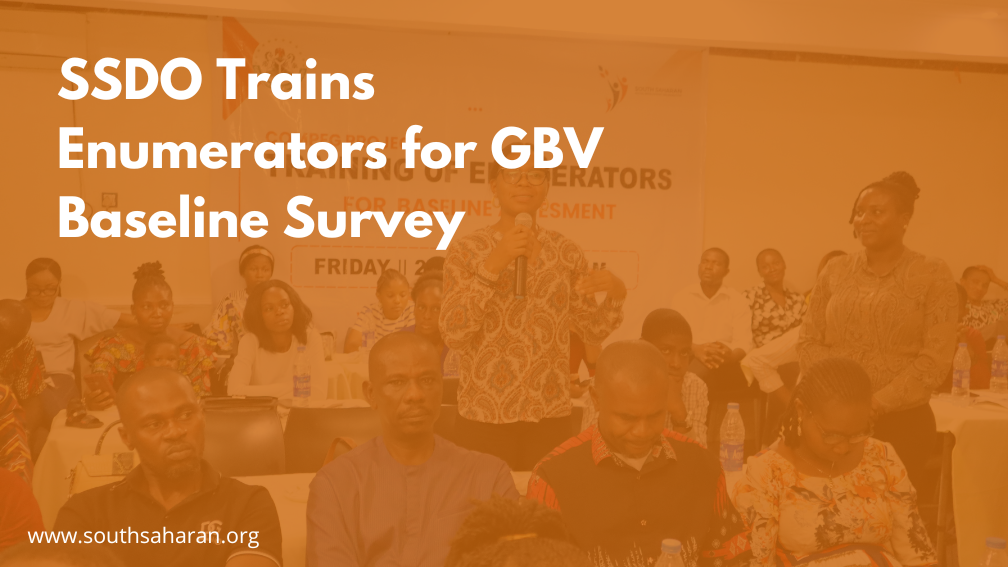
Empowering Data-Driven Change: SSDO Trains Enumerators for GBV Baseline Survey

In a significant stride towards addressing gender-based violence (GBV) in Enugu State, the South Saharan Social Development Organization (SSDO), in collaboration with the Ford Foundation, recently concluded a comprehensive training session for enumerators. This training is part of the Community Partnership for the Elimination of Gender-Based Violence (ComPEG) project, aimed at eliminating harmful practices and norms that perpetuate GBV in rural communities through data-driven, community-based interventions. 

The training, which took place on the 27th of September 2024 at the Bridge Waters Railway in Enugu, brought together enumerators, supervisors, and key stakeholders from across the state to prepare for the upcoming baseline survey. The survey will be conducted across all 17 Local Government Areas (LGAs) of Enugu State, providing essential data that will help shape targeted interventions to reduce the prevalence of GBV and other pressing social issues.

Why the Training Matters

Gender-based violence remains a critical public health issue, with long-lasting impacts on individuals, families, and communities. The ComPEG project seeks to address these issues by engaging local institutions, including traditional leaders, government representatives, and community members, in driving accountability and reform. A crucial aspect of this effort is the collection of accurate, community-specific data to guide and inform future interventions.

The training of enumerators is an essential step in this process, equipping participants with the knowledge and skills necessary to conduct the baseline survey efficiently and ethically. The training agenda covered a range of critical topics, including:

– An overview of GBV and its incidence in Enugu State.

– Ethical considerations in data collection and household mapping.

– Introduction to the mWater tool for data collection and analysis.

– Survey methodologies related to GBV, child labor, antimicrobial resistance, toilet financing, and poverty indicators.

– Role-playing exercises to ensure preparedness in real-world field situations.

By the end of the training, the enumerators were fully prepared to conduct the survey, ensuring that all data collected will be accurate, comprehensive, and aligned with the project’s objectives.

Collaboration for Lasting Impact

The SSDO team, led by Gender and Protection Officer, Blessing Uchendu, worked alongside representatives from the Ministry of Children, Gender Affairs, and Social Development (MCGASD) to ensure that all enumerators were equipped not only with technical skills but also with a deep understanding of the sensitive nature of the data they will be collecting. During the session, Cheta Okonkwo Eze from MCGASD provided critical insights into the state’s GBV and child labor landscape, further emphasizing the importance of ethical data collection practices.

Additionally, participants were introduced to the use of mWater, a digital tool that will be utilized for data collection, making the process more efficient and secure. The data gathered will form the foundation for future interventions, allowing SSDO and its partners to focus resources where they are most needed.

Looking Ahead

Following the training, enumerators will be deployed across the 17 LGAs to conduct the baseline survey over a six-day period. The data collected will provide valuable insights into the prevalence, patterns, and drivers of GBV in Enugu State, as well as other intersecting issues such as child labor and antimicrobial resistance.

This survey represents the first step in a broader effort to create safer, more equitable communities in Enugu State. By identifying high-risk areas and establishing a baseline for future interventions, the SSDO aims to drive real, measurable change in the fight against GBV.

Our Commitment

At SSDO, we are committed to reducing GBV and promoting gender equality through innovative, data-driven approaches. The ComPEG project is a testament to this commitment, and we are grateful for the support of our partners, including the Ford Foundation, for making this critical work possible.

As the baseline survey gets underway, we look forward to sharing updates on our progress and the impact of our work. Together, we can create a future where everyone is safe from gender-based violence.

Stay Connected!

For updates on the ComPEG project and other initiatives, follow us on our social media platforms:

– LinkedIn 

– Facebook

– Twitter/X

– Instagram

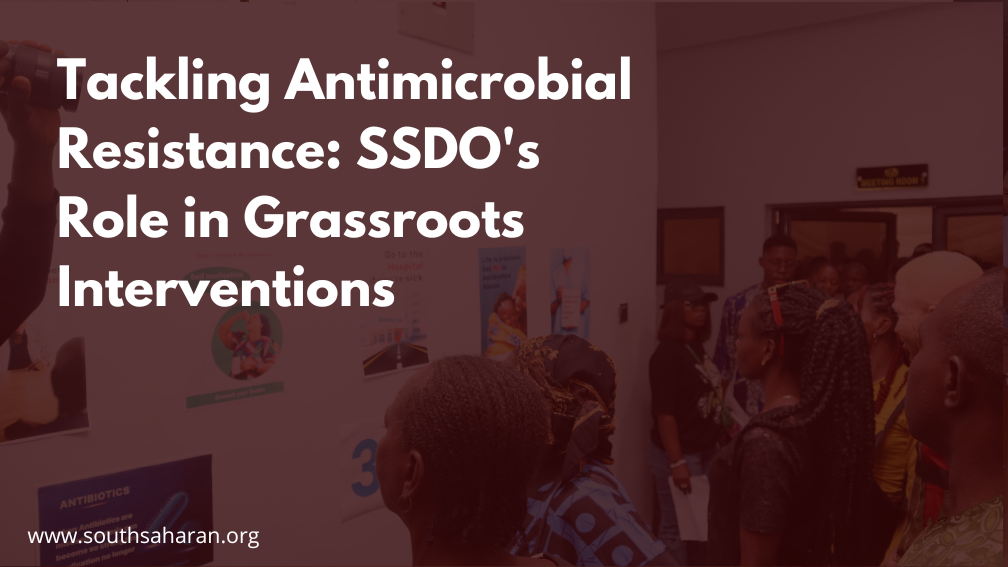
Tackling Antimicrobial Resistance: SSDO’s Role in Grassroots Interventions

Antimicrobial Resistance (AMR) has emerged as a global health threat, posing serious risks to healthcare systems, economies, and communities, particularly in low- and middle-income countries. In response, South Saharan Social Development Organization (SSDO), in collaboration with key stakeholders, recently participated in a public engagement event focusing on “Grassroots Interventions for Antimicrobial Resistance (AMR) and Antibiotic Stewardship”.

The event served as a platform to raise awareness about the growing danger of AMR and explore community-driven solutions to mitigate its impact. AMR occurs when bacteria, viruses, fungi, and parasites evolve to resist the effects of medications, making infections harder to treat and increasing the risk of disease spread, severe illness, and death. With improper antibiotic use being a major driver, this event was an important opportunity to address both public and policy-related challenges.

Key Messages from SSDO’s Executive Director

SSDO’s Executive Director, Dr. Stanley Ilechukwu, delivered a powerful address highlighting the critical role of non-governmental organizations (NGOs) in combating AMR at the grassroots level. 

Dr. Ilechukwu stressed that for communities to effectively tackle AMR, the following actions must be prioritized:

– Strong Government Policies: There is an urgent need for policies that discourage self-medication and misdiagnosis. Without appropriate regulations, over-the-counter antibiotics can be misused, contributing to the rapid spread of resistant bacteria.

– Continuous Awareness & Education: Public health education is a key factor in reducing AMR. Dr. Ilechukwu emphasized the importance of ongoing community engagement to inform the public about responsible antibiotic use and the dangers of self-diagnosis.

– Capacity Building for Drug Vendors: Vendors who sell pharmaceuticals play a major role in the accessibility of drugs. Ensuring that they have the knowledge and capacity to encourage proper testing and diagnosis before the sale of antibiotics can help curb misuse.

– Leveraging Health Insurance: Many individuals resort to self-medication due to the high cost of healthcare. By encouraging the use of health insurance, the financial barriers to professional medical care can be removed, allowing more people to seek appropriate treatment rather than self-diagnosing or turning to unregulated medications.

A Dynamic Public Engagement

The event featured various activities designed to inform and engage the public on the importance of antimicrobial stewardship:

– Sessions on Antimicrobial Resistance: Experts presented the latest findings on AMR and discussed how it affects local communities. Participants gained valuable insights into the global and local context of the issue.

– Q&A Segment: Attendees had the opportunity to ask questions about AMR, gaining clarity on how they can contribute to minimizing the misuse of antibiotics in their daily lives.

– Documentary Viewing: A thought-provoking documentary was screened, showcasing real-life examples of how self-diagnosing and self-medicating with antibiotics can lead to dire consequences. The film aimed to shift behaviors towards seeking professional healthcare advice before taking antibiotics.

– Poster Exhibition: Participants interacted with posters that displayed critical messaging on AMR, reinforcing the importance of responsible antibiotic use. The exhibit allowed individuals to visually engage with the topic and take away important messages about AMR prevention.

Grassroots Solutions to a Global Challenge

As part of its broader mission to improve public health and governance, SSDO is committed to driving awareness and action on AMR. Grassroots engagement is essential in this fight, as it empowers communities with the knowledge and tools needed to tackle AMR from the ground up.

By bringing together local stakeholders, healthcare professionals, and the general public, this event was a step toward creating more resilient communities capable of combating antimicrobial resistance. 

Together, with the support of policy changes, education, and strengthened healthcare systems, we can work toward grassroots solutions to fight AMR. Now more than ever, it is crucial that we take responsibility for our health and advocate for responsible antibiotic use.

Refining the Path to Women’s Economic Empowerment 

The ongoing effort to improve the economic empowerment of women in Enugu State reached another significant milestone yesterday with the successful third meeting of the Technical Working Group (TWG) for the domestication of the National Women Economic Empowerment (WEE) Policy. This meeting, hosted by the South Saharan Social Development Organization (SSDO) in partnership with the development Research and Projects Centre (dRPC) and the Enugu State Government, served as a critical step in the policy development process. 

Reviewing the First Draft: A Collaborative Effort

The focus of the third meeting was the review of the first draft of the WEE policy document. Members of the TWG, drawn from key sectors such as the Ministry of Child, Gender, and Social Development, the Enugu State Bureau of Statistics, and the Ministry of Trade and Investment, came together to offer valuable input, refining the draft to ensure it addresses the most pressing needs of women in the state.

The review process was not just about making edits; it was an avenue for stakeholders to share their expertise and insights, ensuring that the policy remains practical and actionable. The document was carefully fine-tuned to align with the socio-economic realities of women in Enugu, with the ultimate goal of creating a policy that is both inclusive and transformative.

Key Areas of Focus

During the meeting, the TWG discussed several key areas that the policy must address in order to effectively empower women in Enugu State:

1. Education and Skills Development: Women’s access to education and vocational training remains a cornerstone of economic empowerment. The policy aims to enhance opportunities for women to gain the skills needed to participate fully in the economy.

2. Healthcare Access: Women’s health, particularly maternal and reproductive health, plays a significant role in their ability to contribute economically. The policy draft includes provisions to improve access to quality healthcare for women across the state.

3. Financial Inclusion: The group emphasized the need to break down barriers that prevent women from accessing financial services. This includes better access to credit, loans, and financial literacy programs for women entrepreneurs.

4. Legal and Cultural Reforms: To ensure women’s full participation in the economy, the policy must address legal and cultural barriers that limit their rights to own land and property, access resources, and participate in decision-making.

Moving Forward: A Policy with Purpose

The third meeting of the TWG marks significant progress in the policy development process. With the first draft now reviewed and refined, the group is closer to finalizing a document that will serve as a powerful tool for empowering women across Enugu State.

As the process advances, the TWG remains committed to ensuring that the policy is not only well-crafted but also effectively implemented. The next steps involve further consultations with local communities, civil society organizations, and government officials to ensure that the policy reflects the voices and needs of the people it is designed to serve.

A Collective Commitment to Change

The work being done by the TWG for the domestication of the WEE Policy in Enugu State is more than just policy development—it is a collective commitment to creating a future where every woman has the opportunity to thrive. The collaborative nature of the group ensures that the policy will be holistic, addressing the unique challenges women face in various sectors of the economy.

As we move closer to the final stages of policy development, the South Saharan Social Development Organization, dRPC, and the Enugu State Government are confident that this policy will be a catalyst for positive, sustainable change.

The empowerment of women is not just an economic necessity—it is the key to building a more inclusive and prosperous society. Together, we are shaping the future.

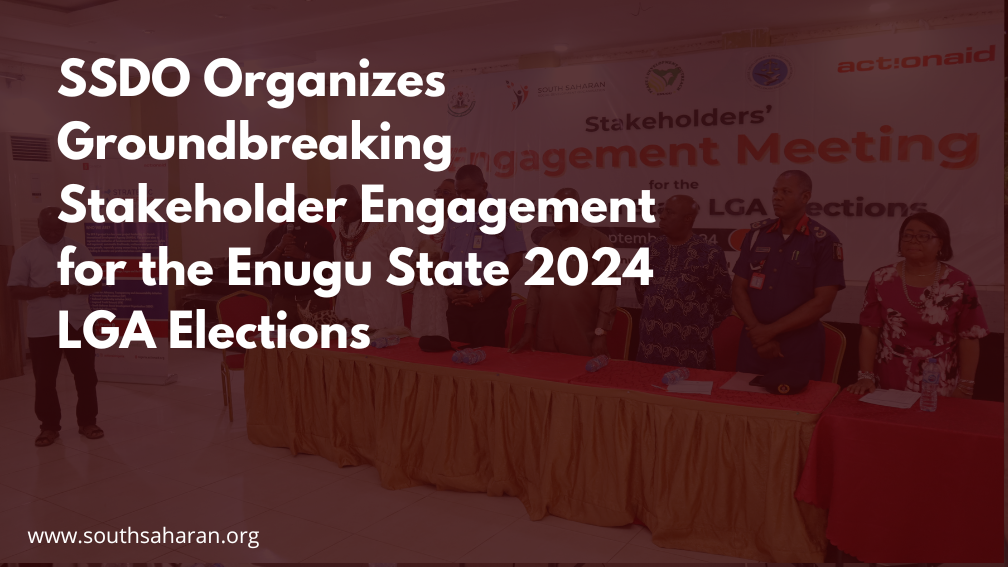
SSDO Organizes Groundbreaking Stakeholder Engagement for the Enugu State 2024 LGA Elections

On the 18th of September 2024, the South Saharan Social Development Organization (SSDO), in collaboration with ActionAid Nigeria, organized a pivotal Stakeholder Engagement on the Enugu State 2024 Local Government Area (LGA) Elections. This crucial event was aimed at fostering dialogue, collaboration, and peace ahead of the elections, bringing together an array of key stakeholders from political parties, security agencies, media, and various government bodies.

The stakeholder engagement created a platform for productive discussions on ensuring peaceful and credible elections while emphasizing the importance of collective responsibility in safeguarding democratic processes.

A Historic Signing of the Peace Accord

One of the highlights of the event was the signing of a **peace accord** by representatives of various political parties, a historic first for Enugu State’s local government elections. This symbolic act underscores the commitment of all parties involved to uphold peace, eschew violence, and respect the rule of law throughout the election process. 

The peace accord is a significant step toward reducing electoral violence and ensuring that elections are conducted fairly, without intimidation or threats to the voting public. 

Security Assurance from the Enugu State Police

During the engagement, CP Kanayo Uzuegbu, the Enugu State Commissioner of Police, took center stage, reassuring citizens of the Nigerian Police Force’s preparedness to protect voters and ensure peace before, during, and after the elections. He emphasized that the police force is committed to providing a secure environment where citizens can freely exercise their democratic rights without fear of disruption or harm. 

CP Uzuegbu’s address highlighted the readiness of security outfits to deploy strategies to maintain law and order, prevent violence, and protect all election participants, including candidates, election workers, and voters.

ENSIEC’s Commitment to Transparency and Fairness

Professor Christian Ngwu, Chairman of the Enugu State Independent Electoral Commission (ENSIEC), delivered a keynote address focusing on the commission’s preparedness for the upcoming elections. Prof. Ngwu assured participants that ENSIEC is fully committed to conducting elections that are not only credible but also transparent and inclusive. His speech reiterated the commission’s dedication to improving the electoral process and ensuring that every vote counts.

With an emphasis on fairness, he outlined the various measures ENSIEC has put in place to ensure free and fair elections, including voter education initiatives, training for election officials, and ensuring the integrity of the electoral process from start to finish.

Collaborative Support from Traditional and Political Stakeholders

The event saw robust participation from critical stakeholders such as the Inter-Party Advisory Council (IPAC) and traditional rulers across the local government areas of Enugu State. These key figures are instrumental in promoting peaceful elections by leveraging their influence within local communities to encourage unity and adherence to the law.

Their presence at the event reinforced the message that the forthcoming elections are not just a responsibility of political candidates but a collective effort requiring the support and collaboration of all facets of society. Their input was vital in underscoring the importance of peace, stability, and mutual respect as non-negotiable elements of the electoral process.

A Joint Effort Towards Credible Elections

The 2024 Enugu State LGA elections present an opportunity to set a positive precedent for future elections at the grassroots level. The Stakeholder Engagement organized by SSDO and ActionAid Nigeria has laid the groundwork for a peaceful election season by encouraging dialogue, understanding, and collaboration between political players, security forces, traditional institutions, and the electorate.

At the heart of this initiative is a commitment to achieving credible, peaceful elections where voters’ voices are heard, and democracy is strengthened. SSDO is proud to have facilitated such an impactful event and will continue to play a leading role in promoting good governance and electoral integrity in Enugu State.

Conclusion

As the 2024 Enugu LGA elections draw closer, SSDO and its partners remain dedicated to ensuring a free, fair, and peaceful electoral process. By bringing together diverse stakeholders and fostering a shared vision for peaceful elections, SSDO is contributing to the long-term stability and development of the region.

Together, we are building a stronger, more democratic Enugu State, where every citizen’s vote counts, and peace prevails.