SSDO

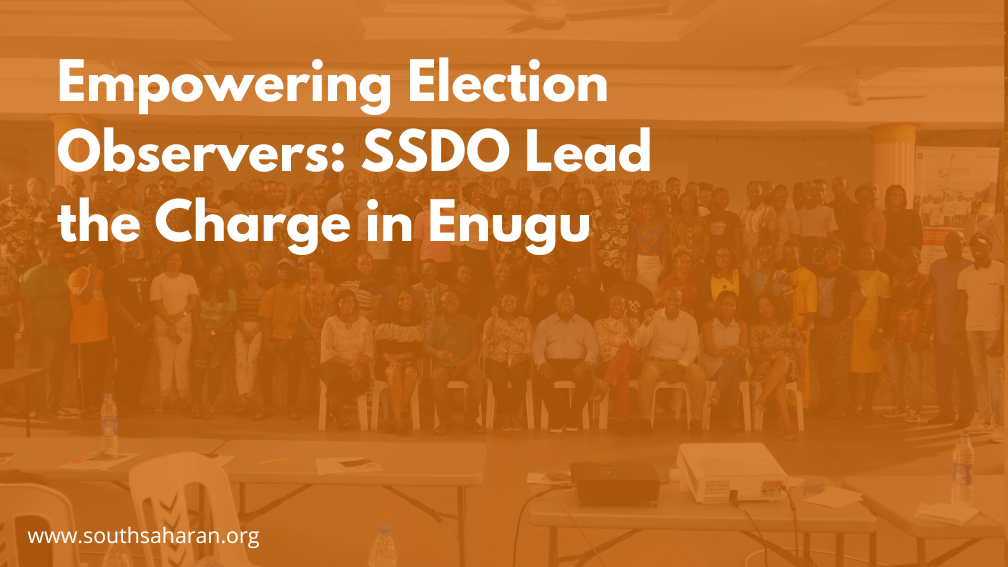
Empowering Election Observers: SSDO Lead the Charge in Enugu

South Saharan Social Development Organization (SSDO), in collaboration with ActionAid Nigeria, successfully conducted a 2-day training for election observers in preparation for the 2024 Enugu State Local Government Area (LGA) Elections. The event, which took place on the 16th and 17th of September 2024 at Jubilee Hall, Holy Ghost Cathedral, Enugu, saw the active participation of citizens eager to play their part in ensuring free, fair, and transparent elections.

Why Election Observers Matter

Election observers are crucial in upholding the integrity of electoral processes. Their role is to monitor activities on election day, ensure adherence to electoral laws, and report any irregularities such as voter suppression, violence, or malpractices. By observing and documenting these issues, they help promote accountability and transparency in democratic governance.

Key Objectives of the Training

The 2-day intensive training equipped participants with the knowledge and skills required for effective election observation. Topics covered included:

– Electoral processes and best practices

– Monitoring and reporting electoral violence and malpractice

– Voter rights and participation

– Accurate reporting procedures for election observations

The sessions were designed to ensure that participants could confidently engage in the electoral process and contribute towards free and fair elections in the state. 

Introducing ActionAid Nigeria’s I-Observers App

One of the key highlights of the training was introducing participants to ActionAid Nigeria’s I-Observers App, a cutting-edge tool designed for seamless data gathering during elections. Participants were trained on how to effectively use the app, which includes built-in checklists and procedures for monitoring elections. This tool allows for real-time data submission, ensuring swift and accurate reporting from observers on the ground. The app is part of an innovative approach to election monitoring, providing a digital solution to efficiently collect, manage, and share data, making it easier to track issues as they unfold.

Interactive Learning and Engagement

The training was not limited to lectures; participants actively engaged in hands-on exercises, group discussions, and case studies. They practiced skills in monitoring electoral violence, identifying malpractices, and ensuring that voters’ rights are upheld throughout the electoral process. Participants were also encouraged to share insights and best practices from their own communities, fostering a collaborative learning environment.

The interactive format ensured that each observer was not only theoretically prepared but also practically equipped to handle real-world election monitoring scenarios. Group work and role-playing activities helped solidify participants’ understanding of how to manage different election day challenges, including managing conflict situations, coordinating with law enforcement, and reporting irregularities.

Commitment to Democratic Governance

As the 2024 Enugu LGA Elections draw near, SSDO and ActionAid Nigeria remain committed to promoting democratic governance through active civic engagement. By preparing these trained observers, both organizations are taking proactive steps to ensure that the elections are conducted with the highest level of transparency and accountability.

Looking Ahead

With the knowledge gained and tools like the I-Observers App in hand, participants are now ready to observe and report on the election proceedings, fostering a culture of transparency and fairness in Enugu State. Their dedication to ensuring the integrity of the electoral process will not only strengthen the outcome of the elections but will also set a precedent for future elections across Nigeria.

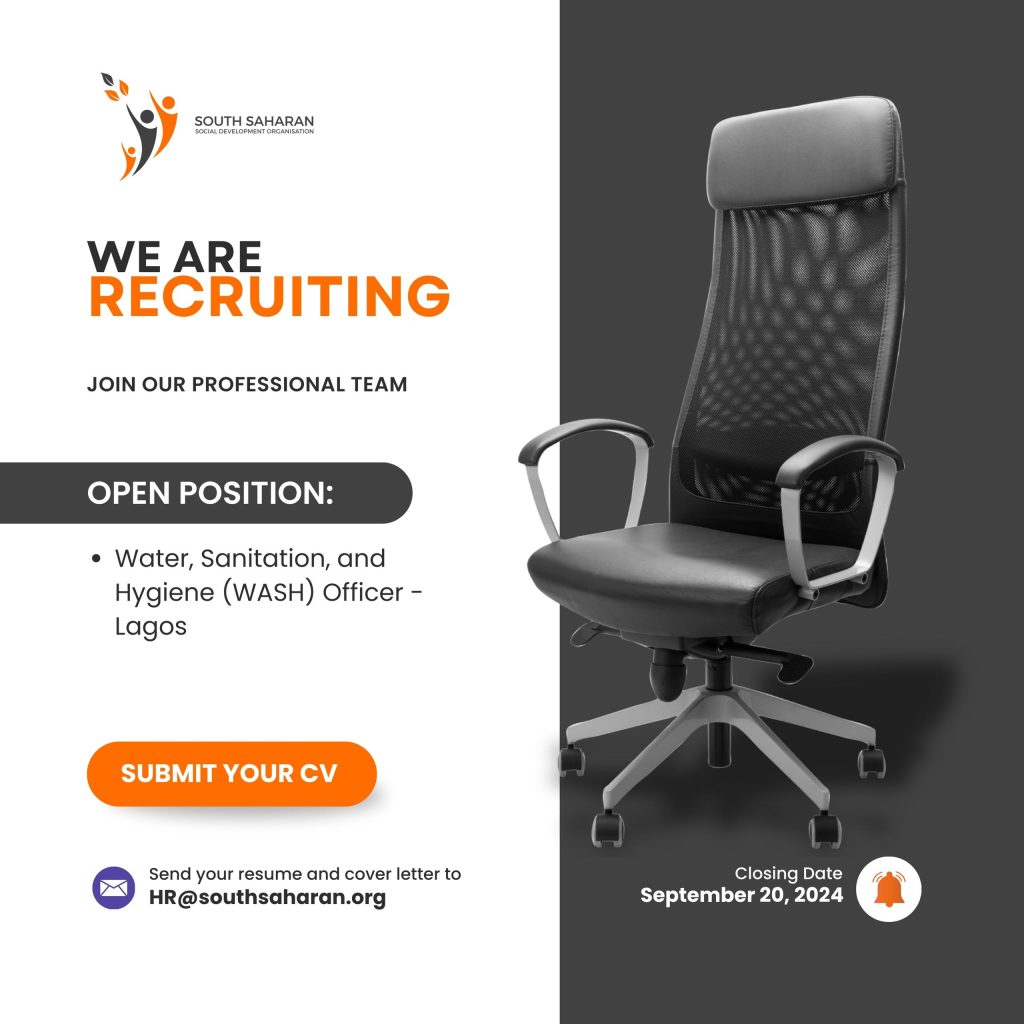
WASH OFFICER – LAGOS at South Saharan Social Development Organization

Job Vacancy: WASH Officer 

Location: Lagos 

Reporting to: Head of Programs, South Saharan Social Development Organization (SSDO) 

Duration: 12 months

About South Saharan Social Development Organization (SSDO)

South Saharan Social Development Organization (SSDO) is a non-profit organization focused on empowering women, youth, and marginalized communities in Sub-Saharan Africa. SSDO addresses cross-cutting governance issues, including health, education, livelihood, gender, climate change, and WASH (Water, Sanitation, and Hygiene). We aim to improve the quality of life for vulnerable groups and foster inclusive development.

Job Summary

The WASH Officer will lead the implementation of the Otumare LUWASH Project in Ilaje-Otumare, a densely populated riverine community in Lagos Mainland. This role involves managing WASH activities, promoting hygiene behavior change, coordinating cholera response efforts, and ensuring the rehabilitation of critical water infrastructure.

Key Responsibilities:

1. Project Implementation:

   – Implement WASH activities in line with project plans and objectives.

   – Oversee the rehabilitation of water points and sanitation facilities.

   – Ensure water quality testing and safe drinking water supply.

   – Supervise contractors and artisans to ensure quality work.

2. Hygiene Promotion:

   – Develop and execute hygiene promotion activities, including the distribution of hygiene kits and outreach programs.

   – Train community volunteers and stakeholders on best hygiene practices.

   – Conduct awareness campaigns and promote cholera prevention.

3. Monitoring and Evaluation:

   – Conduct regular field visits to monitor the progress of WASH interventions.

   – Collect and analyze data on WASH indicators for reporting to stakeholders.

   – Ensure timely reporting on activities, progress, and challenges.

4. Coordination and Collaboration:

   – Collaborate with local authorities, Community Development Associations (CDAs), and other stakeholders.

   – Participate in WASH sector coordination meetings and represent SSDO in relevant forums.

   – Work with private and public partners to ensure project sustainability.

5. Capacity Building:

   – Train healthcare providers, food vendors, and water vendors on WASH management and cholera response.

   – Build local capacity to maintain WASH infrastructure and promote hygiene practices.

6. Documentation and Reporting:

   – Maintain accurate records of WASH activities, project progress, and lessons learned.

   – Prepare regular reports, case studies, and success stories.

Qualifications and Experience: 

– A university degree in Public Health, Environmental Science, Civil Engineering, WASH, or a related field. Advanced degree in a related field is an added advantage. 

– Minimum 5 years of experience in the WASH sector, particularly in project implementation and cholera response. 

– Experience in community mobilization, hygiene promotion, and infrastructure rehabilitation. 

– Strong technical knowledge of WASH standards, guidelines, and best practices. 

– Must be resident in Lagos and familiarity with the local context is a plus. 

– Proficiency in Microsoft Office tools (Word, Excel, PowerPoint).

Key Competencies: 

– Strong project management, organizational, and problem-solving skills. 

– Ability to work independently and in a team environment. 

– Sensitivity to cultural and gender issues. 

– Excellent communication and interpersonal skills. 

– Resident in Lagos.

Method of Application 

Interested and qualified candidates should send their CV and cover letter to hr@southsaharan.org by November 7, 2024, stating “WASH Officer Application” in the subject line. Only shortlisted candidates will be contacted.

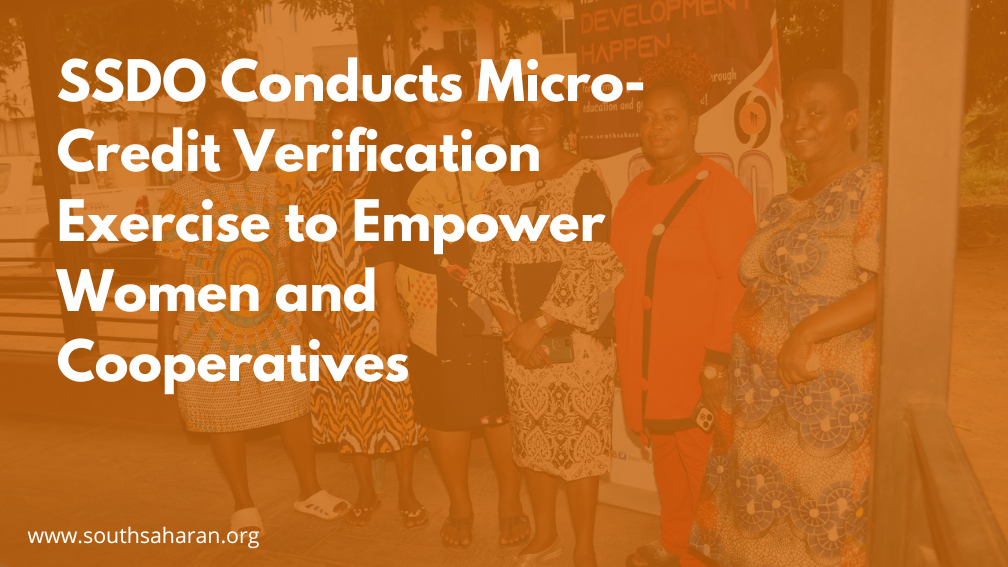
SSDO Conducts Micro-Credit Verification Exercise to Empower Women and Cooperatives

In many communities, women remain financially dependent on their spouses, often limiting their autonomy and ability to escape situations like gender-based violence. This dependence, compounded by poverty, leaves them vulnerable and trapped in cycles of inequality. At South Saharan Social Development Organization (SSDO), we believe that empowering women economically is a powerful way to break these chains, fostering independence, confidence, and long-term sustainability.

One of the initiatives SSDO employs to achieve this is the Jacob’s Well Micro-Credit Scheme. This program provides low-interest loans to women in cooperatives, enabling them to start or expand their businesses. By leveraging social trust within these cooperatives, women can access financial support without the burden of collateral, making it accessible to those who need it most.

The Role of Business Verification 

A key component of ensuring the success and integrity of this program is the verification and evaluation exercise. Before loans are approved, SSDO’s micro-credit officers conduct a thorough verification process, visiting applicants’ businesses to assess their structure, credibility, and potential for growth. This step is essential in determining eligibility for a loan and deciding how much each applicant should receive.

In August and September 2024, SSDO’s Micro Credit Officer, Stella Ani, embarked on a verification exercise, visiting 71 business locations across communities in Enugu State. This process allowed SSDO to better understand the applicants’ businesses, verify their legitimacy, and assess the progress of previous loan recipients.

Building Trust Through Transparency

The verification exercise is more than just an administrative procedure—it builds trust between SSDO and the women who rely on these loans to secure their futures. By taking the time to visit each business, our team can ensure that the loans are being used effectively, promoting accountability and encouraging responsible borrowing. It also helps SSDO gain insights into the challenges these women face in running their businesses, informing future improvements to the micro-credit scheme.

Fostering Women’s Financial Independence

At its core, Jacob’s Well is about more than just providing financial assistance; it’s about fostering independence. By supporting women-owned businesses, SSDO is helping women take control of their financial future, reducing dependency on spouses or other family members, and allowing them to achieve self-sufficiency. For many of these women, a successful business means not only supporting their families but also being able to reinvest in their communities, contributing to the broader goal of poverty alleviation.

Going Forward 

SSDO’s commitment to empowering women through initiatives like Jacob’s Well is stronger than ever. We will continue to provide resources and support for women to succeed in business, ultimately transforming their lives and communities. The recent verification exercise serves as a reminder of the tangible impact of micro-credit programs in helping women build sustainable livelihoods. 

As SSDO moves forward, we remain dedicated to providing innovative and inclusive solutions that address the unique challenges women face, particularly in economically disadvantaged communities. Through financial empowerment, we can help women break the cycle of poverty and dependency, unlocking their full potential to lead, grow, and thrive.

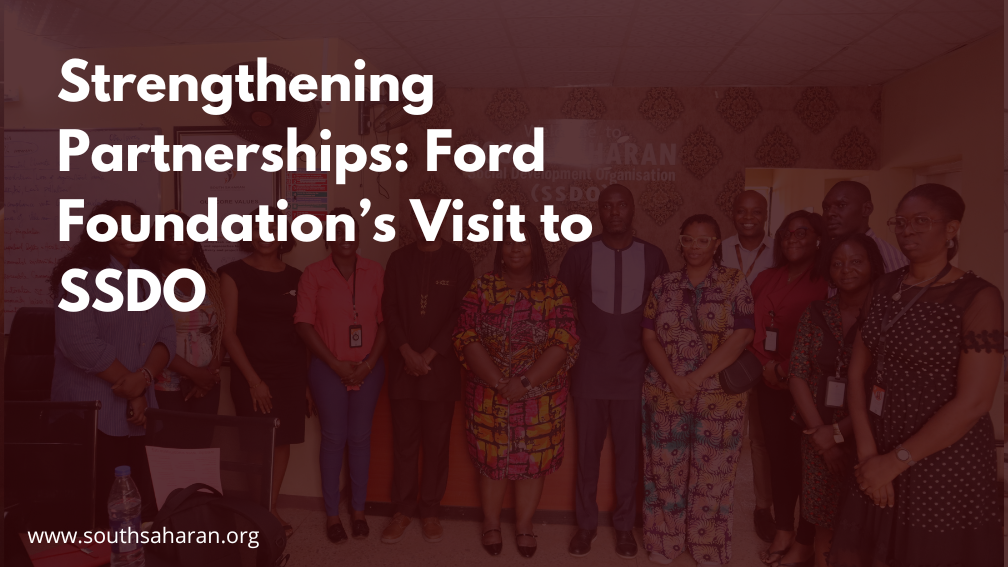
Strengthening Partnerships: Ford Foundation’s Visit to South Saharan Social Development Organization

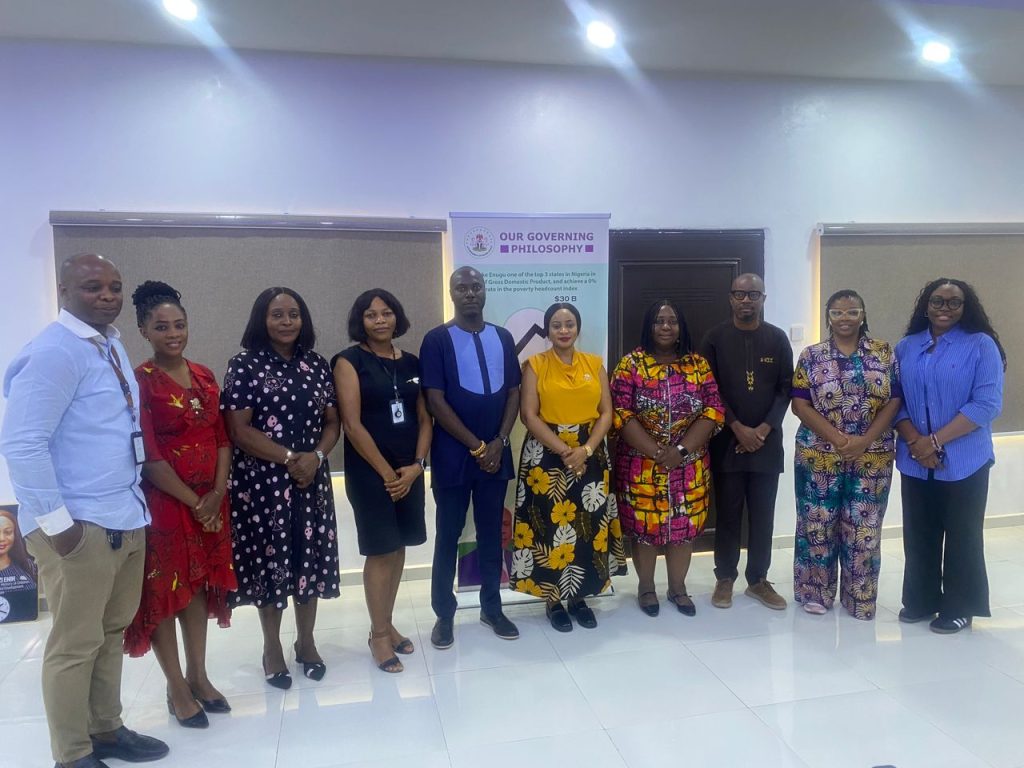
At South Saharan Social Development Organization (SSDO), collaboration is at the heart of our mission to drive sustainable development across Nigeria. On the 2nd of September 2024, we were honored to welcome our esteemed donors from the Ford Foundation to our headquarters in Enugu. This visit marked a significant milestone in our partnership, providing an invaluable opportunity to discuss the impactful work we are doing and the broader context in which we operate.

A Focus on Critical Issues

The discussions during the visit were wide-ranging, covering key areas that are central to our mission: gender equality, youth empowerment, climate change, and good governance. These themes are not just buzzwords but the very pillars upon which our programs are built. Each of these areas presents unique challenges and opportunities within the Nigerian context, and our work is geared towards addressing these in a holistic and sustainable manner.

Gender Equality

Gender equality remains a critical issue in Nigeria, particularly in the southeastern region where SSDO is actively engaged. We highlighted our ongoing projects such as the Sister Guardian Initiative, the Community Partnership for the Elimination of Violence aimed at empowering women, reducing gender-based violence, and promoting economic opportunities for women and girls. Also, our work to domesticate the National Women Economic Empowerment Policy and create more opportunities for women. Our donors were particularly interested in our strategies for overcoming cultural and systemic barriers to gender equality and how we are leveraging community engagement to drive change.

Youth Empowerment

Nigeria’s youth represent both its greatest asset and its most pressing challenge. With over 60% of the population under the age of 25, empowering young people is crucial for the nation’s future. During the visit, we discussed our initiatives designed to provide young people with the skills, knowledge, and opportunities they need to succeed. These include our efforts in developing the Youth Policy. From digital literacy programs to leadership development workshops, SSDO is committed to nurturing the next generation of Nigerian leaders.

Climate Change

Climate change is a global issue, but its impacts are felt most acutely at the local level. In our conversation with the Ford Foundation, we shared insights from our work on climate resilience in rural communities, supporting the state government to develop the Climate Change Policy. As well as capacity building endeavors around agroecology, and climate smart agriculture. This includes initiatives aimed at promoting sustainable agricultural practices, advocating for environmental justice, and supporting communities in adapting to the changing climate. Our donors were keen to understand how we are integrating climate action into our broader development agenda.

Good Governance

Finally, we explored the role of good governance in achieving sustainable development. At SSDO, we believe that transparency, accountability, and inclusive governance are essential for creating a just and equitable society. We discussed our efforts to strengthen local governance structures, promote civic engagement, support the upcoming local governmment elections and advocate for policy reforms that benefit marginalized communities. The Ford Foundation’s support in this area has been instrumental in amplifying our impact.

Deepening Understanding and Strengthening Bonds

One of the key outcomes of the visit was the opportunity for our donors to gain a deeper understanding of the context in which we work. Nigeria is a complex and diverse country, with significant variations in culture, economy, and politics across its regions. By visiting us in Enugu, the Ford Foundation team was able to see firsthand the challenges and opportunities that define our work. This deeper understanding is crucial for aligning our strategies and ensuring that our efforts are as effective as possible.

Visit to the Commissioner for Child, Gender, and Social Development

After an insightful meeting at South Saharan Social Development Organization (SSDO), our team, alongside representatives from the Ford Foundation, paid a courtesy visit to the Commissioner for Children, Gender & Social Development.

This visit was an important step in strengthening our collaborative efforts to promote gender equality, support children, and advance social development initiatives. We look forward to deepening this partnership to drive impactful change in our communities.

Looking Ahead

As we look to the future, the visit from the Ford Foundation has only strengthened our resolve to continue our work with renewed vigor. The insights gained and the bonds strengthened during this visit will undoubtedly help us to refine our strategies and amplify our impact. We are grateful for the Ford Foundation’s unwavering support and partnership as we strive to create a more just, equitable, and sustainable society.

In the coming months, we will continue to build on the momentum generated by this visit, working closely with our partners and stakeholders to drive progress in our key areas of focus. Together, we can achieve lasting change and create a brighter future for all.

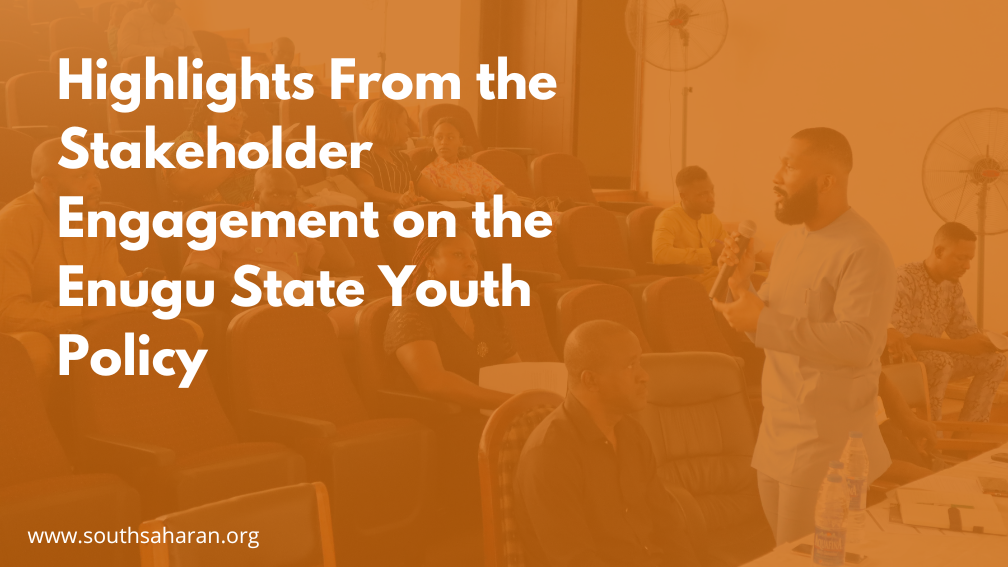
Highlights from the Stakeholder Engagement on the Enugu State Youth Policy

The youth in Enugu State, who constitute about 60% of the population, face significant challenges ranging from unemployment to limited access to quality education and healthcare. These issues, if left unaddressed, threaten not only the personal development of the youth but also the socio-economic growth of the state as a whole. To harness the full potential of Enugu’s youth and ensure they are equipped to contribute meaningfully to the state’s development, there is an urgent need for a comprehensive and inclusive youth policy. This policy must be tailored to the specific needs and aspirations of the youth, taking into account their unique challenges and opportunities.

Recognizing this need, South Saharan Social Development Organization (SSDO), in collaboration with the Enugu State Ministry of Youth and Sports and ActionAid Nigeria, organized a critical Stakeholder Engagement on the Enugu State Youth Policy. This event was a crucial step in the broader process of developing a youth policy that is both inclusive and context-specific. By facilitating this engagement, SSDO and its partners are ensuring that the voices of the youth and other key stakeholders are heard and integrated into the policy development process.

The Stakeholder Engagement brought together a diverse group of participants, including youths from the 17 LGAs in the state, state representatives of the National Youth Council, persons with disabilities, youths in civil society organizations among others to ensure inclusion and a well-rounded policy that speaks to the need of the youths of Enugu State. 

The event was graced by the presence of the Honorable Commissioner for Youths & Sports, Barr. Lloyd Ike Ekweremadu Jr., who provided the opening remarks. In his speech, Barr. Ekweremadu emphasized the importance of creating a youth policy that not only addresses the immediate challenges faced by the youth but also lays the foundation for their long-term empowerment and development. He underscored the government’s commitment to working with all stakeholders to ensure the successful implementation of the policy.

The primary aim of the engagement was to gather inputs from various stakeholders to shape a youth policy that reflects the aspirations and needs of the youth in Enugu State. The event provided a platform for participants to engage in meaningful discussions, share their experiences, and propose practical solutions to the challenges faced by the youth. Wilfred Okeke, a consultant on the policy and convener of the Vibrant Generation Leadership Initiative, facilitated the key session on integrating youth perspectives into the policy. His session provided valuable insights into how the policy can be designed to be more responsive to the needs of the youth.

The agenda of the event was carefully structured to ensure maximum participation and impact. Following the keynote session, participants were divided into breakout groups to discuss specific aspects of the youth policy. These group discussions were followed by a plenary session where the findings and recommendations from each group were presented. The discussions covered a wide range of topics, including education, employment, health, and governance, all of which are critical to the well-being and development of the youth.

The Stakeholder Engagement on the Enugu State Youth Policy marks a significant milestone in the journey towards creating a youth policy that is truly reflective of the needs and aspirations of the youth in Enugu State. SSDO and its partners are committed to continuing this collaborative process and ensuring that the policy is not only developed but also effectively implemented to bring about positive change for the youth.

As SSDO looks to the future, the organization remains steadfast in its mission to empower young people, advocate for their rights, and create opportunities for them to thrive. The successful outcome of this engagement is a testament to the power of collaboration and the importance of involving the youth in decision-making processes that affect their lives. With the continued support of all stakeholders, there is no doubt that the Enugu State Youth Policy will serve as a catalyst for the development and empowerment of the youth, paving the way for a brighter and more prosperous future for all.