

The Indigenous People of Biafra (IPOB) have threatened to issue a one-week sit-at-home order in the Southeast. The order will take effect on November 5 if their leader, Mazi Nnamdi Kanu is not released to them by November 4, 2021. Considering the enormous influence the group wields in the Southeast and how effective their previous orders have been, it is safe to say this is no empty threat.
The group previously declared Mondays a sit-at-home in the Southeast, as a form of agitation and solidarity. As well as any other significant day it deems fit to pass across its message. Such as the President’s visit to Imo state in September and Independence day.
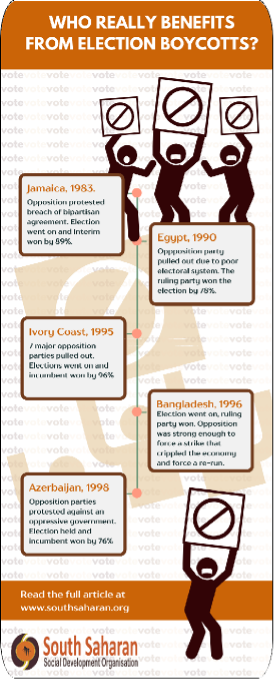
Now there are questions that need answers. Will an election boycott be enough to get the election canceled or postponed? Will an election boycott further the group’s goal of secession? Let’s look at popular election boycotts in history and how they turned out as we seek answers.
Jamaica, 1983.
The election in 1983 was always a two-horse race between the ruling party, Labour Party, and the People’s National Party. Edward Seaga, the seating Prime Minister at the time was the candidate of the ruling party and former Prime Minister Michael Manley was the leader of the opposition party. Both parties initially agreed the election take place in 1984 when a new voters registration system would be in place.
This system will allow 180,000 new voters to register. The incumbent on sensing the economic downturn and his diminishing popularity decided to have the election hold months earlier. Mr. Manley crying foul boycotted the election stating a breach of bipartisan agreement.
Outcome: The election went on and the opposition lost. The interim Prime Minister won by 89%.
Egypt, 1990.
The four main opposition parties in the country boycotted the election citing cases of rigged elections and reluctance on the part of the government to accept the proposed policies of the opposition parties which include: supervision of election by judges, improvements in accounting for voters, and a suspension of the martial law that has been in place since 1981. The parties stated that unless these policies were adopted, elections will be the same old story.
Outcome: The ruling party, National Democratic Party won the election by 78%
Ivory Coast, 1995.
Interim president Henri Bedie in 1994 approved an electoral code that prevents Non- Ivorians from contesting and voting in the 1995 elections. This code automatically ruled out leading opposition aspirant Alassane Ouattara and was also a move that was perceived by the people as one that will destroy national integration. The seven major opposition parties pulled out of the election in protest of the decision.
Outcome: The election went on and the incumbent won by 96%.
Bangladesh, 1996.
The country has had a series of boycotts that resulted in the birth of the prominent political parties in the country today. The country’s major opposition party at the time, Awami League, championed the push for the boycott. This was because the government refused to inaugurate a caretaker government ahead of the elections, as was the custom in the country. They did this to prevent interference by the incumbent government in the election outcome.
Outcome: The election went ahead, which the ruling party at the time, Bangladesh Nationalist Party, won in a landslide victory. However, the opposition parties instigated a strike that crippled the country and resulted in a caretaker government being installed. They conducted elections in June, and Awami League won the election.