

At South Saharan Social Development Organization (SSDO), we are committed to enhancing the well-being of our communities through sustainable water, sanitation, and hygiene (WASH) initiatives. We are thrilled to share the success of the recent WASHCOMS Peer Review Exercise held on the 18th and 19th of July 2024 in Igbo-Eze North Local Government Area (LGA).
Background
In 2019, WaterAid, in partnership with SSDO, initiated a project funded by the Global Environment & Technology Foundation (GETF) to construct a motorized generator-powered borehole. This project also established a Water Consumers Association (WCA) trained to manage the facility, which has been functioning optimally for over four years. Building on this success, similar projects were commissioned in the Amufie and Ukwuinyi communities under the LDSC year one phase, with an additional generator-powered borehole currently under construction in the Mboshi-Aji community.
Objective
The primary objective of the WASHCOMS Peer Review Exercise was to ensure the sustainability and proper functioning of the water schemes in the Amufie, Umuabor, Ukwuinyi, and Mboshi-Aji communities. WaterAid, in partnership with SSDO and the State Ministry of Water Resources, organized this two-day exercise to evaluate and enhance the effectiveness and efficiency of Water, Sanitation, and Hygiene Committees (WASHCOMs) through peer review. The event aimed to foster knowledge exchange, identify best practices, and recommend improvements for sustainable management and community engagement in WASH initiatives.
Participants
The peer review exercise saw the active participation of representatives from WASHCOMs in Umuabor, Amufie, Ukwuinyi, and Mboshi-Aji communities, along with officials from ENSTOWA-Enugu State Ministry of Water Resources, Igbo-eze North WASH unit staff, WOSCONET, WaterAid, and SSDO.
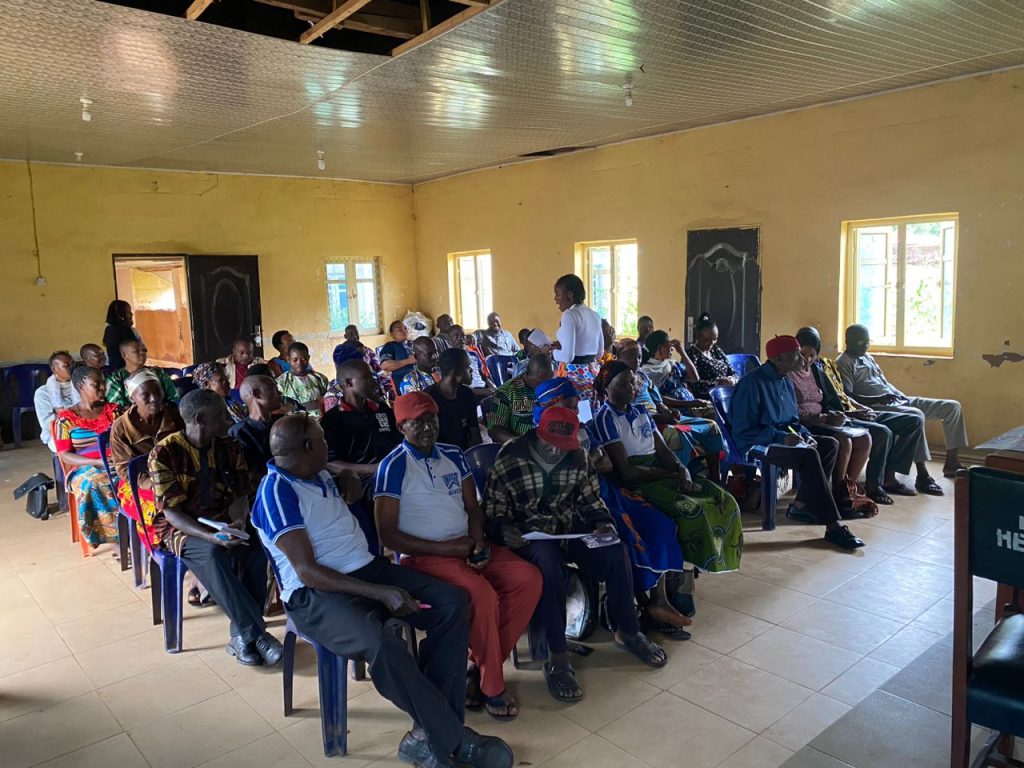
Day 1 Highlights
The first day commenced with an opening prayer, followed by introductions. Miss Ijeoma Okugo, SSDO WASH Staff, outlined the meeting’s objective, while Mr. Emmanuel Obuna, Sanitation Officer-ENSTOWA, provided an overview of the financial aspects of facility management and maintenance. Discussions covered various topics such as water user fees, diesel prices, tank capacity, pumping hours, fuel usage, generator capacity, profit, expenses, utility repairs, and stipends.
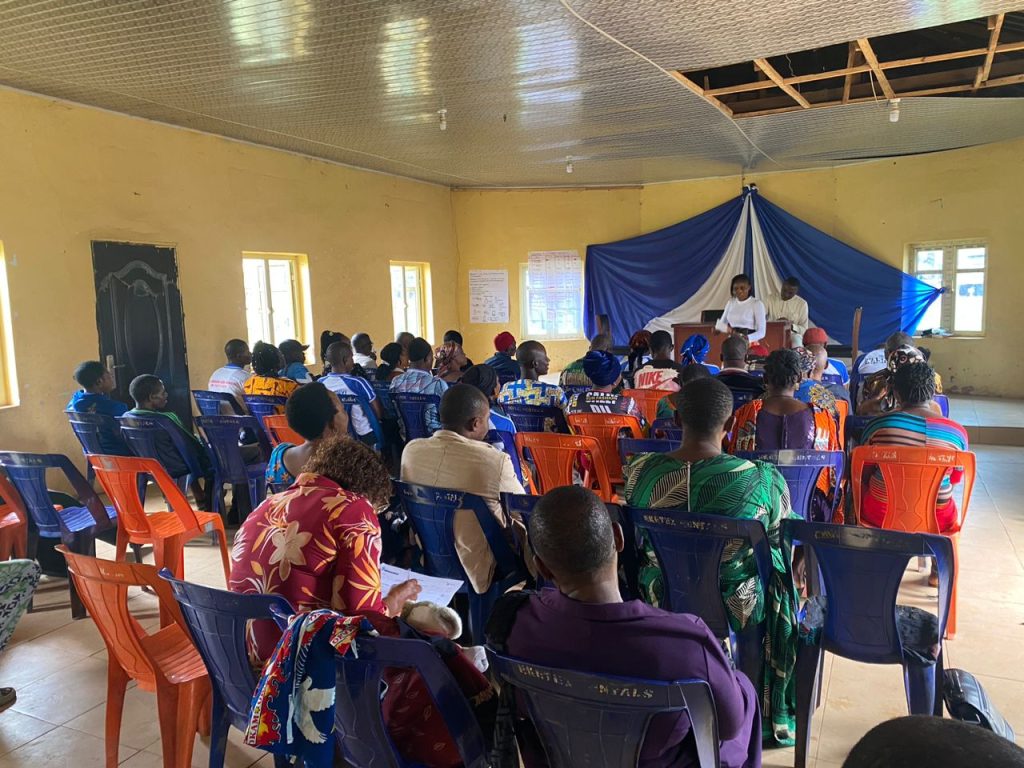
Mr. Levi, Igbo-eze North WASH HOD, emphasized the importance of teamwork, collaboration, role clarity, and effective communication among committee members. Participants from different WASHCOMs shared their experiences, challenges, and solutions.
Day 2 Highlights
The second day began with a recap session led by the sanitation officer, followed by a comprehensive hygiene session conducted by Mrs. Juliet, Sanitation Assistant-ENSTOWA. She covered crucial domains of hygiene, including water hygiene, food hygiene, menstrual/personal hygiene, and hand hygiene, teaching participants proper handwashing techniques and the critical times for handwashing.
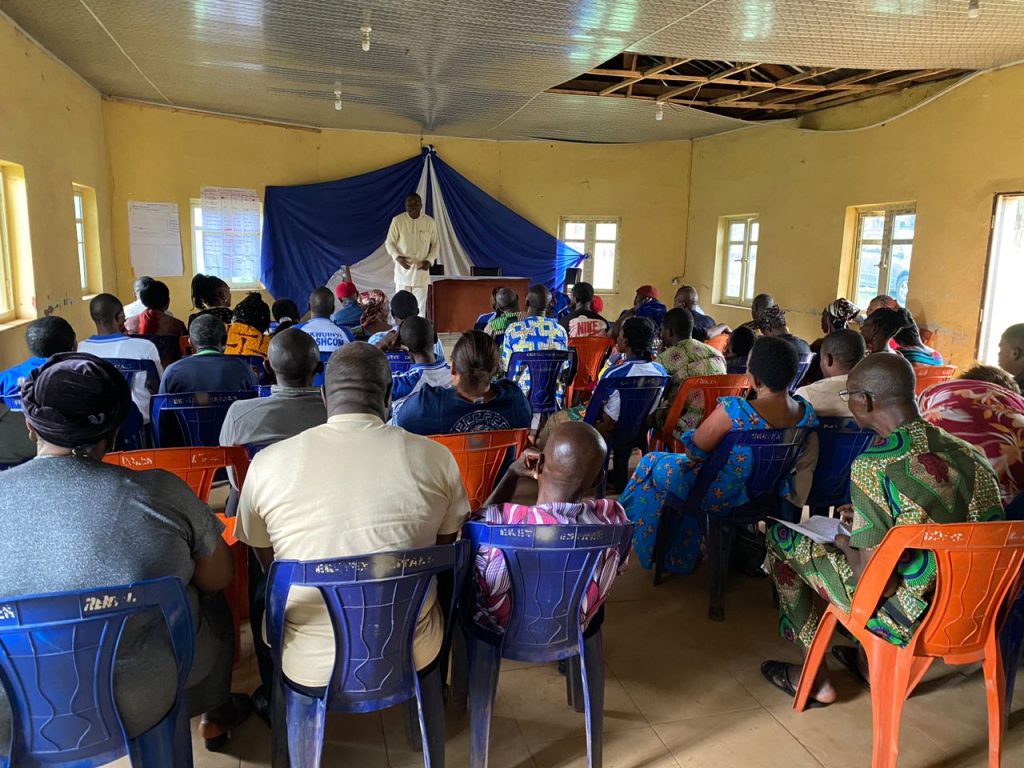
Mr. Emmanuel facilitated a session on sanitation, explaining various sanitation kits, hygiene kits, sanitation and hygiene-related diseases, and the importance of good hygiene and sanitation. Participants’ questions were addressed comprehensively, and WASHCOMs received notebooks for financial recording and visitor logging.
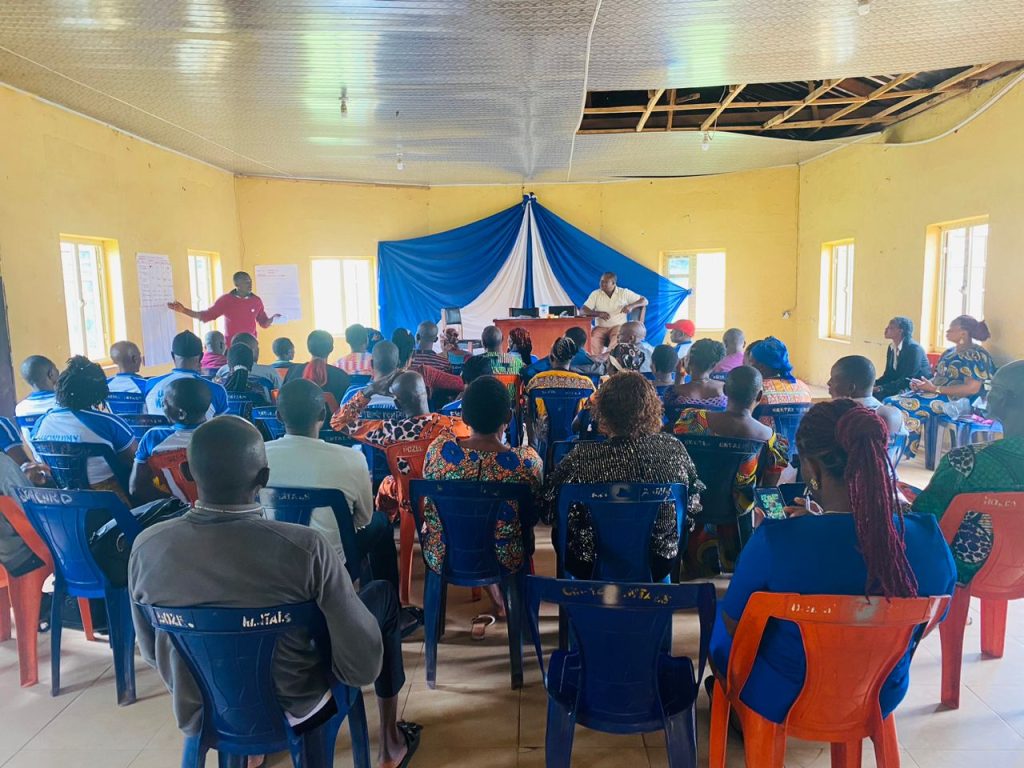
Action Plans
WASHCOMs developed action and sustainability plans with timelines and assigned responsibilities, guided by the sanitation officer. Key activities included training of scheme operators, reviewing stipends, advocacy visits, recruitment of new committee members, and awareness creation. The comprehensive action plan aims to ensure the continued effectiveness and sustainability of the water schemes in these communities.