SSDO

SSDO and WaterAid Installs Handwashing Stations across Enugu state

Water is an essential commodity for survival and remains a top priority for people. Its importance cuts across all spheres of life from agriculture, livelihood, health, and more. About 50 percent of Nigerians still lack access to potable water. Enugu’s topography has even further complicated this challenge. 

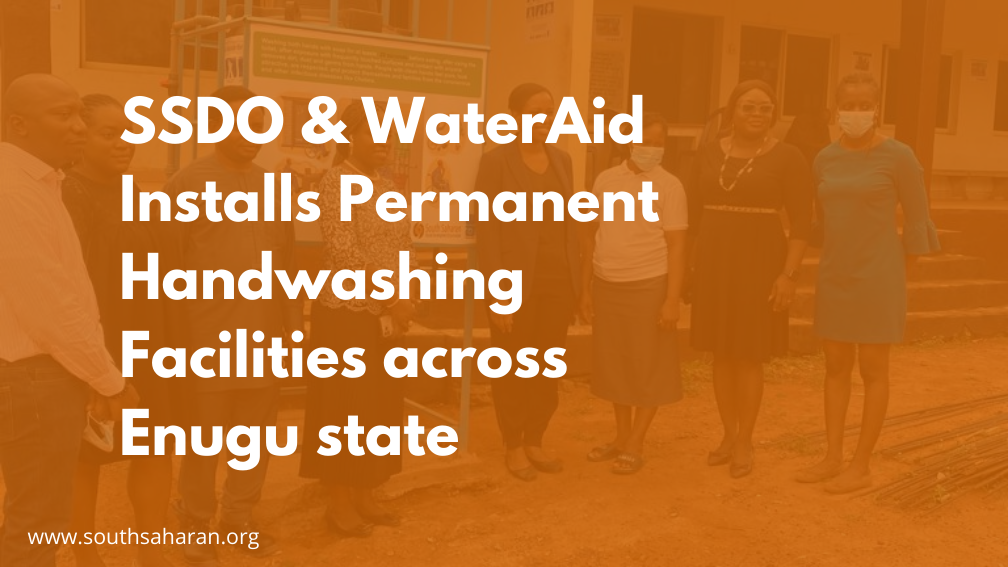
In partnership with WaterAid Nigeria, South Saharan Social Development Organization, SSDO is working tirelessly to improve access to water In Enugu state. We have installed 20 permanent handwashing facilities across the state in strategic locations. These include primary health centers and schools. 

Constant access to water reduces health challenges, helps keep the girl child in school, and in the long run, improves the economy. We’d continue to do our best to improve access.

The supervisory team includes the Heineken African Foundation Board Chairman, the Corporate Affairs Director for Nigerian Breweries, and the Sustainability Manager from the Headquarters of Nigerian Breweries. Also present were representatives from Ama Breweries Enugu, the Enugu State Team Lead, the Monitoring and Evaluating Officer of WaterAid Nigeria, and the WASH Program Lead for SSDO.

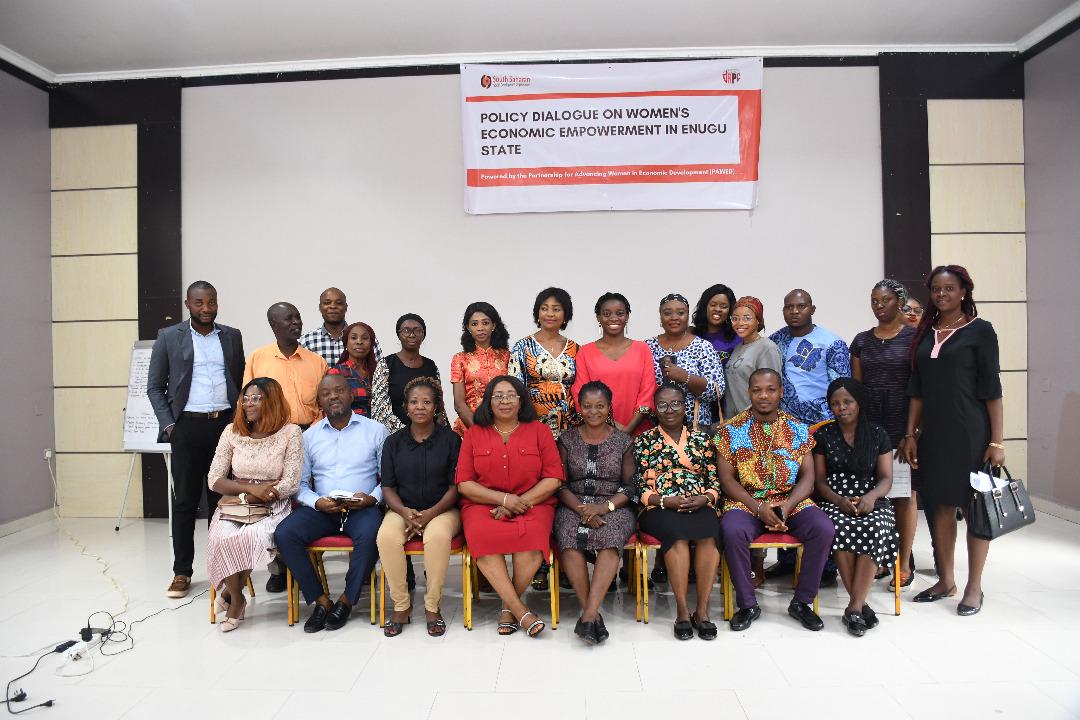
PAWED Policy Dialogue Session

Research shows a 6.3 percent unemployment gap between men and women in Nigeria. This highlights a rather obscure fact that is holding the nation back. Understanding the importance and necessity of women’s empowerment in this time and era, the Development Research and Project Center, (dRPC) in partnership with South Saharan Social Development Organization, (SSDO) is implementing the Partnership for the Advancement of Women’s Economic Development (PAWED) project.  

The PAWED project was formed to strengthen the capacity of women’s economic collectives in Enugu state to conduct high-impact evidence-informed advocacy to improve the livelihood of economically active women and girls in the state.

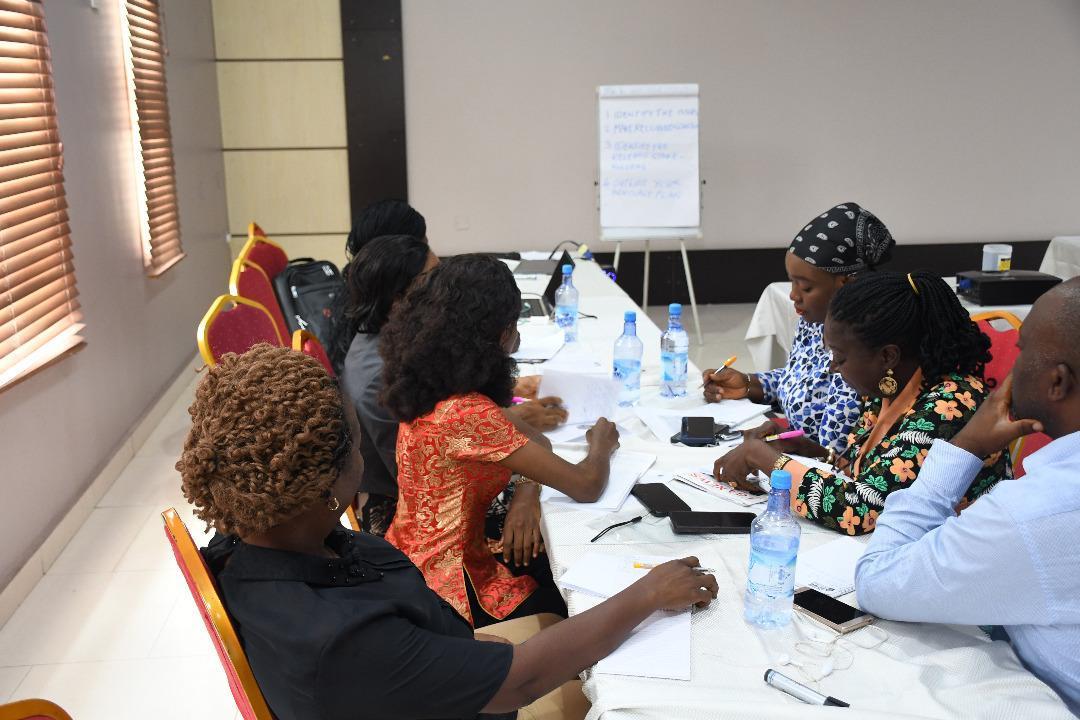
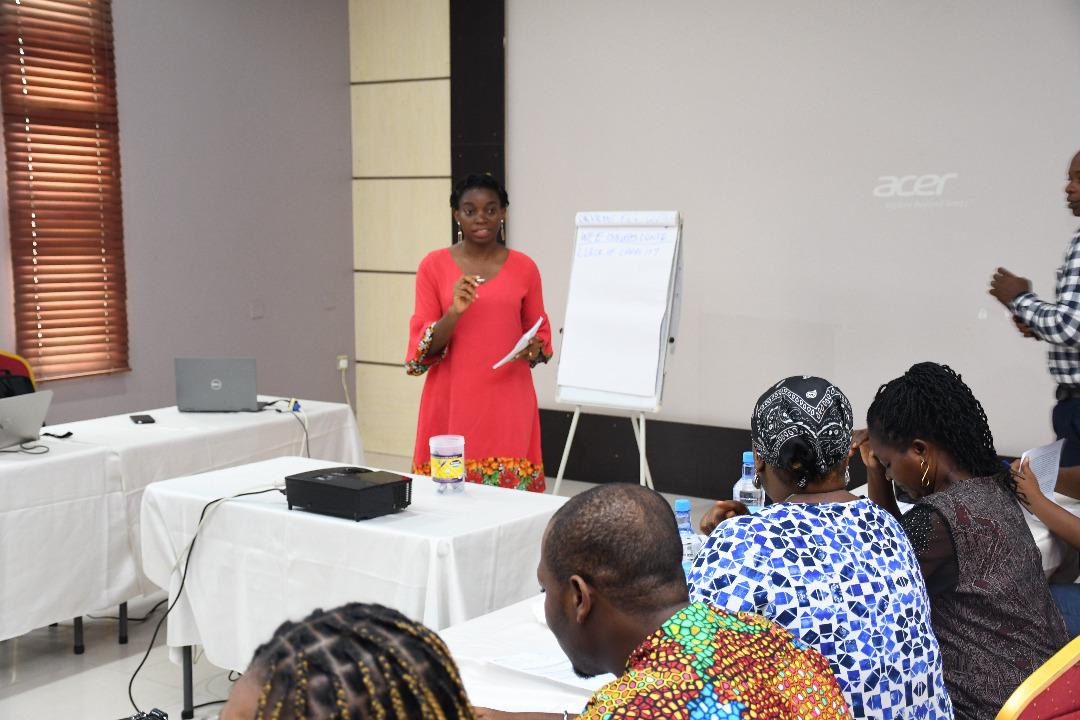
In April 2022, the PAWED project held a Policy Dialogue Session to provide a platform for synergy between stakeholders in Enugu State for effective advocacy for Women’s Economic Empowerment (WEE). The stakeholders included:

  • Women-led, women-focused Civil Society Organizations
  • Women’s Economic Empowerment Cooperatives
  • Representatives from relevant government ministries.
  • Academia – University of Nigeria (UNN) Gender and Development Centre.
  • Media representatives

Specifically, the policy dialogue session aimed to achieve the following:

  • Achieve a consensus on the most pressing WEE issues in the state
  • Identify key policy and regulatory frameworks that will facilitate and accelerate the delivery of WEE projects
  • Proffer solutions and recommendations for the furtherance of Women’s Economic Empowerment (WEE) in the state
  • Produce policy brief documents for succinct and effective advocacy
  • Come up with an effective advocacy strategy based on synergy amongst the different stakeholder groups.
     
https://lh4.googleusercontent.com/aF1wfjtEJ8Q06XJyvAsZ4LAryoM9neJRDTfvXEO8kJApwdNyDUx1Vz5lELPzdmw7nh1G5Pviwuvrx04mV-G9B0Q54o1QL6_GIIMOdz_HRvQ8uo3DCmDoiR6LpGNJmlI09q--mv6e5jHJ5xwqRg

The session started with an overview of the Comparative Analysis of the Subnational 2022 WEE Budgetary Allocation. After which they reached a consensus on pressing WEE issues in Enugu their specific causal factors. Some issues identified were:

  • Poor prioritization of WEE funding.
  • Lack of WEE project coordination. 
  • Duplication of WEE budget lines.
  • Lack of availability of WEE projects.
  • Poor monitoring and evaluation culture.

Participants discussed and proposed several recommendations to tackle issues relating to women’s economic empowerment in Enugu State. Proposed solutions include:

  • Improving access to quality education for women.
  • Providing better healthcare and social protection.
  • Strengthen the digital skills of women to bridge the digital gender gap
  • Promoting policies that enhance human capital development.
  • Eliminating all forms of violence and discrimination against women.
  • Strengthening active policies to build a more inclusive labor market targeting gender wage gap, integration, and advancement of women of diverse backgrounds
  • Advancing multi-stakeholder partnership to update new initiatives for promoting women’s empowerment.

Finally, the participants also devised advocacy strategies to improve the WEE situation in the state, with the government representatives pledging to facilitate advocacy visits to the senior management teams of government agencies responsible for WEE. 

Hygiene Behavior Change Campaign

The Hygiene Behavior Change Campaign is a sensitization program earmarked for 10 communities in Igbo-Eze LGA. The goal is to improve hygiene in the targeted locations by raising awareness on the dangers of a lackadaisical attitude to hygiene practices. Radio jingles were aired on three radio stations -Solid FM, Voice FM, and Lion FM to increase the span of influence. Also, television skits/jingles were used to drive home messages. 

These activities were executed over a three-month period to further drive the hygiene messages in the communities, local government, and state. Though, the campaign continued over a longer period. To ensure the continuity of the campaign, 40 volunteers were trained on the process of engaging households. These Voluntary Hygiene Promoters (VHP), also distribute hygiene packs during the period of sensitization. 

They reached a total of 2,720 households across the LGA. All the households were being educated on the three key behaviors- the use of facemask, handwashing, and social distancing. their various assigned location on safe hygiene practices like proper handwashing amongst others. Also, the HBC Campaign market dissemination continued in three markets namely; Nkwo Aji, Eke Oji and Eke Amufie. 

Infection, Prevention, and Control Training

Healthcare workers are the backbone of an effective healthcare system. Healthcare workers are often frontliners providing essential services at the community level. Based on the sensitivity of their jobs, they are frequently exposed to infections and diseases. Understanding the constant risk healthcare workers are exposed to, SSDO and WaterAid Nigeria saw the need to organize a workshop.

On Friday, 11th February 2022, WaterAid Nigeria, partnered with South Saharan Social Development Organization, (SSDO) to strengthen the capacity of health workers in Infection Prevention and Control (IPC) in Enugu State, Southeast Nigeria. In attendance were participants from different bodies, including representatives from the Enugu State Primary Healthcare Development Agency, 21 Officers-in-Charge (OICs) of the selected healthcare facilities, and 14 Heads-of-Department of 14 selected LGAs.

The workshop was Facilitated by Dr. Kachy Ugwa, Community Health Specialist at the University of Nigeria Teaching Hospital (UNTH) Enugu. He started with an introduction to IPC and standard precautions, using hand hygiene as a case note. He also covered several topics including; Understanding disease transmission, Basics of COVID 19, Environmental cleaning and disinfection, Transmission-based precautions, A risk-based approach to PPEs, Screening and triaging – the principle of screening, isolating, and notifying, IPC and WASH with emphasis on handwashing, social distancing, and the use of facemask as it relates to routine immunization, ante-natal and post-natal.

Commemoration of World Toilet Day

Research shows that 123 million people don’t have access to decent toilet facilities in Nigeria. SSDO and WaterAid Nigeria are playing their part in creating awareness of the under-funded, poorly managed, and neglected toilet facilities in public places.

Life without toilets is dirty, dangerous, and undignified. Public health depends on adequate toilet facilities. Its availability drives improvement in gender equality, education, and the environment. 

For Enugu state to be Open Defecation Free by 2025, sanitation and toilet facilities need to be a top priority.

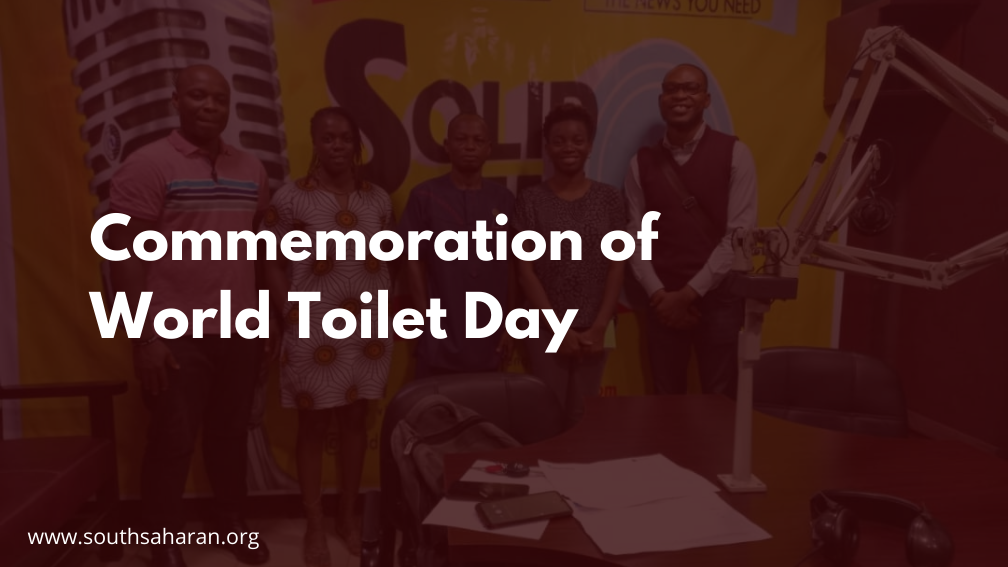
The commemoration of World Toilet Day was celebrated with key stakeholders from CSO partners, the Small-Town Unit of the State Ministry of Water Resources, and the media at a radio engagement. The theme for this year’s World Toilet Day was “Valuing Toilets”. The theme aims to stress the absolute necessity of toilets in our lives, communities, and the state at large.