Do you know that handwashing is critical to preventing illness, especially Covid-19? Proper handwashing can reduce the rate of diarrhea by 40 percent and respiratory infection by 20 percent. Interestingly, 50 percent of food-related illnesses are caused by poor hand hygiene.
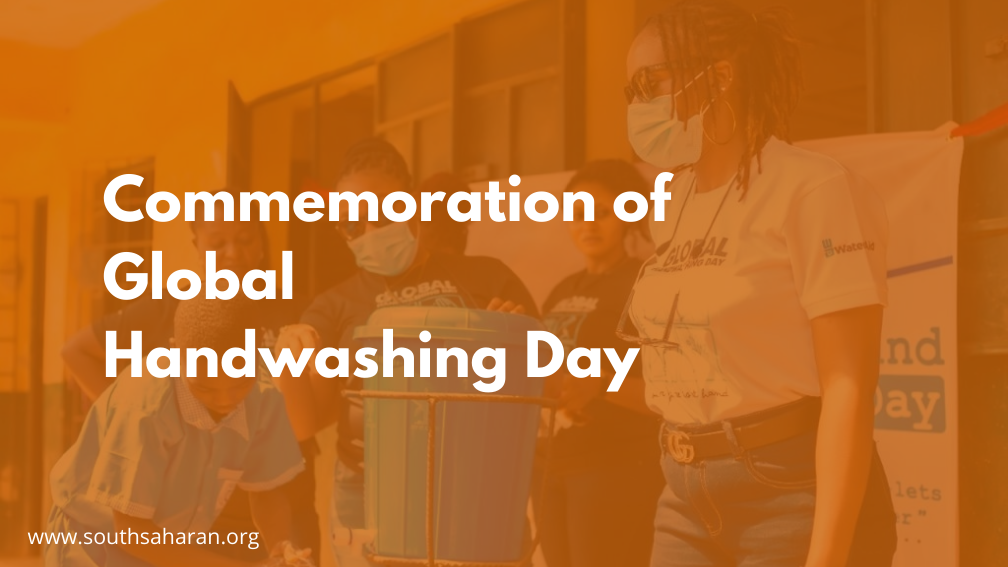
The 15th of October is recognized the world over as Global Handwashing Day. a day dedicated to increasing advocacy and awareness of the importance of handwashing with soap as an effective way to prevent diseases.
The theme of this year’s commemoration is tagged ‘The future is at hand, let’s move forward together.’ The activities for the celebration involved an outreach at a primary school in Enugu and a Radio program.
SSDO carried out a school outreach at Igbariam Nursery and Primary school, Achara Layout, Enugu state. The pupils were educated on the importance of handwashing and the steps for proper handwashing with soap as an effective way to prevent disease. This followed the distribution of soap and some handwashing facilities to the school. A total of 96 students, comprising of 36 males and 60 females were educated and as a result, this will be cascaded to the rest of the school during assembly.
Also, there was a radio engagement at Solid FM to sensitize the public on the need for proper handwashing. The theme for the year was discussed extensively by the guests which included; the Enugu State Team Lead for WaterAid, a Medical Doctor from the Ministry of Health, a representative from the Ministry of Water Resources, and the Head of Program of South Saharan.
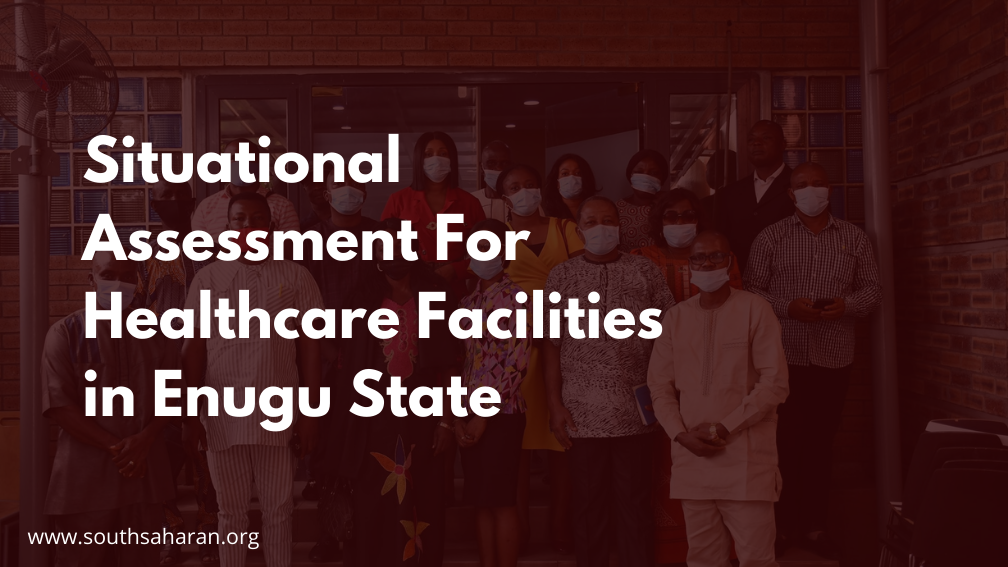
WaterAid conducted a situational assessment of Water Sanitation and Hygiene (WASH) in Primary Health Centers in Enugu state as part of our support to improve the WASH in health outcomes in the state.
This process involved the stakeholder’s engagement, which had representatives from the Ministry of Water Resources, Small Town Unit, Ministry of Health, Primary Health Care Development Agency, Bureau of Statistics, and Economic planning. Presentations were made on the current level of access to WASH in HCF. An addition was also made to the questionnaires for data collection.
The second process was the training of enumerators across the 17 LGAs in Enugu State for data collection from HCFs. The exercise has been completed and data exported to the consultant for further analysis.
The past year and months have been challenging for many. Numerous people are yet to come to terms with the drastic ways that our lives and regular activities have been affected by the covid-19 virus. Plans were terminated, businesses lost, dreams aborted, and for so many people, life started afresh. So many people have lost a lot without actually getting the virus.
“Sometimes I doubt there is any Covid-19, we just keep hearing about it, and we were asked to sit at home. I couldn’t work and my family suffered,” said Onyeka Chiamaka, a fish seller engaged during one of our outreaches.
Community outreaches and awareness campaigns have helped to gauge the knowledge and perception of community members on a particular subject. This is exactly what the Heineken Africa Foundation (HAF)-sponsored covid-19 response plan did.
The HAF Covid-19 response plan was deployed in six states in Nigeria (Bauchi, Benue, Ekiti, Enugu, Kaduna, and Oyo) over a period of six months from August 2020 to January 2021. The aim of the project was to engage decision-makers to accelerate access to water, promote messages about hygiene to the public, and provide handwashing facilities in public places. WaterAid and South Saharan Social Development Organization (SSDO) were implementing partners in Enugu state.
WASH, Enugu’s Challenge
Research shows that about 28 percent of the state’s population lacks access to water supply services. Only 38 percent of the state’s population has access to decent sanitation, and 40 percent of the population still defecates in the open. This points to the fact that the state needs improved access to safe drinking water and sanitation services. It is also necessary to enhance citizen participation in Water and Sanitation Hygiene (WASH) dialogue and decision making. Hence, the urgency for the WASH initiative.
The Approach
Six Local Government Areas (LGAs) identified with the most pressing WASH challenges in the state were selected. They were Nsukka, Isi Uzo, Enugu East, Enugu South, Uzo Uwani, and Ezeagu. After careful observation and analysis of the target community and its members, it was decided that the best medium to improve citizens knowledge and participation in WASH would be to air televised messages/jingles from traditional rulers and religious leaders. Including the Catholic Bishop of the Enugu Diocese.
Sound system for the jingle broadcast.
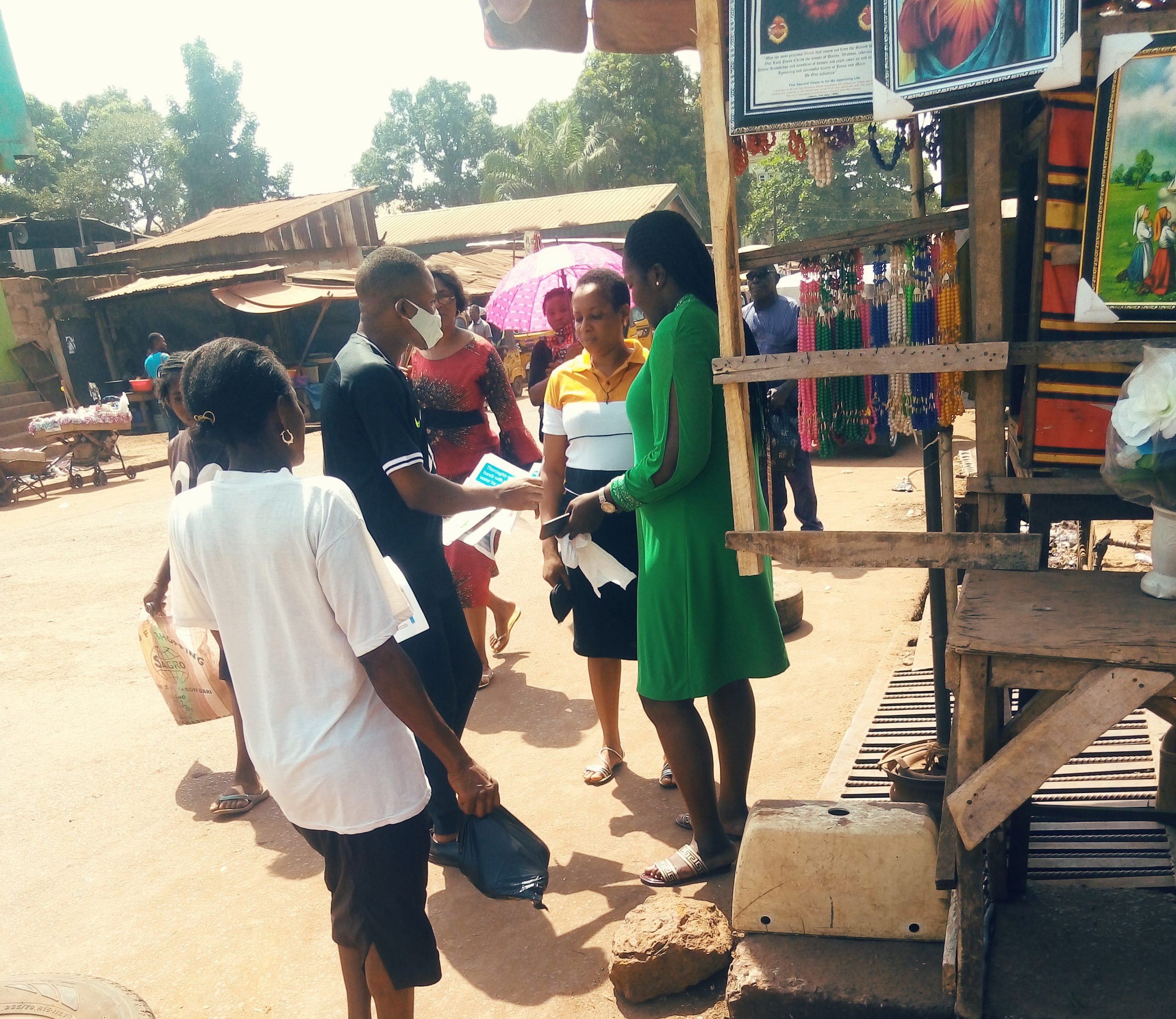
The Covid-19 and WASH messages were scheduled every week over three months. The activity aimed to drive home the message of proper WASH activities and the promotion of improved hygiene practices at home and in public places. Volunteers were also on the ground to sensitize people on the need to follow the Covid-19 guidelines. WASH coordinators monitored, supervised, and captured the activity. Visual aids were used to drive home the message.
The Revelation
In the sensitization course, the volunteers and the WASH coordinators took their time to engage the community members. Their message was well-received in some areas. In some other areas, this wasn’t the case.
“We just dey hear Covid everywhere, I no believe say anything like that dey. Na normal disease wey dem just find wey go soon comot” a palm oil seller told one of our volunteers.
This is just one example of the perception people had in different locations. Most people in the markets were skeptical of the existence or persistence of Covid-19. They believe the pandemic is over or was never a threat.
In another market, the traders were hostile as they had lost business opportunities during the government-imposed lockdown and other restrictions.
“Please I don’t want to hear anything about Covid-19. Leave my shop,” said an electronics shop owner who sounded like the mere mention of the virus evoked memories of losses.
People feared that more covid-19 messaging could result in another lockdown with negative economic implications.
Takeaway
Airing messages in the local languages went a long way to drive home the intended messages. Even better was the fact that the voiceovers were from respected members of their communities to whom they could relate. From subsequent visits and interactions with the traders, many affirmed that they are paying more attention to their hygiene.
“I now have my own hand wash station with soap and sanitizer in front of my shop. All customers must wash their hands before coming in,” said Felicia Nwobodo
Weeks after the initial outreach was conducted, volunteers went back to the LGAs and markets for follow-up visits and there was a remarkable improvement in handwashing practices.
For future efforts at public sensitization, it is important to de-emphasize Covid-19 as the key reason for basic hygiene and social distancing practices. The message would be more beneficial and better received if they focused on the prevention of infectious disease as the primary reason for imbibing safe hygiene. As already noted above, the impact of the Covid-19 pandemic was a bitter pill for many.
Bishop Njoku feels the weight of his responsibilities as the pandemic persists
Feb. 9, 2021
In turbulent times, Bishop David Njoku keenly feels the burden of the mantle. As Bishop of the Apostolic Church of Christ, Oduma-Achara, Aninri LGA, Enugu State, he represents hope and guidance for his flock. “A lot of people depend on us, the church, for information and directives,” he says.
The 67-year-old Bishop is particularly concerned about the economic impact of COVID-19 on Oduma-Achara, a small agrarian village with two lakes that dry out during harmattan, and no functional water facilities. “COVID-19 was a very big challenge to our people; it affected our farming and harvesting. To the extent that our women sold a basin of Okro for N150 (39 cents).” The hardship and scarcity of water has created some unusual items of luxury; GP water tanks are now highly prized among indigenes living in Oduma, and are even requested as part of the bride price. Bishop Njoku worries that the people are not taking hygiene seriously to prevent more outbreaks and other diseases. With a wife and 8 children of his own, he is understandably invested in maintaining hygiene protocol, constantly reminding people to wash their hands before entering the church premises. Yet generally in Oduma hygiene is poor. Open defecation is still widely practiced, and handwashing is only observed in school, at the Igwe’s palace and in church.
File Image: A young woman wondering about the next step as the lake has dried up
confirmed
The intervention by WaterAid and SSDO could not have come at a better time. The Scale Up Hygiene Project, sponsored by the Heineken Africa Foundation, targeted 6 states including Enugu for the promotion of hygiene messages in response to COVID-19. The project utilized radio and TV jingles featuring prominent traditional and religious leaders urging Enugu residents to take the pandemic seriously, wash their hands and wear face-masks. In addition, the jingles were aired in markets in 6 different LGAs coupled with the distribution of IEC materials with instructions on hand-washing, safe waste disposal and other beneficial hygiene behaviours. Hygiene packs were equally distributed to vulnerable households in 7 LGAs.
Bishop Njoku is pleased with the positive response to the messages. “Because of the sensitization, radio programs and IEC materials provided for us, we were able to teach them proper handwashing which they practiced despite the scarcity of water. Our children have also learnt how to use face masks. Our knowledge of hygiene has increased.” However, he notes that access to clean, drinking water is still a major challenge to reinforcing hygiene behaviours, and calls on the state government to urgently install water facilities to help improve the quality of life in Oduma-Achara.
According to the World Health Organisation (WHO) Water is essential for life. The amount of fresh water on earth is limited, and its quantity is under constant pressure. Preserving the quality of freshwater is important for the drinking-water supply, food production, and recreational water use. Water is critical to life, but it is also a limited resource and several interrelated factors are decreasing its availability.
South Saharan Social Development Organization embarked on The Water of Life (WOL) project due to the integral role water access, plays in several human development spheres including education, nutrition, food security, housing and urban planning, good health, and women’s empowerment. The Project provided safe drinking water to over one million inhabitants of local communities within Abia, Rivers, Lagos, Ogun, Niger, Nasarawa, Edo, Benue, Oyo, Delta, Imo, Oyo, Ondo, Enugu, Ekiti, Kwara, and Anambra states, utilizing a methodology that prioritized community ownership in a bid to foster sustainability.
The challenges of the project remain the sustainability of the water source and this is further hindered by a poor maintenance and management culture of the host communities. This culture has led neglect of the water sources and their subsequent fall to ruin. To forestall this scenario, the project decided to support the institution of a functional Water, Sanitation and Hygiene (WASH) Committee whose deliverable is to ensure that the water infrastructure is continually maintained post-rehabilitation and can serve its function of providing safe, quality water to the inhabitants of the community for a very long time.
For the success of the project, SSDO conducted advocacy to gatekeepers and stakeholders in each community. This activity was done to obtain permission for entry and also to identify and select community members to be trained as the WASH committee.
Also, five (5) members of each intervention community were selected and trained on best practices to manage the facilities to ensure sustainability. The trained members were inaugurated as the WASH committee members for the facilities.
Some training sessions were also conducted where WASHCOM members and Operation and Maintenance (O&M) team were trained for each of the facilities. This was done to ensure proper operation and maintenance of the facilities and also to ensure the sustainability of the project.
Boreholes
Lagos State
Onibaba Ajegunle Community Borehole – (GPS Coordinates – 6.456653, 3.342979)
Status: Completed
Located at No. 3 Ago Hausa Street – Beside African Primary School, Ajegunle, Lagos state.
The borehole was serviced and re-developed to open the pores of the aquifer for optimum performance
Refurbishment: The borehole was further refurbished to enhance the aesthetics. This also has been completed and the borehole opened to the community for use.
Isolo – Mafoluku Community Borehole. (GPS Coordinates – 6.55870, 3.33430)
Status: Completed
The borehole is located at 1st Corner of Ansar-ud-Deen, Avenue and Makinde Street, Lagos State. The borehole was serviced and re-developed to open the pores of the aquifer for optimum performance
Refurbishment: The borehole was further refurbished to enhance the aesthetics. This also has been completed and the borehole opened to the community for use.
Noforija1 hand pump borehole. (GPS Coordinates – 6.629500, 3.984820)
Status: Completed
The borehole is located at Noforija1 in Eredo LCDA, Epe LGA, Lagos State.
Ajegbende 1 hand pump borehole. (GPS Coordinates – 6.62035, 4.04805)
Status: Completed
The borehole is located at Ajegbende1 in Eredo LCDA, Epe LGA, Lagos State.
Igbonla hand pump borehole. (GPS Coordinates – 6.67133, 4.00275)
Status: Completed
The borehole is located at Igbonla primary school in Eredo LCDA, Epe LGA, Lagos State.
The UPE primary school Ilara hand pump borehole
A complete set of Indian Mark III and its accessories were procured and installed at Noforija1 according to the specifications of the Bill of Quantities (BOQ). Riser pipes were subsequently installed to ensure optimal functionality and the borehole opened to the public thereafter
The borehole is located at Rafin Sanyi Area Bakin-Iku (Central Mosque) Suleja LGA, Niger state.
The existing borehole in the facility was located in an area with low water yields and this prompted the need for a geophysical survey to identify a new high yield location after which a new borehole was sunk. The overhead tank was reconstructed and the damaged perimeter fencing was repaired. An 11,000 KVA generator set was installed. All other materials for electromechanical repairs were procured and installed while the damaged taps were also replaced. The borehole opened to the community for use.
Handover: The borehole facility was handed over to the community on 14th August 2019 during a handover ceremony.
The borehole at IQBE Centre, Old Kpata was initially slated to rehabilitated but it was discovered that the state government took up the facility for repairs. In view of this, the facility at Fangamu located at Gangarin Fangamu, Gangarin Fangamu Road, Suleja, Niger state under the WOL scheme was selected as a replacement. Due to low water yield from the existing borehole, a geophysical survey was conducted to identify an area of high yield and a new hole was drilled. The overhead tank was reconstructed and also the damaged perimeter fencing was repaired. The borehole opened to the community for use.
Handover: The borehole facility was handed over to the community on 14th August 2019 during a handover ceremony.
The borehole is located behind Central Mosque, Uke, Karu LGA, Nasarawa state.
Status: Completed
The borehole in the facility was flushed and the overhead tank was reconstructed and also the damaged perimeter fencing was repaired. The roof and doors of the generator building was repaired and an 11,000 KVA generator set was installed. All other materials for electromechanical repairs were procured and installed while the damaged taps were also replaced. The borehole opened to the community for use.
Handover: The borehole facility was handed over to the community on 20th August 2019 during a handover ceremony.