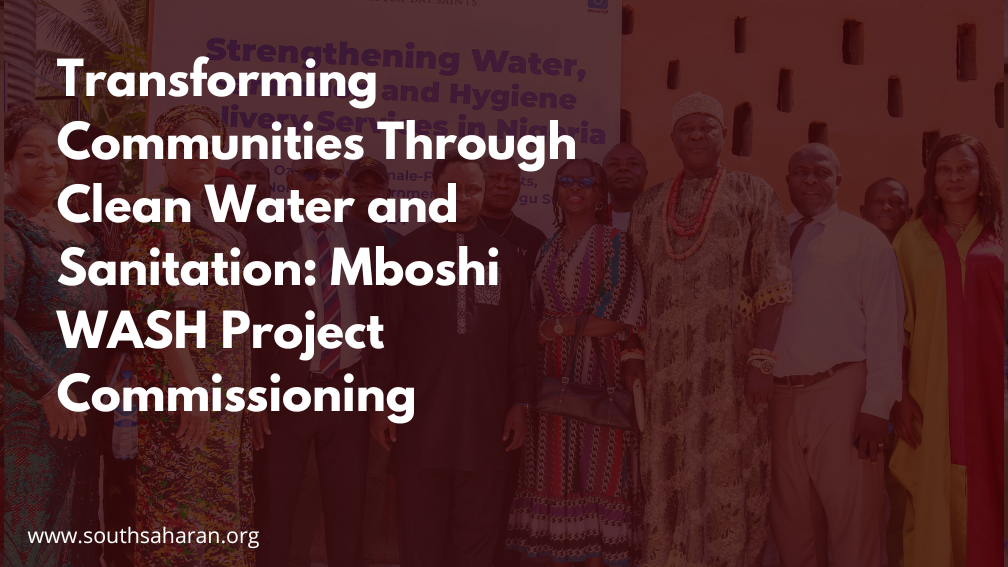
On September 26, 2024, South Saharan Social Development Organization (SSDO), in partnership with WaterAid and the Church of Jesus Christ of Latter-Day Saints, successfully commissioned and handed over key water and sanitation facilities to the communities of Mboshi-Aji and Eke-Ozzi in Igbo-eze North LGA, Enugu State. This significant milestone marks a pivotal moment in the journey toward improving public health, access to clean water, and better sanitation standards in the region.

A Joint Effort to Improve WASH Standards
Access to clean water and adequate sanitation is not just a basic human right but a cornerstone of community health and development. For many rural communities in Enugu State, access to these essential services has remained a challenge for decades, contributing to waterborne diseases, poor hygiene, and a disproportionate burden on women and children.

The LDSC III Project, implemented by SSDO in collaboration with WaterAid and the Church of Jesus Christ of Latter-Day Saints, was designed to address these issues head-on by providing sustainable WASH (Water, Sanitation, and Hygiene) solutions. The newly commissioned facilities are part of a broader effort to promote better health, enhance dignity, and empower women and children, who are often the most affected by inadequate water and sanitation.
Key Facilities Commissioned
At the heart of the project are the following life-changing facilities, which were officially handed over to the Mboshi-Aji and Eke-Ozzi communities:
– A 20,000-liter motorized borehole in Mboshi-Aji: This facility will provide clean and safe drinking water to hundreds of families, reducing the time and effort required to access water and minimizing the risk of waterborne diseases.

– Two female-friendly toilet blocks at Eke Ozzi Market: Designed to address the specific sanitation needs of women and girls, these toilets offer a safe, clean, and dignified space, reducing the public health risks associated with open defecation and improving safety for women in public spaces.

– A solar-powered motorized borehole at Eke Ozzi Market: Harnessing the power of renewable energy, this borehole ensures a consistent and sustainable water supply, even during power outages. The use of solar energy reflects the project’s commitment to environmental sustainability and the efficient use of resources.

A Day of Celebration and Commitment
The commissioning event, held in Igboeze North LGA, was attended by key government officials, community leaders, civil society representatives, and local residents. Distinguished guests included:
– Dr. Felix Nnamani, Honorable Commissioner, Ministry of Water Resources
– Mrs. Chika Mbah, Senior Special Assistant to the Governor on WASH
– Hon. Prince Oguama Solomon, President, Church of Jesus Christ of Latter-Day Saints
– Mr. Solomon Akpanufot, representing WaterAid’s Country Director
– Dr. Stanley Ilechukwu, Executive Director, SSDO
– Traditional leaders and community members, including women, children, and elders.
The day’s events began with a solemn opening prayer, followed by lively performances from local schoolchildren and heartfelt goodwill messages from attending dignitaries. The enthusiasm of the community was palpable as they celebrated the provision of safe water and proper sanitation, resources that will undoubtedly improve their daily lives.

During the site visits, the technical intricacies of the newly installed facilities were explained by project leaders, giving the community a deeper understanding of how to manage and maintain these vital resources. Each handover was marked by a ceremonial transfer of the project keys, symbolizing the community’s ownership of these facilities and their responsibility for sustaining them.

A Broader Impact on Community Health and Gender Equality
While the commissioning of these facilities is a significant milestone, the long-term impact of the LDSC III Project goes beyond just access to infrastructure. The provision of clean water and sanitation is a key factor in improving community health, reducing the incidence of diseases such as cholera, dysentery, and typhoid, which are often linked to poor water quality and sanitation practices.
Moreover, the introduction of female-friendly toilets is particularly impactful for women and girls in the community. These facilities not only promote hygiene and public health but also enhance safety and dignity, particularly for women in public spaces like markets. By addressing their unique needs, the project takes a vital step toward gender equity in WASH service delivery.

A Commitment to Sustainability
A core aspect of the LDSC III Project is its focus on sustainability. The solar-powered borehole at Eke Ozzi Market exemplifies this, using renewable energy to guarantee a reliable water supply without relying on traditional power sources. Additionally, the community’s involvement in the commissioning process ensures that they take full responsibility for the maintenance and upkeep of these facilities.
Dr. Stanley Ilechukwu, Executive Director of SSDO, emphasized the importance of community ownership:
“These projects are not just about infrastructure. They are about empowering communities to take charge of their health, their water, and their future. By working together, we can ensure that these facilities remain functional and continue to benefit generations to come.”

Looking Ahead
As the LDSC III Project concludes its commissioning phase, the future looks brighter for the Mboshi-Aji and Eke-Ozzi communities. The successful handover of these WASH facilities is a powerful testament to the impact that strategic partnerships between civil society, government, and local communities can achieve.
SSDO remains committed to fostering development and improving living conditions in underserved communities through sustainable projects. With the continued support of partners like WaterAid and the Church of Jesus Christ of Latter-Day Saints, SSDO will keep championing initiatives that make a lasting difference in the lives of vulnerable populations.
Conclusion
The commissioning of the LDSC III water and sanitation facilities is more than just an infrastructural achievement – it is a step toward building healthier, more resilient, and empowered communities. By ensuring access to clean water and proper sanitation, SSDO and its partners are helping create a foundation for sustainable development, one community at a time.