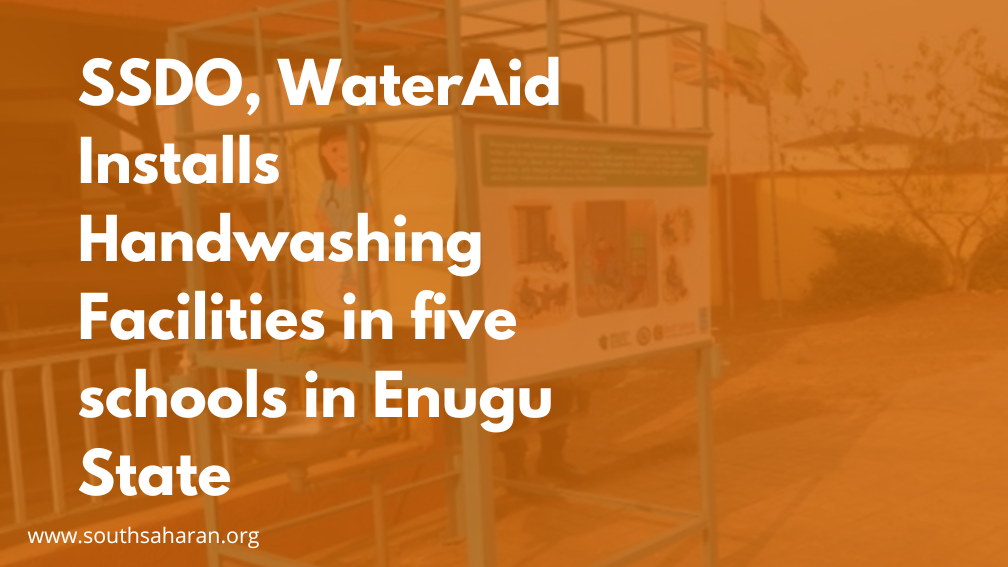
South Saharan Social Development Organization, SSDO, in partnership with WaterAid Nigeria, installed five permanent Handwashing facilities (HWFs) in schools across Enugu State as part of the role out plans for the Heineken African Foundation (HAF) phase III project to combat new Covid-19 variants through hygiene behavior change campaign, and support WASH advocacy in Enugu state.
In order to ensure the sustainability and ascertain the functionality of the facilities, the team organized an assessment and monitoring exercise across the five new facilities and the forty rehabilitated facilities in public places under the Hygiene Behavior Change Coalition Phase II project.
To further buttress the hygiene behavior change messaging and guarantee the sustainability of the newly installed handwashing facilities, SSDO and WaterAid Nigeria, under the HAF III project, organized an operation, maintenance, and hygiene training for school teachers where the facilities were installed.
Over 47 million Nigerians still practice open defecation (OD), and Enugu state is not exempted as about 47 percent of the populace still practice open defecation. This is a pointer to the lack of proper toilet infrastructure and water facilities, especially in rural communities.
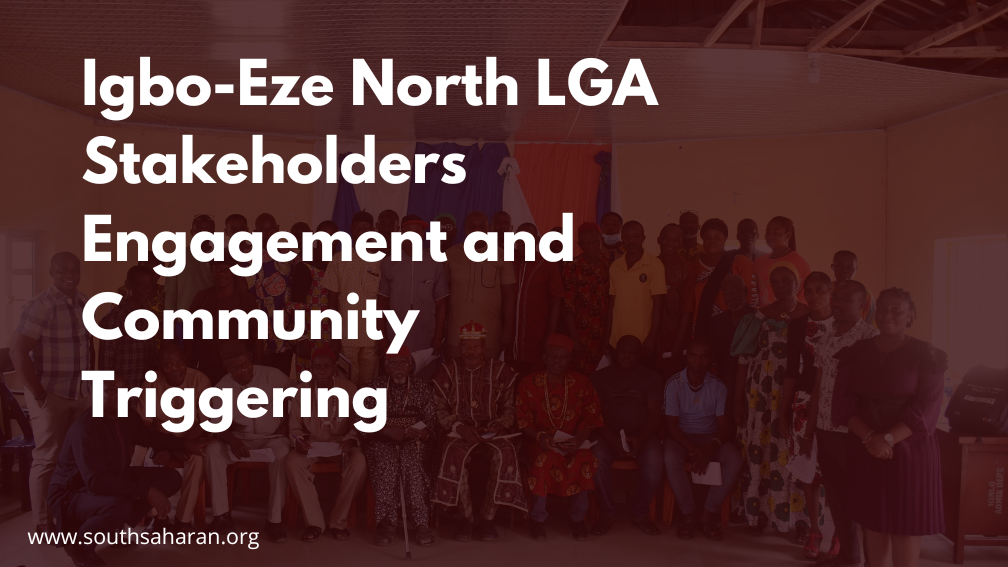
Understanding this challenge and looking to ensure its eradication, South Saharan Social Development Organization, in partnership with WaterAid Nigeria and the Enugu State Ministry of Water Resources, Small Town Units, organized a Community Stakeholder Engagement on Ending Open Defecation in Igbo Eze North LGA. Participants include traditional rulers, Local Government Area (LGA) legislative council representatives, president generals, and community and women leaders.
The engagement aimed to gather stakeholders’ commitment to enacting and domesticating a bye-law against open defecation in the LGA. As well as to develop action plans and roles of the community leaders in achieving open defecation. Participants analyzed the effects of open defecation on the community and how to tackle it.
OBJECTIVE OF THE EVENT
– To conduct open defecation triggering on stakeholders.
– To agree on action plans for execution in the coming weeks.
– To get the buy-in of all stakeholders to institute bye-laws prohibiting open defecation.
The STU Assistant Sanitarian then began the triggering session. She asked four community stakeholders to join her on the premises, where they identified feces and scooped some to be used for the demonstration. She continued the triggering process by inviting a community member to drink water from a new bottle. Then she contaminated the water with feces and asked the participant to drink the water again, to which he refused. She did this with other participants, and all refused.
She asked why they refused. Different participants stated that it was now contaminated and unfit for drinking. She explained why open defecation is bad and drew inferences from their responses. She took contributions and asked the community members what could be done to remediate that, and ideas were put forward.
ACTION POINTS AND ROLES OF COMMUNITY STAKEHOLDERS
Construction and usage of toilet facilities in every home.
Constant sanitation efforts to keep the surroundings clean.
Putting an end to open defecation in bushes.
Creation of awareness on the usage of toilets in the homes.
Proper food hygiene is maintained in the homes.
Establishment of toilet facilities in public places (hospitals, schools, Markets, motor parks).
Establishment of community bye-laws to prohibit open defecation.
Sensitization of traditional rulers on promulgating sanitation bye-laws in the community during their monthly meetings.
Imposing fines on defaulters who fail to provide toilets and defecate in open spaces.
Anyone defecating in open spaces should be handed over to the community security outfit.
All participants should take the message home and ensure that the above resolution is implemented in their immediate environment.
Traditional rulers, the legislative council representative, and the council secretary representative agreed to a three months time frame to produce the sanitation bye-laws.
The Chairman of the Traditional Rulers’ Council in Igboeze North LGA, Igwe Gabriel Agbedo, said that the traditional rulers supported stopping open defecation after the enlightenment got on its serious negative health and financial consequences to the people.
Agbedo said having a defecation-free environment is possible, and the traditional rulers would totally key into it from its general meeting on Feb. 22.
“As agreed by all stakeholders we have to do it for its overwhelming benefits. Everybody wants to live a healthy life and spend less on hospital and medication,” he said.
He says, “We are happy over this advocacy and enlightenment brought to our doorsteps by these non-governmental organizations and the state government.”
We will also know as traditional rulers within each community where we needed community efforts to set-up toilets in public places such as markets, worship centers, and schools,” he said.
Contributing, Mr. Collins Idoko, a Councilor in the LGA, said that enlightenment on ending open defecation is clear, and he would take the message and resolution back to the council’s legislative council.
“I will assist in spreading the benefits; and other benefits that NGOs can attract to our council area as well as ensure that through the legislative council, we push for a bye-law against open defecation within the council area.”
“It might take us time beyond three months due to the elections and most of my colleagues are so much engaged in the ongoing political electioneering,” Idoko, who represented the leader of the council legislative house, said.
At the end of the engagement, the traditional rulers, legislative council representatives, and the council secretary representative agreed to develop a bye-law to eradicate open defecation in Igbo-Eze North LGA. As well as intensify efforts to improve sanitation and hygiene awareness in the LGA.
Enugu’s topography over the years has posited a water scarcity that has lasted for over two decades. Research shows that half of the state’s residents lack basic water services. And in 2020, the state declared a state of emergency in the Water, Sanitation, and Hygiene (WASH) sector and inaugurated an 18-man committee to revamp the sector, but yet the WASH challenges in the state persist.
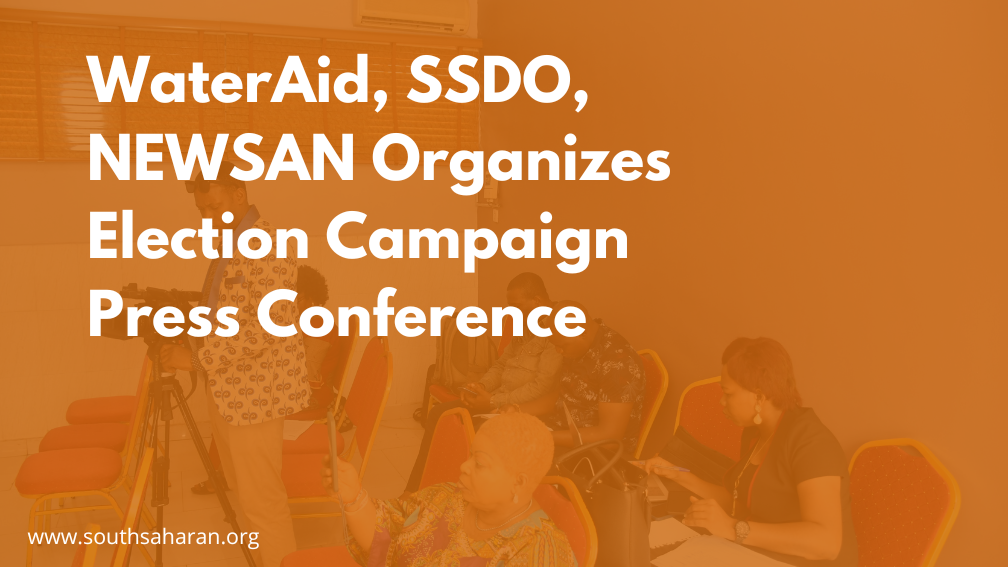
Understanding these challenges, WaterAid Nigeria, in partnership with South Saharan Social Development Organization and The Society for Water and Sanitation (NEWSAN) Enugu, organized an Electoral Campaign press conference to achieve the following:
Sensitize the public on the importance of WASH prioritization.
Garner the commitment of gubernatorial aspirants to prioritize access to efficient and equitable WASH services in the state.
Engage the media as pressure groups to sustain the campaign for WASH in the state.
The Enugu State Coordinator of NEWSAN read a press statement, and the coalition entertained questions from the press. Issues raised were also addressed.
The key asks by the coalition from the conference were:
Citizens should hold their representatives accountable for equitable and affordable WASH services.
Elected officials should prioritize access to efficient and equitable WASH services in their blueprint for governance.
Elected officials should ensure that WASH facilities are constructed and managed with sustainability.
The press should be advocates of WASH and, through their programs, query elected officials on WASH issues in the state.
The lack of access to water increases open defecation in communities. This pollutes the environment, contaminates water sources, and exposes the community to infectious diseases. If the WASH situation of the state is to change, then it is paramount that all residents of the state have access to potable water and sanitary facilities. Hence, the need to engage the government to improve WASH through policy and infrastructure.
Healthcare workers are the backbone of an effective healthcare system. Health officials are often front liners providing essential services at the community level. Based on the sensitivity of their jobs, they are frequently exposed to infections and diseases.
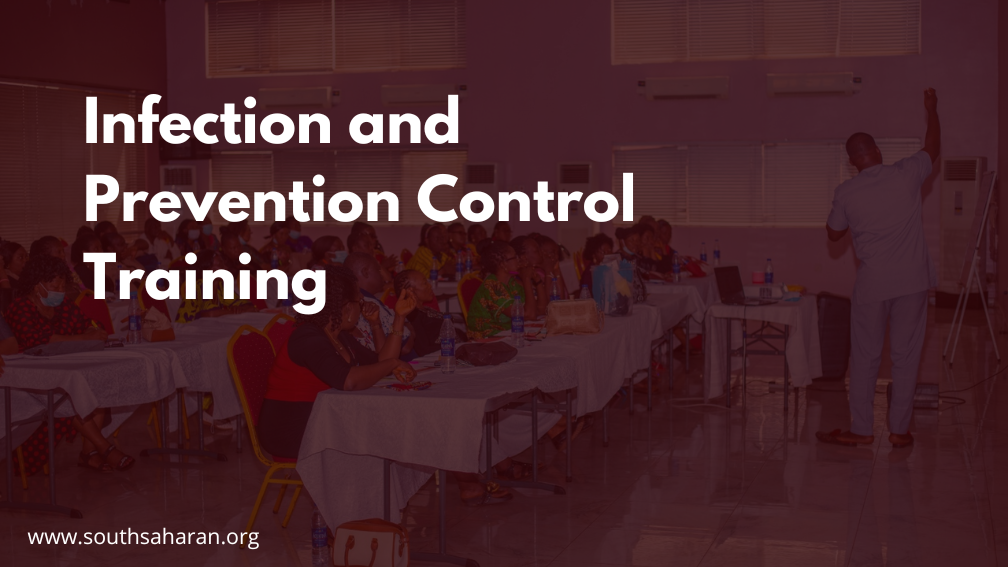
Understanding the constant risk healthcare workers are exposed to, WaterAid Nigeria and South Saharan Social Development Organization saw the need to organize a training workshop to strengthen the capacity of about 100 healthcare workers in Enugu State on infection and prevention control (IPC).
The training, which was held on the 19th and 20th of January, 2023, had health officials from different healthcare facilities and agencies in attendance. Three resource persons facilitated the training: University of Nigeria Teaching Hospital IPC specialist Dr. Onyekachi Ugwa, Enugu State Epidemiologist Dr. Ezeudu Chinyere, and Water and Sanitation Hygiene Consultant Jessica Ezeime.
The workshop covered topics such as environmental cleaning and disinfection, disease transmission, and precautions. Participants were better equipped on how to protect themselves and avoid being a source of infection to patients.
To support the efforts of the government to halt the spread of infectious diseases such as Diarrhea, cholera, coronavirus, and other WASH-related diseases; and consolidate on the gains and wins from previous projects in Enugu state, WaterAid Nigeria and South Saharan Social Development Organization (SSDO) conducted a practical training on Hygiene Behavior Change.
The training was designed to prepare facilitators for the community-based campaign under the Hygiene Behavior Change Coalition (HBCC) Phase II project. It covered behavior change analysis, theory of change, hand washing, food hygiene, safe use of water, and covid-19 vaccine uptake. A community session manual was used to teach the participants about the best approaches for community entry, program implementation, and creative approaches to achieve behavior change.
OBJECTIVES OF THE TRAINING
To acquaint facilitators with WaterAid’s Hygiene Behavior Change Approach
To introduce the Clean Family Campaign (Clean family, Happy family), its rituals and themes, as well as the key behaviors the campaign is trying to reinforce through surprises, fun, and exciting, attractive, and engaging games.
Train facilitators on the designed HBC intervention package for the HBCC II project and develop plans to roll out the pre-testing of the developed HBC tools in 8 communities in Igboeze North LGA.
Conduct Pre-test intervention package for community events 1,2,3 & 4 in selected communities and Household settings and collate feedback in terms of facilitation and content of the manual.
To improve the content of the manual and enhance the facilitation of the community events with information gathered from the events’ pre-testing activities.
The training sessions also focused on the following points.
Ensured everyone understands hygiene and its importance.
Participants understood that a creative/innovative process is more likely to change behavior.
Understood the key elements of the universal behavior change approach.
Deliver – implementing the intervention as developed; minimize the difference between the designed ideal intervention and the actual implementation in real life.
Community entry strategy and how to implement it according to design
Making sessions participatory and interesting for community members
SSDO collaborated with CSO partners who have been part of the HBC implemented in Bauchi State to train the facilitators to have an in-depth understanding of the final HBC Package developed for the HBCC II project to be implemented at community and household levels. The participants were also guided to practically understand the finalized packages through explanations, group simulation/rehearsal, and plenary presentation towards behavior change that will prevent and control the spread of infectious diseases like COVID-19, Diarrhea, Cholera, Lassa fever, among others, and bring dignity.
After the training, participants conducted a pre-test intervention in different communities and households to properly internalize the approach and collect feedback from the communities in a truly participatory monitoring and evaluation process. Participants include members of the Igbo-Eze WASH unit, the State Ministry of Health Epidemiology Unit, the Office of the State Director of Public Health, Primary Healthcare Development Agency, among others.
The HBCC II project is funded by the Foreign, Commonwealth and Development Office (FCDO) and Unilever to combat new Covid-19 variants through hygiene behavior change, rehabilitation, and construction of Handwashing Facilities (HWFs) and support for increased COVID vaccine uptake in Bauchi and Enugu states.