

South Saharan Social Development Organisation (SSDO) strengthens community health and gender systems by supporting interventions that improve health education, empower young people, and promote sustainable solutions to everyday challenges.
Menstrual health remains an important public health and education issue. Many adolescent girls continue to face barriers to accurate information, affordable menstrual products, and supportive environments that allow them to manage menstruation safely and confidently. Addressing these challenges requires community-led interventions that combine health education with practical, sustainable solutions.
Through the Iwollo Period Dignity Project, SSDO provided technical support for a capacity-building initiative that equipped secondary school students with practical menstrual health knowledge and leadership skills in Enugu State.
Strengthening Menstrual Health Education in Schools
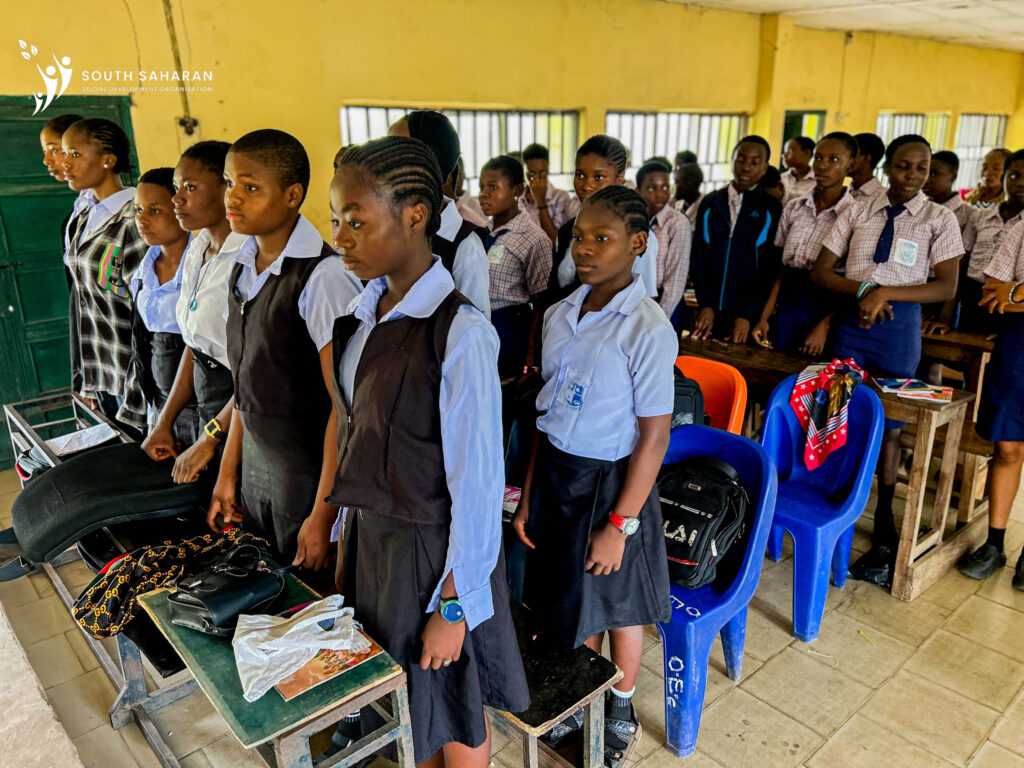
As Technical Partners for the Iwollo Period Dignity Project, SSDO supported a Training of Trainers programme involving 50 secondary school students drawn from four schools in Iwollo, Enugu State.
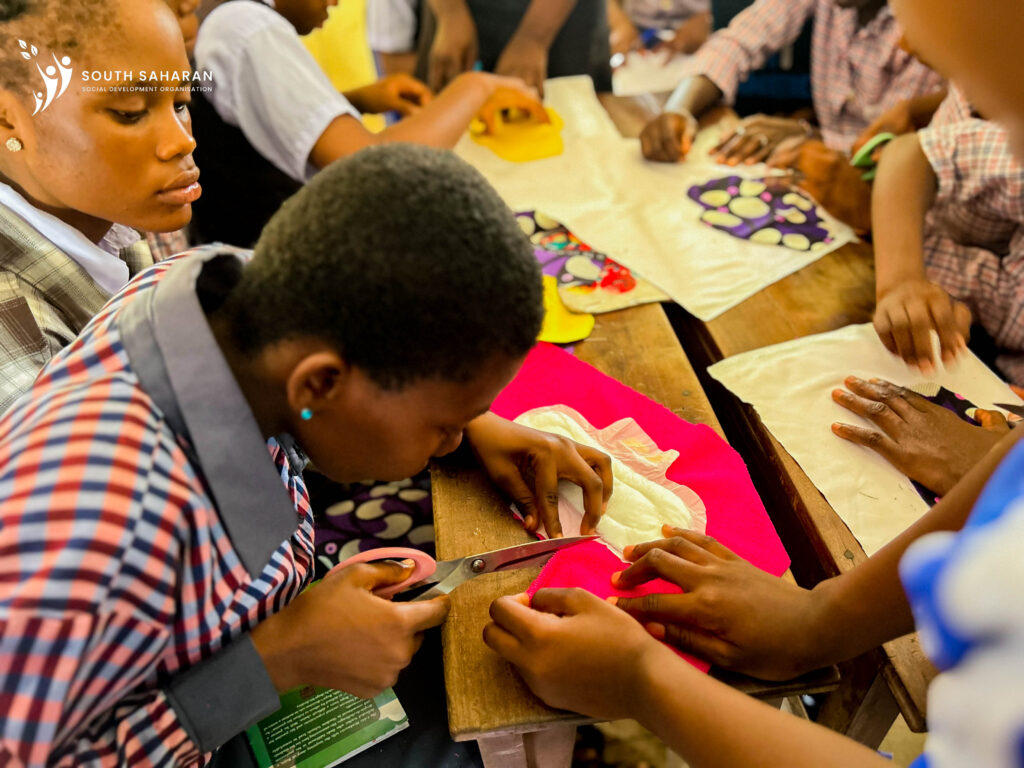
The intervention focused on two complementary areas: menstrual hygiene management and the practical production of reusable sanitary pads. By combining health education with hands-on skills development, the programme sought to improve access to affordable menstrual products while increasing knowledge about healthy menstrual practices.
This approach recognises that improving menstrual health requires more than awareness alone. Young people also need practical solutions that reduce barriers to menstrual dignity and school participation.



Building Skills Through Practical Learning
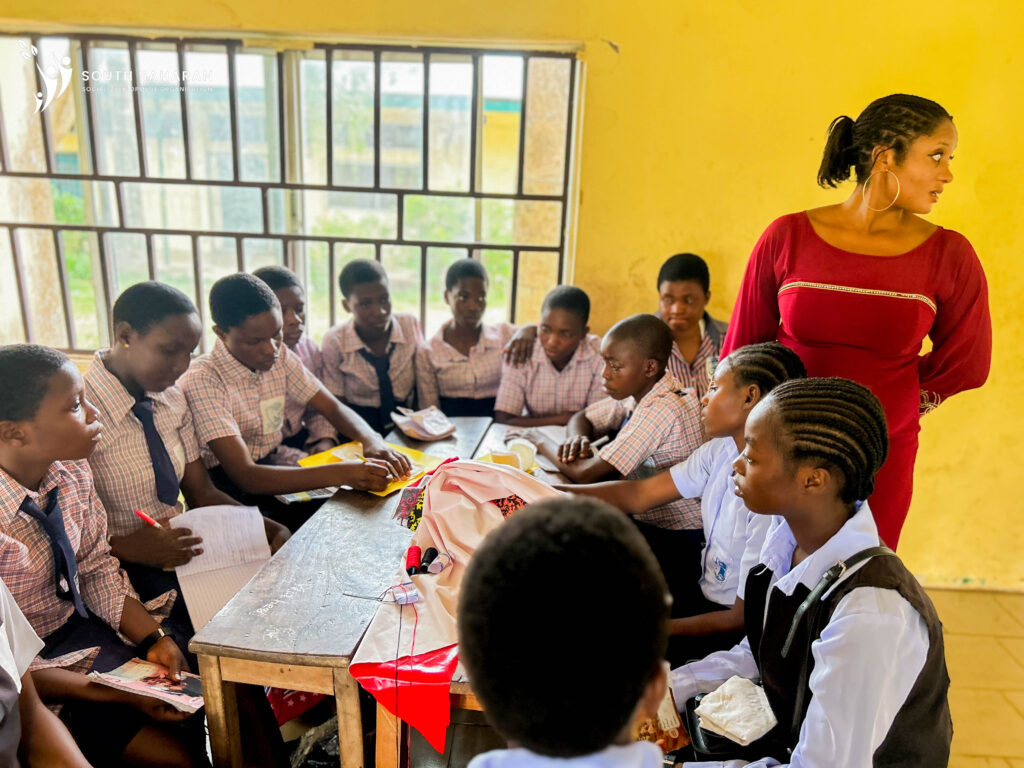
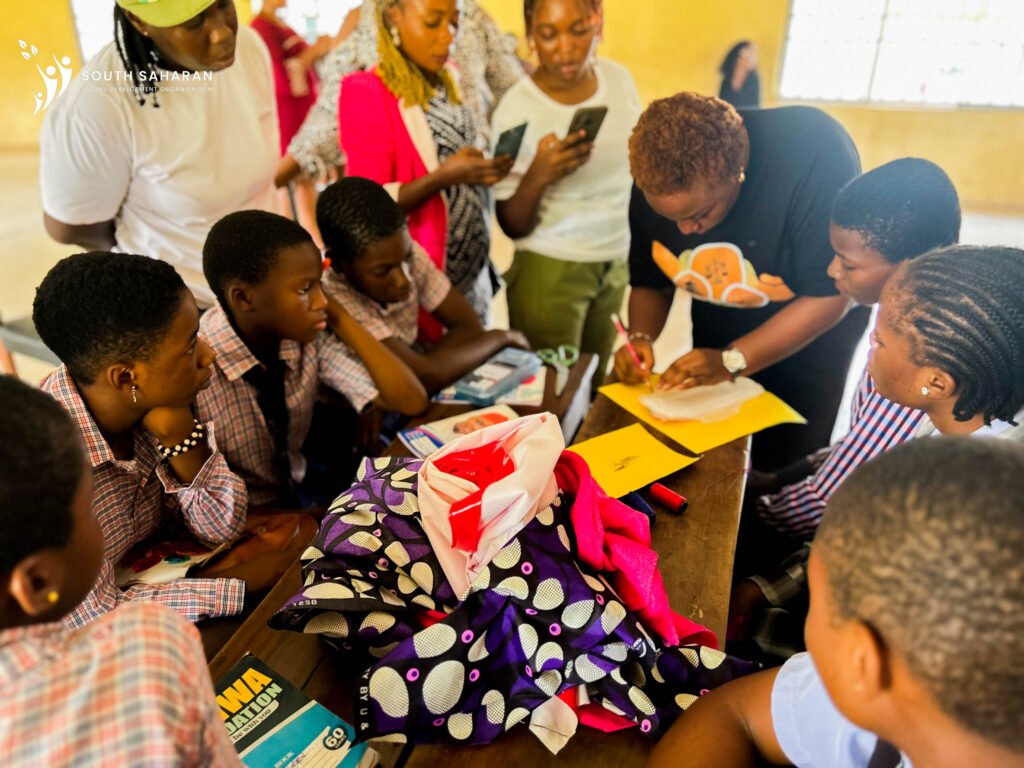
The training adopted an interactive learning model that encouraged participation, discussion, and practical application.
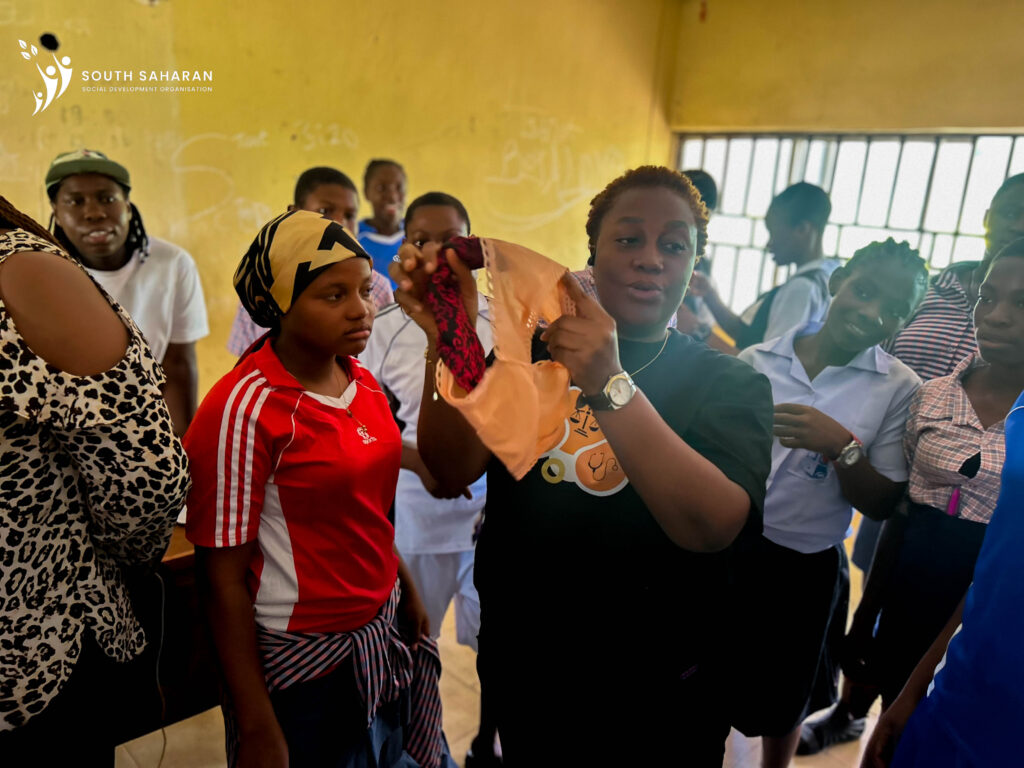
Facilitators Obianuju Ezeike (PMD Pro, BPH), Favour Kalu (PMD Pro, B.Mcb), and Hannah Okugo guided participants through sessions on menstrual health, personal hygiene, and the production of low-cost reusable sanitary pads.
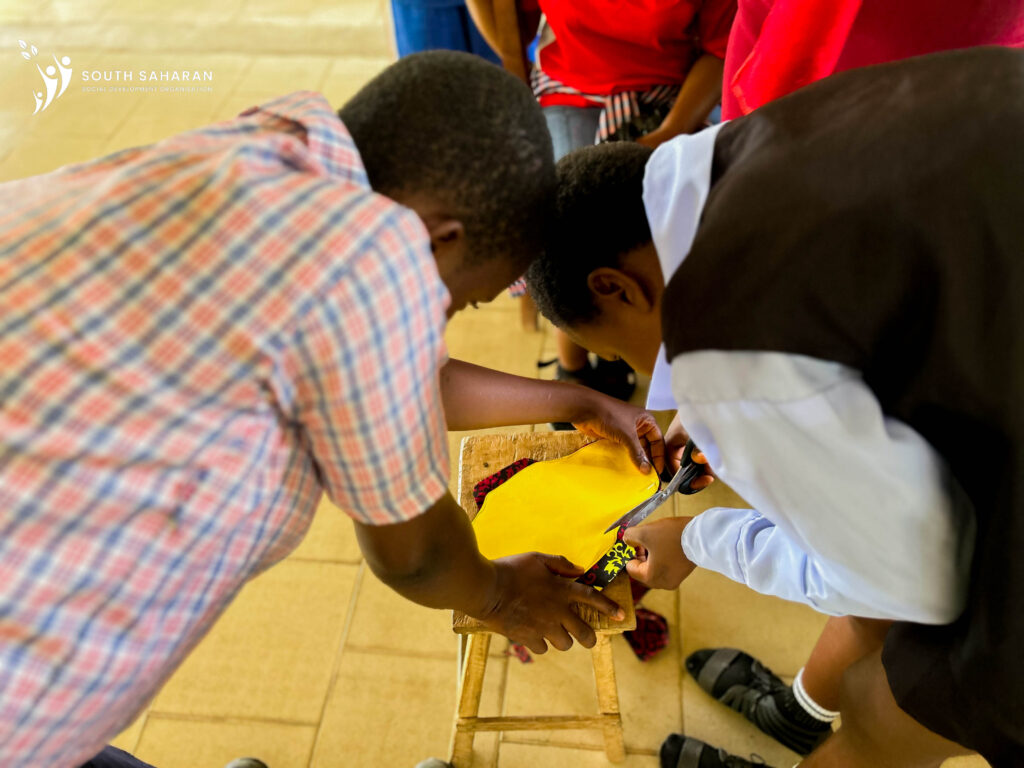
Hands-on group exercises enabled students to apply newly acquired knowledge while building confidence in producing reusable menstrual products that are affordable, environmentally sustainable, and accessible within their communities.
This practical approach strengthened participants’ understanding of menstrual hygiene while equipping them with skills they can continue to use beyond the training.

Creating Menstrual Hygiene Champions
A key feature of the Iwollo Period Dignity Project was its Training of Trainers model.
Rather than limiting the intervention to the students who attended, participants were equipped as Menstrual Hygiene Champions, with responsibility for sharing their knowledge and practical skills with fellow students in their respective schools.
This peer-to-peer learning model creates a multiplier effect by extending accurate menstrual health information beyond the initial training participants. It also encourages young people to become advocates for healthy practices while reducing stigma surrounding menstruation.
Strengthening leadership among adolescents ensures that menstrual health education becomes more sustainable and community-owned over time.


Promoting Sustainable Community Impact
The intervention also demonstrates the value of collaboration in addressing community health challenges.
SSDO commends Corps Member Osawemen Miracle Ronke for identifying an important community need and mobilising stakeholders to implement a sustainable intervention that promotes health, dignity, and leadership among adolescent girls.
By combining technical expertise with local leadership, the project strengthens both community ownership and long-term impact.
Strengthening Health and Dignity Through Community Action
Improving menstrual health requires systems that combine education, practical skills, community participation, and sustainable access to menstrual products.
Through the Iwollo Period Dignity Project, SSDO continues to strengthen community health systems by supporting evidence-informed interventions that promote menstrual dignity, empower young people with practical skills, and build local leadership for lasting change across Enugu State.