SSDO

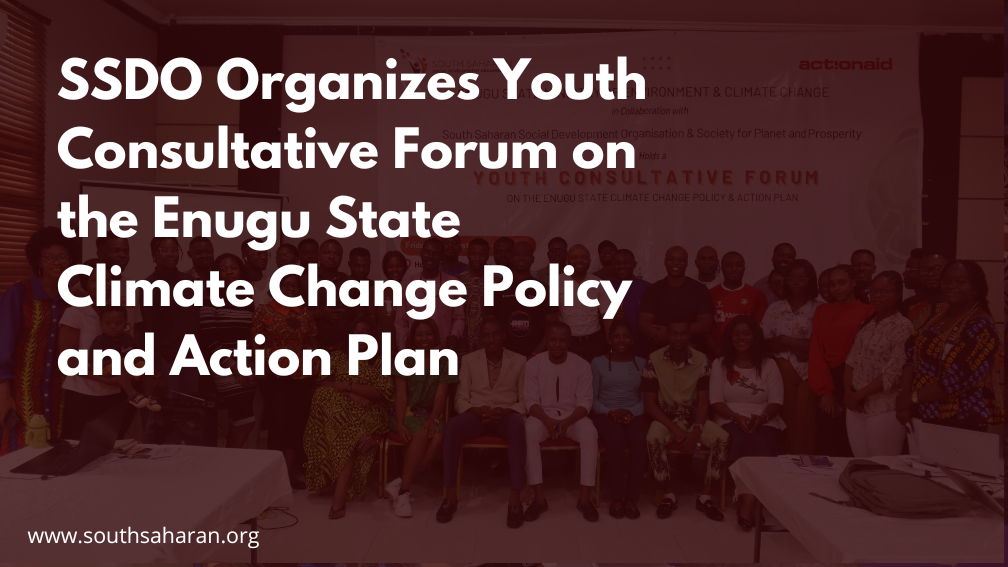
SSDO Organizes Youth Consultative Forum on the Enugu State Climate Change Policy and Action Plan 

In the face of growing climate challenges, the need for proactive, sustainable solutions has never been more urgent. Climate change, driven by human activities like deforestation, fossil fuel use, and industrial emissions, is no longer a distant threat. Its impacts are already manifesting in altered rainfall patterns, rising temperatures, and increased flooding, which severely affect food security, public health, and livelihoods, particularly in vulnerable regions like Enugu State.

Enugu, like many other regions in Nigeria, is experiencing the harsh realities of climate change. The state has been plagued by unpredictable rainfall, worsening heatwaves, and flooding, which have disrupted agriculture, reduced crop productivity, and degraded the environment. These challenges not only threaten the livelihoods of many but also jeopardize the long-term sustainability of the region.

Recognizing these pressing issues, South Saharan Social Development Organization (SSDO) has taken a pivotal step by organizing a Youth Consultative Forum on the Enugu State Climate Change Policy & Action Plan. This event, held on August 30th, 2024, in collaboration with the Enugu State Ministry of Environment & Climate Change, ActionAid Nigeria, and Society for Planet and Prosperity, is a strategic initiative to engage the youth in the fight against climate change.

Why Youth Engagement Matters

Young people are the most affected by the long-term consequences of climate change. They are also the most invested in ensuring that policies aimed at mitigating and adapting to climate impacts are effective and equitable. However, their voices are often underrepresented in policy-making processes. The Youth Consultative Forum aims to change that by providing a platform for young people to engage in meaningful discussions on climate policy, share their knowledge and experiences, and contribute to the development of the Enugu State Climate Change Policy and Action Plan.

The forum is not just a discussion platform; it is a catalyst for action. By bringing together youth leaders, civil society organizations, private sector actors, and government officials, the event fosters partnerships that will support the implementation of the climate policy. This collaborative approach ensures that the policy is not only reflective of the concerns of the youth but also responsive to the needs and aspirations of the wider community.

A Structured Approach to Problem-Solving

The event’s agenda was meticulously designed to maximize impact. Group sessions were organized with youth representatives from various sectors, allowing for focused discussions on specific climate-related challenges. These sessions provided a space for participants to delve deep into issues, share insights, and propose actionable solutions. Following the group discussions, representatives presented their findings during a panel session, ensuring that the diverse perspectives of the youth were brought to the forefront.

The outcome of this forum will be a comprehensive set of youth-driven recommendations and contributions that will be integrated into the Enugu State Climate Change Policy and Action Plan. These recommendations will focus on enhancing climate resilience, promoting sustainable practices, and ensuring the policy’s effectiveness in addressing the unique challenges faced by Enugu State.

Building a Sustainable Future Together

The Youth Consultative Forum aligns with the strategic objectives of the Strategic Partnership Agreement (SPA II) project, funded by the Danish International Development Agency (DANIDA). The project aims to achieve improved realization of basic human and democratic rights, sustainable livelihoods, and resilience for young people, especially young women living in marginalization, including in disaster and protracted crises contexts in Nigeria. By engaging youth in the policy development process, SSDO and its partners are empowering the next generation of climate leaders and ensuring that the Enugu State Climate Change Policy is not only robust but also sustainable.

As the effects of climate change continue to escalate, the importance of youth engagement cannot be overstated. The Youth Consultative Forum is a testament to the power of collective action and the pivotal role that young people play in shaping a sustainable future. Through this initiative, SSDO and its partners are not only addressing the immediate challenges posed by climate change but also laying the foundation for a resilient and prosperous Enugu State.

Conclusion

The Youth Consultative Forum is more than just an event; it is a movement towards a greener, more sustainable Enugu State. By empowering young people to take the lead in climate action, SSDO and its partners are ensuring that the fight against climate change is not only inclusive but also effective. The recommendations and insights gathered from this forum will play a critical role in shaping a climate-resilient policy that addresses the unique needs of Enugu State and sets a precedent for other regions to follow.

As we look to the future, it is clear that the fight against climate change will require the concerted efforts of all stakeholders. But with the youth at the forefront, there is hope that we can build a sustainable and resilient future for generations to come. Together, we can make a difference.
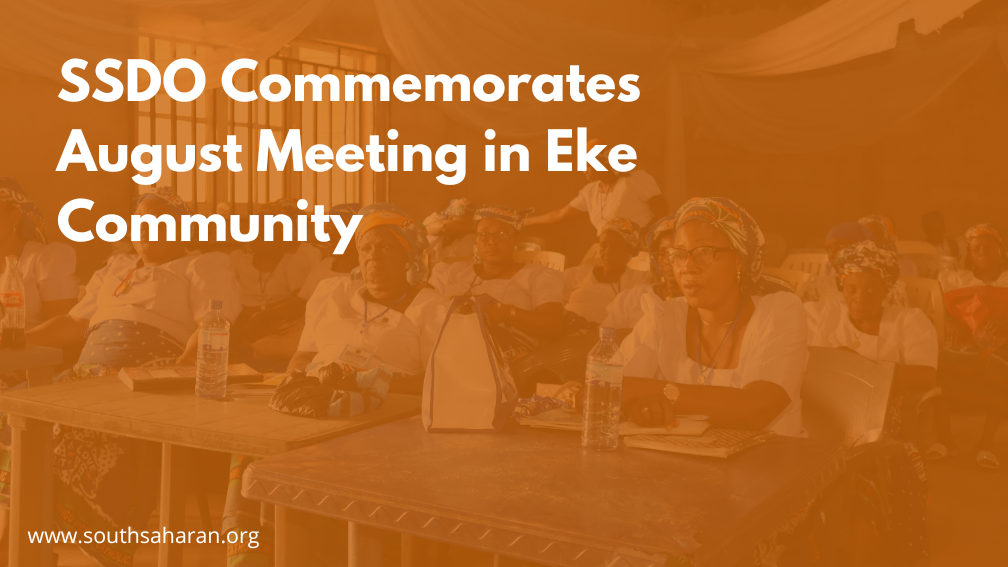
SSDO Commemorates August Meeting in Eke Community

In the heart of Igbo land, the annual “August Meeting” is a cherished tradition, often referred to as the Mother’s Congress. During this time, Igbo women from across the cities and diaspora return to their hometowns to reconnect, strengthen bonds, and most importantly, contribute to the growth and development of their communities. These gatherings are not only social in nature but are also a powerful vehicle for collective action, where women unite to embark on projects that enhance healthcare, peacebuilding, education, and overall community well-being.

Recognizing the significance of this tradition and the critical role that women play in family and community development, the South Saharan Social Development Organization (SSDO) took active steps to commemorate this year’s August Meeting with the women of Eke community in Udi Local Government Area (LGA). This initiative was driven by SSDO’s ongoing commitment to gender equality and the empowerment of women through its Sister Guardian Initiative project.

Empowering Women to Combat Domestic Violence

One of the highlights of SSDO’s participation in the August Meeting was the capacity-building session led by Blessing Uchendu, SSDO’s Gender and Protection Programme Lead. The session focused on a critical issue affecting women and girls globally: domestic violence. Domestic violence remains a pervasive problem that undermines the safety, health, and dignity of women. Recognizing this, the training provided the women of Eke community with essential knowledge on the causes and effects of domestic violence, equipping them with the tools to recognize abuse, and most importantly, how to take action against it.

The training emphasized the importance of reporting domestic violence, guiding the women on where and how to report incidents and ensuring they understand the necessary steps to follow up on these reports. By empowering women with this knowledge, SSDO aims to create a safer environment where women and girls can live free from fear and violence.

Raising Awareness on Women’s Rights and Legal Protections

In addition to addressing domestic violence, SSDO’s team utilized the August Meeting as a platform to raise awareness about women’s rights and the laws that protect them. This effort was part of SSDO’s broader goal to ensure that women are not only aware of their rights but are also empowered to demand and defend them. By fostering a deep understanding of legal protections, SSDO hopes to inspire more women to advocate for themselves and others within their communities.

Addressing Broader Issues

Beyond the immediate concerns of domestic violence and legal awareness, the August Meeting provided an opportunity to discuss other pressing issues that affect women in Eke community and beyond. These included:

Economic Empowerment: The women were educated on various strategies to improve their economic standing, with a focus on leveraging opportunities for growth and financial independence.

Political Inclusion: SSDO emphasized the importance of women’s participation in politics, encouraging them to take on leadership roles and engage actively in decision-making processes that affect their lives and communities.

Violence Against Women: The discussion extended to other forms of violence that women face, highlighting the need for continuous advocacy and community-based interventions to protect women and girls.

Female Genital Mutilation (FGM): FGM remains a deeply entrenched practice in some communities, posing serious health risks and violating the rights of girls and women. SSDO reinforced its stance against FGM and encouraged the women of Eke to join in the fight to end this harmful practice.

Advocacy: The importance of advocacy was underscored, with SSDO encouraging the women to become advocates for change in their communities, particularly in areas related to gender equality and women’s rights.

Leveraging Jacob’s Well for Business Growth

A unique aspect of the capacity-building session was the introduction of Jacob’s Well, a project designed to support women in growing their businesses. The SSDO team sensitized the women on how to effectively leverage the project to acquire credit to grow their businesses, providing them with a valuable tool to achieve greater financial independence and success in their entrepreneurial endeavors.

Looking Ahead: Strengthening Community Development through Women’s Empowerment

The August Meeting in Eke community was more than just a gathering; it was a testament to the power of collective action and the impact that women can have when they are empowered with knowledge and resources. SSDO’s participation in this year’s event through the Sister Guardian Initiative highlights the organization’s commitment to supporting women in their roles as community builders and leaders.

As SSDO continues its work in Eke and other communities, the focus will remain on empowering women, addressing the challenges they face, and ensuring that they have the tools and support needed to drive sustainable development. By standing with these women and providing them with the capacity to overcome obstacles, SSDO is helping to build stronger, more resilient communities where everyone can thrive. 

The journey towards gender equality and women’s empowerment is ongoing, but with initiatives like this, we are moving closer to a future where every woman is empowered to contribute fully to the development of her family, community, and society at large.

WASHCOMS Peer Review Exercise: Strengthening Water, Sanitation, and Hygiene Committees in Igbo-Eze North LGA

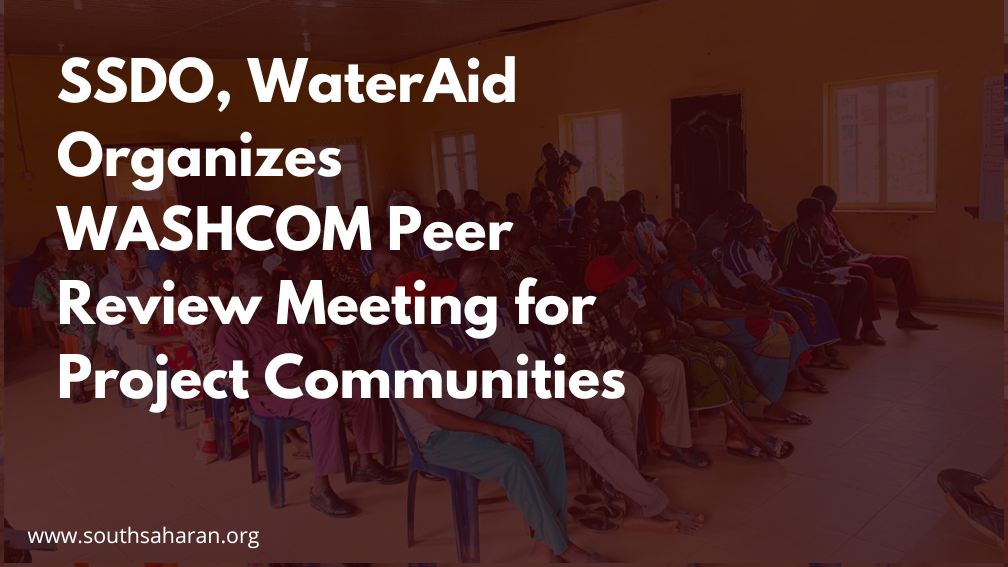
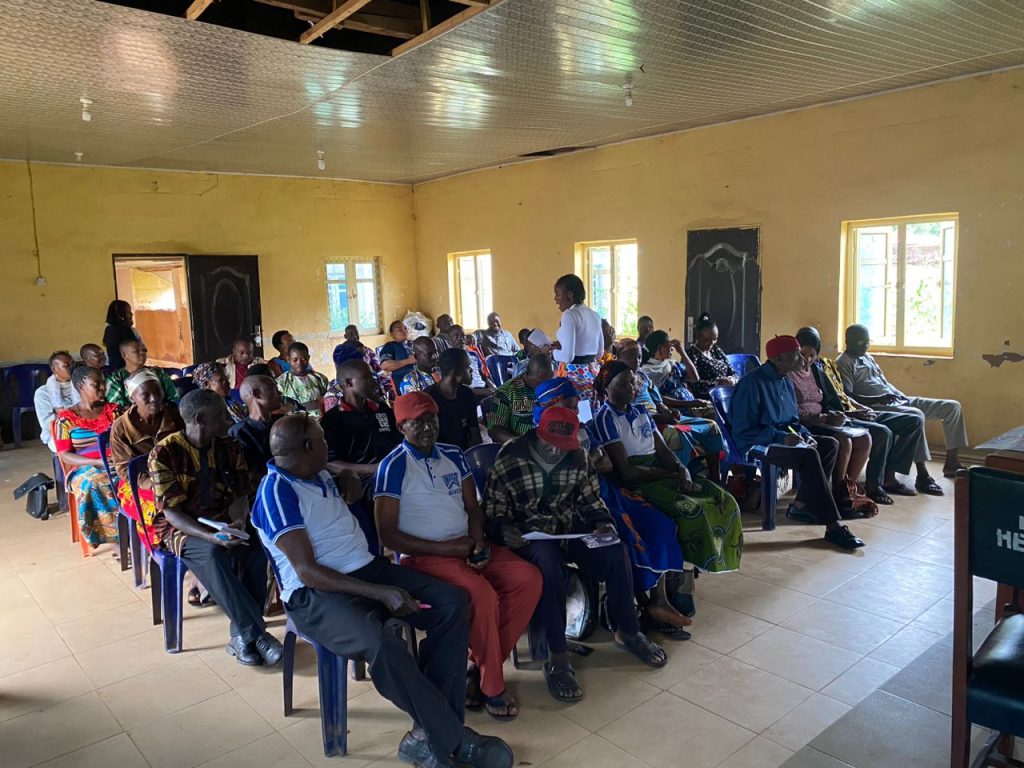
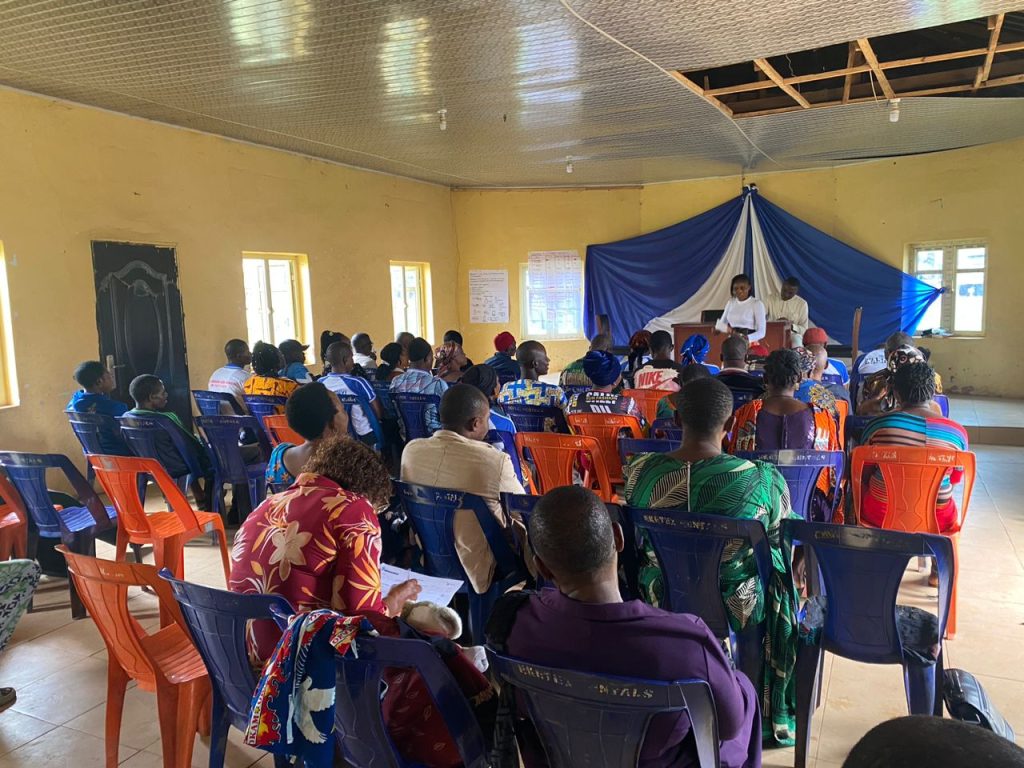
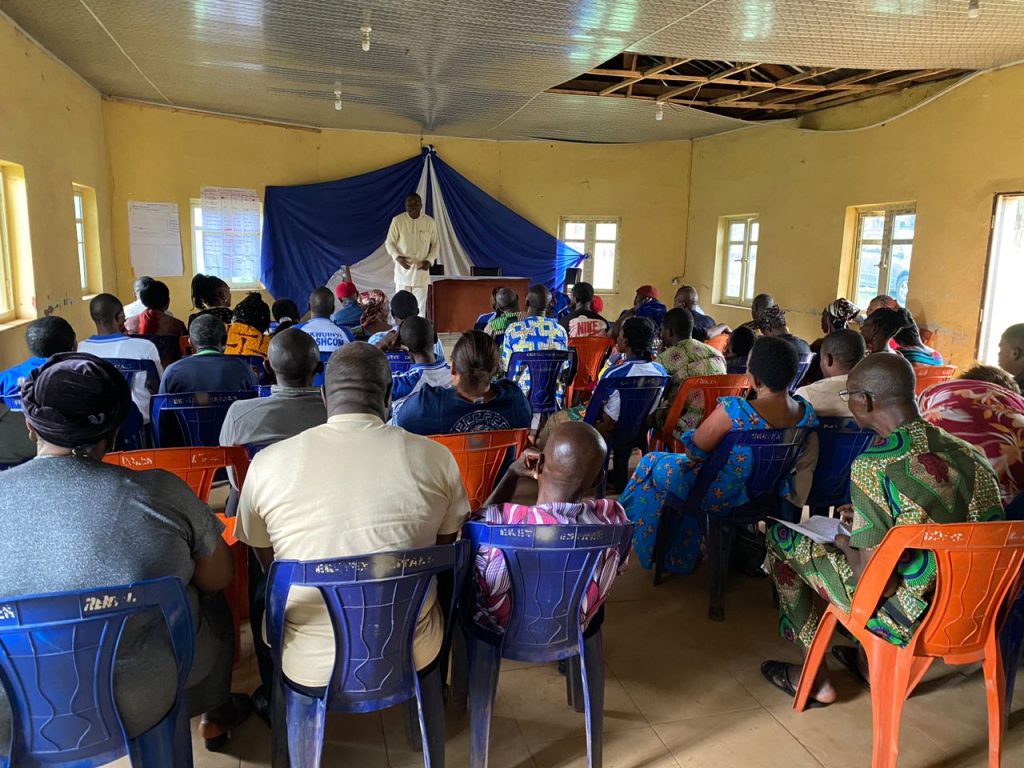
At South Saharan Social Development Organization (SSDO), we are committed to enhancing the well-being of our communities through sustainable water, sanitation, and hygiene (WASH) initiatives. We are thrilled to share the success of the recent WASHCOMS Peer Review Exercise held on the 18th and 19th of July 2024 in Igbo-Eze North Local Government Area (LGA).

Background

In 2019, WaterAid, in partnership with SSDO, initiated a project funded by the Global Environment & Technology Foundation (GETF) to construct a motorized generator-powered borehole. This project also established a Water Consumers Association (WCA) trained to manage the facility, which has been functioning optimally for over four years. Building on this success, similar projects were commissioned in the Amufie and Ukwuinyi communities under the LDSC year one phase, with an additional generator-powered borehole currently under construction in the Mboshi-Aji community.

Objective

The primary objective of the WASHCOMS Peer Review Exercise was to ensure the sustainability and proper functioning of the water schemes in the Amufie, Umuabor, Ukwuinyi, and Mboshi-Aji communities. WaterAid, in partnership with SSDO and the State Ministry of Water Resources, organized this two-day exercise to evaluate and enhance the effectiveness and efficiency of Water, Sanitation, and Hygiene Committees (WASHCOMs) through peer review. The event aimed to foster knowledge exchange, identify best practices, and recommend improvements for sustainable management and community engagement in WASH initiatives.

Participants

The peer review exercise saw the active participation of representatives from WASHCOMs in Umuabor, Amufie, Ukwuinyi, and Mboshi-Aji communities, along with officials from ENSTOWA-Enugu State Ministry of Water Resources, Igbo-eze North WASH unit staff, WOSCONET, WaterAid, and SSDO.

Day 1 Highlights

The first day commenced with an opening prayer, followed by introductions. Miss Ijeoma Okugo, SSDO WASH Staff, outlined the meeting’s objective, while Mr. Emmanuel Obuna, Sanitation Officer-ENSTOWA, provided an overview of the financial aspects of facility management and maintenance. Discussions covered various topics such as water user fees, diesel prices, tank capacity, pumping hours, fuel usage, generator capacity, profit, expenses, utility repairs, and stipends.

Mr. Levi, Igbo-eze North WASH HOD, emphasized the importance of teamwork, collaboration, role clarity, and effective communication among committee members. Participants from different WASHCOMs shared their experiences, challenges, and solutions.

Day 2 Highlights

The second day began with a recap session led by the sanitation officer, followed by a comprehensive hygiene session conducted by Mrs. Juliet, Sanitation Assistant-ENSTOWA. She covered crucial domains of hygiene, including water hygiene, food hygiene, menstrual/personal hygiene, and hand hygiene, teaching participants proper handwashing techniques and the critical times for handwashing.

Mr. Emmanuel facilitated a session on sanitation, explaining various sanitation kits, hygiene kits, sanitation and hygiene-related diseases, and the importance of good hygiene and sanitation. Participants’ questions were addressed comprehensively, and WASHCOMs received notebooks for financial recording and visitor logging.

Action Plans

WASHCOMs developed action and sustainability plans with timelines and assigned responsibilities, guided by the sanitation officer. Key activities included training of scheme operators, reviewing stipends, advocacy visits, recruitment of new committee members, and awareness creation. The comprehensive action plan aims to ensure the continued effectiveness and sustainability of the water schemes in these communities.

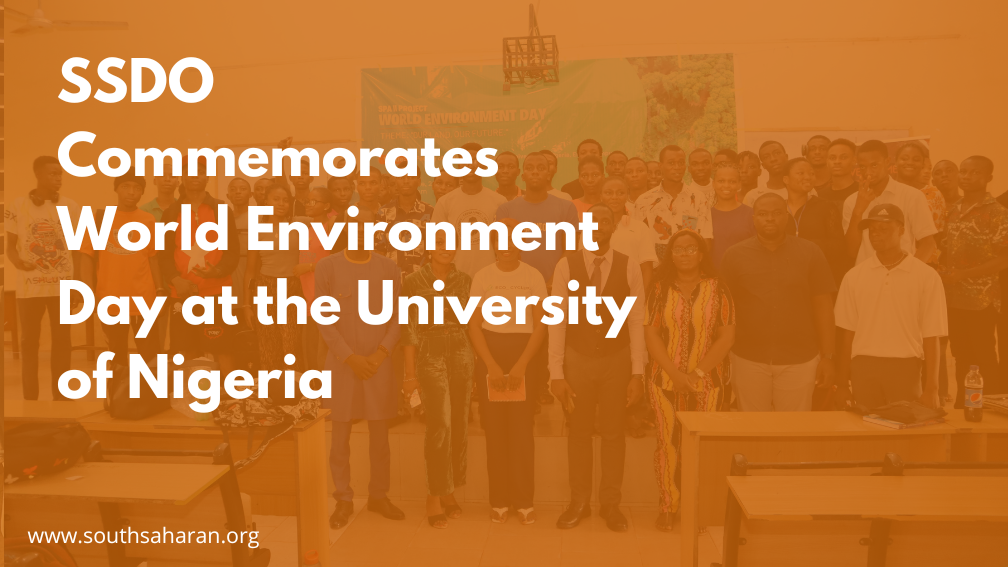
SSDO Commemorates World Environment Day at The University of Nigeria

Climate change, driven by greenhouse gas emissions from human activities, is a global crisis manifesting in rising temperatures, altered precipitation patterns, severe weather events, and sea level rise. These changes pose significant risks to ecosystems, human health, food security, water resources, and economic stability.

In Nigeria, the impacts of climate change are evident in desertification, land degradation, increased flooding, and reduced agricultural productivity. Enugu State faces challenges such as disrupted agricultural activities, soil erosion, land degradation, and an increased prevalence of waterborne diseases due to altered rainfall patterns and rising temperatures.

South Saharan Social Development Organization with support from ActionAid understanding this challenge took the initiative to implement a one-day sensitization outreach and climate policy dialogue session at the Faculty of Environmental Studies, University of Nigeria, Enugu Campus. The aim of the event was to enhance environmental sustainability, raise awareness, and encourage proactive environmental stewardship among students. This is crucial for promoting sustainable development and building resilience against the adverse impacts of climate change.

Participants were enlightened on how to protect the environment in their own way. They were educated on practical steps that would protect the environment such as recycling, tree planting, and animal breeding as a way to improve biological conservation of endangered species. 

Okoh Happiness, a part 2 student shared, “Before now, I never thought I had a part to play in improving or supporting the environment. I always thought it was the government’s responsibility. But now, I see how I can improve environmental sustainability and biodiversity by breeding grasscutters rather than focusing on consumption.”

Okweye Blessed, a final year student shared, “I have been enlightened to how much impact planting trees have on our environment. Rather than looking for walls or boards to sign my name on, I could invest by planting a tree.”

Grace Okeke a third-year student shared, “I didn’t know plastics had so much impact on the environment. After the session, I realized that beyond even cleaning the environment, I could make money by the side doing it. I am grateful to SSDO and ActionAid for the training.

Because of SSDO and ActionAid’s intervention, more students participated in the dialogue session which provided more insights and recommendations from a youth perspective for the ongoing Enugu State Climate Change Policy. There’s also an increased involvement of students in environmental initiatives and activities on campus and in the wider community.

Ikechukwu Favour, the faculty president was excited about the impact of the initiative. “Because of the SPA II programme by ActionAid, we are proud we will be turning out more enlightened and empowered youths. They won’t just be looking for employment but are positioned to be employers of labor themselves.”

The students asked questions, got clarifications, and proffered solutions based on how climate issues affect them.

Transformative Empowerment: A Tale of Resilience and Progress 

This piece delves into the poignant narrative of a community grappling with the multifaceted impact of poverty on its women. It unfolds the pressing need for empowerment, as the women yearned for opportunities that would break the shackles of financial deprivation and dismantle the barriers restricting their potential. In the face of these challenges, the community found an unexpected ally in South Saharan Social Development Organization, SSDO, an organization that became a beacon of hope, introducing the transformative Sister Guardian Initiative and Economic Empowerment. This is a tale of dreams taking flight, a community transcending adversity, and the remarkable journey toward empowerment that has forever altered the landscape of the community.

In the heart of Umuode community, Nkanu East where the echoes of hardship reverberated through every humble dwelling, the story of resilience and triumph unfolded. For the women of this close-knit community, poverty cast a long shadow, and the societal roots of gender-based discrimination deepened their struggle. As the oppressive forces of economic hardship and unequal opportunities took their toll, a collective call for change emerged from the hearts of the women in Umuode. 

In the not-so-distant past, the Chizaram Farmers Multipurpose Cooperative Umuode, nestled in the Nkanu East Local Government Area of Enugu State, grappled with the harsh realities of poverty. Mrs. Ani Faithful, a member of the cooperative, vividly recounts the challenging times when meager livelihoods were sustained through small businesses, mere tables, and kiosks acting as the stage for their economic pursuits. 

“Many of us struggled to raise funds to grow our businesses. We knew what we wanted and where we saw ourselves but the limiting factor was money. Rather than stay idle, I started by selling provisions in a small kiosk, hoping to raise enough money to go into rice farming.” 

Adding to their struggles was a deeply ingrained societal bias that denied women access to land, exacerbating the cycle of poverty and inequality. 

“In our community, women are not given land to farm like the men. This was a huge challenge to my goal of becoming a rice farmer. And this worsened an already dire situation.” 

Women’s Empowerment, The Way Forward

Recognizing the dire need for change, the call for women’s empowerment resonated profoundly within the cooperative. The oppressive grip of poverty, coupled with gender-based discrimination, spurred a collective desire for transformation. It was against this backdrop that SSDO, a beacon of hope for marginalized communities, stepped in with the Sister Guardian Initiative and Economic Empowerment through Jacob’s Well project.

In 2020, SSDO, through its Jacob’s Well Officer, Stella Ani, and Gender Protective Lead, Blessing Uchendu, introduced the initiatives to Chizaram Farmers Multipurpose Cooperative Umuode. The initiative aimed to address both the immediate economic challenges faced by the women and the underlying societal issues perpetuating gender inequality. 

Women working on their rice plantation

Advocacy for Women’s Rights

Stella Ani and Blessing Uchendu became catalysts for change, utilizing advocacy as a powerful tool to dismantle barriers. They engaged with key stakeholders, including the Igwe and his Cabinet, the President General, and other influential figures, and sought to challenge the status quo. They advocated passionately for women’s right to land and their rightful place in decision-making bodies, igniting a spark of change in the community’s consciousness.

“We understand that for any community to fully thrive, there’s must be a deliberate effort to liberate and empower the women to not just be backbenchers but active contributors to the economy. This was our focus with our initiatives,” Blessing shared. 

Now the community is more inclusive and a more adequate representation of what a thriving society should be — one with ample opportunities for women.  

Stella Ani paying a supervisory visit to the rice plantation

Dream Becomes Reality

Having addressed flaws in ideologies, norms, and beliefs, it was time to empower the women with capital to achieve their goals of becoming rice farmers. SSDO further supported the cooperative with over 2 million naira to help the female farmers purchase equipment, cultivate, and grow rice. SSDO’s involvement also helped the cooperative secure a partnership with the International Fund for Agricultural Development, IFAD. This helped them secure farm inputs and cassava processing plant that has drastically improved their productivity and yield.

Woman standing next to the processing plant provided by IFAD. 

Here are some of the wins of the Sister Guardian and Jacob’s Well endeavors in the community: :

  •  Land Allocation:

   The community responded to the call for equality by allocating 15 acres of land to the women, unlocking a realm of possibilities for farming and economic ventures.

  • Inclusion in Leadership:

   The once marginalized women now hold esteemed positions, with three members of the Sister Guardian Initiative serving in the Igwe’s Cabinet and two contributing actively to the Town Union.

  •  Respect and Recognition:

   The societal shift is palpable, with women no longer relegated to the shadows; they bask in newfound respect and recognition, transforming not only their individual lives but also the community’s perception of gender roles.

  • Business Evolution:

   Breaking free from the constraints of table and kiosk businesses, the women have evolved into successful rice farmers, marking a tangible shift from subsistence to sustainable entrepreneurship.

  • Business Literacy:

   The initiative instilled essential business literacy skills, equipping the women with the knowledge to manage and grow their enterprises. Business record-keeping has become second nature, empowering them to make informed decisions for sustained growth.

  • Familial Harmony:

   As the women prosper, the positive ripple effect extends to familial harmony, creating an environment conducive to personal and collective growth.

Female Farmers of Chizaram Multipurpose Cooperative during harvesting season

The Power of Social Development Initiative 

The journey from adversity to achievement in Chizaram Farmers Multipurpose Cooperative and for women at large in Umuode showcases the transformative impact of strategic social development initiatives. South Saharan’s unwavering commitment to women’s empowerment has not only broken the shackles of poverty and gender-based discrimination but has also sown the seeds of lasting change within the fabric of the community. As the women stand tall, proud, and empowered, their success story resonates as a beacon of hope for other marginalized communities yearning for transformation.