SSDO

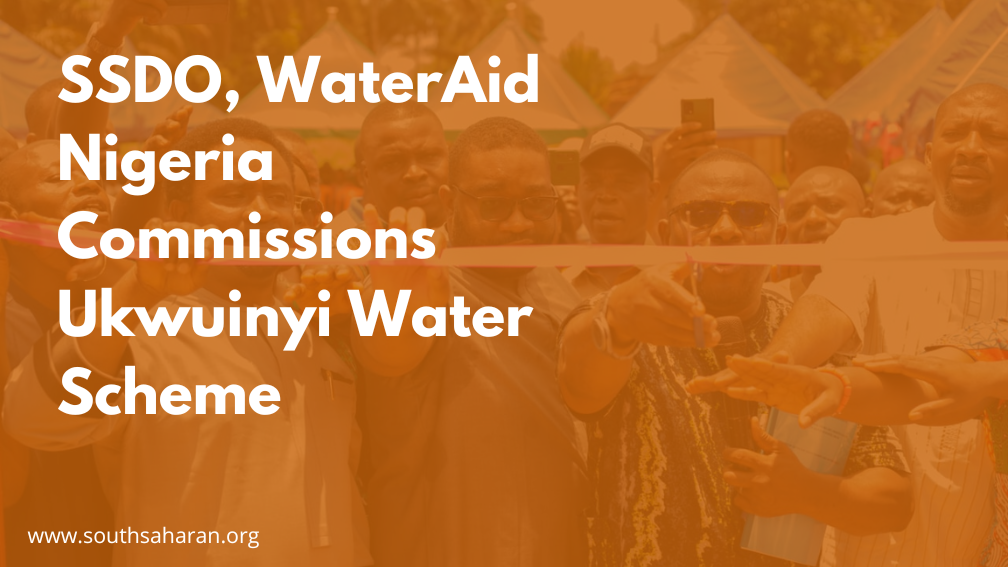
SSDO, WaterAid Nigeria Commissions Ukwuinyi Water Scheme 

In Nigeria, more than 60 million people do not have access to basic water supply. Over 12 million people lack access to toilet facilities. About 29 percent of children do not have water to meet their daily needs. Thus affecting their ability to attend school and wash their hands properly to fight off diseases. In Enugu, half of the state’s residents lack access to basic water services. 

Understanding this challenge, South Saharan Social Development Organization, in partnership with WaterAid Nigeria through the Latter Day Saints Charity Project, has provided a 40,000-liter water scheme at Ukwuinyi community, Igbo-Eze North LGA, leveraging the kiosk model to ensure proper dissemination. This is part of the interventions under the second phase of the Strengthening Water and Sanitation Delivery Project.  

The water scheme will help to reduce open defecation and keep Enugu on course to achieve an open defecation-free status by 2030. It will reduce the likelihood of waterborne diseases like cholera, diarrhea, and dysentery that the community suffers before the installation. And help community children focus more on their education as the distraction of going long distances to draw water has been eliminated.

Dignitaries present at the Project commissioning and handover include the Honorable Commissioner for Water Resources, Dr. Felix Nnamani, Special Adviser to the Enugu State Governor on Donor Relations, Hon. Dubem Onyia, WaterAid Country Director represented by Mr. Solomon Akpanufot, State Programme Lead, Directors from the State Ministry of Water Resources, State House of Assembly Representatives, and Chairmen, 

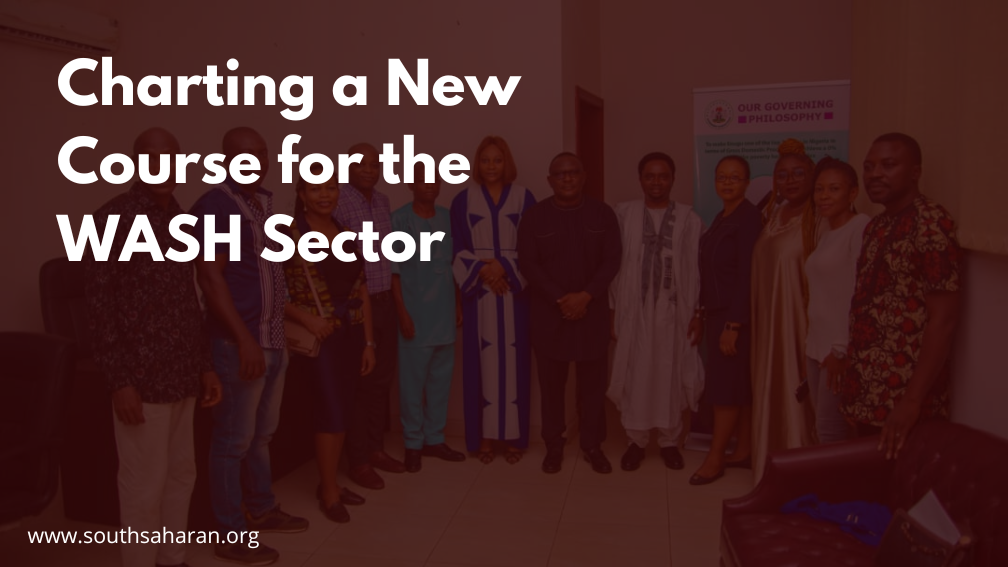
Charting a New Course for the WASH Sector

Enugu State’s WASH Stakeholders paid a courtesy visit to the newly appointed Commissioner for Water Resources, Dr. Felix Nnamani. The delegation, led by WaterAid Nigeria, included South Saharan Social Development Organization, SSDO, and various CSOs. 

The team used the opportunity to discuss and agree on a roadmap for partnership with the state government to deepen WASH service delivery in Enugu State. And shared insights into the team’s initiatives.  

Key issues brought to the notice of the commissioner include: 

– Implementation of the Enugu State Water Sector Law 2021. 

– Declaring a state of emergency in the sanitation sector to fast-track the Open Defecation Free Vision 2025. 

– Sustainability and strengthening of the WASH Sector Partnership Forum. 

These and more were discussed during the meeting. Representing SSDO were the Head of Programs, Udochukwu Egwim, and the Finance and Admin Manager, Amaka Okoye. SSDO is committed to improving access to WASH facilities for residents of Enugu state. 

THE POTENCY OF COMMUNITY TRIGGERING IN ENDING OPEN DEFECATION

Over 47 million Nigerians still practice open defecation (OD), and Enugu state is not exempted as about 47 percent of the populace still practice open defecation. This is a pointer to the lack of proper toilet infrastructure and water facilities, especially in rural communities.

Understanding this challenge and looking to ensure its eradication, South Saharan Social Development Organization, in partnership with WaterAid Nigeria and the Enugu State Ministry of Water Resources, Small Town Units, and the Igbo-Eze North LGA WASH Unit, organized a Community Triggering Event on Ending Open Defecation in Mboshi, Aji community, Igbo Eze North LGA. Participants include community leaders, women leaders, and community members. 

The community members were engaged using the Defecation Area Map (DAM) triggering method. Participants were asked to draw their community map and highlight important landmarks. They then identified their houses on the maps with cardboard. The facilitator then asked who had toilets and asked the community members to applaud them. Community members without toilets were asked to identify on the map with sawdust where they defecate.

At this point, community members were asked to make their observations. A participant, Madam Cordelia Ugwuanyi, said, “The community is filled with faeces. This causes sickness in people.” Another community member, Mr. Ali Michael, commented, “The constant open defecation causes diarrhea and cholera, especially in children.” He further added that open defecation makes the environment unhabitable. 

This method helped the participants zone out and get a true perspective of the community’s state. They saw the downsides of open defecation and were able to point out the effects. At the end of the engagement, they agreed on the following action plans. 

ACTION POINTS 

– Immediate formation of a 12-man WASH committee with seven males and five females. 

– The WASHCOM members were directed to visit households to determine the actual number of households with and without toilet facilities and report to the elders for appropriate fines and sanctions.

–  Establishment of community bye-laws to prohibit open defecation. 

– Construction and usage of toilet facilities in every home. 

– Constant sanitation effort to keep the surroundings clean. 

– Putting an end to open defecation in the homes. 

– Proper food hygiene is maintained in the homes. 

– Using the community’s task force to ensure adherence. 

– Community members agreed to a three months time frame to ensure that every household has a toilet.

SSDO, WaterAid Organizes a Radio Sensitization Program on Proper Waste Management

South Saharan Social Development Organization, in partnership with WaterAid Nigeria, organized a radio sensitization and advocacy engagement. The one-hour radio show with the topic, ‘Poor Solid Waste Management and Responsibilities of Individuals, Communities and Service Providers in Enugu State’, awakened the populace to the benefits of proper waste management. 

The guests on the show were – Head of Programs SSDO, Udochukwu Egwim, Small Town Unit – Ministry of Water Resources (Sanitation officer), Mr. Emmanuel Obuna, NEWSAN Coordinator, Mrs. Enwelum Ogechukwu, and SSDO Wash program Officer, Obianuju Ezeike. 

They all critically analyzed and discussed the topic extensively, highlighting the negative impacts of poor solid waste management on the environment and public health. The team also dissected the effect poor waste disposal has on water bodies. Highlighting how Lassa fever could easily be transmitted through rats that feed off the waste and come in contact with humans. 

This radio sensitization served as an avenue to enlighten the public on the need to sort their wastes into recyclable and disposable wastes. Also, the public was encouraged to avoid indiscriminate dumping and burning of refuse. They also encouraged the government to invest in proper waste infrastructure and implement bye-laws to ensure compliance with proper waste disposal methods. 

SSDO, WaterAid Organizes Radio Sensitization Program on the Effects of Open Defecation

South Saharan Social Development Organization, in partnership with WaterAid Nigeria, organized a radio sensitization and advocacy engagement. The one-hour radio show with the topic, ‘Effects of Open Defecation on Community Health’, awakened the populace to the health implications of open defecation.

The guests on the show were – Head of Programs SSDO, Udochukwu Egwim, Small Town Unit – Ministry of Water Resources (Sanitation officer), Mr. Emmanuel Obuna, State Epidemiologist-Ministry of Health, Dr. Chinyere Ezeudu, NEWSAN Coordinator, Mrs. Enwelum Ogechukwu, Hygiene officer-GHARF, Mrs Christiana Nnaji.

They all critically analyzed and discussed the topic extensively, highlighting how open defecation can affect water sources and cause cholera, typhoid, and dysentery. This radio sensitization served as an avenue to enlighten the public on the need for decent sanitation facilities and encourage the government to build more public toilet facilities.