SSDO

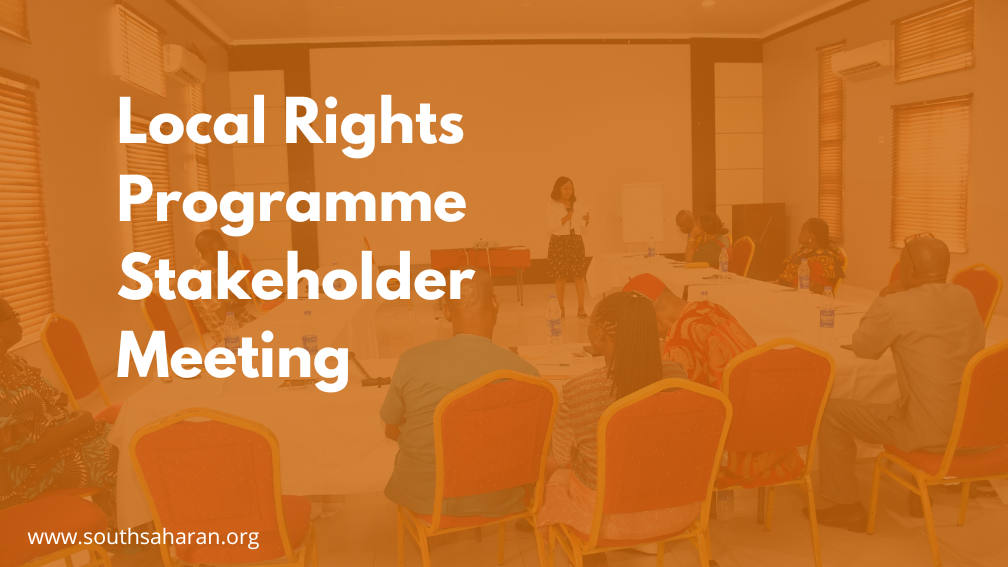
Local Rights Programme Stakeholder Meeting

To ensure a holistic and cross-cutting intervention, beneficiaries and stakeholders must be involved. They should have their say in evaluating the most pressing needs they have.

South Saharan Social Development Organization in partnership with ActionAid Nigeria organized a Local Rights Programme stakeholder meeting with representatives from the communities where the project is being implemented.

The meeting aimed to conduct a community appraisal for the involved communities. A pair-wise ranking system was used to determine the most pressing issues in the communities. This would help inform the approach the project takes in the communities.

Stakeholders present include traditional rulers, president-generals, women leaders, and a representative from the Enugu State Ministry of Rural Development.

A community charter document was also provided to the stakeholders to help guide them in upholding the rights of the local residents.

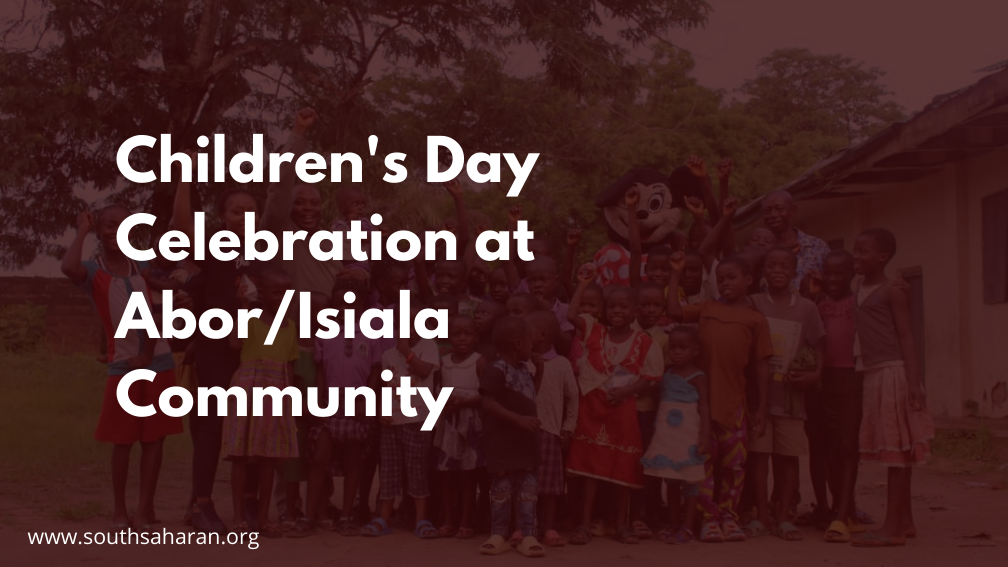
Children’s Day Celebration at Abor/Isiala Community

To celebrate Children’s Day, South Saharan Social Development Organization, SSDO in partnership with ActionAid Nigeria, visited Abor/Isiala community to continue its child message collection activity. There were gift and food items to engage and keep the kids entertained. There was also a session dedicated to teaching the children the importance of hygiene.

The Local Rights Programme is an initiative that aims to reduce poverty by engaging with the poor and marginalized in selected communities through its child sponsorship mechanisms. 

Some of the issues identified in the communities include the poverty, lack of education and poor access to healthcare, which are indicators of a deficient system, of which the biggest victims are children.

Having identified this problem, ActionAid Nigeria has partnered with SSDO to find ways to remediate the situation, particularly in Enugu state, through the implementation of the Local Rights Programme (LRP).

This initiative identifies vulnerable children aged 3 – 8 years and attaches them to sponsors. Selected communities include Oduma Achara in Aninri LGA, Igga and Nkume in Uzo Uwani LGA and Abor/Isiala in Isi Uzo LGA.

So far, since the start of the programme, over 500 children have been identified and the sponsorship mechanism initiated. 

4 Skills that Improve your Ability as a Youth

As compared to a time where all you need was to go through school and a job awaits you, the ball game is entirely different. Statistics released by the International Labour Organization (ILO) in 2020 show that the global youth unemployment rate is at 18%. With that of Nigeria currently sitting pretty at 23% with about 275 million youths unemployed worldwide. These numbers only mean one thing, you’re as valuable as the skill set you possess. July 15 is recognized globally by the U.N as World Youth Skills Day. This is a day used to re-emphasize the place and importance of skills in changing the socio-economic fortune of the youth.

The U.N’s initiative designed to tackle this challenge is the Technical and Vocation and Education Training (TVET). This scheme is targeted at ensuring that all youths find the most suitable place for them to thrive, irrespective of their financial capabilities. Seeing that artisans, the informal sector, and the formal sector work together for a vibrant economy.

SSDO’s Role

South Saharan Social Development Organization (SSDO) is at the forefront of implementing the TVET initiative. SSDO organized a TVET conference sponsored by Development Research and Projects Center and Ford foundation aimed at bridging the skills gap in the Formal and Informal TVET sector with a keen focus on artisans, technicians, and students. Find more on the TVET mini-conference

Importantly, before youths can effectively put their knowledge to good use and in fact create employment, there are marquee skills that are crucial and important for youths to be successful in the sector they choose to operate in. Here is a rundown of the most important soft and foundational skills needed for life’s mastery.

Time Management

This is one of the most important skills needed in the world today, but painfully only a few youths have been able to master it. Youths are adventurous, fun, strong, hardworking, diligent but a lot of them have no grip of the concept of time. And you see so many people ask themself at the end of a long day. “What did I do with my time?”.

Time management is fundamental to personal development and a key ingredient in goal setting. For your planning to be effective you need to work with a time ban. Come to think of it, why do CEOs and successful people have a personal assistant? Oh yes! Scheduling is the crux of productivity and that’s why even people who have life all figured out, don’t joke with this. Time is our most valuable asset and often can’t be recouped once lost.

                “Time is the most valuable thing a man can spend.” – Theophrastus.

Communication

This is another skill that so many people have yet to come to grasp with and rightfully so, it is psychological. There is a science to communication. Interestingly, when people communicate, it is less about the words spoken and more about the things left unsaid. Research has shown that about 70% of communication is deduced from nonverbal cues. So how much attention do you pay to body gestures, sighs, facial expressions, eye contact, and more? Someone is saying, ” Well, I am going into business, this doesn’t concern me.” Sorry to break the bad news to you, it does!

The better you can communicate your business’s essence and the brand story, the more loyal your customers are. And for those in the formal sector, the importance of communication cannot be overemphasized. Both written and oral forms. As an effective team lead or member, how well do you communicate with your team? Are you someone who speaks and others are struggling to decipher the theme behind your message? Or you in fact leave them more confused than how you started? Communication is indeed one of the most important skills youth should seek and learn.

Networking

There are four types of quotients, intelligence quotient(IQ), emotional quotient(EQ), social quotient(SQ), and adversity quotient(AQ). Of all these, you’d expect that IQ would be the most significant to be successful in career and business right? Well, it’s not. Studies have shown that the most successful individuals in the world are those who have combined well their EQ and SQ. How well do you know people?

How willing are you to leave your space and meet others? Your ability to build a relationship and relate with people is often time the most crucial factor for success. The most important resource to build a career isn’t money, but social capital. This is the network of relationships among people that live and work in a society, hence propelling it to function. Relationship is the new oil, and those who know how to network are the owners of the oil well.

Critical Thinking

This is the ability to task the mind and brain systematically to get solutions to everyday problems. It is the ability to think independently, rationally, and connect ideas to achieve results. This isn’t something that comes after 5 minutes of thinking. And you realize that based on some socio-cultural norms, most youths in this age haven’t harnessed this skill. How many people can patiently think up a solution for one to two hours straight?

This skill is requisite in today’s fast-paced world. To stand out, come up with innovative ideas, brand strategy, policies, and innovations that would set you apart from the crowd, you need to be a critical thinker. You must be able to manage your mind in the midst of the pressures of the world, trends, and happenings jostling for your attention. In this 21st century, a vibrant mind is essential to not just keeping your sanity but also to make good judgments at the point of decision making.

If you can effectively harness these skills, you are well on your way to freedom in every sense of the word.


SSDO – ActionAid Partnership: The Journey to Change

Community Volunteers administering educational materials and drugs to children in Odumachara Community in Enugu State.

Feb. 26, 2021

It was past 11am when the van pulled in to the community. The team spent over 2 hours on the road from Enugu Metropolis to Igga community in Uzo-Uwani LGA. The team was assigned to the only public school to carry out the child profile collection.

As typical with any southeastern rural settlement, the red earth was visible, houses sparsely located and striking was the fact that there was no access to potable water. Further conversation with community members revealed that there hasn’t been light in the community for years.

The community relies on the stream which is located over 2km away from the settlement for its needs. “We use water from the stream to bathe, cook, wash, and drink,” said a child when questioned. A similar scenario was also encountered across the five communities where there were obvious deficiencies of basic amenities. Interestingly, at Oduma Achara, Aninri LGA, two critical observations were made.

Firstly, the unusually high number of private schools in the community, precisely 3 opposes the norm seen in rural communities, and our fieldworker engaged a community member on the subject. “I don’t trust the quality of the government school. They lack teachers.” said a mother of 3 children.

The field worker asked whether she would use the government school if the situation improved, to which the woman answered, “Yes, I will. The private schools are expensive.” 

This initiative identifies vulnerable children aged 3 – 8 years and attaches them to sponsors. Selected communities include Oduma Achara in Aninri LGA, Igga and Nkume in Uzo Uwani LGA and Abor/Isiala in Isi Uzo LGA. 


Facts & Figures

The above issues highlight the problem of poverty, lack of education and healthcare, which are indicators of a deficient system, of which the biggest victims are children. 

Having identified this problem, ActionAid Nigeria has partnered with South Saharan Social Development Organization to find ways to remediate the situation, particularly in Enugu state, through the implementation of the Local Rights Programme (LRP).

The initiative aims to reduce poverty by engaging with the poor and marginalized in selected communities through its child sponsorship mechanisms. 


Community Selection

The aim of the initiative guides the selection of communities. The selection of communities is based on reliable data from the National Bureau of Statistics indicating the poorest geo-political zones in the country. This is then narrowed down to the poorest states and then cascaded to the poorest local governments and communities.

This initiative was first implemented in Ebonyi state. Having achieved success in the state, Enugu state became the next port of call. Before entry into these communities, ActionAid liaises with the appropriate government authorities for ease of access.


File Image: A dilapidated classroom in Oduma-Achara community where pupils learn daily.

confirmed

Disparity in English language proficiency

The second observation made by the team in Oduma Achara, based on interactions with the children, was that most children in the community barely understood or spoke the English Language. Further interaction with the parents showed that they spoke and understood English Language better than the children. Another negation to the norm seen in other rural communities where the children had better fluency in English than the adults.

This observation led to further inquiries using the key informant interview system. Community members and teachers were interviewed and the following reasons were deduced.

The key reason attributed to this observation is that children were predominantly taught in the Igbo language. It is not certain whether this is to aid easy assimilation on the part of the children, or a lack of confidence on the part of the teachers to deliver in English Language.

It was also elucidated that the parents have traveled more. Some adults had contact with the cities at a young age. Some schooled there, and some trade there. Thus, leaving them no choice but to communicate in English which is more predominant in urban areas. Whereas, the children have lived all through in the community.

This observation begs more questions than it gives answers. Is teaching in the local dialect a more effective form? Is there a correlation between language and future success? These and more are questions that we would look to answer in our subsequent publication.

These communities afford us the much-needed opportunity to educate, inform, and advocate for their basic human rights. As well as to point the spotlight on these communities, which would, in turn, get the government to take more decisive actions. We are excited about the possibilities! 


By Oduguwa Olusomi

The Story of Unsung Heroes

Group Photograph of the Executive Director, Dr. Stanley Ilechukwu, Principal of Government Technical College, Akpuoga Nike and some teachers.

Mar. 05, 2020

The impact of teachers in the world over cannot be overemphasized. For starters, they are the nurturers that build values in children who grow up to be world-changers. Aside parents, they have the largest influence on young minds. Which so many would argue and say that their influence rivals that of parents. This is often attributed to the fact that they have access to the child during their most productive part of the day as well as their formative years.


On this day in the world, especially this week, we take out time to celebrate teachers and
their impact on our communities. The theme of this year’s celebration
, Leading in Crisis, Reimagining the Future is geared at raising the awareness of teachers this period to more innovative ways of teaching during the Covid-19 pandemic. Especially technology-driven models that would enable them better prepared to handle the crisis.


At South Saharan Social Development Organization (SSDO), we recognize that teachers are pivotal and a key proponent if development must happen. Hence the need to ensure that they are well equipped to impart children. Seeing that SSDO’s work revolves around women, youth, and children. And if development is to happen, it must start at the grassroots, right? For us at SSDO, we are not just celebrating teachers, but walking the talk by adding value.


Ray Of Hope in the Pandemic

The scourge of the Covid-19 has been felt by all sectors and Education hasn’t been left out. Schools in the country have been shut for about 6 months thus crumpling the learning system, altering the calendar, and causing a delay in the graduation time of students. Final year students in secondary school were preparing for their external examinations when the pandemic hit home. Thankfully, schools have resumed and these students need to be up and about their preparation for their exams.

However, the pandemic caused a financial crisis that crippled the economy and as well affected the ability of parents to muster resources to aid this preparation. This is where SSDO comes in. The organization in partnership with the Development Research and Projects Center (DRPC) is making an education grant available to cushion the effect of the pandemic.


Value Adding

DRPC, who is focused on social sector development particularly the educational sector is making grants available to selected technical and vocational schools nationwide in preparation for the
NABTEB examinations. And as such have partnered with SSDO, as their link-up partner for Enugu state. The selected school for Enugu is Government Technical College, Akpuoga Nike, located in Enugu East LGA. 

The funding is targeted at helping the school make extra lessons available, procuring past questions, and textbooks to aid studying and improve the overall performance of the students in the examination. Also, the funds will be targeted at getting resources for the practical sessions of the examinations. Furthermore, the funds will also be channeled towards ensuring that PPEs such as face masks and sanitizers are acquired to ensure that the safety of the students is guaranteed during the examination period.


File Image: The Executive Director and the Principal formalizing the details

confirmed

The award was presented on the 14th of September by the Executive Director of SSDO, Dr. Stanley Ilechukwu on behalf of DRPC. Dr. Stanley said, “One of SSDO’s mantras is making quality education accessible to communities across the South Eastern landscape. This birth the partnership with DRPC to identify the most deserving technical school in the state.” The NABTEB examination is slated to run from the 21st of Sept to the 15th of Oct 2020.


Sustainable Growth

We are not just concerned about momentary significance but long-term impact. This has led us to develop a Technical and Vocational Education and Training (TVET) conference themed “Leveraging the Strengths of Formal and Informal TVET to Improve Competencies of Nigerian Youth for Productive Employment” after the NABTEB examination aimed at bridging
the gap between fresh graduates and the working sector.

This conference would help the students understand the requirements needed to effectively transition from the educational environment to the working sphere. 


By Oduguwa Olusomi