Studies from the Nigerian Economic Summit Group revealed that 91 million Nigerians now live below the poverty line. With an additional eight million people pushed into poverty in 2021. Interestingly, about 60 percent of people living below the poverty line are women. Unemployment, unpaid labor, gender discrimination, and marginalization are mostly responsible for it.
In many communities, women are largely dependent on their spouses for their financial needs. This dependence is one reason why women fail to report gender-based violence. They fear they’d lose their financial support and become stranded. Women’s empowerment is one of the practical solutions to reducing the cases of violence against women.
South Saharan Social Development Organization (SSDO) is committed to improving the quality of life for women in communities. We empower them to be financially independent, thus reducing poverty and dependency. One such way we do this is through Jacob’s Well micro-credit scheme. SSDO makes loans available to women in a cooperative to start or sustain their business.
Here are some remarkable stories from the project and how beneficiaries have been able to change their household’s economic situation.
Ilunoh Josephine
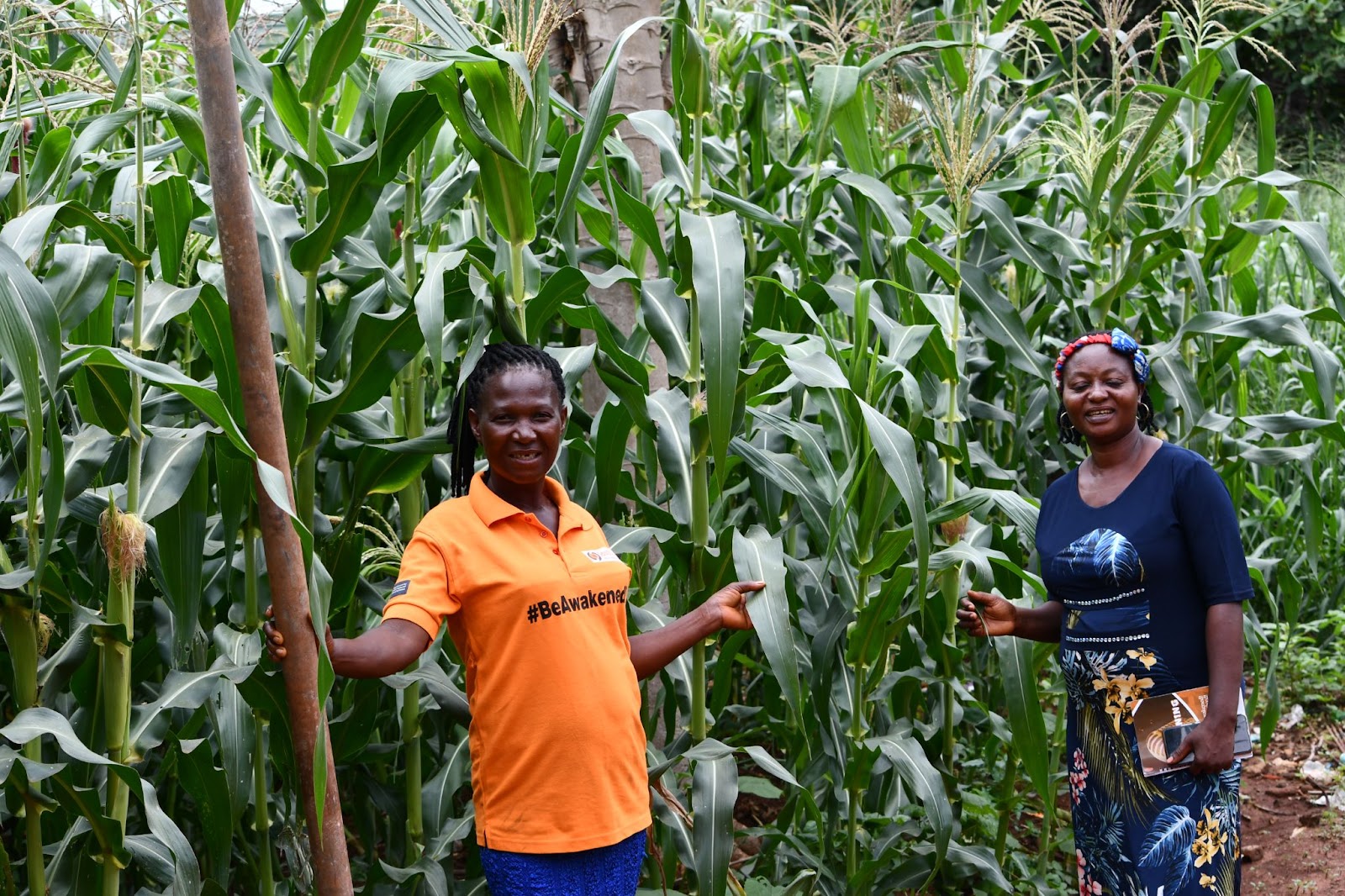
Josephine relocated from the north a few years ago because of the insurgency. Since her return to the east, she found it difficult to meet ends. It was a struggle for her and her family to survive. However, in 2020, she discovered SSDO’s micro-credit scheme, and her story hasn’t been the same.
She had a small poultry business she started but hasn’t been able to break even due to the lack of capital. The poultry had 20 birds when she found out about the scheme. After accessing loans twice, she has grown her poultry farm to over 100 birds and 20 turkeys. She has also successfully expanded to the sales of agricultural produce.
Josephine testifies that her financial challenges have been a thing of the past.
“I am so grateful to SSDO for the loans they allowed me access. I have been able to grow my business. Three of my kids are in the university, and I’ve been able to cater to their needs without any financial challenges.”
Chinenye Oforkansi
“Before the loan I got from SSDO, I could barely feed my family. I struggled to pay my children’s school fees and school materials.”
Chinenye uses her room for petty trading. She couldn’t expand her business. She has grown her business since she accessed loan credit from the scheme. She is currently constructing a kiosk to accommodate her thriving business.
She now has an oil palm business. Her standard of living has significantly improved, and she caters to her children’s educational needs without stress.
Geraldine Okeh
Geraldine runs a restaurant business. She has been looking to diversify into cash crop production but was restrained by the lack of funds. However, her story is changing.
“Since I got the loan, I have been able to diversify into the poultry business. I have a registered farm where I plant economic crops.”
She’s showing no signs of slowing down as she’s already looking forward to her next loan grant. “With my next loan, I will add vegetable crops to the farm.”
“SSDO has changed my life and business. I am so happy and grateful for their effort.”
Benedict Udeneh
“I run a small restaurant. But I could not expand and meet my customer’s needs.”
Benedict couldn’t expand her restaurant business due to a lack of capital. The profit she made wasn’t enough to cater to her expansion needs. All the business afforded her was her daily needs. So if she didn’t cook the next day, there was no way the next meal was guaranteed.
However, after accessing the loan credit, things took a new turn. She has been able to establish poultry and an oil bean business.
“I can comfortably afford to foot my children’s education bills without stress. My standard of living has also significantly improved.”
The 4GATES Orphaned and Vulnerable Children (OVC) project is a global action toward HIV epidemic control in sub-national units in Nigeria. It is a five-year comprehensive HIV care, treatment, and prevention program funded by the Center for Disease Control. With a mandate to work with non-profit organizations and healthcare facilities.
Enugu was one of the red states identified during the assessment and as such, the project is being currently implemented in the state. South Saharan Social Development Organization(SSDO) is an implementing partner alongside the Catholic Caritas Federation of Nigeria (CCFN). So far, the project has been able to reach over 10,000 beneficiaries. Linking them to treatment and monitoring their progress to attain viral load suppression.
Of all the positive beneficiaries enrolled, 96 percent have been able to attain viral load suppression. Reducing the amount of HIV in the blood to a very low level. This makes it possible for the immune system to function and reduces the risk of illnesses. But importantly, it also keeps the risk of transmission at a low.
Through the project, SSDO has been able to support beneficiaries with cash transfers and other forms of support. Beyond health, we understand that other facets of the beneficiary’s life matter in attaining wholeness. For us, the goal is not just to see them attain health stability but also financial and psychosocial stability. Here’s how we’re empowering beneficiaries to be financially stable and economically viable citizens.
Income Generating Activities
IGA is a business model that offers beneficiaries the capital and support to improve their household income through livelihood diversification. We provide beneficiaries with financial support to startup small businesses. The goal of IGA is to ensure the financial sustainability of households. Some of the businesses include petty trading, chemical production, and agricultural byproduct sales.
We currently have 67 beneficiaries of IGA in the OVC project. They have been able to provide for their families and built a sustainable source of income. Another such initiative is cash transfer.
Cash Transfer
A cash transfer is a direct payment of money to a beneficiary who is in dire need. It could be temporary assistance for needy families, social security, or workers’ compensation. But in this case, it is made available to beneficiaries who have an urgent need for cash. Often, the beneficiaries are incapacitated or unable to run a business due to health or age factors. So far over 40 beneficiaries have benefitted from cash transfers.
Adolescent Vocational Training
Understanding that financial sustainability is a long-term endeavor, we focus on empowering adolescent beneficiaries with valuable life skills that can help them learn. Rather than wasting time after their secondary school before taking the tertiary entrance examinations, adolescents are enrolled to acquire skills. And for those who are unable to continue with tertiary education, it becomes a valuable path to economic sustainability.
To guarantee consistency and dedication, adolescents are allowed to choose skills of their choice from a wide range of options. They include welding, fashion designing, carpentry, plumbing among others. The training fees and startup kits are usually provided for beneficiaries. There are currently about 20 beneficiaries of this initiative.
One way to improve the financial stability of a family is by creating a financial plan and following through with the process. Savings is one such habit that can help a family in dire times. It provides a financial backstop for life’s uncertainties and gives a feeling of security. It helps with emergencies and purchases and can be a good starting point to financial independence.
We understand the importance of savings to the stability of beneficiaries and as such encourage Village Savings and Loans (VSLA) in our catchment areas: Enugu South, Nkanu West, and Nkanu East LGAs. South Saharan Social Development Organization (SSDO) in partnership with the Catholic Caritas Foundation of Nigeria through the 4GATES Orphaned and Vulnerable Children Program empowers beneficiaries to make healthy decisions to improve stability.
It is not enough to offer quick, one-time donations to beneficiaries. Beyond the emergency period, there has to be a sustainable mechanism to ensure beneficiaries can generate income for themselves. One such avenue is leveraging VSLA.
VSLA is a self-select savings group that uses members’ savings to lend to each other so they can grow their business. This way, members can increase their income, cultivate a savings habit, and imbibe an investment mindset.
This methodology enables members to save weekly or bi-weekly according to the agreed number of shares. It helps build savings that can be reinvested into the business or used to take care of emergencies or general household running.
Benefits of a VSLA
The savings scheme helps increase the income of a household head. When it is time for a savings group member to access loans, they can use the bulk payment to start or fund an existing business.
It teaches members the importance of frugality and the need for savings. Rather than being extravagant, they learn how to invest in business and agriculture.
Current Reality
Under the catchment areas that SSDO manages, there are 64 beneficiaries in three VSLA groups. And they run a cycle of 9 to 12 months.
The Household Economic Strengthening Officer is always on the ground during meetings to supervise the proceedings, monitor the progress, and offer psychosocial support.
WORKSHOP REPORT: PARTNERSHIP FOR ADVANCING WOMEN IN ECONOMIC DEVELOPMENT (PAWED)
BACKGROUND
Women in South Eastern Nigeria face many hurdles in their quest for economic empowerment. They contend with gender discriminatory cultural practices and social norms, unpaid domestic labor, and low access to capital. These and other constraints keep women poor and financially dependent on their male counterparts.
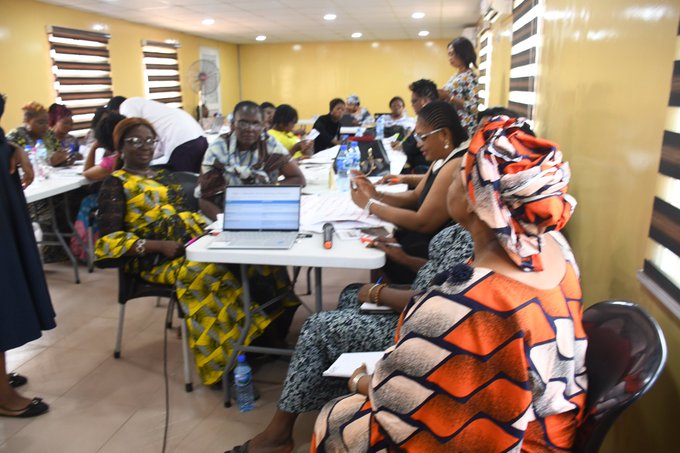
The development Research and Projects Centre (dRPC), has partnered with South Saharan Social Development Organization (SSDO), to form the Partnership for Advancing Women in Economic Development (PAWED). One of the first activities of the PAWED project was to form a coalition for Women Economic Empowerment, consisting of women-focused and women-led CSOs and WECS. This coalition was inaugurated in a 2-Day Advocacy Training and Inauguration of the Women’s Economic Empowerment (WEE) Coalition.
The workshop was held in Enugu, Nigeria from Friday 25th to Saturday 26th February 2022.
OBJECTIVES OF THE TRAINING
This event had the following objectives:
· To formally constitute the state WEE Coalition;
· To introduce the PAWED project’s objectives
· To build the capacity of coalition members on advocacy for Women’s Economic Empowerment
PARTICIPANTS’ PROFILE
The workshop participants included members of women-led Civil Organizations (CSOs), Women’s Economic Empowerment Cooperatives (WECs), and representatives from relevant government Ministries.
Participants cuts across duly-registered organizations and cooperatives who have successfully executed projects that are geared towards empowering women and engendering women’s development.
TRAINING METHODOLOGY
Learning was achieved through presentations by experts (the team of facilitators) as well as through group work.
WORKSHOP OVERVIEW
The workshop was opened at 10:30 a.m. with a welcome statement by the Executive Director of SSDO, Dr. Stanley Ilechukwu. He gave a brief overview of the vision and mission of SSDO and concise background of the PAWED project.
Dr. Stanley stated the need for social justice and women empowerment through a transformation of economic, social, and political structures at state and national levels. He acknowledged the resourcefulness of the facilitators and urged participants to utilize this opportunity and make the best out of the workshop. He finally wished all participants a good and successful training workshop.
Afterward Alaya Biliqis, the lead facilitator thanked the participants of the workshop for being in attendance and thereafter introduced herself and the team of facilitators. They are a team of four (the lead facilitator inclusive).
1. Alaya Biliqis
2. J. AGBA OGAR
3. Damilola Praise Rotimi
4. Lawal Moshood O. (Ph.D.)
DAY ONE
SESSION 1: Welcome and Introduction (by Alaya Biliqis)
The lead facilitator, Alaya Biliqis commenced the workshop with an ice breaker with the intent of encouraging familiarity with the facilitators and other participants. Participants were encouraged to network with each other and share their work area in women’s economic empowerment. The ground rules were also initiated by the participants.
SESSION 2: Introduction to Advocacy (by Damilola Praise Rotimi)
This session was geared towards defining Advocacy, discussing its basic elements/steps, and as well determining the differences between Advocacy and lobbying. It was established that there are different definitions of Advocacy but the facilitator went with the definition of Wikipedia and Alliance for Justice as seen below.
“Advocacy is an activity by an individual or group that aims to influence decisions within political, economic, and social institutions” – Wikipedia
And “Advocacy is defined as any action that speaks in favor of, recommends, argues for a cause, supports or defends, or pleads on behalf of others” – Alliance for Justice
Advocacy was seen as both a science and an art. Science: because it involves systematic planning, and each step requires distinct knowledge and skills. Art: because it involves articulating issues in ways that inspire people to action. It involves negotiating and consensus-building, incorporating creativity, style, and even humor.
Elements of Advocacy
Advocacy starts with a core group of people and organizations concerned with a particular issue who are willing to commit resources, including time and expertise to bring about change. Advocacy is a process but does not always take place in a defined or rigid step-by-step manner, the process to be followed varies depending on the Advocacy goal/objectives, the groups involved and the environment in which the Advocacy is taking place.
More so, the basic steps involved in Advocacy constitute the elements. In all situations, it is always advisable, to begin with, the goals and objectives, other steps to follow depend on the group and resources that exist, for example, if a group has considerable data and data expertise already they may decide to go ahead to develop a position paper, another group might decide to delay the development of a position paper until they have formed a strong coalition, depending on available resources (financial and human) some activities may take place simultaneously.
Advocacy and Lobbying
“Lobbying” is one of the tactics used in Advocacy, however, for this dRPC project, there is a special consideration. In some countries, charities and non – governmental organizations are prohibited from using government funds (including grants and revenues from contracts) to lobby. This dRPC Project falls into this category. To help the participants to further understand the issue the guidelines used by the United States, State of Oregon was helpful.
Lobbying
You are lobbying when you:
• Talk or write a legislator or his or her staff to influence legislative action. This includes:
o Testimony favoring or opposing a bill or budget
o Proposing amendments to a bill, including technical amendments
o A letter, memo, or email favoring or opposing a bill or budget
o Formal or casual conversations favoring or opposing a bill or budget
• Talk or write to a legislator or to his or her staff to promote goodwill toward an agency or program
• Talk or write to others with the intent to ask them to influence legislative action. This includes:
o Meeting where you ask people to support or oppose a bill
o Letters, memos, emails, or newsletters asking people to support or oppose
You are not lobbying when you:
• Talk to or write to a legislator or his or her staff merely to provide facts. (Facts may include fact estimates or expert opinion of facts). The facts may apply to any program, budget, bill or issue.
• Do work within your agency to do research, write or otherwise develop a bill or budget
• Research or write testimony supporting or opposing a bill
• Are waiting to present testimony or meet with legislators or staff
• Write or talk to anyone to solicit their input on an agency’s legislative proposals or bill
• Do support work for an agency’s lobbying activities, but do not communicate, yourself, with legislators and staff
SESSION 3: Defining advocacy goal and objectives (by J. Agba Ogar)
The focus of this session, participants will be able to determine and develop Advocacy goals and objectives. Participants were also trained to explain specific elements of the Advocacy objective.
Goal and objectives both describe what a person wants to achieve; a goal is a broad statement of purpose we use to chart our course and objectives are specific statements of how the goal will be achieved.
An advocacy goal is a long-term general aim to solve an outstanding issue, for example, to increase male involvement in order to improve the reproductive health of Samoan families. For each goal, several objectives need to be defined. “An advocacy objective focuses on a specific action that an institution can take. This action is a specific measurable step towards the goal.
To define your advocacy objectives, ask the following questions:
• WHAT do we want to change?
• WHO can make the change?
• BY HOW MUCH?
• BY WHEN?
SESSION 4: Issues/Barriers and Threats Facing WEE In Nigeria (by Lawal Moshood O., Ph.D.)
This session had the aim of helping participants to know how to define Women Economic Empowerment (WEE), identify and frame Key Advocacy issues affecting WEE in Nigeria, discuss key issues affecting WEE in Nigeria and also explain the differences between threats and barriers experienced by women in business and their impact.
Women empowerment is defined as the process in which women elaborate and recreates what it is that they can be, do, and accomplish in a circumstance that they previously were denied. Alternatively, it is the process for women to redefine gender roles that allows them to acquire the ability to choose between known alternatives that have otherwise been restricted from such ability Women’s empowerment is seen as involving the transformation of economic, social, psychological, political, and legal circumstances of women.
Key Issues Affecting WEE in Nigeria?
Gender Equity (GE) is a Second-tier Federal Government of Nigeria (GoN) Priority.
GON stakeholders agree to GE/WEE in principle – and in public. Yet, these concepts are rarely reflected as priority objectives in key GON programs and policies some laws deny women equal opportunities with men such as land ownership and opportunities to invest freely. These laws function as a handicap to women’s economic capabilities and perpetuate a culture of dependence. There is still a wide gap between men’s and women’s representation in political leadership. Despite the affirmative action of 30% for women in all political structures at the 1995 international women conference, reviews have shown that Nigeria has not reached that level.
Limited Funding
A lack of GE policy prioritization and Nigeria’s tightening fiscal space has led to reduced budgetary prioritization of GE and relatively meager funds for WEE-focused programming. An analysis of the federal budgets since 2017 has shown that women in agribusiness receive the lowest funding annually. In the budget (2017-2021), the government allocated N416 million to women in agribusiness. Women in agriculture are believed to be the major food producers in the sector.
Weak, Ad hoc, Merged Programmes
Weak, ad hoc, merged programs GE/WEE programs are generally ad hoc, separate from broader policy priorities, and often merged with efforts to support other vulnerable groups like youth, children, and the disabled. The Federal Government is spending N5.6 billion on women empowerment and the fight against Gender-Based-Violence (GBV) this year (2021). While this is welcoming, there is no good provision for accountability in terms of measuring the proportion of each program.
Welfare as Empowerment
WEE is conflated with social welfare. Transfers-based models dominate and are often deployed as political tools. As a result, the Government of Nigeria’s GE interventions rarely lead to systemic change.
Technical Capacity Bottlenecks
High-potential programs – including Nigeria for Women Project – have suffered from weak implementation capacity, especially at the state level.
Poor Database
For WEE projects and initiatives around the country, there has been a poor data management system to help track the progress and true status of the work done in various states of the country. This also contributes to the challenges faced in the sustainability of the several WEE initiatives.
Pet Projects
It has been established how each of the first ladies at one point or the other tried to empower women and each of their efforts was halted mostly due to a change in government. Hence why most of the First lady projects or programs do not exceed their tenure once they are out of office because every first lady wants to own her own legacy and as such create gaps in the development or impacts already made by a predecessor. There is therefore a need to advocate for programs to be more people-oriented to ensure continuity and sustainability even after a change in any government.
Nigeria’s Patriarchal Societal and Government Structures and Norms Reinforce Gender Inequality
It is hard – and even politically costly in some cases – for GE/WEE to emerge as policy priorities). Political advisors are less likely to support female candidates making it difficult for them to make headway in the political space. Male domination in politics and decision making over the years have made it difficult for women to hold political office
At the end of this session, participants were grouped into four (4) to do advocacy on women marginalization (economic, social, political, etc.) and develop a goal and objective(s), guided by a template shared earlier.
SESSION 5: Coalition Building (by Alaya Biliqis)
This session had the purpose of training participants to discuss coalition building and explain the benefits of coalition building. It also aims at explaining the challenges of coalition building to the participants. The participants were trained on the key steps in coalition building and how to incorporate influencers into Advocacy coalitions.
DAY TWO
SESSION 6: Identifying/mapping your advocacy audiences (by Damilola Praise Rotimi)
The participants were trained in this session on how to define their Advocacy Audiences and most importantly, determine different Advocacy Audiences, map different Advocacy Audiences and as well define political gatekeepers and Advocacy champions.
SESSION 7: Advocacy Research – Data Collection, Information and Testimonies (by J. Agba Ogar)
The focus of this session was to train the participants on the importance of research to the success of Advocacy. They were also trained to differentiate between different Advocacy Research Methods.
SESSION 8: Preparing Your Position Paper and Fact Sheets (by Lawal Moshood O., Ph.D.)
Participants were trained in this session on the content of an Advocacy position paper and on how to draft fact sheets.
SESSION 9: Handling Objections – from your opponents (by J. Agba Ogar)
The key objective of this session was to train the participants on how to recognize objections to their Advocacy message and as well determine ways to handle objections from their opponents.
SESSION 10: Improving Your Advocacy Skills (by Damilola Praise Rotimi)
The participants in this session were trained to identify key skills required for successful Advocacy and also on how to deploy these skills necessary for Advocacy success.
SESSION 11: Message Development and Delivery
The goal of this session was to train participants on how to write up effective Advocacy messages, be conversant with the characteristics of effective Advocacy messages and so develop an effective Advocacy message. They were also trained to develop the One Minute message.
SESSION 12: Innovative and Culturally Responsive Approaches and Messaging to Conduct Advocacy in Nigeria
Participants were given a proper understanding on innovative and culturally responsive approaches to Advocacy in Nigeria and at the end trained to deploy those innovative approaches for effective Advocacy.
SESSION 13: Action Planning
Participants were trained to write up an Action Plan for Advocacy Initiative and Coalition • they were also taught the key elements of an Action Plan.
SESSION 14: Monitoring and Evaluation
In this session, participants were trained to identify key factors to take into consideration for Advocacy monitoring and evaluation. The remaining period in this session was spent on training participants on Advocacy monitoring and evaluation. One of the examples used was the budget tracking process.
South Saharan Social Development Organization, SSDO featured in Ford Foundation’s documentary on the importance of civil society and civic space for a vibrant democracy. The video draws attention to the relevance of civil societies by highlighting inspiring examples of the institution’s value in addressing complex issues. Ford Foundation presented this documentary at the Summit for Democracy organized by the U.S government.
SSDO has been a voice of advocacy championing good governance and education causes, specifically in the southeast region. We campaign and draw awareness to critical issues in society, such as water scarcity, and campaign to cancel the controversial life pension bills for ex-governors in the Enugu state.
Democracy gives certain rights to you as a citizen, and one is a right to be heard. Another expectation is the protection of your human rights. Democratic governance goes in tandem with protecting human rights and the rule of law. But repeatedly, this right has been neglected or outrightly abused by the government who is supposed to protect it.
The civic society is a key actor for bringing such rights infringement from mostly the community level to the front burners at a national scale. To ensure that laws and policies are enacted and implemented to resolve such issues.
Advocacy is a tool civil societies use to call the government to order and ensure they uphold human rights. It ensures that citizens’ voices are heard, particularly the vulnerable or marginalized. To defend their rights, have their views sincerely considered when decisions about their lives are made. In a democratic system of government, advocacy is a critical mechanism through which citizens can make their desires known to the leaders.
In this documentary, SSDO’s Executive Director, Dr. Stanley Ilechukwu joined his voice to other organizations worldwide as they advocate the importance of an enabling environment for civic space. Click here to watch the video.