SSDO

Infection, Prevention, and Control Training

Healthcare workers are the backbone of an effective healthcare system. Healthcare workers are often frontliners providing essential services at the community level. Based on the sensitivity of their jobs, they are frequently exposed to infections and diseases. Understanding the constant risk healthcare workers are exposed to, SSDO and WaterAid Nigeria saw the need to organize a workshop.

On Friday, 11th February 2022, WaterAid Nigeria, partnered with South Saharan Social Development Organization, (SSDO) to strengthen the capacity of health workers in Infection Prevention and Control (IPC) in Enugu State, Southeast Nigeria. In attendance were participants from different bodies, including representatives from the Enugu State Primary Healthcare Development Agency, 21 Officers-in-Charge (OICs) of the selected healthcare facilities, and 14 Heads-of-Department of 14 selected LGAs.

The workshop was Facilitated by Dr. Kachy Ugwa, Community Health Specialist at the University of Nigeria Teaching Hospital (UNTH) Enugu. He started with an introduction to IPC and standard precautions, using hand hygiene as a case note. He also covered several topics including; Understanding disease transmission, Basics of COVID 19, Environmental cleaning and disinfection, Transmission-based precautions, A risk-based approach to PPEs, Screening and triaging – the principle of screening, isolating, and notifying, IPC and WASH with emphasis on handwashing, social distancing, and the use of facemask as it relates to routine immunization, ante-natal and post-natal.

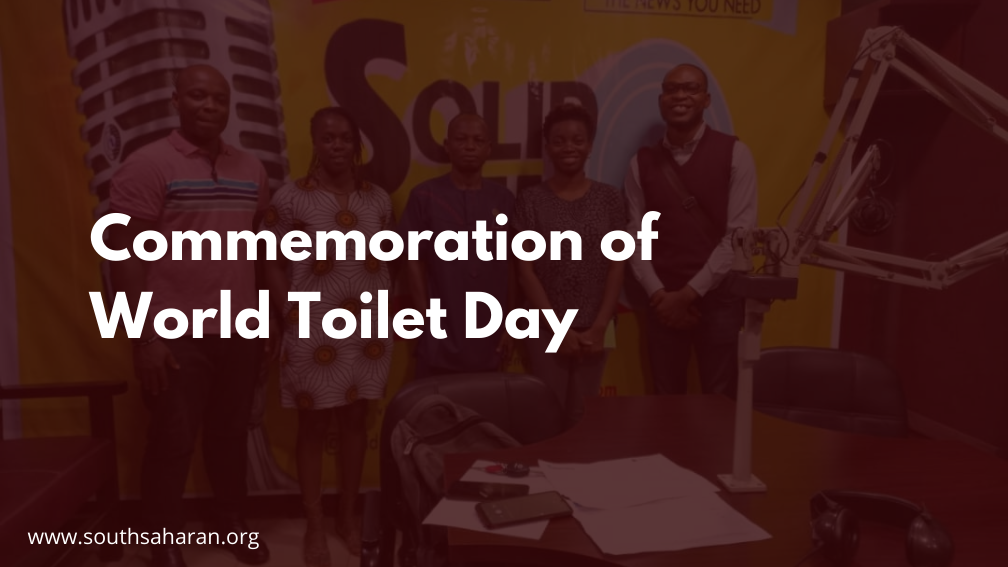
Commemoration of World Toilet Day

Research shows that 123 million people don’t have access to decent toilet facilities in Nigeria. SSDO and WaterAid Nigeria are playing their part in creating awareness of the under-funded, poorly managed, and neglected toilet facilities in public places.

Life without toilets is dirty, dangerous, and undignified. Public health depends on adequate toilet facilities. Its availability drives improvement in gender equality, education, and the environment. 

For Enugu state to be Open Defecation Free by 2025, sanitation and toilet facilities need to be a top priority.

The commemoration of World Toilet Day was celebrated with key stakeholders from CSO partners, the Small-Town Unit of the State Ministry of Water Resources, and the media at a radio engagement. The theme for this year’s World Toilet Day was “Valuing Toilets”. The theme aims to stress the absolute necessity of toilets in our lives, communities, and the state at large.

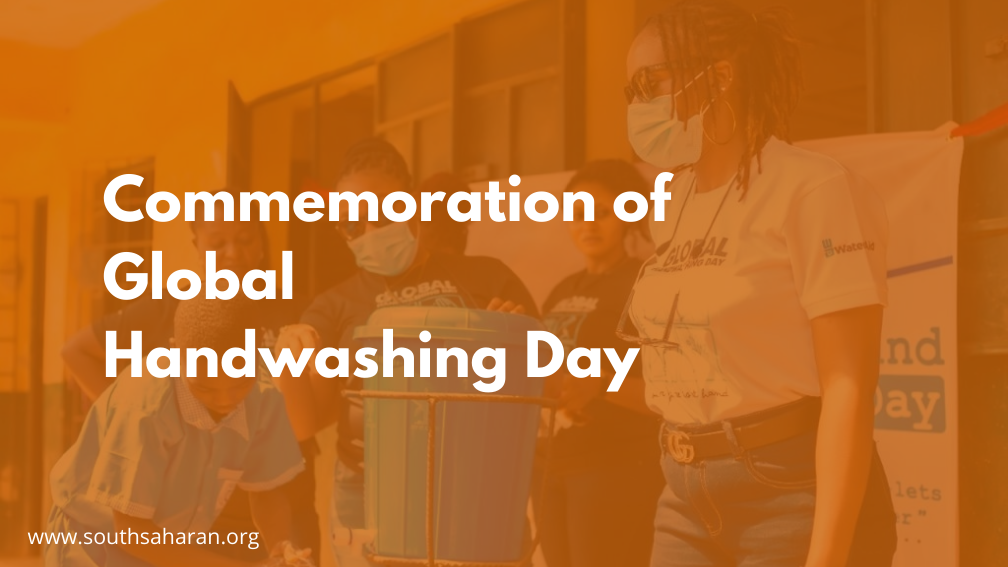
Commemoration of Global Handwashing Day

Do you know that handwashing is critical to preventing illness, especially Covid-19? Proper handwashing can reduce the rate of diarrhea by 40 percent and respiratory infection by 20 percent. Interestingly, 50 percent of food-related illnesses are caused by poor hand hygiene. 

The 15th of October is recognized the world over as Global Handwashing Day. a day dedicated to increasing advocacy and awareness of the importance of handwashing with soap as an effective way to prevent diseases. 

The theme of this year’s commemoration is tagged ‘The future is at hand, let’s move forward together.’ The activities for the celebration involved an outreach at a primary school in Enugu and a Radio program.

SSDO carried out a school outreach at Igbariam Nursery and Primary school, Achara Layout, Enugu state. The pupils were educated on the importance of handwashing and the steps for proper handwashing with soap as an effective way to prevent disease. This followed the distribution of soap and some handwashing facilities to the school. A total of 96 students, comprising of 36 males and 60 females were educated and as a result, this will be cascaded to the rest of the school during assembly. 

Also, there was a radio engagement at Solid FM to sensitize the public on the need for proper handwashing. The theme for the year was discussed extensively by the guests which included; the Enugu State Team Lead for WaterAid, a Medical Doctor from the Ministry of Health, a representative from the Ministry of Water Resources, and the Head of Program of South Saharan. 

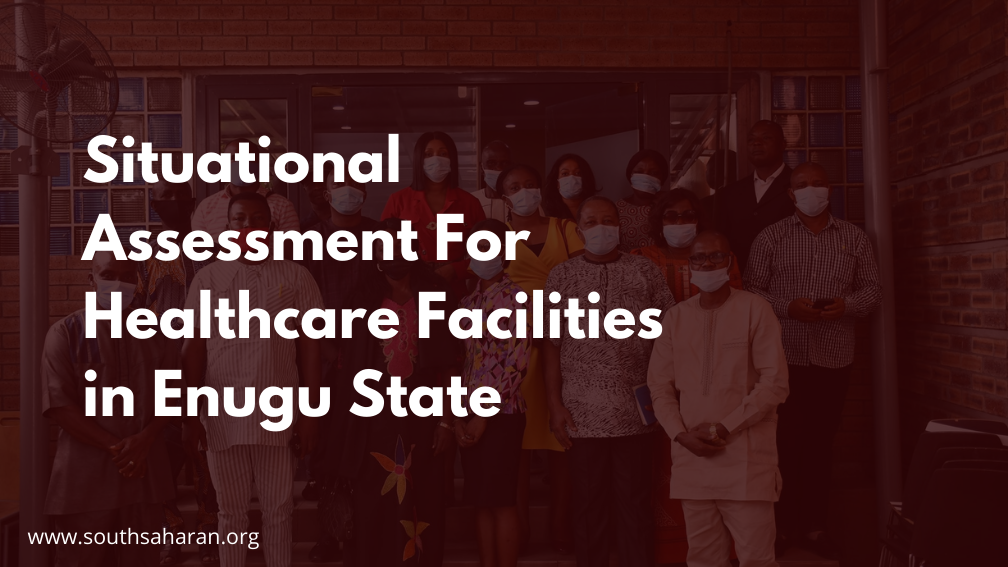
Situational Assessment for Health Care facilities in Enugu State

WaterAid conducted a situational assessment of Water Sanitation and Hygiene (WASH) in Primary Health Centers in Enugu state as part of our support to improve the WASH in health outcomes in the state. 

This process involved the stakeholder’s engagement, which had representatives from the Ministry of Water Resources, Small Town Unit, Ministry of Health, Primary Health Care Development Agency, Bureau of Statistics, and Economic planning. Presentations were made on the current level of access to WASH in HCF. An addition was also made to the questionnaires for data collection. 

The second process was the training of enumerators across the 17 LGAs in Enugu State for data collection from HCFs. The exercise has been completed and data exported to the consultant for further analysis. 

Promoting Women’s Empowerment Through Peer Education

Through years of working on projects at the community level, we realize that women and girls are hugely disadvantaged. They have often been marginalized and segregated to the background on so many fronts in society. Especially politically and economically. We also observe that this marginalization has created a false consciousness in most women. 

Women are now satisfied with the status quo of swallowing their thoughts and ideas when it is clear that their input will make the difference. One of the primary reasons for marginalization is the inequality between men and women in accessing and controlling resources. But even more shocking is that in many communities, women don’t even have control over reproduction. 

The goal is to create an equal society where men and women can speak, and their voices matter. To see a world where women, youth, and children can develop in a politically and socioeconomically correct environment. Where gender equality is prioritized, and women have complete control over their resources and time. 

And as such South Saharan Social Development Organization, SSDO, in partnership with ActionAid Nigeria, seeks to foster women’s empowerment through peer education. This initiative aims to advocate for women’s rights and bridge women’s capacity deficiency at the community level. As well as meet the political, social, and economic needs of women. 

Peer Education Program

A peer education program is a scheme that involves people being taught by facilitators of similar backgrounds. This way, the message is easily absorbed, and the facilitator can communicate clearly on the same wavelength as the participant.

The program was facilitated by Osamudiamen Owens-Akinwale, Advisor Local Rights Programme, ActionAid Nigeria. The training was executed using the Women Peer Education Resource Kit. It covered essential areas such as personal development, health, livelihood and survival, and inclusion. The women were taught the importance of body image, self-esteem, time management, hygiene, skill acquisition, and the dangers of gender-based violence.   

The women’s peer education program was organized in Isiama Community, Oduma Achara, Aninri LGA, Enugu state. The intention is for the training to be cascaded down to other women in the community through the trained representatives. 

Correcting Wrong Notions

“I learned about how to care for the elderly and the importance of child spacing. I also learned that we have the right to stand and contest for election.” – Obodo Victoria. 

Women were better informed of their rights and responsibilities after the training. They were taught valuable life and soft skills to help them be more efficient in their homes and businesses. 

“Before, we believed that if a woman is not circumcised, she would be very promiscuous. I also didn’t see the need for a woman to undergo a cesarean section. But now, I know that female genital mutilation is dangerous to the sexual health of a woman. And that if a woman has labor difficulties that last too long without help, it can be really dangerous.” A woman from Isiama Community.

Importantly, we see that beyond the women learning about their rights, wrong notions which have been held on to for a long time were corrected. Now, the women have the right foundation to build on and groom young girls.