SSDO

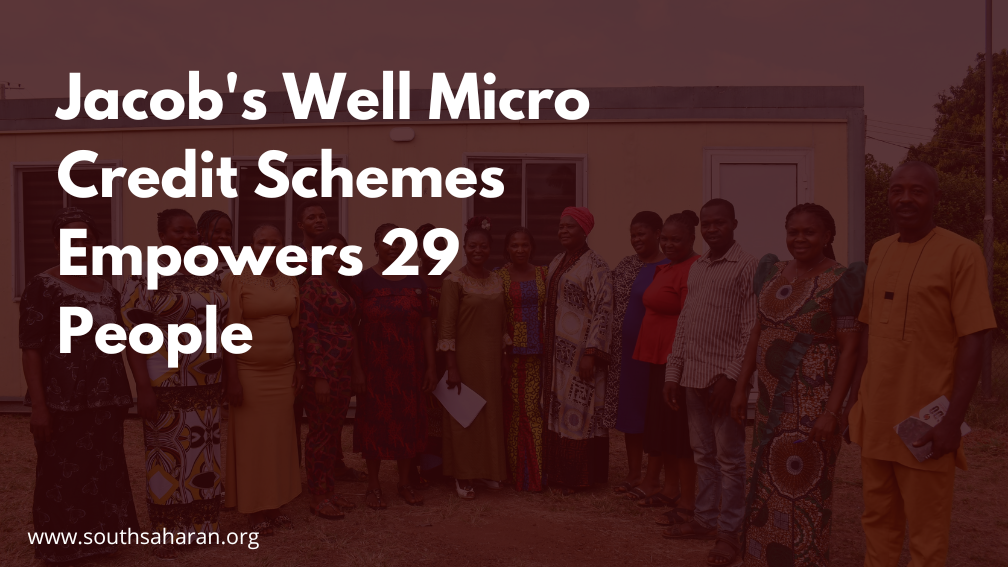
Jacob’s Well Micro-credit Scheme Empowers 29 People

Studies from the Nigerian Economic Summit Group revealed that 91 million Nigerians live below the poverty line. With an additional, eight million people pushed into poverty in 2021. Interestingly, about 60 percent of people living below the poverty line are women. Unemployment, unpaid labor, gender discrimination, and marginalization are mostly responsible for it. 

In many communities, women are largely dependent on their spouses for their financial needs. This dependence is one reason why women fail to report gender-based violence. They fear they’d lose their financial support and become stranded. 

This dependency also means that these women are largely unbanked and would be next to impossible to access loans from traditional institutions. Their lack of access to assets of their own also means they don’t have any form of capital that can suffice as collateral. In our line of work, we’ve seen that this economic disparity engenders gender-based violence. 

Understanding these peculiar challenges, South Saharan Social Development Organization empowers them to be financially independent, thus reducing poverty and dependency. 

One such way we do this is through Jacob’s Well micro-credit scheme. SSDO makes loans available to women in a cooperative at low-interest rates to start or sustain their businesses. The organization empowers these women with no collateral required leveraging the social trust within the cooperative mechanism to ensure compliance across the board. 

In November, 29 loan collectors across three registered cooperatives got loans to grow their businesses. They were trained in financial literacy, risk management, savings culture, business and cooperative management to help sustain and grow the venture.

A sum of 2.85 million naira was disbursed to these women with no collateral required leveraging the social trust within the cooperative mechanism to ensure compliance across the board.

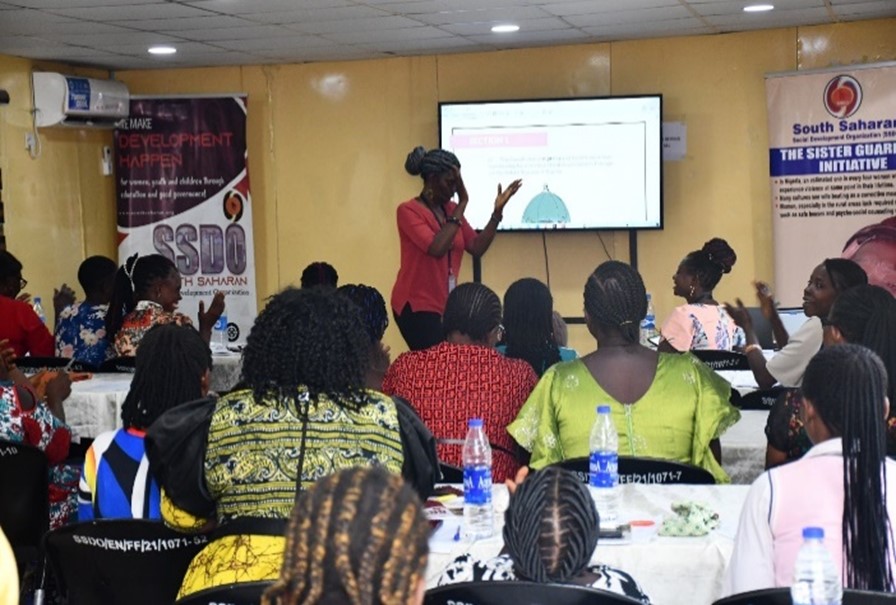
Sister Guardian Initiative Toolkit Validation Workshop

One reason why violence against women, especially at the community level, seems to be a non-ending cycle is that often, the perpetrators of these heinous acts are not made to face the wrath of the law. The victims or the community sometimes protect them. And in other cases, victims don’t know how to protect themselves under the purview of the law. 

Understanding the place of the law and people knowing their rights in curbing gender-based violence, South Saharan Social Development Organization conducted a one-day workshop for 37 women of the Sister Guardian executives from the 19 communities where the project is currently running. The women comprised the presidents and secretaries of each chapter of the initiative. 

The workshop aimed to build the capacity of the Sister Guardians on the provision of the constitution on violence against women and the associated punishment. The Sister Guardian toolkit was also reviewed and unanimously validated for adoption. The Violence Against Persons Prohibition (VAPP) law was also reviewed to help the women be well-rounded in tackling gender-based violence cases. 

It also focused on the following: 

  • To incorporate the knowledge in the course of their work in the community and also step down their learnings to community members
  • The documentation of the cases adjudicated in the case registers provided by SSDO

Going forward, this workshop will better serve the Sister Guardians to better advocate, mediate, and proffer solutions to gender-based violence cases they deal with.

Achievements:

l  Built the capacity of 37 executive members of the Sister Guardian women (presidents and secretaries) on the aims and objectives of the SGI, rationale behind the selection of communities and composition of the executive membership and its work in relation to knowledge and access to human rights

l   Reviewed the Sister Guardian Toolkit document to unanimously validate it for adoption

l  General review of the VAPP law as enshrined in the 1999 Nigeria constitution as amended  

l  Practical revision on the documentation of the Sister Guardian case register

Challenges: 

The women complained that one of the difficulties they face in functioning effectively in their different communities is the inability to involve the police in some of the matters they adjudicate on that needs police attention.

Recommendations:

During the review of the Sister Guardian Toolkit, the women made the following recommendations on chapter 4 [Conflict Resolution] page 10 on the section that talks about “matters Sister Guardian can mediate on”. The women identified cases they adjudicate which were not captured in the Toolkit, and they include:

Human trafficking 

The threat of murder from the spouse

Parental murder 

Young men impregnating young women and refusing to marry them

The burden of women catering to the family alone cause hitches in the marriage

Disallowing women to see their children during separation

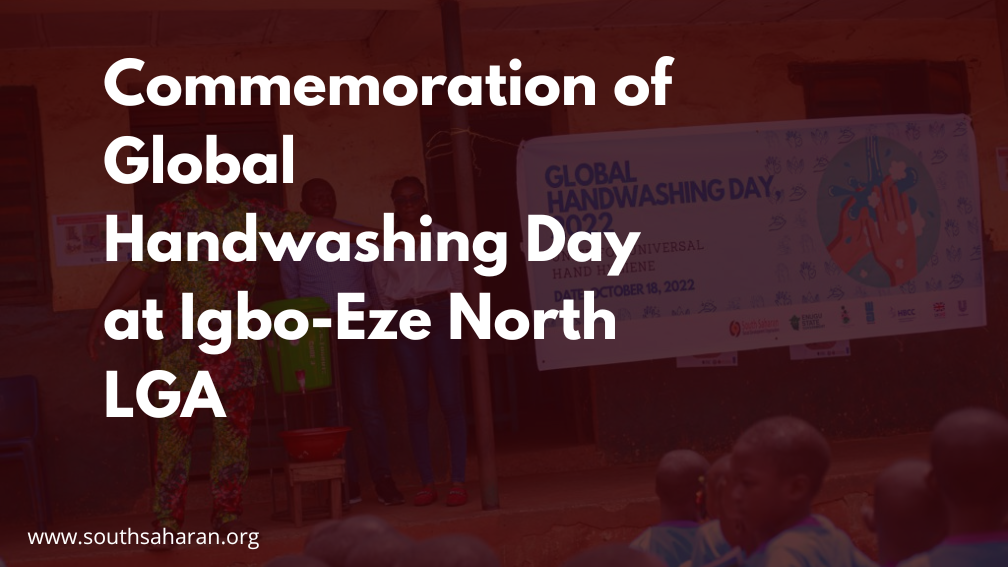
Commemoration Of Global Handwashing Day At Igbo-Eze North LGA

Do you know that handwashing is critical to preventing illness, especially infectious diseases? Proper handwashing can reduce the rate of diarrhea by 40 percent and respiratory infection by 20 percent. Interestingly, 50 percent of food-related illnesses are caused by poor hand hygiene. 

The 15th of October is recognized the world over as Global Handwashing Day. a day dedicated to increasing advocacy and awareness of the importance of handwashing with soap as an effective way to prevent diseases and saves lives. 

The theme of this year’s commemoration is tagged ‘Unite for Universal Hand Hygiene.’ WaterAid in partnership with South Saharan, the Ministry of Water Resources, and the Enugu State Universal Basic Education Board (ENSUBEB) commemorated the Global Handwashing Day at two schools: Township School 1 Ogrute and Community Primary School Ugwu-Amufie both in Igboeze North LGA.

The pupils were taught the six critical times to wash their hands, alongside the techniques for handwashing; this session was facilitated by a representative from the state Ministry of Water Resources. Handwashing buckets and liquid soaps were presented to the two schools to also promote hand hygiene in the schools. 

The Environmental Health Clubs that had been established and trained by the WASH Unit of the Local Government were inaugurated by the visiting team. 

The representatives from the ENSUBEB and the schools’ administration appreciated the team and reassured the team of their continuous support towards hand hygiene and general hygiene promotion. Through this activity, 174 students were reached in total: 100 Females and 74 Males.

This outing is one of the key deliverables for the HBCC II project that will ensure the promotion of hygiene behaviour change to improve personal hygiene.

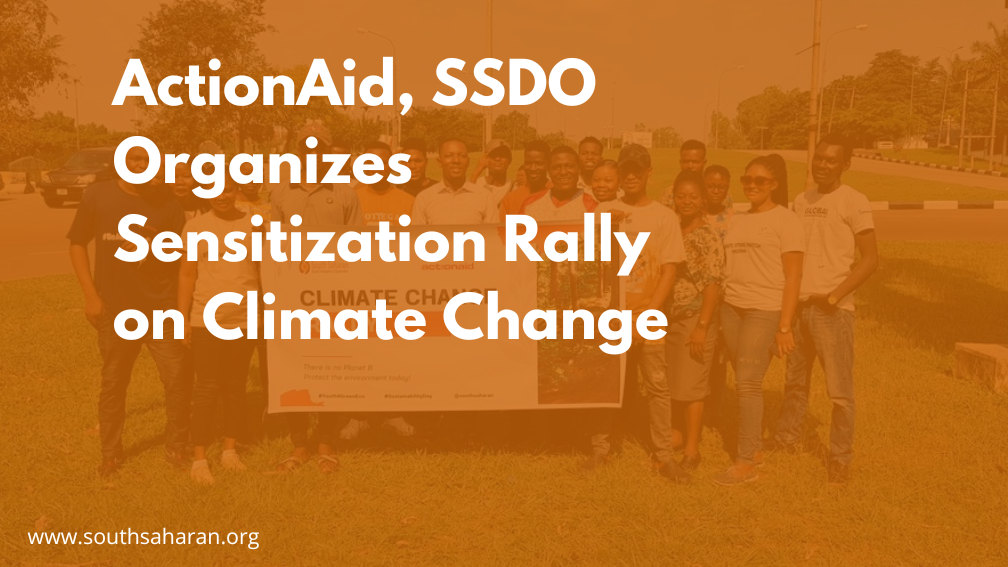
ActionAid, SSDO Organizes a Sensitization Rally on Climate Change

Nigeria’s climate has been changing: temperature increases; variable rainfall; rise in sea level and flooding; drought and desertification; land degradation; more frequent extreme weather events; affected freshwater resources, and loss of biodiversity. The durations and intensities of rainfall have increased, producing large runoffs and flooding in many places in Nigeria. 

Rainfall variation is projected to continue to increase. Precipitation in southern areas is expected to rise, and rising sea levels are expected to exacerbate flooding and submersion of coastal lands. Droughts have also become a constant in Nigeria and are expected to continue in Northern Nigeria, arising from a decline in precipitation and rise in temperature. Lake Chad and other lakes in the country are drying up and at risk of disappearing.

Floods are a recurring natural hazard in Nigeria and have become more frequent throughout the country in recent decades. Agriculture, health, infrastructure, the economy, and trade are all negatively impacted, as evidenced in 2012 when severe floods contributed to reduced economic growth in agriculture and trade. This is coupled with the trigger of the Lagba Dam in Cameroon which has drastically increased the level of flooding in the country affecting over ten states.

Increased flooding due to rising sea levels will negatively impact agriculture, the economy, coastal infrastructure, human health, coastal ecosystems, and human settlements. Sea levels have been rising along the coast of Nigeria, causing coastal erosion and some villages to be lost. It has been estimated that a 1-meter rise in sea level could cause 75% of the land in the Niger Delta to be lost.

Over the past few weeks, different states have felt the sting of the floods. In as much as the government has a role, we also have a part to play to ensure the earth is habitable and safe. The effect of human activities has a telling effect on the atmosphere. And nobody is exempted from these devastating effects. Hence, the need for sensitization to raise awareness about climate change. 

Understanding these effects, ActionAid Nigeria, in partnership with South Saharan Social Development Organization, is playing its part in creating awareness and sensitizing people on steps to take to combat climate change. The message was simple: “There is no planet B. Protect the environment today.” 

The rally also sensitized people on what they can do to protect the environment from their corner: 

– Cut down waste

– Conserve water

– Plant a tree

– Walk more

– Spread the word.

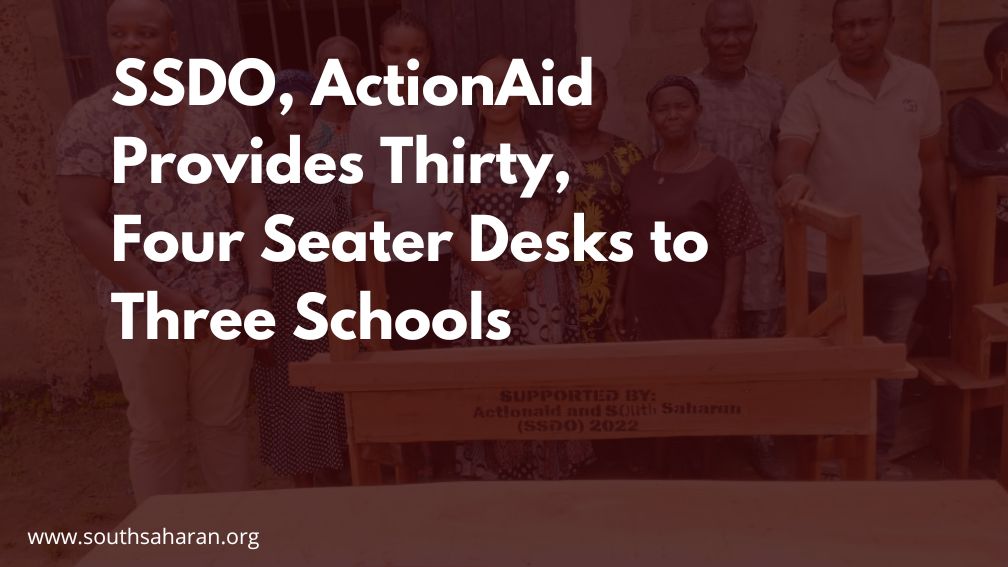
SSDO, ActionAid Provides Thirty Four-Seater Desks to Three Primary School

“Education is the most powerful weapon which you can use to change the world.” – Nelson Mandela

Marginalized communities are often characterized by a higher prevalence of poverty, lack of infrastructure, and low access to healthcare and education, of which the biggest victims are children. This affects their standard of living and quality of life. There has to be a deliberate focus to improve access to health and education for such communities to improve development. 

Often, children in these communities don’t have access to quality educational facilities. Putting them at a disadvantage when compared to their peers in urban areas. The lack of amenities like potable water and functional health centers also impact on their ability to learn and be productive in class.  

Understanding this need, South Saharan Social Development Organization, in partnership with ActionAid Nigeria through the Local Rights Programme, is doing its part to improve education in marginalized communities. The project provided ten 4-seater desks each for Divine Favour Nursery and Primary School Abor Isiala Community in Isi Uzo LGA, Community Primary School, Oduma Achara, Ani-nri LGA and Community primary school Nkume Community, Uzo Uwani LGA.

In a ceremony on the school premises on Friday, 30th of September 2022, the headmistress of Community Primary School expressed her gratitude by thanking the organizations for their effort. “You can see the joy and the way the kids danced. That says it all. We’re grateful to SSDO and ActionAid for this timely intervention.”

Stakeholders present include School Based Management Committee Chairman, Mr. Ovili, LGA Councilor, Mr. Amos Orji, SSDO’s Head of Programs, Udochukwu Egwim, SSDO’s LRP Project Lead, Perpetual Njoku, Parents and Teachers Association (PTA) chairpersons, teachers, and community representative of the schools amongst others. 

SSDO’s Head of programs, Udochukwu Egwim, stated that the importance of education cannot be overemphasized. “We as an organization will do our best to ensure that kids are in school and a lack of facilities would not be a stumbling block to their learning development.”

Through its child sponsorship mechanism, the project aims to reduce poverty by engaging with the poor and marginalized in selected communities.