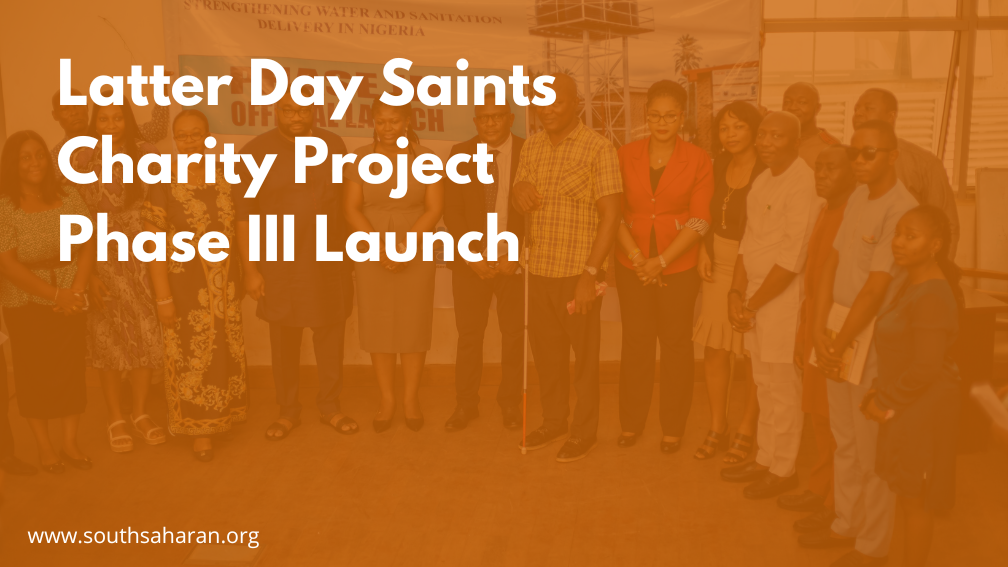
South Saharan Social Development Organization, in partnership with WaterAid Nigeria, will be implementing the third phase of the Strengthening Water and Sanitation Delivery project courtesy of Latter Day Saints Charity.
The project will complement the results of the first and second phases to provide Enugu residents with clean water, safely managed sanitation, and increased hygiene promotion. This includes water facility provision, public toilets, and WASH advocacy.
Stakeholders present include Hon. Commissioner of the Ministry of Water Resources, Health, Education, and Gender, the Special Adviser to the Governor on Donor Relations, the Chairperson of the House Committee on Water Resources, the Special Adviser of Enugu State Water Corporation, the Executive Chairman of Igbo Eze North LGA, and the Executive Chairman of Enugu State Universal Basic Education Board, and representatives from Joint Association of People with Disability (JONAPWD),
The project was officially launched on the 14th of November 2023, and offered a unique opportunity to enlighten stakeholders, raise media awareness, and develop a suitable implementation strategy across the state. This was also a medium for public stakeholders to reemphasize the government’s commitment to initiate the provision of potable water in the first 180 days in office.
In Nigeria, more than 60 million people do not have access to basic water supply. Over 12 million people lack access to toilet facilities. About 29 percent of children do not have water to meet their daily needs. Thus affecting their ability to attend school and wash their hands properly to fight off diseases. In Enugu, half of the state’s residents lack access to basic water services.
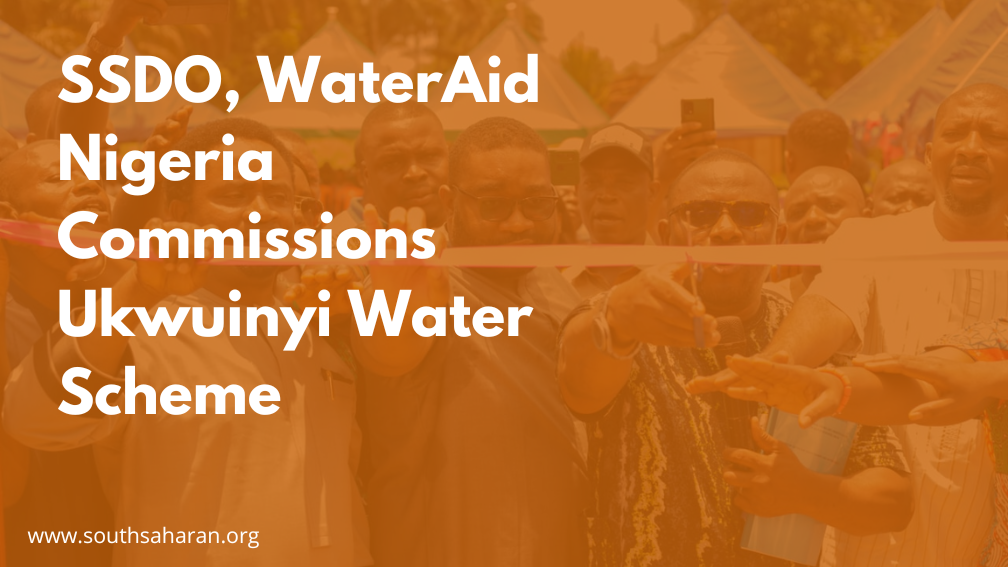
Understanding this challenge, South Saharan Social Development Organization, in partnership with WaterAid Nigeria through the Latter Day Saints Charity Project, has provided a 40,000-liter water scheme at Ukwuinyi community, Igbo-Eze North LGA, leveraging the kiosk model to ensure proper dissemination. This is part of the interventions under the second phase of the Strengthening Water and Sanitation Delivery Project.
The water scheme will help to reduce open defecation and keep Enugu on course to achieve an open defecation-free status by 2030. It will reduce the likelihood of waterborne diseases like cholera, diarrhea, and dysentery that the community suffers before the installation. And help community children focus more on their education as the distraction of going long distances to draw water has been eliminated.
Dignitaries present at the Project commissioning and handover include the Honorable Commissioner for Water Resources, Dr. Felix Nnamani, Special Adviser to the Enugu State Governor on Donor Relations, Hon. Dubem Onyia, WaterAid Country Director represented by Mr. Solomon Akpanufot, State Programme Lead, Directors from the State Ministry of Water Resources, State House of Assembly Representatives, and Chairmen,
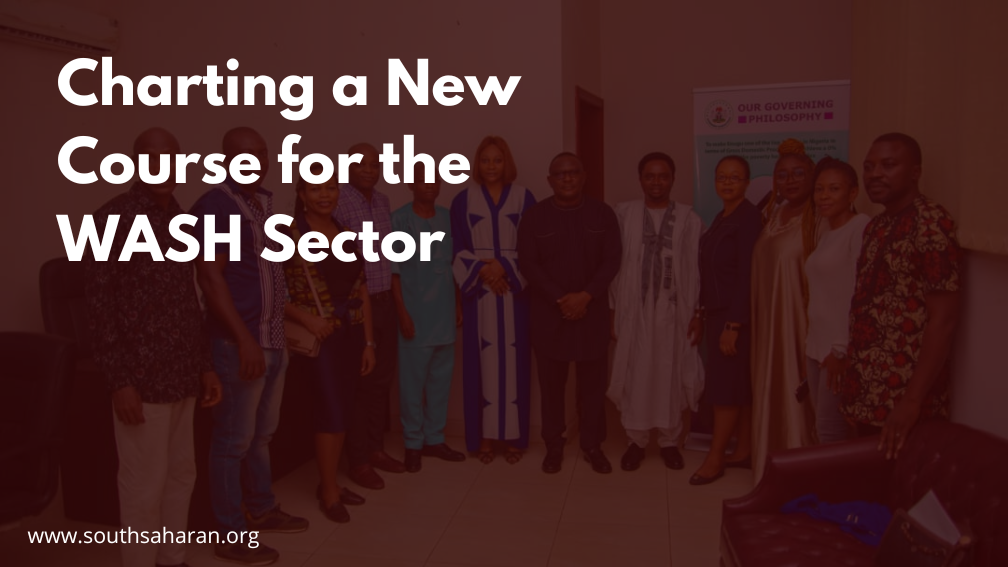
Enugu State’s WASH Stakeholders paid a courtesy visit to the newly appointed Commissioner for Water Resources, Dr. Felix Nnamani. The delegation, led by WaterAid Nigeria, included South Saharan Social Development Organization, SSDO, and various CSOs.
The team used the opportunity to discuss and agree on a roadmap for partnership with the state government to deepen WASH service delivery in Enugu State. And shared insights into the team’s initiatives.
Key issues brought to the notice of the commissioner include:
– Implementation of the Enugu State Water Sector Law 2021.
– Declaring a state of emergency in the sanitation sector to fast-track the Open Defecation Free Vision 2025.
– Sustainability and strengthening of the WASH Sector Partnership Forum.
These and more were discussed during the meeting. Representing SSDO were the Head of Programs, Udochukwu Egwim, and the Finance and Admin Manager, Amaka Okoye. SSDO is committed to improving access to WASH facilities for residents of Enugu state.
Over 47 million Nigerians still practice open defecation (OD), and Enugu state is not exempted as about 47 percent of the populace still practice open defecation. Open defecation (OD) poses a significant sanitation challenge in various communities across Enugu State. It leads to adverse health effects and environmental pollution.
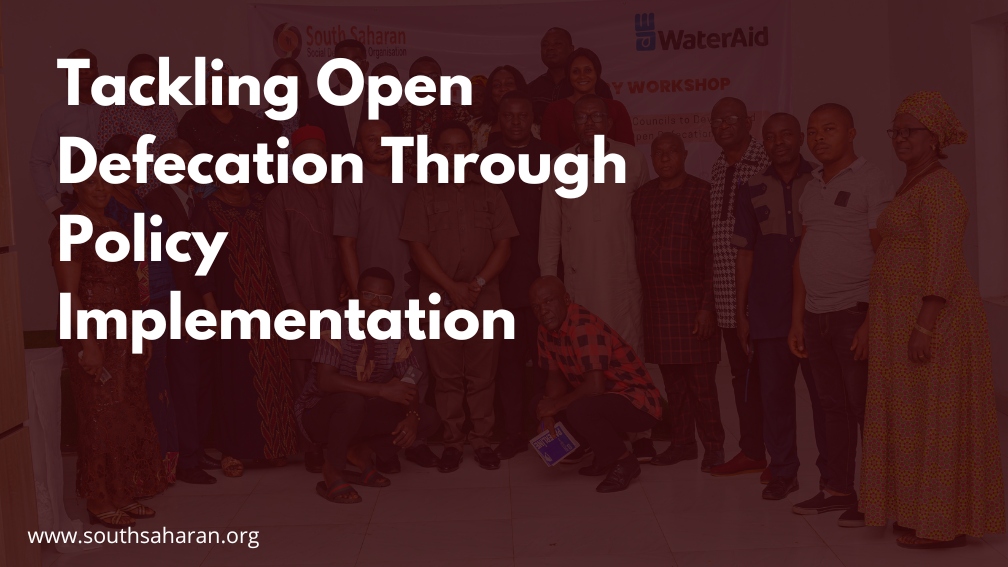
Understanding this challenge, South Saharan Social Development Organization, SSDO, in partnership with WaterAid Nigeria, under the Bill and Melinda Gates Foundation project organized a 2-day Sanitation Advocacy Workshop to address this issue. The workshop targeted six communities, precisely two communities per Local Government Area (Igbo Eze North, Nsukka and Udenu) in the Enugu North Senatorial zone of the state.
The workshop’s primary objective was to empower the communities and local government authorities (LGAs) to develop and implement an Anti-Open Defecation by-law to end open defecation in their communities. The workshop had a community-led approach and had leaders of the legislative council, president generals, women and youth leaders, WASH coordinators, and CSO partners in attendance.
The first session of the day was expertly facilitated by Emmanuel Obuna, the Sanitation Officer of ENSTOWA. His session delved into the pressing issue of open defecation and the imperative of curbing this practice at the community level. Participants were enlightened on the pivotal role of community-led sanitation and hygiene initiatives, gaining insights into the historical evolution of sanitation practices in Enugu metropolis. Key concepts such as Community-Led Total Sanitation and Sanitation Marketing were elucidated, emphasizing their relevance and effectiveness in achieving sustainable sanitation outcomes.
Building upon the foundation laid by the previous session, Dr. Umoh Boniface, a distinguished WASH consultant and senior lecturer at the University of Nigeria, Nsukka, led an extensive and interactive session on the vital role of Water, Sanitation, and Hygiene (WASH) in community development. This dynamic session provided a platform for participants to share their experiences related to open defecation, fostering a collective understanding of the challenges at hand. From the shared experiences, key factors contributing to open defecation were identified, including the lack of inclusive toilets for persons with disabilities, inadequate clean toilet facilities in government places and institutions, and a shortage of toilets in public spaces, particularly for travellers.
During this session, the WASH Coordinator of Igbo Eze North LGA emphasized the crucial need for cooperation and active involvement from government officials in empowering and enforcing relevant by-laws. Participants unanimously agreed that enacting by-laws through community leaders and engaging town unions in markets and public places would effectively facilitate the implementation of these laws.
To deepen participants’ understanding of the severity and consequences of open defecation, a compelling sanitation advocacy animated video was screened. The video vividly depicted the direct link between open defecation, the spread of illnesses, and the associated health risks. This visual presentation served as a powerful catalyst, evoking a heightened sense of urgency and reinforcing the critical need for collective action.
As the day progressed, participants were divided into groups according to their respective LGAs—Igbo Eze North, Udenu, and others—each group tasked with deliberating and developing a comprehensive framework. These frameworks highlighted the specific challenges related to poor sanitation in their LGAs, proposed innovative solutions to address these challenges, outlined detailed action plans with designated responsible individuals, and established timeframes to achieve the esteemed goal of attaining Open Defecation Free (ODF) status in their communities.
Day 2
Following the previous session, Dr. Umoh proceeded with a comprehensive session on By-Law against open defecation: contextual imperative & implication for communities in Enugu State. During this session, he provided an informative overview of a well-structured by-law, highlighting its key qualities and essential content. These elements encompassed:
• Title: A clear and descriptive title that accurately represents the purpose of the by-law.
• Date made: The date on which the by-law is officially established.
• Citation: The specific reference or legal citation that identifies the by-law.
• Objectives of the by-law: Clearly defined goals and objectives that the by-law aims to achieve in addressing the issue at hand.
• Definition of terms: A section that provides clear and concise definitions of relevant terms and concepts used within the by-law, ensuring a common understanding among stakeholders.
• Application: The scope and applicability of the by-law, specifying the areas, entities, or individuals to which it applies.
• Sanitation Trust Fund (STF) Establishment: The establishment of a dedicated Sanitation Trust Fund, which serves as a financial mechanism to support and sustain sanitation initiatives.
• Purpose of the STF: A clear articulation of the objectives and intended use of the Sanitation Trust Fund, such as funding infrastructure projects, awareness campaigns, or capacity-building activities.
• Appropriation of the Sanitation Trust Fund: Guidelines and procedures for allocating and managing funds within the Sanitation Trust Fund, ensuring transparency and accountability.
By outlining these essential components, Dr. Umoh provided valuable insights into the fundamental aspects that should be considered when developing a comprehensive by-law targeting open defecation. Equipped with this knowledge, the participants were then regrouped into their respective Local Government Areas (LGAs) to collaboratively develop context-specific draft by-laws aimed at eradicating open defecation within their communities.
Going Forward
The Sanitation Advocacy Workshop significantly empowered communities and local government councils to address the challenge of open defecation in their localities. The workshop created awareness, built capacity, and fostered community-led solutions toward ending open defecation. The collaboration between WaterAid, SSDO, and the participating communities and LGAs resulted in developing context-specific draft by-laws and action plans. The workshop’s outcomes will contribute to the sustainable implementation and enforcement of by-laws, improving sanitation practices and eradicating open defecation in Enugu State.
Did you know that over 37 million women and girls of reproductive age in Nigeria lack access to menstrual hygiene products due to a lack of funds? Period poverty is a global problem but is more prevalent in developing countries. Today, girls are still stigmatized and excluded because of a normal bodily function.
Menstrual Hygiene Day (MHD) is held annually on the 28th of May to highlight the importance of menstrual care and raise awareness about the issues faced by those who don’t have access to sanitary products.
Understanding this challenge, South Saharan Social Development Organization, in partnership with WaterAid Nigeria, is playing its part in changing the narrative. To commemorate Menstrual Hygiene Day this year under the theme, “Making Menstruation a Normal Fact of Life by 2030”, the team organized a menstrual hygiene management education program at Government Secondary School Abakaliki Road, Enugu.
The introduction and overview of menstruation were facilitated by Mrs. Cheta the Adolescent focal person at UNTH. She started by asking the students questions on menstruation and then stated the meaning of menstruation, also known as a woman’s period, as a natural process that occurs in the reproductive system of females which is also a regular part of a woman’s life, typically starting during puberty and continuing until menopause. While menstruation is a normal biological phenomenon, it is often accompanied by a range of physical and emotional experiences that can vary from person to person.
She went further to explain that menstruation has been both a topic of curiosity and a subject shrouded in stigma and taboo. Cultural beliefs, religious practices, and societal attitudes have influenced the way menstruation is perceived and discussed. However, in recent years, there has been a growing movement, such as sensitizing both males and females to break the silence surrounding menstruation and promote open conversations about this natural bodily function. Therefore, she encouraged the students, especially the girls, to embrace their womanhood and have open conversations when needed.
The school outreach was an opportunity to raise awareness and promote proper menstrual hygiene practices among female students. Male students were also sensitized as brothers, future fathers and uncles so they know what to do to help out. They were taught not to stigmatize or mock their female counterpart. The engagement increased knowledge and understanding of menstrual hygiene, debunked myths and misconceptions, and challenged stigmas surrounding menstruation.
Students were engaged in a participatory and inclusive approach as they demonstrated how to use sanitary pads properly, and wrong notions were corrected. Sanitary pads were shared among the female students, ensuring they had access to essential menstrual hygiene products.