

Happy New Month!
More than ever before, there’s a need to focus on the development of children, adolescents, and youth. To have a functional society, we must have a positive change of attitude and invest heavily in their development. Youths are the backbone of a society, and the nation’s development depends on their health and well-being. South Saharan Social Development Organization, SSDO, understands these needs and prioritizes children and adolescents in the execution of our projects.
Interventions like the Orphaned and Vulnerable Children’s project and the Local Rights Programme help shine the spotlight on our endeavors to ensure that the
health and educational needs of kids in our intervention communities are met. Still, there’s more to be done. New reports reveal that 18.5 million children, the majority of whom are girls, do not have access to education in Nigeria. A sharp increase compared to the 10.5 million last year.
Over the past quarter, SSDO has also focused on women’s advocacy and empowerment, WASH infrastructure provision, capacity building, and needs assessment to improve service delivery in existing projects. Here’s a highlight of how SSDO has been contributing to nation-building.

Struggles of a Girl Battling HIV From Birth: Journey to Recovery
“I am tired. There is no one else I can go to. I don’t have any money. Where would I take her?”
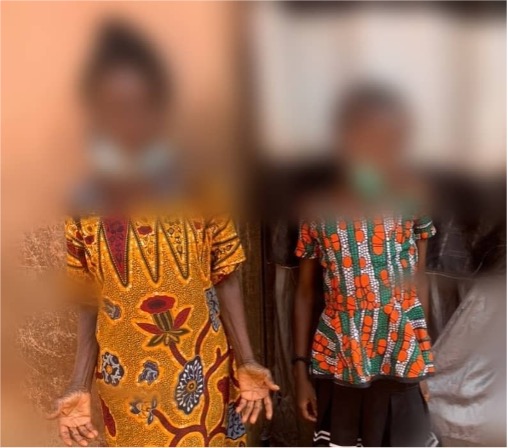
purse to gather the last ₦2,500 requested to buy drugs for Adaugo. Adaugo is a 12-year-old child who lives in Enugu state. She is HIV positive. She was infected at birth (mother-to-child transmission) and this has totally altered her life.
Children’s Day Celebration at Abor/Isiala Community
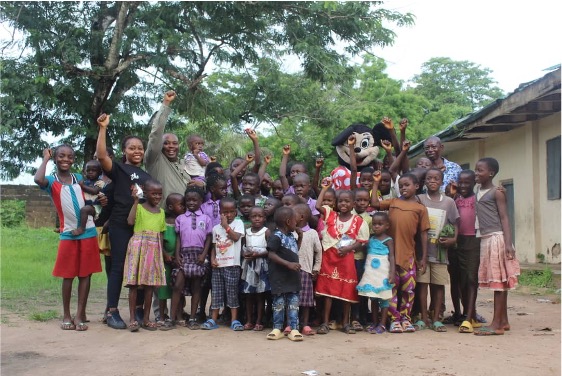
To celebrate Children’s Day, South Saharan Social Development Organization, SSDO in partnership with ActionAid Nigeria, visited Abor/Isiala community to continue its child message collection activity. There were gift and food items to engage and keep the kids entertained. There was also a session dedicated to teaching the children the importance of hygiene.
The Local Rights Programme is an initiative that aims to reduce poverty by engaging with the poor and marginalized in selected communities through its child sponsorship mechanisms.
Some of the issues identified in the communities include the poverty, lack of education and poor access to healthcare, which are indicators of a deficient system, of which the biggest victims are children. Read more.
Promoting Women’s Empowerment Through Peer Education

Through years of working on projects at the community level, we realize that women and girls are hugely disadvantaged. They have often been marginalized and segregated to the background on so many fronts in society. Especially politically and economically. We also observe that this marginalization has created a false consciousness in most women. One of the primary reasons for marginalization is the inequality between men and women in accessing and controlling resources. But even more shocking is that in many communities, women don’t even have control over reproduction.
The goal is to create an equal society where men and women can speak, and their voices matter. To see a world where women, youth, and children can develop in a politically and socioeconomically correct environment. Where gender equality is prioritized, and women have complete control over their resources and time.
And as such South Saharan Social Development Organization, SSDO, in partnership with ActionAid Nigeria, seeks to foster women’s empowerment through peer education. This initiative aims to advocate for women’s rights and bridge women’s capacity deficiency at the community level. As well as meet the political, social, and economic needs of women. Continue reading.
PAWED Policy Dialogue Session
Research shows a 6.3 percent unemployment gap between men and women in Nigeria. This highlights a rather obscure fact that is holding the nation back. Understanding the importance and necessity of women’s empowerment in this time and era, the Development Research and Project Center, (dRPC) in partnership with South Saharan Social Development Organization, (SSDO) is implementing the
The PAWED project was formed to strengthen the capacity of women’s economic collectives in Enugu state to conduct high-impact evidence-informed advocacy to improve the livelihood of economically active women and girls in the state.
In April 2022, the PAWED project held a Policy Dialogue Session to provide a platform for synergy between stakeholders in Enugu State for effective advocacy for Women’s Economic Empowerment (WEE). Read on.
Income Generating Activity Support for Beneficiaries
Beyond health, we understand that all other facets of the beneficiary’s life matter in attaining wholeness. And as such, we do not just focus on their health but also on their economic stability. One such way we cater to the needs of beneficiaries is through Income-Generating Activities (IGA). IGA is a business model that offers beneficiaries the capital and support to improve their household income through livelihood diversification.
South Saharan Social Development Organization (SSDO) in partnership with Caritas Nigeria through the 4GATES Orphaned and Vulnerable Children (OVC) Project is providing financial support to beneficiaries to start up businesses. We conduct an assessment to determine those who need this support. They select a business of their choice and are provided with the support to grow the business.
SSDO’s OVC Program Officer and Program Assistant were on hand to provide financial education training to beneficiaries to help improve the small businesses thrive. As well as provide support to established business owners and ensure proper record keeping. In this batch, 70 beneficiaries will benefit from this initiative.
SSDO and WaterAid Installs Handwashing Stations Across Enugu State
Water is an essential commodity for survival and remains a top priority for people. Its importance cuts across all spheres of life from agriculture, livelihood, health, and more. About 50 percent of Nigerians still lack access to potable water. Enugu’s topography has even further complicated this challenge.
In partnership with WaterAid Nigeria, South Saharan Social Development Organization, SSDO is working tirelessly to improve access to water In Enugu state. We have installed 20 permanent handwashing facilities across the state in strategic locations. These include primary health centers and schools.
Constant access to water reduces health challenges, helps keep the girl child in school, and in the long run, improves the economy. We’d continue to do our best to
Local Rights Programme Stakeholders Meeting
To ensure a holistic and cross-cutting intervention, beneficiaries and stakeholders must be involved. They should have their say in evaluating the most pressing needs they have. South Saharan Social Development Organization in partnership with ActionAid Nigeria organized a Local Rights Programme stakeholder meeting with representatives from the communities where the project is being implemented.
The aim of the meeting was to conduct a community appraisal for the involved communities. A pair-wise ranking system was used to determine the most pressing issues in the communities. This would help inform the approach the project takes in the communities. Stakeholders present include traditional rulers, president-generals, women leaders, and a representative from the Enugu State Ministry of Rural Development.
A community charter document was also provided to the stakeholders to help guide them in upholding the rights of the local residents.
Capacity Building for Women at the Community Level
Research from World Health Organization shows that one in three women are subjected to physical or sexual violence by their partner. And research from the Nigeria Demographic and Health Survey shows that one in four women will experience violence in their lifetime. Most rural communities in Nigeria do not have structures to support women facing domestic violence. The little support that exists – pro bono legal services and safe houses, can only be accessed in the state capitals.
Understanding these concerns and needs, South Saharan Social Development Organization, SSDO is implementing the Sister Guardian Initiative to reduce violence at the community level. The program is currently being implemented in 19 communities in Enugu and Anambra state. The initiative provides psychosocial support to women and makes referrals to other relevant agencies where necessary.
In June, the Gender Officer for SSDO visited six communities to monitor the initiative’s progress, build the capacity of the Sister Guardians, and conduct a need assessment evaluation to strengthen the initiative in the target communities.
For more real-time updates on our projects and activities, follow us on our social media platforms using the icons below.