SSDO

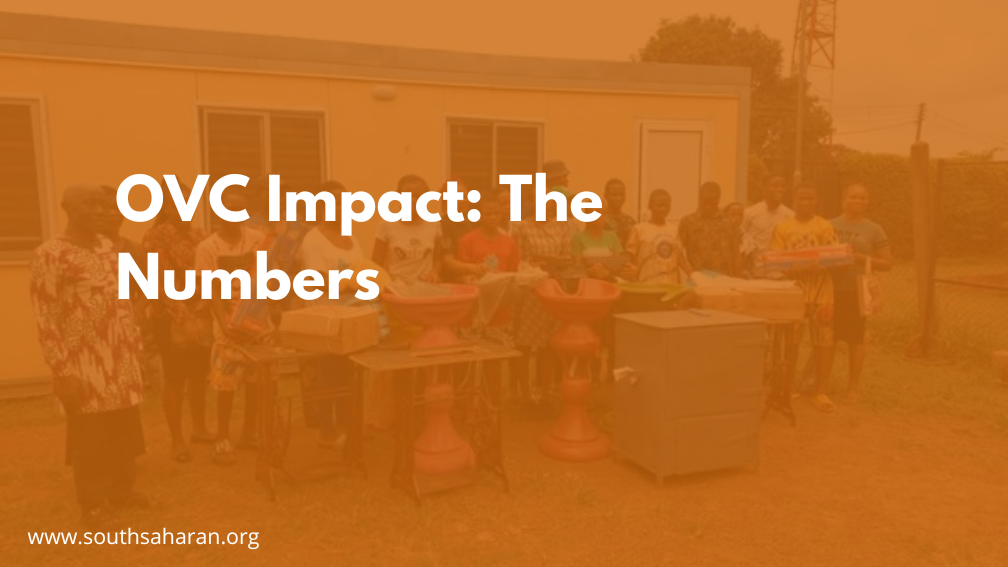
OVC IMPACT: The Numbers

A successful project requires applying skills, processes, methods, and experience to achieve the project’s objectives and goals. Thus, ensuring that the final deliverables are achieved. Throughout the project life cycle, there’s a need for constant monitoring and evaluation of determined milestones. 

The case isn’t different for the 4GATES Orphaned and Vulnerable Children’s (OVC) Project. Federal  Ministry of Women Affairs Heaquaters, Abuja.  Enugu State Ministry of Gender Affairs and Social Development and Caritas Nigeria conducted a joint national assessment. The assessment was to determine progress made on the project, gather feedback for the various government agencies, and use the findings to shape the ministry’s effort toward women and children. 

The assessment was an avenue to review the progress made on the OVC project in the year under review. 

– Over 5,000 children have been registered and provided with food, emergency health, and transport support. 

– 70 beneficiaries have received Income Generating Activity support. 

– 13 beneficiaries received cash transfers. 

– 24 adolescents have been enrolled for vocational training.  

– 110 children enrolled in school.

Households of beneficiaries and facilities were also visited during the assessment.

START-UP KITS PRESENTATION CEREMONY

Beyond health, we understand that all other facets of the beneficiary’s life matter in attaining wholeness. And as such, we do not just focus on their health but also their economic stability.

One way we cater to the needs of beneficiaries is through vocational training. Beneficiaries of the project are enrolled in training programs where participants learn vocational skills and become self-employed.

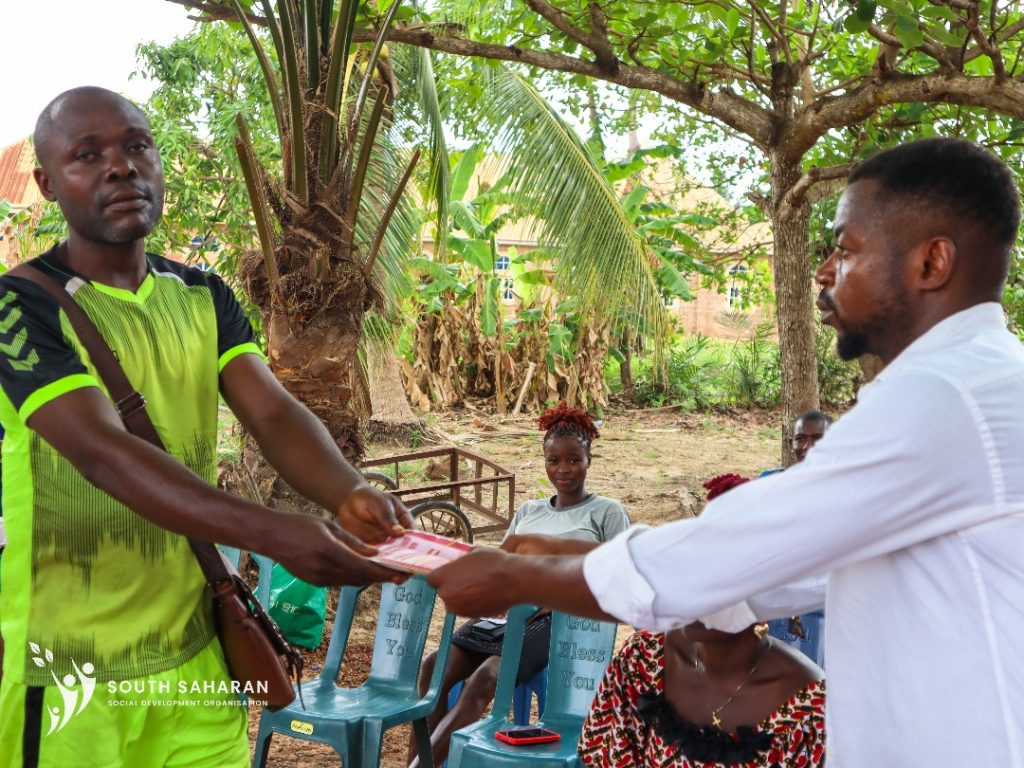
South Saharan Social Development Organization (SSDO), in partnership with Caritas Nigeria through the 4GATES Orphaned and Vulnerable Children (OVC) Project, is providing support to beneficiaries to enroll in vocational training. After the training, beneficiaries are provided with start-up kits to help get them on their journey to financial independence.

Enugu State OVC Technical Specialist, Mr. Edward Ugba, CCFN OVC Program Officer, Mrs. Wisdom Uso, CCFN HES OFFICER, Mrs. Chisom Iyidiobi, SSDO’s OVC Program Officer Obinna Anyanwu were on hand to facilitate the start-up kits presentation ceremony.

Promoting Women’s Empowerment Through Peer Education

Through years of working on projects at the community level, we realize that women and girls are hugely disadvantaged. They have often been marginalized and segregated to the background on so many fronts in society. Especially politically and economically. We also observe that this marginalization has created a false consciousness in most women. 

Women are now satisfied with the status quo of swallowing their thoughts and ideas when it is clear that their input will make the difference. One of the primary reasons for marginalization is the inequality between men and women in accessing and controlling resources. But even more shocking is that in many communities, women don’t even have control over reproduction. 

The goal is to create an equal society where men and women can speak, and their voices matter. To see a world where women, youth, and children can develop in a politically and socioeconomically correct environment. Where gender equality is prioritized, and women have complete control over their resources and time. 

And as such South Saharan Social Development Organization, SSDO, in partnership with ActionAid Nigeria, seeks to foster women’s empowerment through peer education. This initiative aims to advocate for women’s rights and bridge women’s capacity deficiency at the community level. As well as meet the political, social, and economic needs of women. 

Peer Education Program

A peer education program is a scheme that involves people being taught by facilitators of similar backgrounds. This way, the message is easily absorbed, and the facilitator can communicate clearly on the same wavelength as the participant.

The program was facilitated by Osamudiamen Owens-Akinwale, Advisor Local Rights Programme, ActionAid Nigeria. The training was executed using the Women Peer Education Resource Kit. It covered essential areas such as personal development, health, livelihood and survival, and inclusion. The women were taught the importance of body image, self-esteem, time management, hygiene, skill acquisition, and the dangers of gender-based violence.   

The women’s peer education program was organized in Isiama Community, Oduma Achara, Aninri LGA, Enugu state. The intention is for the training to be cascaded down to other women in the community through the trained representatives. 

Correcting Wrong Notions

“I learned about how to care for the elderly and the importance of child spacing. I also learned that we have the right to stand and contest for election.” – Obodo Victoria. 

Women were better informed of their rights and responsibilities after the training. They were taught valuable life and soft skills to help them be more efficient in their homes and businesses. 

“Before, we believed that if a woman is not circumcised, she would be very promiscuous. I also didn’t see the need for a woman to undergo a cesarean section. But now, I know that female genital mutilation is dangerous to the sexual health of a woman. And that if a woman has labor difficulties that last too long without help, it can be really dangerous.” A woman from Isiama Community.

Importantly, we see that beyond the women learning about their rights, wrong notions which have been held on to for a long time were corrected. Now, the women have the right foundation to build on and groom young girls.  

Success Stories From Jacob’s Well Micro-credit Scheme

Studies from the Nigerian Economic Summit Group revealed that 91 million Nigerians now live below the poverty line. With an additional eight million people pushed into poverty in 2021. Interestingly, about 60 percent of people living below the poverty line are women. Unemployment, unpaid labor, gender discrimination, and marginalization are mostly responsible for it. 

In many communities, women are largely dependent on their spouses for their financial needs. This dependence is one reason why women fail to report gender-based violence. They fear they’d lose their financial support and become stranded. Women’s empowerment is one of the practical solutions to reducing the cases of violence against women. 

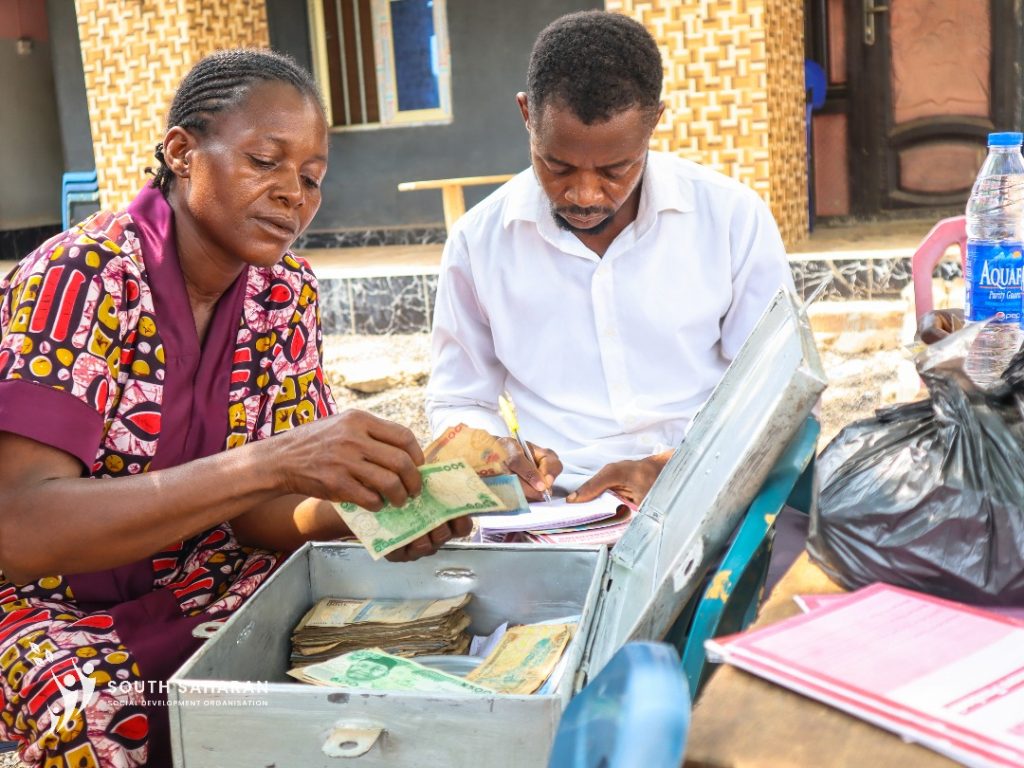
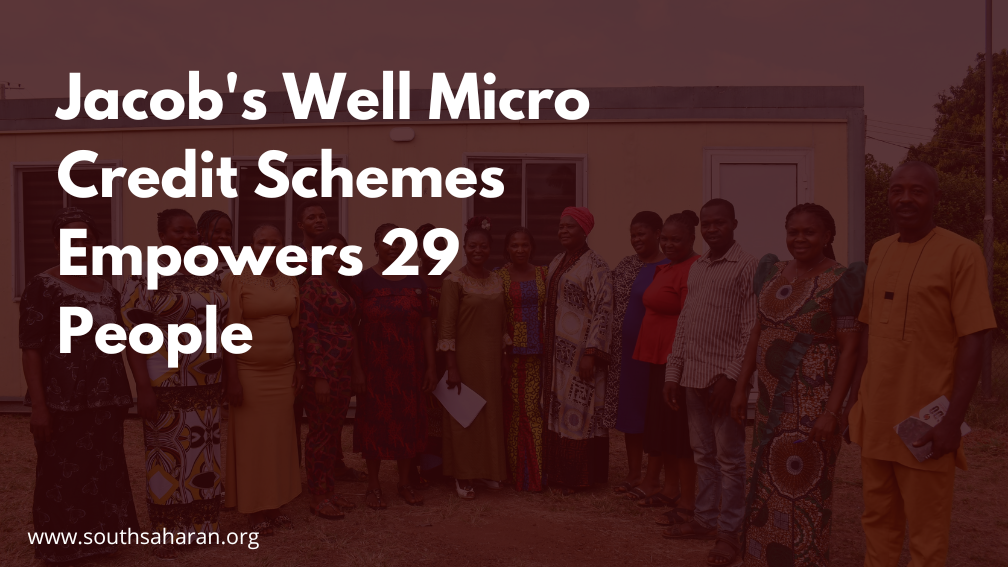
South Saharan Social Development Organization (SSDO) is committed to improving the quality of life for women in communities. We empower them to be financially independent, thus reducing poverty and dependency. One such way we do this is through Jacob’s Well micro-credit scheme. SSDO makes loans available to women in a cooperative to start or sustain their business. 

Here are some remarkable stories from the project and how beneficiaries have been able to change their household’s economic situation.

Ilunoh Josephine

Josephine relocated from the north a few years ago because of the insurgency. Since her return to the east, she found it difficult to meet ends. It was a struggle for her and her family to survive. However, in 2020, she discovered SSDO’s micro-credit scheme, and her story hasn’t been the same. 

She had a small poultry business she started but hasn’t been able to break even due to the lack of capital. The poultry had 20 birds when she found out about the scheme. After accessing loans twice, she has grown her poultry farm to over 100 birds and 20 turkeys. She has also successfully expanded to the sales of agricultural produce. 

Josephine testifies that her financial challenges have been a thing of the past. 

 “I am so grateful to SSDO for the loans they allowed me access. I have been able to grow my business. Three of my kids are in the university, and I’ve been able to cater to their needs without any financial challenges.” 

Chinenye Oforkansi 

“Before the loan I got from SSDO, I could barely feed my family. I struggled to pay my children’s school fees and school materials.” 

Chinenye uses her room for petty trading. She couldn’t expand her business. She has grown her business since she accessed loan credit from the scheme. She is currently constructing a kiosk to accommodate her thriving business. 

She now has an oil palm business. Her standard of living has significantly improved, and she caters to her children’s educational needs without stress.

Geraldine Okeh

Geraldine runs a restaurant business. She has been looking to diversify into cash crop production but was restrained by the lack of funds. However, her story is changing. 

“Since I got the loan, I have been able to diversify into the poultry business. I have a registered farm where I plant economic crops.” 

She’s showing no signs of slowing down as she’s already looking forward to her next loan grant. “With my next loan, I will ‌add vegetable crops to the farm.” 

“SSDO has changed my life and business. I am so happy and grateful for their effort.” 

Benedict Udeneh 

“I run a small restaurant. But I could not expand and meet my customer’s needs.” 

Benedict couldn’t expand her restaurant business due to a lack of capital. The profit she made wasn’t enough to cater to her expansion needs. All the business afforded her was her daily needs. So if she didn’t cook the next day, there was no way the next meal was guaranteed. 

However, after accessing the loan credit, things took a new turn. She has been able to establish poultry and an oil bean business. 

“I can comfortably afford to foot my children’s education bills without stress. My standard of living has also significantly improved.” 

Women-Owned Agro Businesses Feel the Brunt of the Herdsmen Attack in Enugu.

Woman weeding her plantation

“I can’t go to the farm anymore. You don’t know where or when they will attack,” Chigozie explains. 

This has been the situation of farmers in communities in Uzo-Uwani LGA, Enugu State. On the 25th of July 2021, herders attacked Obie Akwu farm camp where few people died and many were injured. This has disrupted the normal proceedings of the communities whose chief occupation is farming. Now, farmers are scared to return to the farms for fear of being attacked. 

The herders-farmers crisis has been an ongoing issue in the country and has recently become a cause of concern in the Southeast. As remote communities have been frequently attacked in recent months. 

“I buy farm products from farmers to sell in the market. Since the attack there’s been little activity from the farmers,” Onyinye, a fruit seller said. 

Many women in Uzo-Uwani communities are traders. Some buy farm produce from farmers and sell it in the market. Other women engage in farming and proceed to sell the products themselves. Thus, raising money to fend for themselves and support their families. 

However, many of these women deal in small quantities. Buying and selling as much as they can to break even and stay afloat. There is a limit to how they can support their family and look to attain financial independence. 

Women like Onyinye abound across communities in Enugu and the country at large who make barely enough to cater to their needs. Coupled with the insecurity the communities in Uzo-Uwani face, it is worse off. 

“I barely make enough profit to buy books and clothes for my kids, talk less of taking care of myself,” Onyinye said. 

In 2019, Onyinye came in contact with South Saharan Social Development Organization (SSDO) during one of their community outreaches to Uzo-Uwani. 

“I met some officials from SSDO and they told me I could access loans from their organization to grow my business. I was so excited.”

SSDO through its Jacob’s Well initiative aims at improving the quality of life for women in Enugu state by providing micro-credit facilities. The objective of the project is to empower women to gain financial independence, reduce poverty and over-dependency. 

Recipients of the Micro-credit loan

Onyinye has been able to grow her business after acquiring some loans. She can now buy fruits in more quantities and expand her business. 

“I use to buy fruits in small quantities before from those who buy from the farm. Some oranges, bananas, and a few watermelons. With the loans, I have been able to grow my business. I buy in bags directly from the farm. I am grateful to SSDO for the opportunity.” 

These loans are made available with a cooperative as a third party. Only women who are duly registered with these cooperatives can benefit from the loans. Once a loan is cleared off, the women can reapply for another one. Thus, steadily growing their businesses. 

Things have however changed, the recent attack has made it difficult for business activities to continue as normal. Not just that, female businesses that have been empowered through the Jacob’s Well Initiative might suffer as well. Women take loans from SSDO to grow their businesses then refund the loans gradually after making profit. With the level of insecurity, this might no longer be visible. 

“With the current situation of things, I don’t know when I will be able to go the farm again. I also cannot take another loan because I’m not sure of how things will turn out”.

The same also can be said for Theresa a rice farmer in Adani community. She gets loans from SSDO and has scaled up her business. However, the current situation in the community has brought all activities to a standstill. 

Beneficiaries sun-drying their rice.

“Since the incident, I’ve not been able to go to the farm. And that is where we carry out the parboiling and the sieving of the rice as well. So now we are stranded.”   

This poses a new challenge for women in these communities. Access to funds was usually the problem but this new status quo looks to threaten the progress that has been made with women empowerment in these communities.