We understand that poverty lies at the heart of unreported cases of Gender-based violence (GBV). Most women are often afraid they will lose their economic support if they report. Statistics show domestic violence has increased in the wake of the COVID19 pandemic. Women have a huge role to play in nation-building. Gender inequality, unpaid care, and a largely unskilled women’s group are some issues to name a few that hold them back.
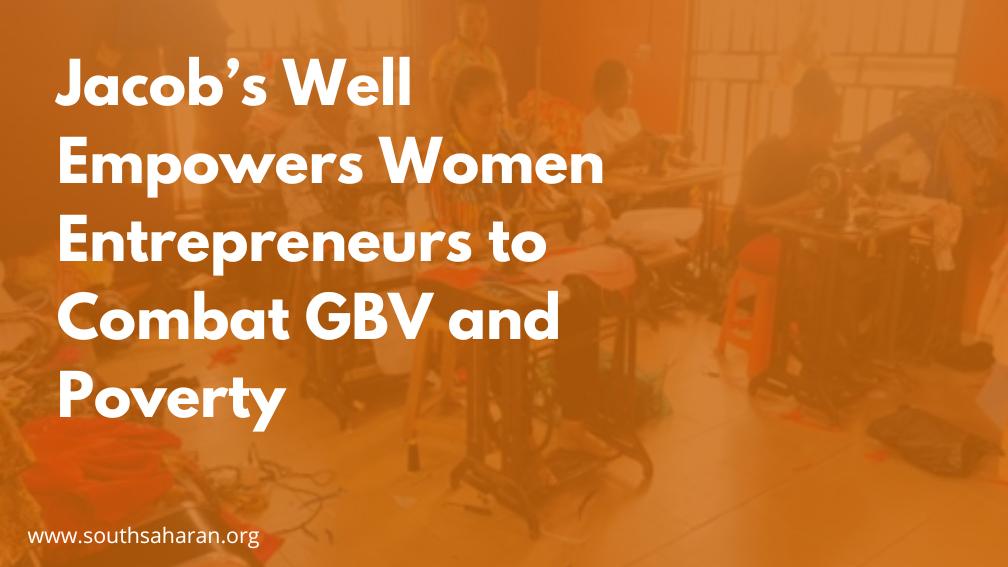
Women’s empowerment is one of the practical solutions to reducing the cases of violence against women. South Saharan Social Development Organization through its Jacob’s Well program is providing micro-credit to female-owned small businesses. This will help women achieve financial independence and reduce poverty.
In 2023, 42 beneficiaries across five registered cooperatives got loans to grow their businesses. They were trained in financial literacy, risk management, savings culture, business, and cooperative management using the GIZ Nigeria & ECOWAS resource manual to help sustain and grow the venture.
A sum of 9.5 million naira was disbursed to these women with no collateral required leveraging the social trust within the cooperative mechanism to ensure compliance across the board. We are happy to report that the various businesses are thriving and the beneficiaries are doing tremendously well.
This piece delves into the poignant narrative of a community grappling with the multifaceted impact of poverty on its women. It unfolds the pressing need for empowerment, as the women yearned for opportunities that would break the shackles of financial deprivation and dismantle the barriers restricting their potential. In the face of these challenges, the community found an unexpected ally in South Saharan Social Development Organization, SSDO, an organization that became a beacon of hope, introducing the transformative Sister Guardian Initiative and Economic Empowerment. This is a tale of dreams taking flight, a community transcending adversity, and the remarkable journey toward empowerment that has forever altered the landscape of the community.
In the heart of Umuode community, Nkanu East where the echoes of hardship reverberated through every humble dwelling, the story of resilience and triumph unfolded. For the women of this close-knit community, poverty cast a long shadow, and the societal roots of gender-based discrimination deepened their struggle. As the oppressive forces of economic hardship and unequal opportunities took their toll, a collective call for change emerged from the hearts of the women in Umuode.
In the not-so-distant past, the Chizaram Farmers Multipurpose Cooperative Umuode, nestled in the Nkanu East Local Government Area of Enugu State, grappled with the harsh realities of poverty. Mrs. Ani Faithful, a member of the cooperative, vividly recounts the challenging times when meager livelihoods were sustained through small businesses, mere tables, and kiosks acting as the stage for their economic pursuits.
“Many of us struggled to raise funds to grow our businesses. We knew what we wanted and where we saw ourselves but the limiting factor was money. Rather than stay idle, I started by selling provisions in a small kiosk, hoping to raise enough money to go into rice farming.”
Adding to their struggles was a deeply ingrained societal bias that denied women access to land, exacerbating the cycle of poverty and inequality.
“In our community, women are not given land to farm like the men. This was a huge challenge to my goal of becoming a rice farmer. And this worsened an already dire situation.”
Women’s Empowerment, The Way Forward
Recognizing the dire need for change, the call for women’s empowerment resonated profoundly within the cooperative. The oppressive grip of poverty, coupled with gender-based discrimination, spurred a collective desire for transformation. It was against this backdrop that SSDO, a beacon of hope for marginalized communities, stepped in with the Sister Guardian Initiative and Economic Empowerment through Jacob’s Well project.
In 2020, SSDO, through its Jacob’s Well Officer, Stella Ani, and Gender Protective Lead, Blessing Uchendu, introduced the initiatives to Chizaram Farmers Multipurpose Cooperative Umuode. The initiative aimed to address both the immediate economic challenges faced by the women and the underlying societal issues perpetuating gender inequality.
Women working on their rice plantation
Advocacy for Women’s Rights
Stella Ani and Blessing Uchendu became catalysts for change, utilizing advocacy as a powerful tool to dismantle barriers. They engaged with key stakeholders, including the Igwe and his Cabinet, the President General, and other influential figures, and sought to challenge the status quo. They advocated passionately for women’s right to land and their rightful place in decision-making bodies, igniting a spark of change in the community’s consciousness.
“We understand that for any community to fully thrive, there’s must be a deliberate effort to liberate and empower the women to not just be backbenchers but active contributors to the economy. This was our focus with our initiatives,” Blessing shared.
Now the community is more inclusive and a more adequate representation of what a thriving society should be — one with ample opportunities for women.
Stella Ani paying a supervisory visit to the rice plantation
Dream Becomes Reality
Having addressed flaws in ideologies, norms, and beliefs, it was time to empower the women with capital to achieve their goals of becoming rice farmers. SSDO further supported the cooperative with over 2 million naira to help the female farmers purchase equipment, cultivate, and grow rice. SSDO’s involvement also helped the cooperative secure a partnership with the International Fund for Agricultural Development, IFAD. This helped them secure farm inputs and cassava processing plant that has drastically improved their productivity and yield.
Woman standing next to the processing plant provided by IFAD.
Here are some of the wins of the Sister Guardian and Jacob’s Well endeavors in the community: :
Land Allocation:
The community responded to the call for equality by allocating 15 acres of land to the women, unlocking a realm of possibilities for farming and economic ventures.
Inclusion in Leadership:
The once marginalized women now hold esteemed positions, with three members of the Sister Guardian Initiative serving in the Igwe’s Cabinet and two contributing actively to the Town Union.
Respect and Recognition:
The societal shift is palpable, with women no longer relegated to the shadows; they bask in newfound respect and recognition, transforming not only their individual lives but also the community’s perception of gender roles.
Business Evolution:
Breaking free from the constraints of table and kiosk businesses, the women have evolved into successful rice farmers, marking a tangible shift from subsistence to sustainable entrepreneurship.
Business Literacy:
The initiative instilled essential business literacy skills, equipping the women with the knowledge to manage and grow their enterprises. Business record-keeping has become second nature, empowering them to make informed decisions for sustained growth.
Familial Harmony:
As the women prosper, the positive ripple effect extends to familial harmony, creating an environment conducive to personal and collective growth.
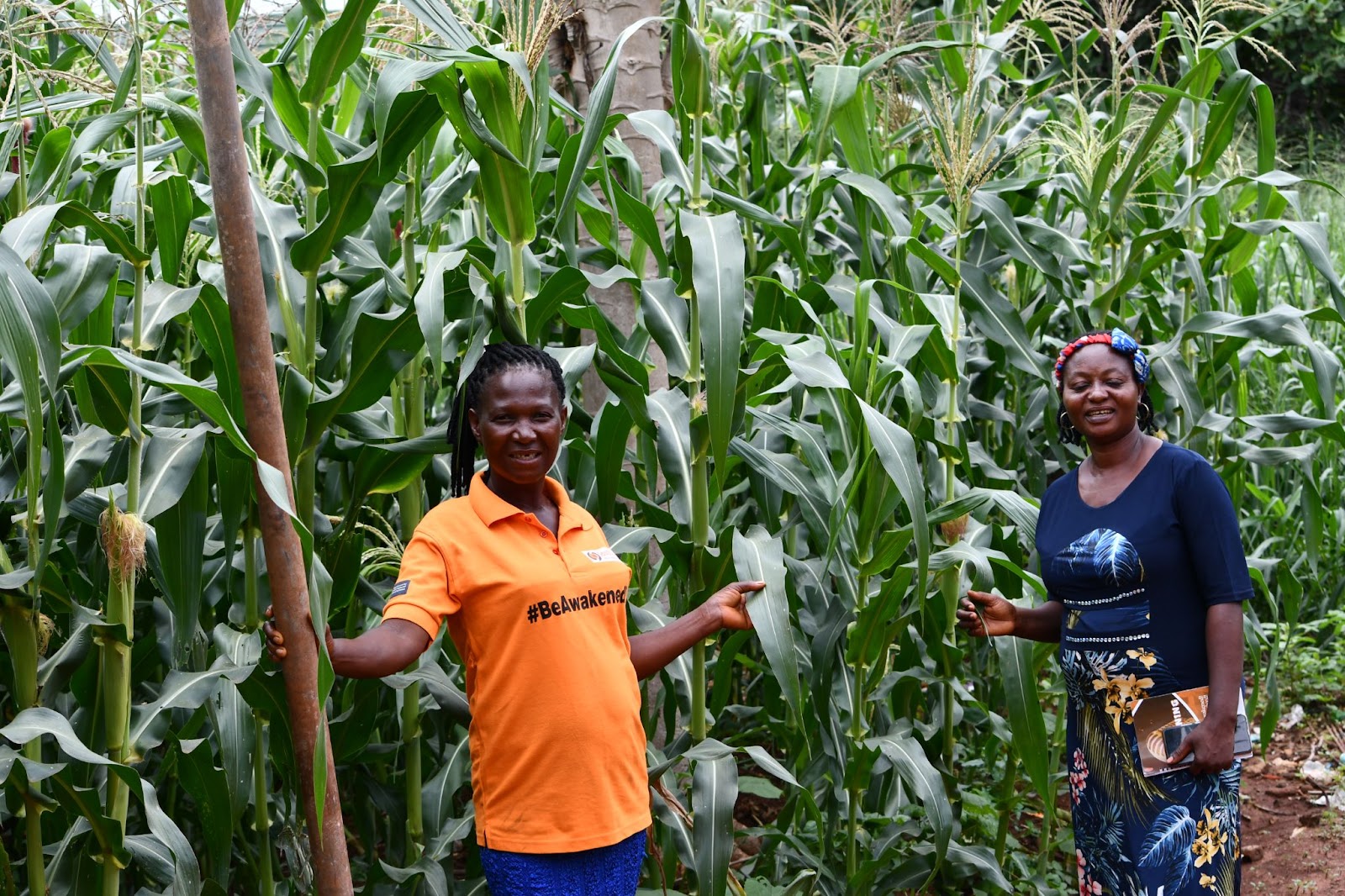
Female Farmers of Chizaram Multipurpose Cooperative during harvesting season
The Power of Social Development Initiative
The journey from adversity to achievement in Chizaram Farmers Multipurpose Cooperative and for women at large in Umuode showcases the transformative impact of strategic social development initiatives. South Saharan’s unwavering commitment to women’s empowerment has not only broken the shackles of poverty and gender-based discrimination but has also sown the seeds of lasting change within the fabric of the community. As the women stand tall, proud, and empowered, their success story resonates as a beacon of hope for other marginalized communities yearning for transformation.
Studies from the Nigerian Economic Summit Group revealed that 91 million Nigerians live below the poverty line. With an additional, eight million people pushed into poverty in 2021. Interestingly, about 60 percent of people living below the poverty line are women. Unemployment, unpaid labor, gender discrimination, and marginalization are mostly responsible for it.
In many communities, women are largely dependent on their spouses for their financial needs. This dependence is one reason why women fail to report gender-based violence. They fear they’d lose their financial support and become stranded.
This dependency also means that these women are largely unbanked and would be next to impossible to access loans from traditional institutions. Their lack of access to assets of their own also means they don’t have any form of capital that can suffice as collateral. In our line of work, we’ve seen that this economic disparity engenders gender-based violence.
Understanding these peculiar challenges, South Saharan Social Development Organization empowers them to be financially independent, thus reducing poverty and dependency.
One such way we do this is through Jacob’s Well micro-credit scheme. SSDO makes loans available to women in a cooperative at low-interest rates to start or sustain their businesses. The organization empowers these women with no collateral required leveraging the social trust within the cooperative mechanism to ensure compliance across the board.
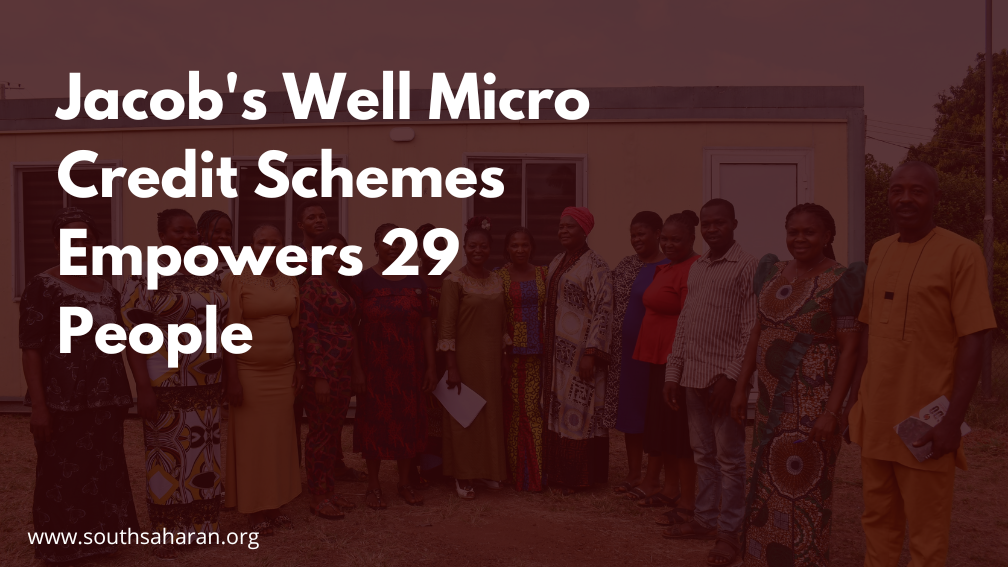
In November, 29 loan collectors across three registered cooperatives got loans to grow their businesses. They were trained in financial literacy, risk management, savings culture, business and cooperative management to help sustain and grow the venture.
A sum of 2.85 million naira was disbursed to these women with no collateral required leveraging the social trust within the cooperative mechanism to ensure compliance across the board.
Studies from the Nigerian Economic Summit Group revealed that 91 million Nigerians now live below the poverty line. With an additional eight million people pushed into poverty in 2021. Interestingly, about 60 percent of people living below the poverty line are women. Unemployment, unpaid labor, gender discrimination, and marginalization are mostly responsible for it.
In many communities, women are largely dependent on their spouses for their financial needs. This dependence is one reason why women fail to report gender-based violence. They fear they’d lose their financial support and become stranded. Women’s empowerment is one of the practical solutions to reducing the cases of violence against women.
South Saharan Social Development Organization (SSDO) is committed to improving the quality of life for women in communities. We empower them to be financially independent, thus reducing poverty and dependency. One such way we do this is through Jacob’s Well micro-credit scheme. SSDO makes loans available to women in a cooperative to start or sustain their business.
Here are some remarkable stories from the project and how beneficiaries have been able to change their household’s economic situation.
Ilunoh Josephine
Josephine relocated from the north a few years ago because of the insurgency. Since her return to the east, she found it difficult to meet ends. It was a struggle for her and her family to survive. However, in 2020, she discovered SSDO’s micro-credit scheme, and her story hasn’t been the same.
She had a small poultry business she started but hasn’t been able to break even due to the lack of capital. The poultry had 20 birds when she found out about the scheme. After accessing loans twice, she has grown her poultry farm to over 100 birds and 20 turkeys. She has also successfully expanded to the sales of agricultural produce.
Josephine testifies that her financial challenges have been a thing of the past.
“I am so grateful to SSDO for the loans they allowed me access. I have been able to grow my business. Three of my kids are in the university, and I’ve been able to cater to their needs without any financial challenges.”
Chinenye Oforkansi
“Before the loan I got from SSDO, I could barely feed my family. I struggled to pay my children’s school fees and school materials.”
Chinenye uses her room for petty trading. She couldn’t expand her business. She has grown her business since she accessed loan credit from the scheme. She is currently constructing a kiosk to accommodate her thriving business.
She now has an oil palm business. Her standard of living has significantly improved, and she caters to her children’s educational needs without stress.
Geraldine Okeh
Geraldine runs a restaurant business. She has been looking to diversify into cash crop production but was restrained by the lack of funds. However, her story is changing.
“Since I got the loan, I have been able to diversify into the poultry business. I have a registered farm where I plant economic crops.”
She’s showing no signs of slowing down as she’s already looking forward to her next loan grant. “With my next loan, I will add vegetable crops to the farm.”
“SSDO has changed my life and business. I am so happy and grateful for their effort.”
Benedict Udeneh
“I run a small restaurant. But I could not expand and meet my customer’s needs.”
Benedict couldn’t expand her restaurant business due to a lack of capital. The profit she made wasn’t enough to cater to her expansion needs. All the business afforded her was her daily needs. So if she didn’t cook the next day, there was no way the next meal was guaranteed.
However, after accessing the loan credit, things took a new turn. She has been able to establish poultry and an oil bean business.
“I can comfortably afford to foot my children’s education bills without stress. My standard of living has also significantly improved.”