Research shows that Nigeria ranks high among the high-burden countries for Tuberculosis and has a low detection rate. It is estimated that there are 460,000 new cases and around 245,000 deaths occur annually. Nigeria is one of the eight countries that accounts for 86 percent of all TB cases in the world.
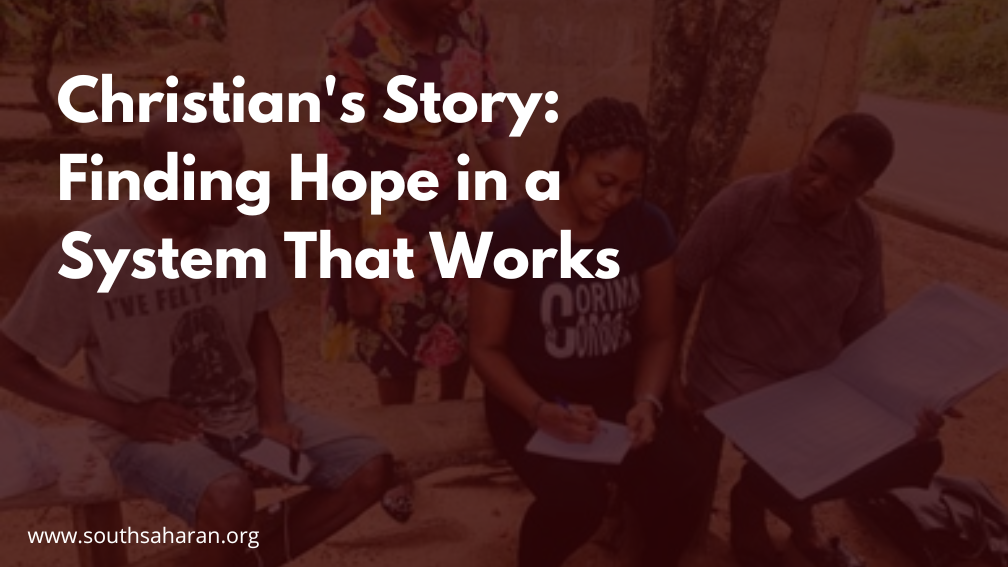
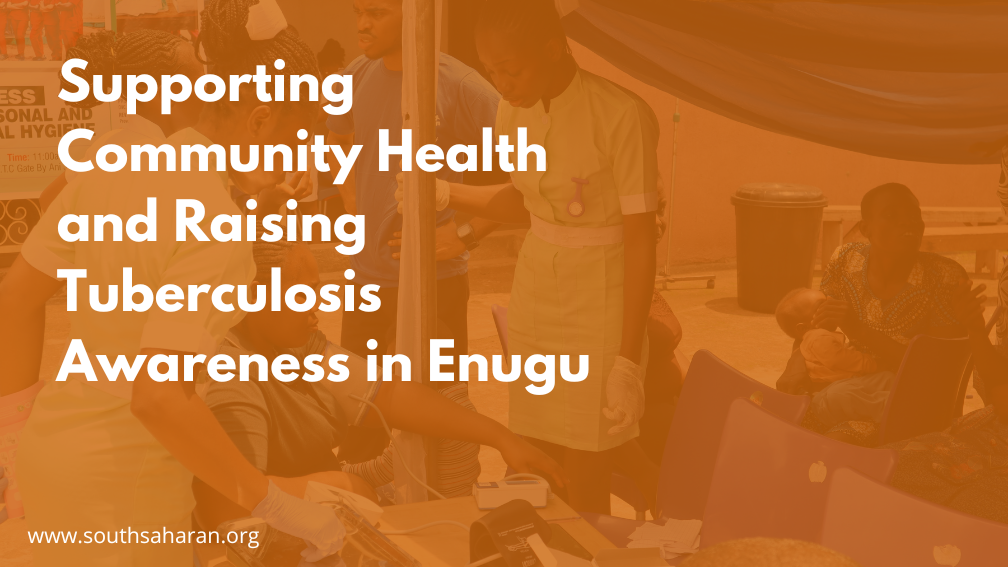
Understanding this crisis, South Saharan Social Development Organization, in partnership with Association for Reproductive & Family Health-ARFH and the Enugu State Tuberculosis and Leprosy Control Unit, is playing its part through The Global Fund Community Drug-Resistant Tuberculosis (DR-TB) project in reducing this epidemic in Enugu state.
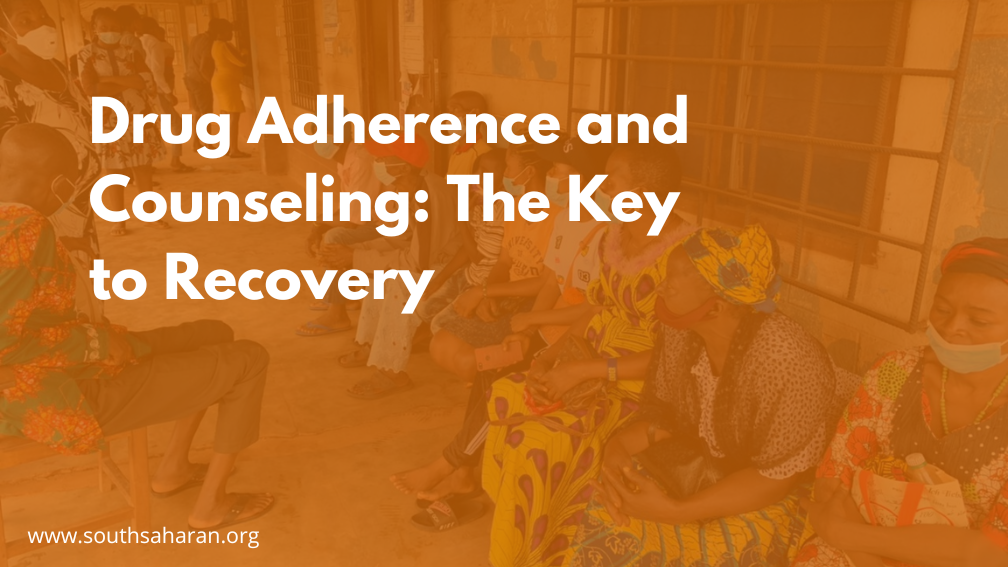
The project supports DR-TB patients on their road to recovery. As well as ensures beneficiaries adhere to treatment and don’t miss the Out of Patient Department (OPD) clinic. The initiative also provides on-site training to treatment supporters and executes routine household visits to beneficiaries to ensure adherence.
There are currently 26 beneficiaries on the project. Every month, SSDO’s health officer provided adherence counselling and conducts household visits to beneficiaries. The project also provides monthly transport support to the patients and their treatment supporters.
NCF, SSDO Organises a Sensitization Rally on Vulture Conservation
The Nigeria Conservation Foundation (NCF) and South Sahara Social Development Organisation (SSDO) have carried out a walk and sensitization of residents of Enugu State on the need to conserve vultures.
The walk, which is meant to commemorate International Vulture Day 2022, titled: “A Mile for Egyptian Vulture”, witnessed sensitization within major roads in Enugu metropolis for several hours on Thursday.
The aim of the rally is to create awareness on the importance of vultures to the ecosystem and why they need to be protected, especially the Egyptian Vultures. Vultures are scavengers and natural cleaning agents. By feasting on carcasses, they remove pathogens and toxins from the dead animals that would have infected the environment. This is possible because their stomach contains a potent acid that destroys the harmful substances found in dead animals.
However, research has shown that the vulture population is on a steady decline and some species are fast going extinct. There is a healthy vulture population in Enugu state. These vultures existence is threatened by illegal killing and trading of vultures.
Mr. Oladapo Soneye, Head of Communications, NCF, stated “There is a wrong cultural impression people have about vultures. People assume seeing vultures mean bad omen and then do everything possible to get rid of them.” “Others say vultures are ugly and have no usefulness and then proceed to harm them. Today we want to change the narrative of killing vultures and destroying their habitat.”
Speaking, the Head of Programmes in SSDO, Mr Udochukwu Egwim, said the economic and health benefits of allowing the vulture do their naturally assigned role of environmental cleaning agents cannot be over-emphasized. Egwim noted that vultures ensure the “essential balance in the eco-system” and do much by their activities to protect life both of humans and animals in a given environment.
“We are on this to ensure that as change agent, which SSDO stands for, we ensure that our people do the right thing and ensure that international best practices meant to benefit every human on earth is done,” he said.
Egwim noted that it was unfortunate that about 150 vultures were found dead in Ihe community in Awgu Local Government Area of the state about two years ago.
“SSDO has carried investigation on the matter and did awareness with the residents of the community on vultures’ protection as well as set up a vulture volunteer watch group.
“The protection group, made up of hunters, farmers, youths and traditional authority, will watch-over and preserve vultures in the community henceforth and report any threat to NCF and SSDO,” he said.
South Saharan Social Development Organization (SSDO) in partnership with Caritas Nigeria, CCFN, provided 30 desks each for Community Primary Schools in Ozalla and Umueze in Nkanu West LGA. The provision is part of a block grant in the Orphaned and Vulnerable Children (OVC) Program that will see 150 children benefit from the intervention.
In a ceremony in the school premises on Wednesday, 23rd of September 2022, the headteacher of Community Primary School Umueze expressed her gratitude by thanking the organizations for their effort. “We appreciate SSDO and CARITAS for this work. As we start the new academic session, the classrooms will be more conducive for the teachers and students alike.”
Stakeholders present include CCFN OVC Program Officer, Wisdom Uso, SSDO’s Head of Programs, Udochukwu Egwim, SSDO’s OVC Program Manager, Obinna Anyanwu, Parents and Teachers Association (PTA) chairpersons, teachers, and community representative of the schools amongst others.
The project aims to improve access to education for indigent and vulnerable children, which will also reduce the risk of violence and abuse. Also, ensuring that they are enrolled and remain in school.
A successful project requires applying skills, processes, methods, and experience to achieve the project’s objectives and goals. Thus, ensuring that the final deliverables are achieved. Throughout the project life cycle, there’s a need for constant monitoring and evaluation of determined milestones.
The case isn’t different for the 4GATES Orphaned and Vulnerable Children’s (OVC) Project. Federal Ministry of Women Affairs Heaquaters, Abuja. Enugu State Ministry of Gender Affairs and Social Development and Caritas Nigeria conducted a joint national assessment. The assessment was to determine progress made on the project, gather feedback for the various government agencies, and use the findings to shape the ministry’s effort toward women and children.
The assessment was an avenue to review the progress made on the OVC project in the year under review.
– Over 5,000 children have been registered and provided with food, emergency health, and transport support.
– 70 beneficiaries have received Income Generating Activity support.
– 13 beneficiaries received cash transfers.
– 24 adolescents have been enrolled for vocational training.
– 110 children enrolled in school.
Households of beneficiaries and facilities were also visited during the assessment.
The names were changed to conceal the identity of the beneficiaries.
“I am tired. There is no one else I can go to. I don’t have any money. Where would I take her?”
Mrs. Ugobi blurted out after being told by the hospital she needed to cuff up more money for her granddaughter’s treatment. The elderly woman barely scraped her purse to gather the last ₦2,500 requested to buy drugs for Adaugo.
Adaugo is a 12-year-old child who lives in Enugu state. She is HIV positive. She was infected at birth (mother-to-child transmission) and this has totally altered her life.
Adaugo lost her parents to AIDS a few years after she was born. Ever since she has been living with her grandma, Mrs. Ugobi, alongside her cousins. Adaugo and her grandmother live hand-to-mouth. The elderly woman sells vegetables at a popular market in town to make ends meet. They can barely guarantee their next meal without going out to trade.
For a child of twelve, Adaugo was severely malnourished. It was clear her immune system was failing. The family could barely feed, and enrolling her in a hospital was out of the question. Until Adaugo started coughing.
It started mildly, but in a matter of days, it became severe, increasing in frequency. She coughed uncontrollably and bled when she did. She had difficulties breathing and could barely stand. Adaugo was struggling for life.
Mrs. Ugobi had to seek help or risk losing her granddaughter. She went to a nearby hospital where she was referred to Enugu State Teaching Hospital for Tuberculosis screening.
“I spent all I had, and it was barely enough. They asked me to get more drugs and my child wasn’t getting any better. I couldn’t handle seeing her in so much pain, it broke me down.”
Seeing how helpless she was, the facility referred Mrs. Ugobi to the Orphaned and Vulnerable Children (OVC) Project. The OVC project is a global action toward HIV epidemic control in sub-national units in Nigeria. It is an HIV care, prevention, and treatment program that identifies beneficiaries, link them to care and helps achieve viral load suppression. South Saharan Social Development Organization (SSDO) in partnership with the Catholic Caritas Foundation of Nigeria (CCFN) is the implementing partner.
The OVC project took responsibility for her care and facilitated her TB screening process. The results came out positive, and she was immediately linked to care in the state TB treatment program. She has begun TB medication and continued her HIV treatment. The organization also provided emergency food and health support to the family.
Research shows that poverty is inversely correlated with drug adherence. Part of the project’s objective is to help people like Adaugo by providing social and economic support. Families like Adaugo’s wouldn’t have been able to meet the financial demands of treating HIV and tuberculosis without the OVC program. Her journey to viral load suppression and TB treatment completion would have been stunted.
We can gladly report to you that Adaugo is doing much better and responding to treatment. Mrs. Ugobi’s joy knew no bounds and profusely thanked the team for the support.
“Only God can repay you. I don’t know what I would have done if you didn’t enroll her in the OVC project. It is because of you I didn’t lose my daughter.”
The hospital also screened other members of the family who have been in proximity to Adaugo for tuberculosis. Three returned positive and have been linked to treatment.