SSDO

Women-Owned Agro Businesses Feel the Brunt of the Herdsmen Attack in Enugu.

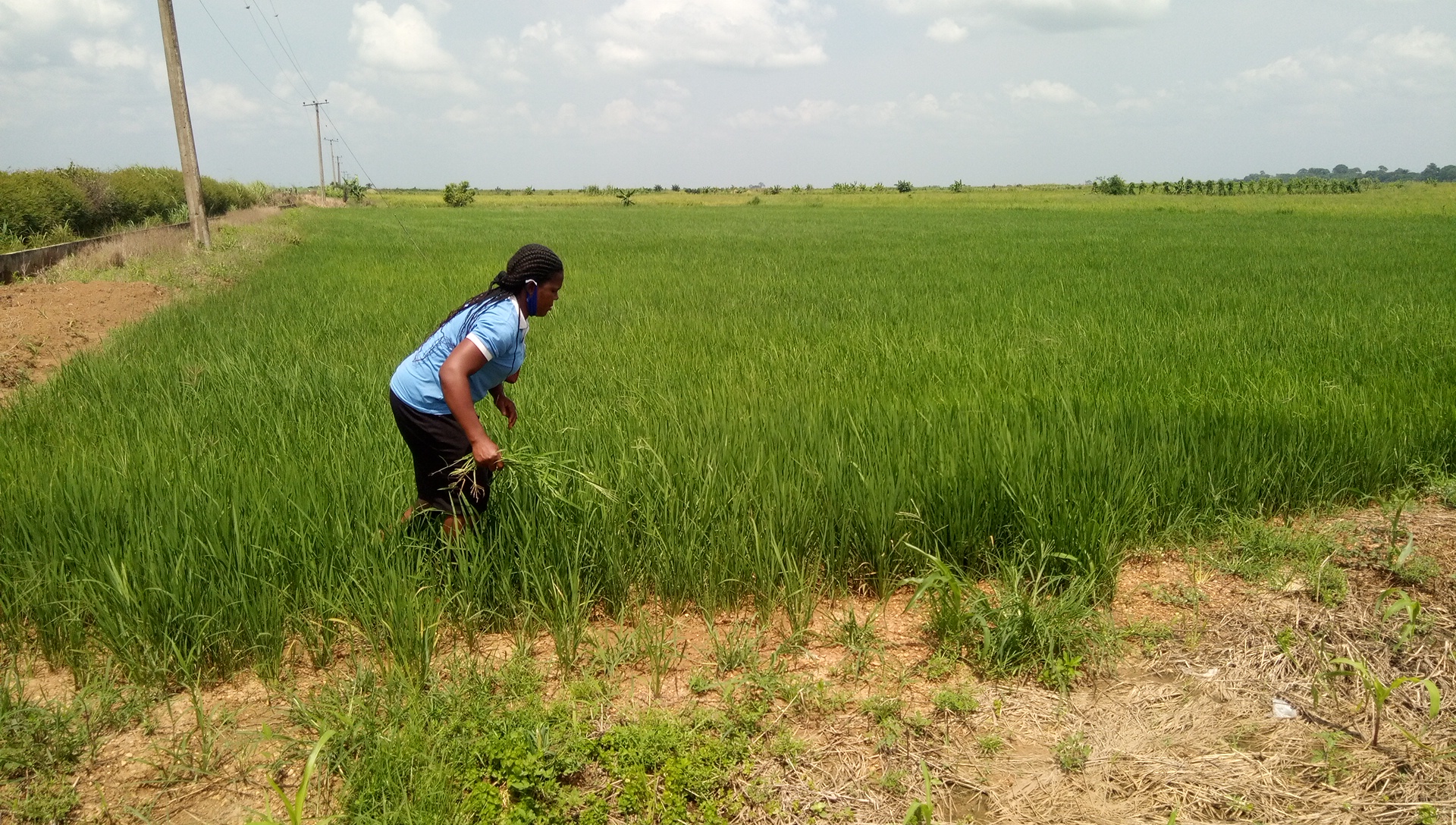
Woman weeding her plantation

“I can’t go to the farm anymore. You don’t know where or when they will attack,” Chigozie explains. 

This has been the situation of farmers in communities in Uzo-Uwani LGA, Enugu State. On the 25th of July 2021, herders attacked Obie Akwu farm camp where few people died and many were injured. This has disrupted the normal proceedings of the communities whose chief occupation is farming. Now, farmers are scared to return to the farms for fear of being attacked. 

The herders-farmers crisis has been an ongoing issue in the country and has recently become a cause of concern in the Southeast. As remote communities have been frequently attacked in recent months. 

“I buy farm products from farmers to sell in the market. Since the attack there’s been little activity from the farmers,” Onyinye, a fruit seller said. 

Many women in Uzo-Uwani communities are traders. Some buy farm produce from farmers and sell it in the market. Other women engage in farming and proceed to sell the products themselves. Thus, raising money to fend for themselves and support their families. 

However, many of these women deal in small quantities. Buying and selling as much as they can to break even and stay afloat. There is a limit to how they can support their family and look to attain financial independence. 

Women like Onyinye abound across communities in Enugu and the country at large who make barely enough to cater to their needs. Coupled with the insecurity the communities in Uzo-Uwani face, it is worse off. 

“I barely make enough profit to buy books and clothes for my kids, talk less of taking care of myself,” Onyinye said. 

In 2019, Onyinye came in contact with South Saharan Social Development Organization (SSDO) during one of their community outreaches to Uzo-Uwani. 

“I met some officials from SSDO and they told me I could access loans from their organization to grow my business. I was so excited.”

SSDO through its Jacob’s Well initiative aims at improving the quality of life for women in Enugu state by providing micro-credit facilities. The objective of the project is to empower women to gain financial independence, reduce poverty and over-dependency. 

Recipients of the Micro-credit loan

Onyinye has been able to grow her business after acquiring some loans. She can now buy fruits in more quantities and expand her business. 

“I use to buy fruits in small quantities before from those who buy from the farm. Some oranges, bananas, and a few watermelons. With the loans, I have been able to grow my business. I buy in bags directly from the farm. I am grateful to SSDO for the opportunity.” 

These loans are made available with a cooperative as a third party. Only women who are duly registered with these cooperatives can benefit from the loans. Once a loan is cleared off, the women can reapply for another one. Thus, steadily growing their businesses. 

Things have however changed, the recent attack has made it difficult for business activities to continue as normal. Not just that, female businesses that have been empowered through the Jacob’s Well Initiative might suffer as well. Women take loans from SSDO to grow their businesses then refund the loans gradually after making profit. With the level of insecurity, this might no longer be visible. 

“With the current situation of things, I don’t know when I will be able to go the farm again. I also cannot take another loan because I’m not sure of how things will turn out”.

The same also can be said for Theresa a rice farmer in Adani community. She gets loans from SSDO and has scaled up her business. However, the current situation in the community has brought all activities to a standstill. 

Beneficiaries sun-drying their rice.

“Since the incident, I’ve not been able to go to the farm. And that is where we carry out the parboiling and the sieving of the rice as well. So now we are stranded.”   

This poses a new challenge for women in these communities. Access to funds was usually the problem but this new status quo looks to threaten the progress that has been made with women empowerment in these communities.  
Providing Safe Spaces for Survivors of Gender-Based Violence

“I was young when I met my husband. He was loving and kind. We got married not long after. Then he changed.” Blessing said.

Blessing’s husband is the main provider of the family. She also supports the family with proceeds from her foodstuff business. From time to time, she joins her mother on the farm to uproot cassava and make gari.

“When we started together, he was caring. I didn’t have to pay for things,” she noted. 

He made it his responsibility to take care of her from when they met and even throughout her pregnancies. Their relationship was a sweet affair until two years ago when everything went sour. 

“He stopped providing for the family. Anytime I ask for money for upkeep, he will become angry and ask me to use my money,” she said. 

At the slightest provocation or argument, he hits her. Blessing didn’t take this lightly, as every time he hits her she will retaliate. 

“I always fight with my husband because he is always hitting me,” she said.

But being stronger, he overpowers and beats her. Many times the thought of leaving crossed her mind. She always waded it off, thinking of the shame and stigma. The income from her foodstuff business could not take care of her and her three kids. This coupled with her little education effectively knocked off the idea of moving. Blessing knew her livelihood was tied to her husband. 

Sadly, the beatings and maltreatment didn’t stop rather it became more frequent. When it became unbearable and looked like she may lose her life, she moved back to her parent’s house.

“He started beating me so much, I had to run for my life with my kids,” she said. 

Weeks after, her husband came to her parent’s house and demanded that the kids be handed over to him. She refused this request. It led to a heated argument that spiraled into something far worse. He pounced on her and beat her right in her parent’s house. Her mother on hearing the chaos rushed to the scene to mediate. But she was on the receiving end of things as he hit her with his elbow and shoved her away. All the while her three children watched in horror. 

Her mother’s eye instantly swelled and became teary. She struggled to see and had to be rushed to the hospital. She sustained a serious injury to the eye from the collision that led to a discharge, leaving her very uncomfortable.    

Her mother was taken to the hospital for treatment, but they couldn’t pay the ₦60,000 bill. All efforts to reach her husband to cover the bill were futile. The family had to borrow the funds to save her mother’s life. 

“You’d expect that after he hurt my mother, the least he should do as a sign of remorse was to foot the medical expenses. But he never showed up. I was afraid that I might lose her. Her eyes kept bringing out mucus.” she said. 

The family could barely survive, talk less of paying the medical expenses from the treatment. Blessing said that after the money was borrowed, debtors were on their necks for a refund. 

“After the eye treatment, the lenders wanted their money back. We had no way to pay. Different people spoke to him but he kept sending them away, refusing to foot the bill.” 

A friend of hers later informed her of the presence of Sister Guardian in Omor community. She reported the matter to the group, and they intervened. The case was brought before the panel of elected women leaders. They heard from both parties and mandated the man to cover the medical expenses. 

Blessing affirmed that this decision made her family feel relief from the lenders’ pressure and her husband’s maltreatment stopped. The husband also promised not to beat her anymore. The intervention also provided counseling services for Blessing seeing as she agreed to give the relationship another chance.   

“I am thrilled that the Sister Guardian was able to intervene. He doesn’t beat me anymore, he respects me more now.”

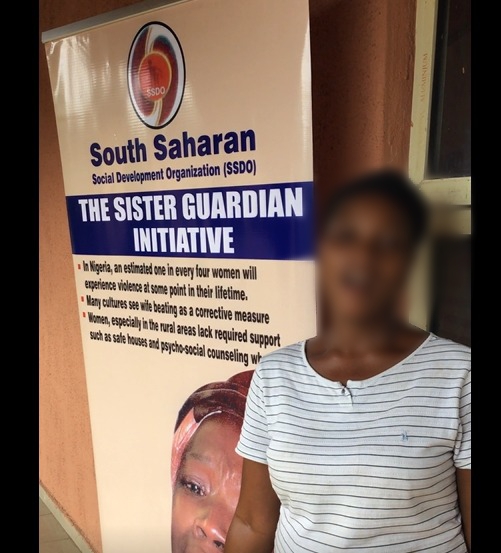
As part of South Saharan Social Development Organization’s (SSDO) commitment to the reduction of gender-based violence at the community level, it implemented the Sister Guardian Initiative in 16 communities in Enugu and Anambra. This initiative taps into existing community-based women’s groups to identify women who will stand in the gap and advocate for other women.  

Blessing Uchendu, the Gender Officer for the organization who spearheads the initiative and interacts with the Sister Guardian (SG) group sheds more light on the impact of the group.

“The beauty of the group is the unique setup that enables it to tackle different violence-based issues. The SG provides immediate support such as safety, referral, and mediation with husbands and families. The group also has a working relationship with the village rulers, police, and courthouses. This gives the group its potency.”  

“Studies from World Health Organization (WHO) show that 30 percent of women have been subjected to physical or sexual violence. The risk of anxiety and problem drinking is two times higher for abused women. That is why the SGI’s support for women is so important.” 

Gender-based violence, also known as violence against women and girls, is one of the most prevalent issues facing women yet the least visible. It affects the health, security, dignity of the victims. Victims suffer sexual and reproductive health issues such as unwanted pregnancies, traumatic disorders, and sexually transmitted infections. SSDO is one of the leading organizations in Nigeria working to improve gender equality and women empowerment. SSDO’s program offers psychosocial support, micro-credit loans, and promotes the rights of women to live an abuse-free life.  

Mrs. Uchendu also stated that one reason for prolonged gender-based violence and fear of reporting is economic dependence on the man. She also shed light on what SSDO is doing. 

“You will observe that violence is condoned because of the family’s economic dependence on the man. SSDO is providing micro-credit facilities for abused women, to empower them and make them more self-reliant.”  

Over the course of the initiative, over 300 women have benefitted from the micro-credit schemes. 

Covid-19 Hygiene Messaging: Lessons From the Field

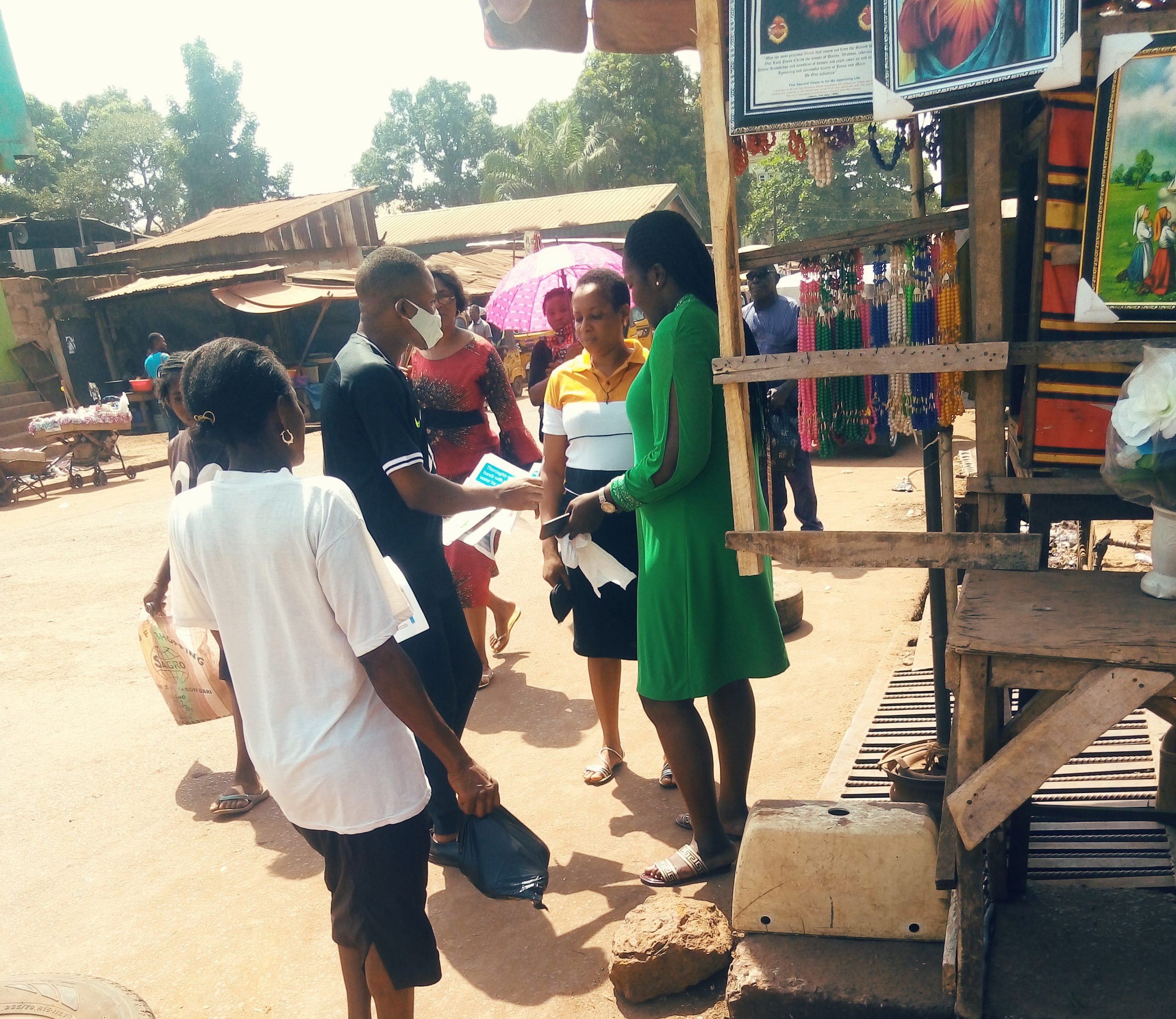
Volunteer distributing sensitization materials.

The past year and months have been challenging for many. Numerous people are yet to come to terms with the drastic ways that our lives and regular activities have been affected by the covid-19 virus. Plans were terminated, businesses lost, dreams aborted, and for so many people, life started afresh. So many people have lost a lot without actually getting the virus.  

“Sometimes I doubt there is any Covid-19, we just keep hearing about it, and we were asked to sit at home. I couldn’t work and my family suffered,” said Onyeka Chiamaka, a fish seller engaged during one of our outreaches. 

Community outreaches and awareness campaigns have helped to gauge the knowledge and perception of community members on a particular subject. This is exactly what the Heineken Africa Foundation (HAF)-sponsored covid-19 response plan did.

The HAF Covid-19 response plan was deployed in six states in Nigeria (Bauchi, Benue, Ekiti, Enugu, Kaduna, and Oyo) over a period of six months from August 2020 to January 2021. The aim of the project was to engage decision-makers to accelerate access to water, promote messages about hygiene to the public, and provide handwashing facilities in public places. WaterAid and South Saharan Social Development Organization (SSDO) were implementing partners in Enugu state. 

WASH, Enugu’s Challenge

Research shows that about 28 percent of the state’s population lacks access to water supply services. Only 38 percent of the state’s population has access to decent sanitation, and 40 percent of the population still defecates in the open. This points to the fact that the state needs improved access to safe drinking water and sanitation services. It is also necessary to enhance citizen participation in Water and Sanitation Hygiene (WASH) dialogue and decision making. Hence, the urgency for the WASH initiative.    

The Approach

Six Local Government Areas (LGAs) identified with the most pressing WASH challenges in the state were selected. They were Nsukka, Isi Uzo, Enugu East, Enugu South, Uzo Uwani, and Ezeagu. After careful observation and analysis of the target community and its members, it was decided that the best medium to improve citizens knowledge and participation in WASH would be to air televised messages/jingles from traditional rulers and religious leaders. Including the Catholic Bishop of the Enugu Diocese. 

Sound system for the jingle broadcast. 

The Covid-19 and WASH messages were scheduled every week over three months. The activity aimed to drive home the message of proper WASH activities and the promotion of improved hygiene practices at home and in public places. Volunteers were also on the ground to sensitize people on the need to follow the Covid-19 guidelines. WASH coordinators monitored, supervised, and captured the activity. Visual aids were used to drive home the message. 

The Revelation 

In the sensitization course, the volunteers and the WASH coordinators took their time to engage the community members. Their message was well-received in some areas. In some other areas, this wasn’t the case. 

“We just dey hear Covid everywhere, I no believe say anything like that dey. Na normal disease wey dem just find wey go soon comot” a palm oil seller told one of our volunteers. 

This is just one example of the perception people had in different locations. Most people in the markets were skeptical of the existence or persistence of Covid-19. They believe the pandemic is over or was never a threat. 

In another market, the traders were hostile as they had lost business opportunities during the government-imposed lockdown and other restrictions. 

“Please I don’t want to hear anything about Covid-19. Leave my shop,” said an electronics shop owner who sounded like the mere mention of the virus evoked memories of losses. 

People feared that more covid-19 messaging could result in another lockdown with negative economic implications. 

Takeaway 

Airing messages in the local languages went a long way to drive home the intended messages. Even better was the fact that the voiceovers were from respected members of their communities to whom they could relate. From subsequent visits and interactions with the traders, many affirmed that they are paying more attention to their hygiene. 

“I now have my own hand wash station with soap and sanitizer in front of my shop. All customers must wash their hands before coming in,” said Felicia Nwobodo 

Weeks after the initial outreach was conducted, volunteers went back to the LGAs and markets for follow-up visits and there was a remarkable improvement in handwashing practices.

For future efforts at public sensitization, it is important to de-emphasize Covid-19 as the key reason for basic hygiene and social distancing practices. The message would be more beneficial and better received if they focused on the prevention of infectious disease as the primary reason for imbibing safe hygiene. As already noted above, the impact of the Covid-19 pandemic was a bitter pill for many. 

TERMS OF REFERENCE – RESEARCH CONSULTANT – AUGUST 2021

1. Background

South Saharan Social Development Organization (SSDO) is a duly registered non-profit organization in Nigeria, with a primary focus on equipping women youth and children with the social, health, economic, educational and political skills needed to survive and compete favourably in a vastly changing and urbanizing sub-Saharan Africa.

South Saharan Social Development Organization (SSDO) has been at the forefront of the response to reduce Gender-Based Violence (GBV) at the community level through its flagship program – The Sister Guardian Initiative (SGI). The SGI puts women at the forefront of GBV interventions by building the capacity of women drawn from existing religious and socio-cultural associations within the community to provide GBV services and advocate against its practice within their community.

SGI is being implemented in 17 communities spread across Enugu and Anambra States and currently plans to expand to an additional 5 communities in Enugu state. This consultancy is designed to facilitate the expansion strategy of the project by mapping GBV prevalence in Enugu State.

2. Objective of the assignment

The main objective of this assignment is to map the GBV prevalence in Enugu State through the following:

  1. Document the law enforcement reporting and policing processes for GBV with an aim to identifying the gaps and challenges

  2. Document reported GBV cases across all 40 divisions of the Enugu State Police Command.

  3. Produce a report and PowerPoint with infographics that document the findings

  4. Present the findings in research results and lessons learned dissemination activities

3. Timing, duration and location

This is a research consultancy with a timeframe of 6 weeks. The precise timing is to be discussed and agreed upon with the consultants respectively.

Research: September – October 2021

The research will be conducted across the 40 divisions of the Enugu State police command

4. Methodology

Consultants should as part of their application provide a summary of their research methodology

5. Deliverables

The consultants are required to deliver the following:

  • Research methodologies and tools
  • Qualitative and quantitative data collected
  • Final report

All deliverables are to be presented to SSDO for approval before implementation. All rules and regulations should be strictly applied to all outputs.

6. Key documents and sources of information to be consulted

  • Standard Operating Procedures
  • Case reports
  • Summary reports
  • Other relevant documents
  • Additional documents to be identified during the research

7. Required skills and experience

The Consultant should have

  • Advanced degree in social sciences, preferably PhD in sociology, demography, political science, or comparable work experience
  • Advanced knowledge of qualitative research methods, data collection, and data analysis techniques;
  • Experience researching on GBV
  • Demonstrable experience and network within Enugu State Police command;
  • Experience in quantitative and qualitative data collection methods;
  • Excellent analytical skills;

8. Contact details

For more details, or to submit your expression of interest, please send an ‘Expression of Interest’ letter indicating your current rate, along with an up-to-date CV to the email – hr@southsaharan.org

9. Deadline for Applications

All applications should be submitted on or before the 15th of August 2020.

4 Skills that Improve your Ability as a Youth

As compared to a time where all you need was to go through school and a job awaits you, the ball game is entirely different. Statistics released by the International Labour Organization (ILO) in 2020 show that the global youth unemployment rate is at 18%. With that of Nigeria currently sitting pretty at 23% with about 275 million youths unemployed worldwide. These numbers only mean one thing, you’re as valuable as the skill set you possess. July 15 is recognized globally by the U.N as World Youth Skills Day. This is a day used to re-emphasize the place and importance of skills in changing the socio-economic fortune of the youth.

The U.N’s initiative designed to tackle this challenge is the Technical and Vocation and Education Training (TVET). This scheme is targeted at ensuring that all youths find the most suitable place for them to thrive, irrespective of their financial capabilities. Seeing that artisans, the informal sector, and the formal sector work together for a vibrant economy.

SSDO’s Role

South Saharan Social Development Organization (SSDO) is at the forefront of implementing the TVET initiative. SSDO organized a TVET conference sponsored by Development Research and Projects Center and Ford foundation aimed at bridging the skills gap in the Formal and Informal TVET sector with a keen focus on artisans, technicians, and students. Find more on the TVET mini-conference. 

Importantly, before youths can effectively put their knowledge to good use and in fact create employment, there are marquee skills that are crucial and important for youths to be successful in the sector they choose to operate in. Here is a rundown of the most important soft and foundational skills needed for life’s mastery.

Time Management

This is one of the most important skills needed in the world today, but painfully only a few youths have been able to master it. Youths are adventurous, fun, strong, hardworking, diligent but a lot of them have no grip of the concept of time. And you see so many people ask themself at the end of a long day. “What did I do with my time?”.

Time management is fundamental to personal development and a key ingredient in goal setting. For your planning to be effective you need to work with a time ban. Come to think of it, why do CEOs and successful people have a personal assistant? Oh yes! Scheduling is the crux of productivity and that’s why even people who have life all figured out, don’t joke with this. Time is our most valuable asset and often can’t be recouped once lost.

                “Time is the most valuable thing a man can spend.” – Theophrastus.

Communication

This is another skill that so many people have yet to come to grasp with and rightfully so, it is psychological. There is a science to communication. Interestingly, when people communicate, it is less about the words spoken and more about the things left unsaid. Research has shown that about 70% of communication is deduced from nonverbal cues. So how much attention do you pay to body gestures, sighs, facial expressions, eye contact, and more? Someone is saying, ” Well, I am going into business, this doesn’t concern me.” Sorry to break the bad news to you, it does!

The better you can communicate your business’s essence and the brand story, the more loyal your customers are. And for those in the formal sector, the importance of communication cannot be overemphasized. Both written and oral forms. As an effective team lead or member, how well do you communicate with your team? Are you someone who speaks and others are struggling to decipher the theme behind your message? Or you in fact leave them more confused than how you started? Communication is indeed one of the most important skills youth should seek and learn.

Networking

There are four types of quotients, intelligence quotient(IQ), emotional quotient(EQ), social quotient(SQ), and adversity quotient(AQ). Of all these, you’d expect that IQ would be the most significant to be successful in career and business right? Well, it’s not. Studies have shown that the most successful individuals in the world are those who have combined well their EQ and SQ. How well do you know people?

How willing are you to leave your space and meet others? Your ability to build a relationship and relate with people is often time the most crucial factor for success. The most important resource to build a career isn’t money, but social capital. This is the network of relationships among people that live and work in a society, hence propelling it to function. Relationship is the new oil, and those who know how to network are the owners of the oil well.

Critical Thinking

This is the ability to task the mind and brain systematically to get solutions to everyday problems. It is the ability to think independently, rationally, and connect ideas to achieve results. This isn’t something that comes after 5 minutes of thinking. And you realize that based on some socio-cultural norms, most youths in this age haven’t harnessed this skill. How many people can patiently think up a solution for one to two hours straight?

This skill is requisite in today’s fast-paced world. To stand out, come up with innovative ideas, brand strategy, policies, and innovations that would set you apart from the crowd, you need to be a critical thinker. You must be able to manage your mind in the midst of the pressures of the world, trends, and happenings jostling for your attention. In this 21st century, a vibrant mind is essential to not just keeping your sanity but also to make good judgments at the point of decision making.

If you can effectively harness these skills, you are well on your way to freedom in every sense of the word.