SSDO

The Fight Against Gender Imbalance and Land-Grabbing: Alice’s Story

The Jostle for Earth’s Most Precious Resource

Land is one of the most fiercely contested resources in the world over. And Nigeria isn’t any different. This resource has constantly been a cause for dispute and conflicts nationwide. Lands are a source of livelihood, survival and wealth creation, hence the constant need to acquire and possess. At the community level, it is a source of socioeconomic empowerment and carries some form of identity and symbolic association with family lineage.

In the South West, we often see disputes between land grabbers, communities, and supposed private individuals who have purchased these properties. Up North and the southeast, there are clashes between farmers and herders who compete for the earth’s resources to fuel their livelihood. But beyond the farmer-herder clash in the southeast, there is also the challenge of erosion, which further exacerbates land scarcity and reduces arable land. 

Gender Imbalance and Disparity

However, more pressing is the effect of cultural norms and practices, which places women at a disadvantage when it comes to land usage and ownership. Disinheritance of landed properties is one of the most prevalent forms of gender-based violence (GBV) in the southeast and has affected many widows across the region. The inability of women to access these landed properties due to cultural norms in a patriarchal society has led to abuse, trauma, and impoverishment. 

Women in rural areas in Southeast Nigeria, who comprise over 67 percent of the region’s labor for subsistence and commercial agriculture, depend on the indigenous lands to sustain their livelihood, despite owning only about 10 percent of the land. This shows a huge gender imbalance and disparity in land ownership in the southeast. 

Research from USAID shows that gendered power imbalances affect women’s ability to access, use, control and benefit from land. This reality limits women’s economic empowerment and perpetuates poverty. For rural communities, discrimination can be even more pronounced, meaning they have even fewer rights and less access to land than their male counterparts. 

Ignorance of the Law, a Punishment for Rural Women

Nigeria has legal mechanisms in place to protect the rights of these women, like the Nigerian Marriage Act and the Nigerian Administration of Estate Act, which guarantee women’s access to land resources. However, women in rural communities are unaware of these laws and how they protect them. A typical case of being in the midst of plenty and still dying of hunger. 

“Nothing in the world is more dangerous than sincere ignorance….” – Martin Luther King Jr.

Their absence from decision-making spaces like the traditional ruling councils where land disputes are first adjudicated and the absence of land activists to advocate for their rights limits access to these resources. 

SSDO’S Impact

Understanding how these factors affect women in rural communities, South Saharan Social Development Organization, SSDO, is raising awareness about women’s rights to own landed properties and helping them seek redress on land grabbing through the Sister Guardian Initiative in communities across the southeast. The Sister Guardian Initiative (SGI) is SSDO’s flagship on reducing violence against women at the community level. The SSDO-funded project institutes community-based women groups -SGI Chapters, to advocate against GBV and provide immediate survivor-centered support to survivors through counselling, temporary shelters, and referrals. 

The program also builds the capacity of law enforcement and health officials to respond to GBV cases according to international best practices; and support traditional leaders to institutionalize by-laws against GBV. It is currently being implemented in 19 communities in Enugu and Anambra states.

The Sister Guardian Initiative is playing its part in changing the narrative, one community at a time. So far, the SGI has supported over 3,000 women, ensured the inclusion of women in the traditional ruling council of six communities and successfully introduced by-laws criminalizing GBV in four communities.

Helping Alice Recover Her Land

The SGI chapter in Ihenyi community, Isi-Uzo LGA, Enugu, recently helped a widow, Ogbuebor Alice, reclaim her land after much tussle with her husband’s brother. The Gender Protection Lead for SSDO, Blessing Uchendu, spoke about the intervention by the SGI. Blessing recalled, “The land tussle started over thirty years ago when Alice’s husband passed on and her kids were still little. Her husband’s brother laid claim over the piece of land as the rightful owner as opposed to the norm, which was supposed to be Alice’s kids.”

This struggle continued, and the uncle resurfaced three years ago. But by this time, Alice was aware of the existence of the SGI chapter in Ihenyi community. She reported the case, and the group mediated. Only for the uncle to return this year and dispose them off the land. 

“The case was reported to me that Alice’s husband’s brother was back making an ownership claim of the parcel of land. The SGI intervened again but, this time, swiftly moved the case to the Igwe’s cabinet for further adjudication. Members of the Igwe’s cabinet then divided the land equally among both parties, but he still went back on the decision and took the land for himself.”

Ogbuebor Emeka, Alice’s younger son, shares more insight. “In the scuffle for the land, he arrested me and put me behind bars for three days until my family met the bail conditions. He threatened us never to set foot on the land again.” 

Blessing Uchendu confirmed that after many threats, the case was charged to the court. “On the first hearing, Alice’s husband’s brother didn’t show up, and the case was adjourned. On the second hearing, he still didn’t show up, and the court dismissed the case.” 

Alice and her family can now resume farming activities to guarantee their livelihood courtesy of the SGI intervention. Many women still suffer from discriminatory norms, ignorance of their rights, as well as from power imbalances in the community. SSDO is ever committed to reducing gender imbalances and power disparities as it concerns land tenure and ownership.
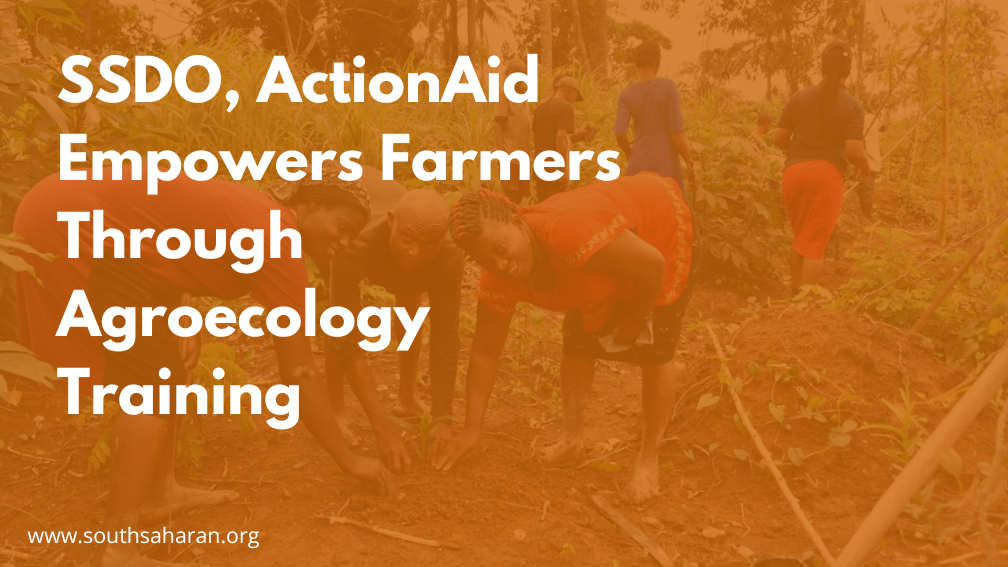
SSDO, ActionAid Empowers Farmers Through Agroecology Training 

The impact of climate change has never been more evident, especially on agriculture in Nigeria. Erratic rainfall, flooding of farmlands, rising temperature, and soil degradation reduce farmers’ output and increase food insecurity. However, Agroecology has been recognized as an essential solution to Nigeria’s food security and sustainability challenges. It offers numerous advantages in addressing environmental degradation and population growth.

Understanding this challenge, South Saharan Social Development Organization, in partnership with ActionAid Nigeria, organized a 3-day Agroecology training and established model farms under the Strategic Partnership Agreement Programme in three communities in Enugu state: Oduma Achara in Aninri LGA, Ihenyi in Isi Uzo LGA, and Umuogili in Igbo Eze North LGA.

The Strategic Partnership Agreement (SPA II), a groundbreaking four-year initiative funded by the Danish International Development Agency (DANIDA), is making significant strides in promoting basic human rights, democratic values, and sustainable livelihoods for young individuals, particularly marginalized young women, within disaster-prone and protracted crisis areas in Nigeria. 

By preserving soil health, reducing erosion, and minimizing reliance on synthetic inputs, this holistic approach promotes sustainable agriculture. The integration of agroecology practices enhances food security by increasing productivity and profitability, while simultaneously reducing the dependence on costly external resources. Additionally, it elevates rural livelihoods by bolstering incomes, improving living standards, stimulating economic growth, and alleviating poverty.

The training conducted enabled farmers to embrace sustainable practices, decrease reliance on harmful inputs, augment yields, and ultimately improve their incomes. This, in turn, paves the way for enhanced food security, improved rural livelihoods, and a more sustainable future for farming in the community.

The training was facilitated by Mr. Theophilus Ivoh and Dr. Agah Celestine from the Ministry of Agriculture, and It covered topics such as soil conservation, sustainable water management, reduction in the use of agrochemicals and composting, pest control, multiple cropping, rotation, and intercropping.

In a truly participatory approach, the community donated four plots of land and received 207 improved palm seedling for their model and personal farms. This would help improve the socioeconomic status of the households and communities. It will also help communities become more resilient to climate change through afforestation and improved seedlings.

The participants expressed their heartfelt gratitude to ActionAid Nigeria and SSDO for their commendable efforts in implementing this transformative project. They recognized the immense value of the training received and acknowledged the positive impact it will have on their farming practices and overall livelihoods.

The success of the agroecology workshop signifies a significant step forward in achieving the goals outlined in the Strategic Partnership Agreement (SPA II). As ActionAid Nigeria and SSDO continue to collaborate and empower marginalized communities, it is expected that their unwavering commitment to sustainable agriculture and livelihood improvement will yield lasting positive change for Nigeria’s farming sector and its resilient farmers.

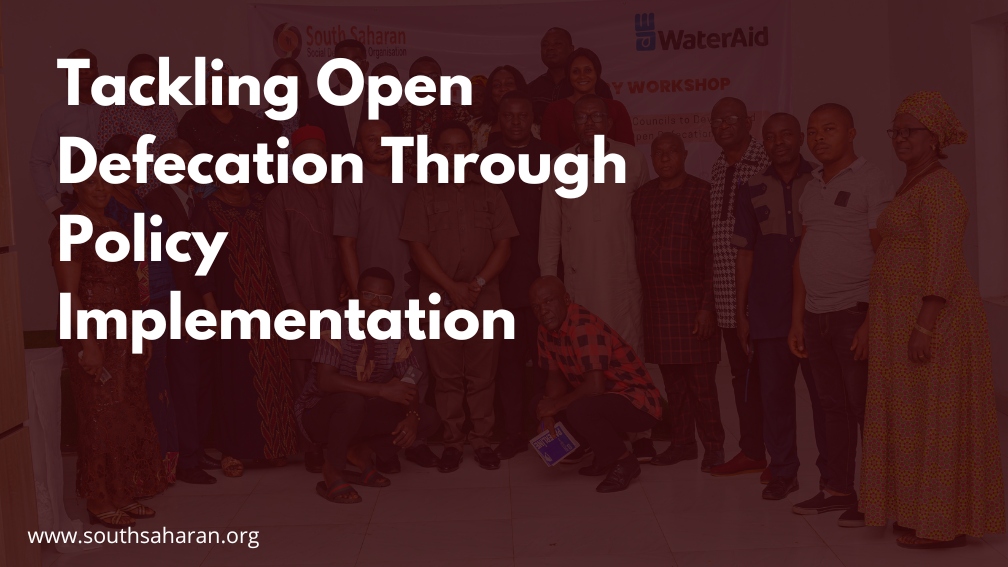
Tackling Open Defecation Through Policy Implementation

Over 47 million Nigerians still practice open defecation (OD), and Enugu state is not exempted as about 47 percent of the populace still practice open defecation. Open defecation (OD) poses a significant sanitation challenge in various communities across Enugu State. It leads to adverse health effects and environmental pollution. 

Understanding this challenge, South Saharan Social Development Organization, SSDO, in partnership with WaterAid Nigeria, under the Bill and Melinda Gates Foundation project organized a 2-day Sanitation Advocacy Workshop to address this issue. The workshop targeted six communities, precisely two communities per Local Government Area (Igbo Eze North, Nsukka and Udenu) in the Enugu North Senatorial zone of the state. 

The workshop’s primary objective was to empower the communities and local government authorities (LGAs) to develop and implement an Anti-Open Defecation by-law to end open defecation in their communities. The workshop had a community-led approach and had leaders of the legislative council, president generals, women and youth leaders, WASH coordinators, and CSO partners in attendance. 

The first session of the day was expertly facilitated by Emmanuel Obuna, the Sanitation Officer of ENSTOWA. His session delved into the pressing issue of open defecation and the imperative of curbing this practice at the community level. Participants were enlightened on the pivotal role of community-led sanitation and hygiene initiatives, gaining insights into the historical evolution of sanitation practices in Enugu metropolis. Key concepts such as Community-Led Total Sanitation and Sanitation Marketing were elucidated, emphasizing their relevance and effectiveness in achieving sustainable sanitation outcomes.

Building upon the foundation laid by the previous session, Dr. Umoh Boniface, a distinguished WASH consultant and senior lecturer at the University of Nigeria, Nsukka, led an extensive and interactive session on the vital role of Water, Sanitation, and Hygiene (WASH) in community development. This dynamic session provided a platform for participants to share their experiences related to open defecation, fostering a collective understanding of the challenges at hand. From the shared experiences, key factors contributing to open defecation were identified, including the lack of inclusive toilets for persons with disabilities, inadequate clean toilet facilities in government places and institutions, and a shortage of toilets in public spaces, particularly for travellers.

During this session, the WASH Coordinator of Igbo Eze North LGA emphasized the crucial need for cooperation and active involvement from government officials in empowering and enforcing relevant by-laws. Participants unanimously agreed that enacting by-laws through community leaders and engaging town unions in markets and public places would effectively facilitate the implementation of these laws. 

To deepen participants’ understanding of the severity and consequences of open defecation, a compelling sanitation advocacy animated video was screened. The video vividly depicted the direct link between open defecation, the spread of illnesses, and the associated health risks. This visual presentation served as a powerful catalyst, evoking a heightened sense of urgency and reinforcing the critical need for collective action.

As the day progressed, participants were divided into groups according to their respective LGAs—Igbo Eze North, Udenu, and others—each group tasked with deliberating and developing a comprehensive framework. These frameworks highlighted the specific challenges related to poor sanitation in their LGAs, proposed innovative solutions to address these challenges, outlined detailed action plans with designated responsible individuals, and established timeframes to achieve the esteemed goal of attaining Open Defecation Free (ODF) status in their communities.

Day 2

Following the previous session, Dr. Umoh proceeded with a comprehensive session on By-Law against open defecation: contextual imperative & implication for communities in Enugu State. During this session, he provided an informative overview of a well-structured by-law, highlighting its key qualities and essential content. These elements encompassed:

• Title: A clear and descriptive title that accurately represents the purpose of the by-law.

• Date made: The date on which the by-law is officially established.

• Citation: The specific reference or legal citation that identifies the by-law.

• Objectives of the by-law: Clearly defined goals and objectives that the by-law aims to achieve in addressing the issue at hand.

• Definition of terms: A section that provides clear and concise definitions of relevant terms and concepts used within the by-law, ensuring a common understanding among stakeholders.

• Application: The scope and applicability of the by-law, specifying the areas, entities, or individuals to which it applies.

• Sanitation Trust Fund (STF) Establishment: The establishment of a dedicated Sanitation Trust Fund, which serves as a financial mechanism to support and sustain sanitation initiatives.

• Purpose of the STF: A clear articulation of the objectives and intended use of the Sanitation Trust Fund, such as funding infrastructure projects, awareness campaigns, or capacity-building activities.

• Appropriation of the Sanitation Trust Fund: Guidelines and procedures for allocating and managing funds within the Sanitation Trust Fund, ensuring transparency and accountability.

By outlining these essential components, Dr. Umoh provided valuable insights into the fundamental aspects that should be considered when developing a comprehensive by-law targeting open defecation. Equipped with this knowledge, the participants were then regrouped into their respective Local Government Areas (LGAs) to collaboratively develop context-specific draft by-laws aimed at eradicating open defecation within their communities. 

Going Forward

The Sanitation Advocacy Workshop significantly empowered communities and local government councils to address the challenge of open defecation in their localities. The workshop created awareness, built capacity, and fostered community-led solutions toward ending open defecation. The collaboration between WaterAid, SSDO, and the participating communities and LGAs resulted in developing context-specific draft by-laws and action plans. The workshop’s outcomes will contribute to the sustainable implementation and enforcement of by-laws, improving sanitation practices and eradicating open defecation in Enugu State.

Empowering Women Through Peer Education Training

Through years of working on projects at the community level, we realize that women and girls are hugely disadvantaged. They have often been marginalized and segregated to the background on so many fronts in society. One of the primary reasons for marginalization is the inequality between men and women in accessing and controlling resources.

Understanding this, South Saharan Social Development Organization, in partnership with ActionAid Nigeria, organized a women’s peer education training in Igga community, Uzo Uwani LGA. The program seeks to foster women’s empowerment through peer education. This initiative aims to advocate for women’s rights and bridge women’s capacity deficiency at the community level.

The three-day training was facilitated by the project lead, Priye West, and SSDO’s Gender Officer, Blessing Uchendu. The training was executed using the Women Peer Education Resource Kit.

During the training sessions, the women expressed how low self-esteem had previously affected their engagement in community activities. They also discussed issues that impacted their emotional well-being within their marriages, such as husbands using harsh words and taking their earnings. They were taught by the team how to identify opportunities provided by the government and how to position themselves to be beneficiaries. 

Education and skill acquisition were discussed, with many young girls expressing concerns about their parents’ reluctance to send them to school, leading to early marriages within the community. This issue was recognized as critical and in need of addressing during advocacy meetings.

The concept of managing post-harvest losses was explained, although many participants lacked the necessary capital to expand their businesses. Climate change issues were addressed, focusing on harmful environmental practices that needed to be rectified. The participants were encouraged to promote inclusivity and support disabled individuals in the community, despite their community having few disabled persons.

The training also covered essential areas such as personal development, health, livelihood and survival, and inclusion. The women were taught the importance of body image, self-esteem, time management, hygiene, skill acquisition, and the dangers of gender-based violence. After the training, the group elected a President.

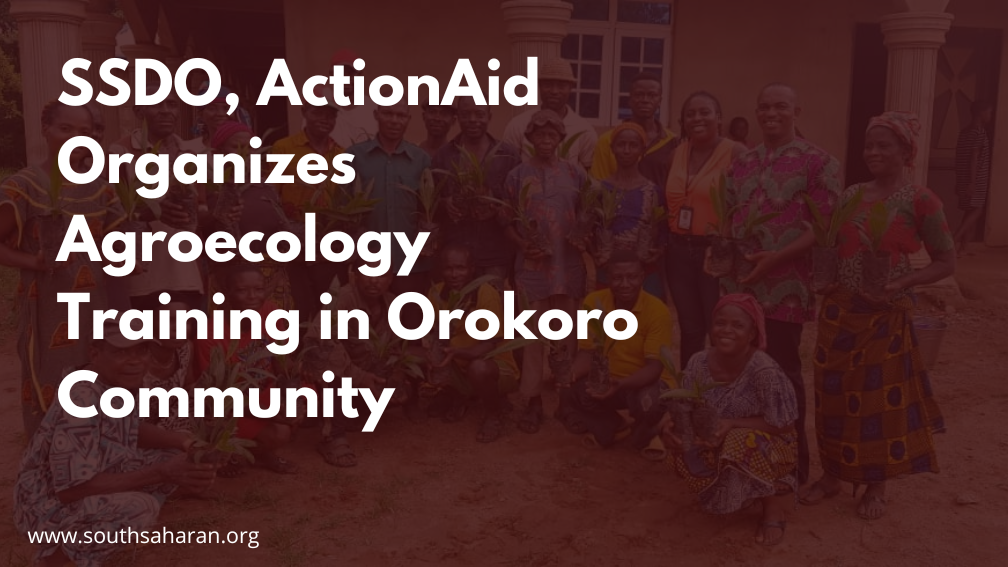
SSDO, ActionAid Organized Agroecology Training in Orokoro Community

The impact of climate change has never been more evident, especially on agriculture in Nigeria. Erratic rainfall, flooding of farmlands, rising temperature, and soil degradation reduce farmers’ output and increase food insecurity.

Understanding this challenge, South Saharan Social Development Organization, in partnership with ActionAid Nigeria, organized a 3-day Agroecology training and established a model farm under the Local Rights Programme in Orokoro community, Isi-Uzo LGA, Enugu State.

Participants learned modern farming techniques and alternatives to chemical pest control and fertilizers. They also learned new methods for water retention and how to ensure they retain soil fertility in their farms. So as to increase farm yields and improve sales.

The training was facilitated by Mr. Theophilus Ivoh from the Ministry of Agriculture and Priye West, Local Rights Programme Officer. It covered topics such as soil conservation, sustainable water management, reduction in the use of agrochemicals and composting, pest control, multiple cropping, rotation, and intercropping.

In a truly participatory approach, the community donated four plots of land and were given 75 improved palm seedling for their model farm and personal farms. This would help improve the socioeconomic status of the households and community. It will also help the community be more resilient to climate change through afforestation and improved seedlings.