SSDO

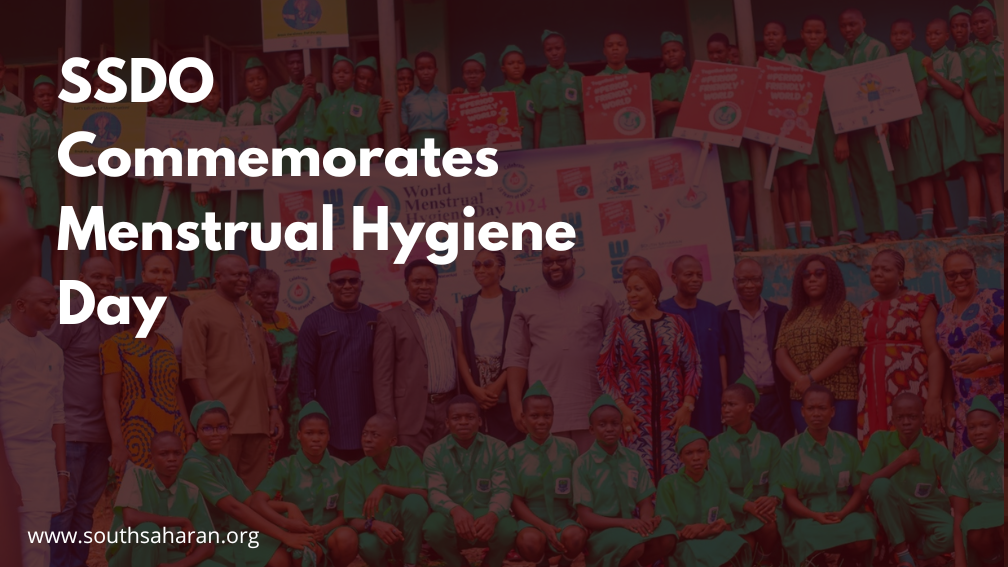
SSDO Commemorates Menstrual Hygiene Day

Did you know that over 37 million women and girls of reproductive age in Nigeria lack access to menstrual hygiene products due to a lack of funds? Period poverty is a global problem but is more prevalent in developing countries. Today, girls are still stigmatized and excluded because of a normal bodily function. 

Understanding this challenge, South Saharan Social Development Organization, in partnership with WaterAid Nigeria, is playing its part in changing the narrative. To commemorate Menstrual Hygiene Day this year under the theme, “Together for a Period Friendly World.”

The team organized a 2-day menstrual hygiene management education and sanitary pad-making program at Community Secondary School, Iva Valley, Enugu. 

Stakeholders present include Commissioner for Water Resources, Dr. Felix Nnamani, Commissioner for Children, Gender, and Social Development, Hon. Mrs. Ngozi Enih, Special Adviser on Donor Relations, Hon. Dubem Onyia, Senior Special Assistant on Social Culture, Dera Okenwa, WaterAid Country Director, Evelyn Mere represented by the Enugu State Team Lead, Mr. Solomon Akpanufot among other dignitaries. 

The event was an opportunity to trigger the government and secure their buy-in on menstrual hygiene policy and guidelines.

Students were taught in a participatory and inclusive approach on how to make reusable sanitary pads. The school outreach was an opportunity to raise awareness and promote proper menstrual hygiene practices among female students. Male students were also sensitized as brothers, future fathers, and uncles so they knew how to help out. 

They were taught not to stigmatize or mock their female counterpart. The engagement increased knowledge and understanding of menstrual hygiene, debunked myths and misconceptions, and challenged stigmas surrounding menstruation.

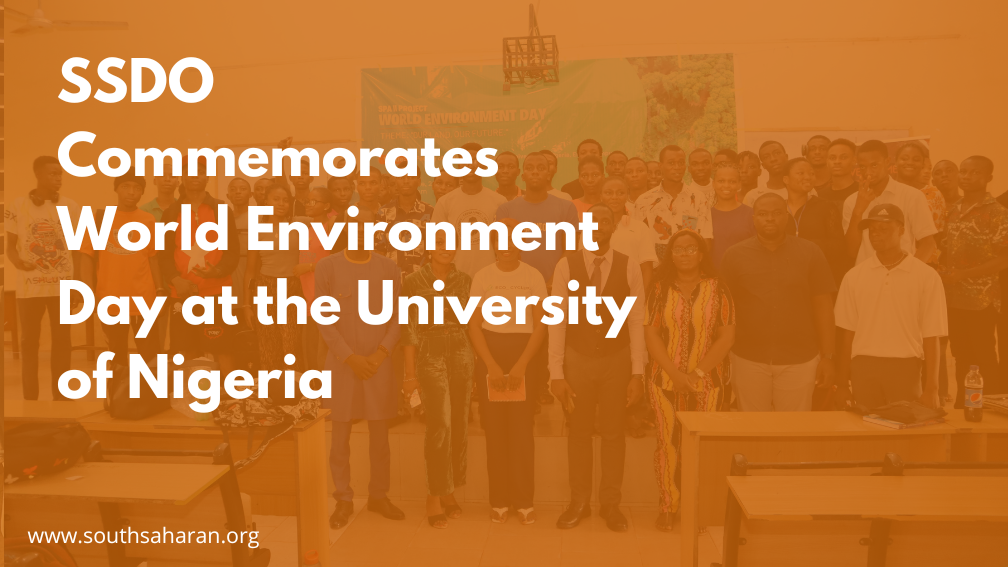
SSDO Commemorates World Environment Day at The University of Nigeria

Climate change, driven by greenhouse gas emissions from human activities, is a global crisis manifesting in rising temperatures, altered precipitation patterns, severe weather events, and sea level rise. These changes pose significant risks to ecosystems, human health, food security, water resources, and economic stability.

In Nigeria, the impacts of climate change are evident in desertification, land degradation, increased flooding, and reduced agricultural productivity. Enugu State faces challenges such as disrupted agricultural activities, soil erosion, land degradation, and an increased prevalence of waterborne diseases due to altered rainfall patterns and rising temperatures.

South Saharan Social Development Organization with support from ActionAid understanding this challenge took the initiative to implement a one-day sensitization outreach and climate policy dialogue session at the Faculty of Environmental Studies, University of Nigeria, Enugu Campus. The aim of the event was to enhance environmental sustainability, raise awareness, and encourage proactive environmental stewardship among students. This is crucial for promoting sustainable development and building resilience against the adverse impacts of climate change.

Participants were enlightened on how to protect the environment in their own way. They were educated on practical steps that would protect the environment such as recycling, tree planting, and animal breeding as a way to improve biological conservation of endangered species. 

Okoh Happiness, a part 2 student shared, “Before now, I never thought I had a part to play in improving or supporting the environment. I always thought it was the government’s responsibility. But now, I see how I can improve environmental sustainability and biodiversity by breeding grasscutters rather than focusing on consumption.”

Okweye Blessed, a final year student shared, “I have been enlightened to how much impact planting trees have on our environment. Rather than looking for walls or boards to sign my name on, I could invest by planting a tree.”

Grace Okeke a third-year student shared, “I didn’t know plastics had so much impact on the environment. After the session, I realized that beyond even cleaning the environment, I could make money by the side doing it. I am grateful to SSDO and ActionAid for the training.

Because of SSDO and ActionAid’s intervention, more students participated in the dialogue session which provided more insights and recommendations from a youth perspective for the ongoing Enugu State Climate Change Policy. There’s also an increased involvement of students in environmental initiatives and activities on campus and in the wider community.

Ikechukwu Favour, the faculty president was excited about the impact of the initiative. “Because of the SPA II programme by ActionAid, we are proud we will be turning out more enlightened and empowered youths. They won’t just be looking for employment but are positioned to be employers of labor themselves.”

The students asked questions, got clarifications, and proffered solutions based on how climate issues affect them.

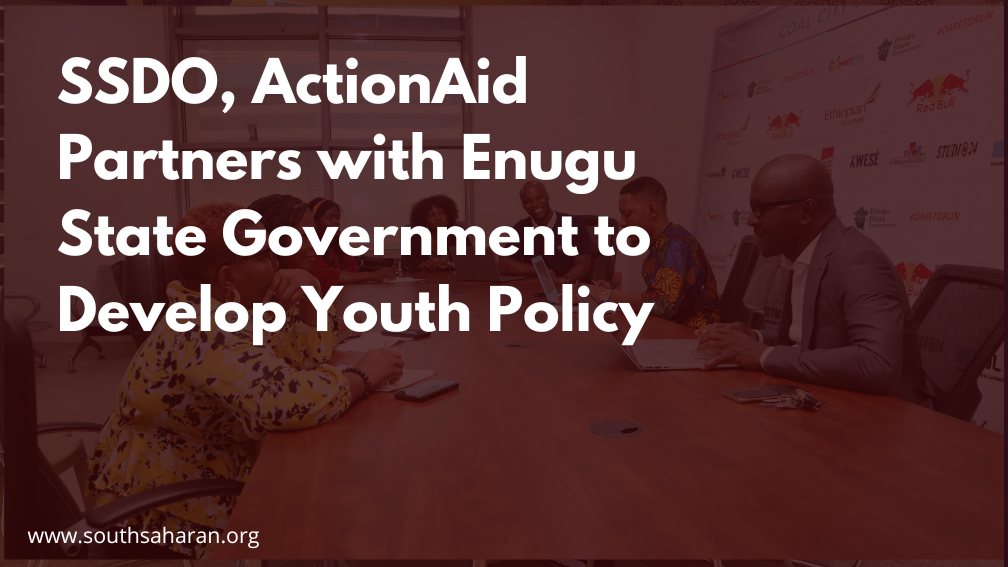
SSDO, ActionAid Partners with Enugu State Government to Develop Youth Policy

Research shows that about 60% of Enugu state population is under 30 with 23% specifically aged 15 to 29. This burgeoning demographic presents an opportunity and a challenge for the state. Currently, youths struggle with unemployment, poor access to education, insecurity, and inequality. This highlights the urgent need for a framework that puts the youth at the center of development processes. 

Understanding this challenge, South Saharan Social Development Organization in partnership with ActionAid Nigeria is facilitating the development of the Enugu State Youth Policy. The proposed Enugu State Youth Policy aims to address critical issues the youth face and create an enabling environment for their growth and development. 

Members of the Technical Working Group include Technical Adviser to the Enugu State Commissioner for Youth and Sports Development, Director, Planning, Research and Statistics, Ministry of Youth and Sports, Technical Adviser, Enugu State Economic Planning Commission, civil society organizations, and media.

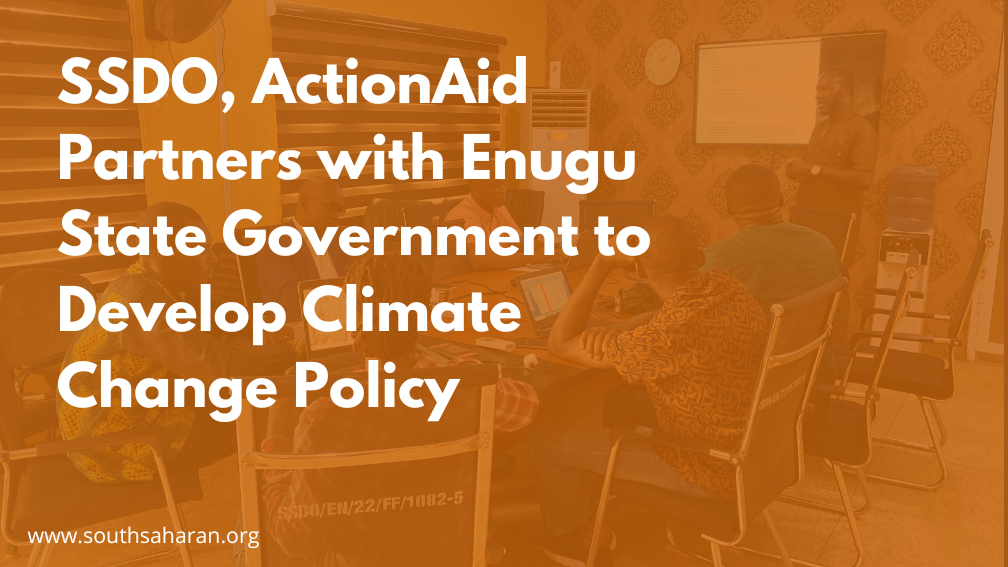
SSDO, ActionAid Partners with Enugu State Government to Develop Climate Change Policy

Climate change, driven by increased greenhouse gas emissions from human activities such as burning fossil fuels, deforestation, and industrial processes, is one of the most pressing issues facing the world today. Agricultural disruption, with altered growing seasons and reduced crop yields, is a major concern for food security in Nigeria. 

Understanding this challenge, South Saharan Social Development Organization in partnership with ActionAid Nigeria is facilitating the development of the Enugu State Climate Change Policy. 

The proposed Enugu State Change Policy aims to integrate climate change adaptation and mitigation strategies, promote sustainable agricultural practices, enhance community resilience, and foster economic development. This comprehensive approach will help safeguard the state’s natural resources, protect public health, and ensure a sustainable and prosperous future for all residents.

Members of the Technical Working Group include Director, Enugu State Ministry of Environment and Climate Change, Director, Planning, Research and Statistics of the above ministry, Technical Adviser, Enugu State Economic Planning Commission, civil society organizations, and media.

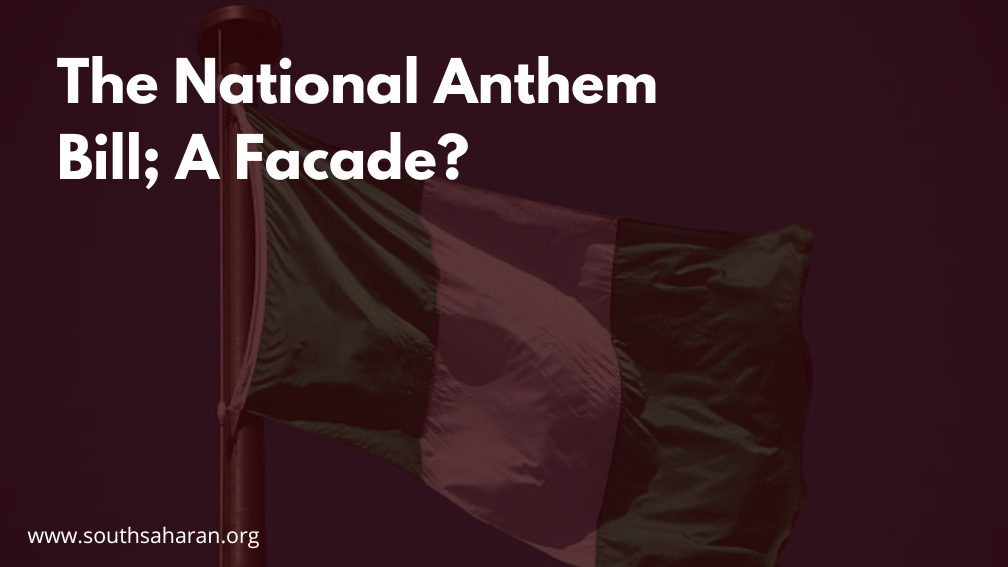
The National Anthem Bill; A Facade? 

On the 29th of May, 2024, the President of the Federal Republic of Nigeria, Bola Tinubu, passed the National Anthem Bill, a proposition to revert to the 1960 National Anthem into law. This means effective from now for official purposes, the “Nigeria We Hail Thee” tune will rent the airwaves in place of “Arise, O Compatriots.” 

Many questions come to mind as to the purpose of this reversal. Why now? To what end? What will it achieve? 

The “Nigeria We Hail Thee” anthem was written by Lilian Jean Williams and composed by Frances Berda, and one of the numerous criticisms it received before it was replaced was that foreigners created it. But 48 years after its change, it has now been passed into law as the newly recognized National Anthem.  

Senator Bamidele Opeyemi proposed the bill on the floor of the Senate while Hon. Julius Ihonbvere did same on the floor of the House of Representatives. Part of the reasons for the new bills is that it’s a better reflection of national unity and a better representation of the President’s vision. Some say the old anthem (Nigeria We Hail Thee) evokes a better sense of patriotism and that the new anthem somewhat reinforces the pain and struggles associated with the military era. 

However, amidst the present country’s economic woes and struggles, it begs the question if this is the right move. Inflation is eating deep into the country’s fabric. The purchasing power of the people is ever so drastically diminishing, and the elected officials who have the power to influence decisions choose to prioritize a matter that has little or no importance to the lives of Nigerians. With the pressing insecurity, you can’t help but wonder if this should be taking precedence in the country’s highest legislative body. 

Interestingly, it is worth noting that this bill passed the first, second, and third reading on the same day, Thursday, last week. If the legislative arm can swing into action on a matter with such speed, precision, and emphasis, why then do more pressing bills that have a direct bearing on the people take weeks or months before being passed?  

Case in point, The Not Too Young Too Run Bill was proposed to the Senate in 2016, approved in 2017, and signed into law in 2018. The Petroleum Industry Bill has been in and out since 2008 before being passed in 2019. The Electoral Amendment Bill was passed in 2022 since 2010 after three major elections in between. The Police Reform Bill has also been proposed to the legislative arms at different times but finally got approved in 2019. 

On the other hand, one can say this move shows zero consideration for the public. With how quickly it was proposed and passed, there was little to no consultation and zero regard for public opinion. If there is anything that Nigerians have a sentimental bias for, and for right reason, it is the National Anthem. Over 50 percent of the country’s current population was born into the dispensation of the “Arise O Compatriots” anthem. To take that away from them on the grounds that the older one has more appeal and signifies better national unity doesn’t seem a good enough reason. 

But more concerning is that seeing how little to no regard is given to the public’s input in matters of such sentimental weight, how much more when it comes to more pressing issues? The legislative arm is supposed to give enough time for the public to opine their view on bills before they are passed. But with the way this was expedited and passed, what will be the hope of the masses for more weightier matters? 

Then you can’t help but wonder if there isn’t a flaw in the legislative process and room for public hearings. The National Assembly is at the FCT and when there are public hearings, how many people can attend? Should the legislative bodies not look to leverage technology to improve inclusivity in its process? Surely they’ve been selected to be the mouthpiece of the people on critical matters, but one man cannot speak or accurately represent the voice of his senatorial constituency without neglecting the desires of a good majority. 

Some other schools of thought see this move by the government as a grand PR scheme to deviate and take the people’s attention from a holistic evaluation of the performance of this government in the past year in office. The country’s inflation rate rose to 33 percent in April 2024 and the food inflation rate jumped to 40 percent. A major cause of food inflation is the insecurity the country has been facing. Farmers are scared to go to the farms as there’s been a rise in killings, abductions, and kidnappings, especially in the hinterlands. 

Major multinational corporations have stopped operations in the country due to the high cost of operations and difficulties in breaking even caused by the current foreign exchange and devaluation of the naira. Nigerians’ purchasing power has been reduced. People earn the same but can buy less. The country’s production level is shrinking on a daily and something needs to be done about this quickly. Maybe if the current government is taking strides to actively solve these issues and the legislative bodies are not pandering to pass the National Anthem Bill, then Nigerians would have little worry about a sentimental bill.