

SSDO NEWSLETTER, VOLUME 7, ISSUE 2
Happy new month, and welcome to the second half of the year.
It is with great pleasure that we bring you the latest edition of our newsletter, highlighting our ongoing efforts to promote good governance and improve the quality of education across all strata in Southeast Nigeria. We firmly believe that a foundation of good governance is essential for sustainable development. Therefore, we actively engage with local communities, government institutions, and other stakeholders to create an environment of transparency, accountability, and citizen participation.
We would like to express our deepest gratitude to our dedicated team, partners, donors, and stakeholders whose unwavering support makes our work possible. Together, we are making a tangible difference in the lives of individuals and communities in Southeast Nigeria.
In this newsletter, we invite you to delve into the inspiring stories of change, learn about the impact of our projects, and discover ways to get involved. Your support, whether through donations, volunteering, or spreading awareness, enables us to expand our reach and create a brighter future for all.
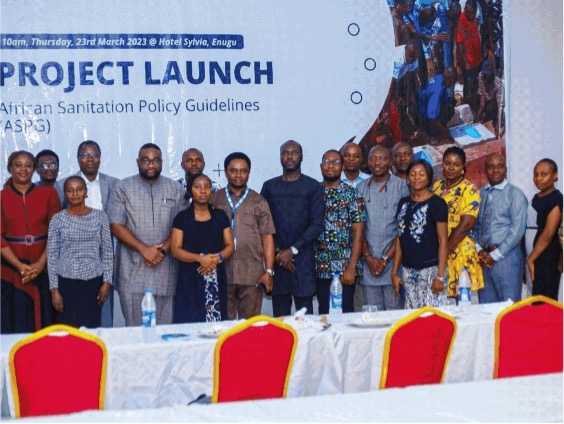
African Sanitation Policy Guidelines (ASPG) Project Launch
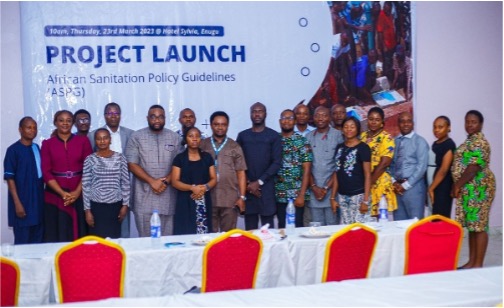
South Saharan Social Development Organization, in partnership with WaterAid Nigeria, began the implementation of the African Sanitation Policy Guidelines The project will focus on improving sanitation and hygiene practices through policies, advocacy, and collaboration with other stakeholders. Prior to the launch, the project lead, Udochukwu Egwim, conducted advocacy visits to stakeholders to brief them about the project’s goals for the sanitation sector and get their buy-in.
The project was officially launched on the 23rd of March, 2023 and offered a unique opportunity to enlighten stakeholders, raise media awareness, and iterate a suitable implementation strategy across the state. Stakeholders and dignitaries present include the Commissioner for Health, Dr. Emmanuel Obi, Commissioner for Rural Development, Dr. Kingsley Udeh, Special Adviser to the Enugu State Governor on Water Resources, Hon. Dubem Onyia, Permanent Secretary Ministry of Environment, The STU Coordinator, representatives of ENRUWASSA, civil society organizations, the media among others.
The Fight Against Gender Imbalance and Land Grabbing: Alice’s Story
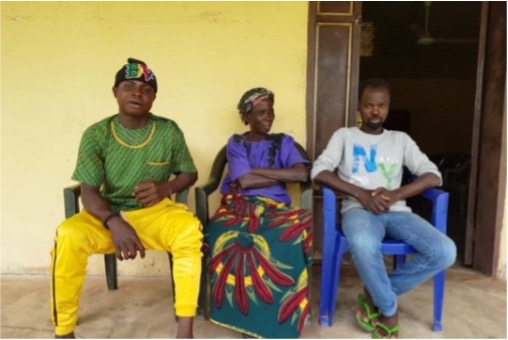
Disinheritance of landed properties is one of the most prevalent forms of gender- based violence (GBV) in the southeast and has affected many widows across the region. The inability of women to access these landed properties due to cultural norms in a patriarchal society has led to abuse, trauma, and impoverishment.
The SGI chapter in Ihenyi community, Isi-Uzo LGA, Enugu, recently helped a widow, Ogbuebor Alice, reclaim her land after much tussle with her husband’s brother. The Gender Protection Lead for SSDO, Blessing Uchendu, spoke about the intervention by the SGI. Blessing recalled, “The land tussle started over thirty years ago when Alice’s husband passed on and her kids were still little. Her husband’s brother laid claim over the piece of land as the rightful owner as opposed to the norm, which was supposed to be Alice’s kids.”
Children’s Day Commemoration at Ameke, Ihenyi, and Orokoro Communities
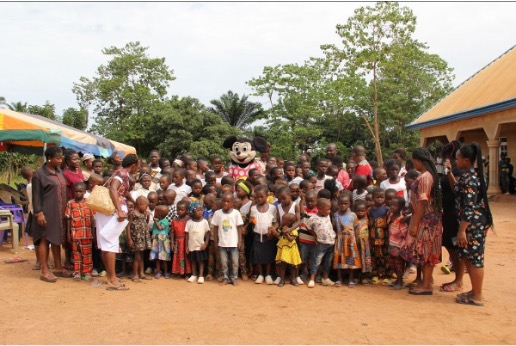
South Saharan Social Development Organization, in partnership with ActionAid Nigeria, commemorated this year’s event, themed “Celebrating Creativity – The Power of Imagination”, by organizing community outreaches to Ihenyi and Orokoro communities in Isi-Uzo LGA and Ameke community in Aninri LGA. Stakeholders present include the LGA representative, President-General. Youth community leaders, parents, and teachers.
The children were educated about their rights and encouraged to report any incidents of abuse. Parents were urged to remain vigilant, especially when children exhibited withdrawal signs or complain about abuse-related issues. The LRP program officer educated the children and parents on the importance of practising good hygiene behaviours and spoke about good environmental hygiene. The children participated in a marching parade, quiz competition, sack race, dance competition and a cultural display.
The team also used the medium to sensitize parents and children on the importance of keeping a clean environment in line with World Environment Day. In a participatory approach, participants identified environmental issues affecting the community. Everyone vowed to keep their environment clean and avoid open defecation, littering, and indiscriminate waste disposal.
Enugu WASH Policy Review
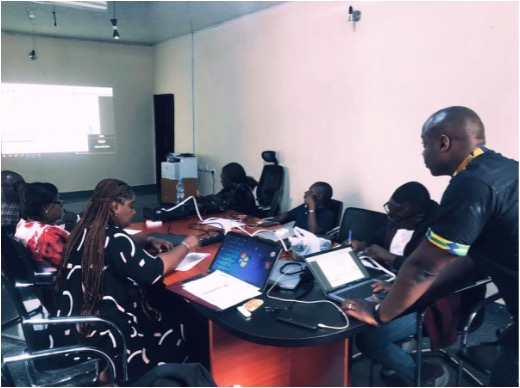
South Saharan Social Development Organization, in partnership with WaterAid Nigeria and other stakeholders, commenced the review of the Enugu State WASH Policy document to reflect the changes in the state following the restructuring of the Enugu state water sector.
The team used the African Sanitation Policy Guidelines to power the review process. Participants include representatives of the Small Town Unit of the Enugu State Ministry of Water Resources, Water Corporation, ENRUWASSA, Ministry of Health, Ministry of Gender, Ministry of Environment, Ministry of Economic Planning Commission, Ministry of Education, GHARF, and NEWSAN.
The review of the WASH policy is an important step towards ensuring that the state’s water and sanitation sector is aligned with current realities and best practices. As we work towards reviewing and refining the state’s WASH policy, we remain committed to promoting sustainable solutions that will have a lasting impact on the lives of individuals and families.
Budget Monitoring and Tracking Training
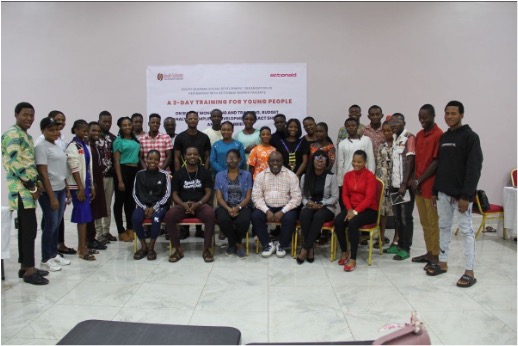
South Saharan Social Development Organization, in partnership with ActionAid Nigeria, organized a 2-day capacity building on Budget monitoring and tracking under the Strategic Partnership Agreement Phase II project in Enugu State.
This training equipped participants with the relevant knowledge needed to follow budget proceedings in a more proactive rather than a reactive manner. Youths were empowered on the best approaches for evidence-based advocacy and community engagement at various levels.
The training was facilitated by ActionAid’s Governance Manager, Celestine Odo, Youth Development and Governance Expert, Nebo Collins, and Public Affairs Analyst, Wilfred Okeke. It covered topics such as public budget and budget process, identifying youth-focused expenditures, budget advocacy and strategy, budget analysis, and skills among others. Participants were engaged using a combination of lectures, interactive sessions, and group discussions. They also developed fact sheets and policy briefs, which will be used to drive advocacy campaigns subsequently.
The Potency of Community Triggering in Ending Open Defecation
Over 47 million Nigerians still practice open defecation (OD), and Enugu state is not exempted as about 47 percent of the populace still practice open defecation. This is a pointer to the lack of proper toilet infrastructure and water facilities, especially in rural communities.
Understanding this challenge and looking to ensure its eradication, South Saharan Social Development Organization, in partnership with WaterAid Nigeria and the Enugu State Ministry of Water Resources, Small Town Units, and the Igbo-Eze North LGA WASH Unit, organized a Community Triggering Event on Ending Open Defecation in Mboshi, Aji community, Igbo Eze North LGA. Participants include community leaders, women leaders, and community members.
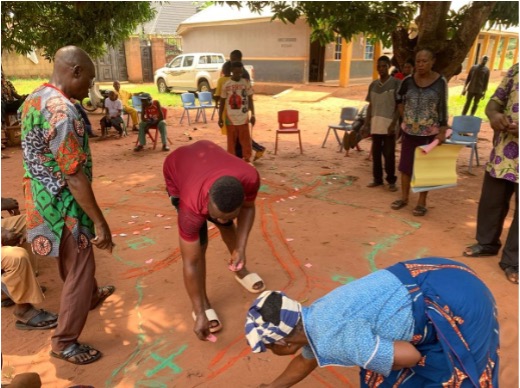
The community members were engaged using the Defecation Area Map (DAM) triggering method. Participants were asked to draw their community map and highlight important landmarks. They then identified their houses on the maps with cardboard. Community members without toilets were asked to identify on the map with sawdust where they defecate. .
SSDO, ActionAid Organizes Fun Activities for Kids in Nkume Community
School-age children learn through creative activities like music, visual arts, dance, drama, storytelling, and sports. Creative arts and sports activities engage children across all cognitive, language, social, emotional, and physical domains. It helps improve their motor skills, build emotional intelligence, and stimulates creativity and problem-solving.
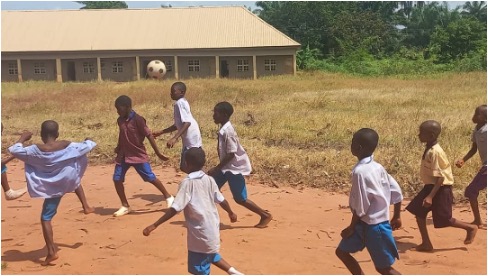
Understanding this, South Saharan Social Development Organization, in partnership with ActionAid Nigeria under the Local Rights Programme, organized fun activities for kids to promote physical health and well-being for children in Nkume community. For maximum participation, the kids choose the activities they want to engage in.
The children participated in football, running games, egg-spoon, ball toss, freeze tag, and dancing competitions for the children. The activities helped the kids bond better and improved the kids’ team spirit.
Heineken Africa Foundation (HAF) Phase III Project Closeout
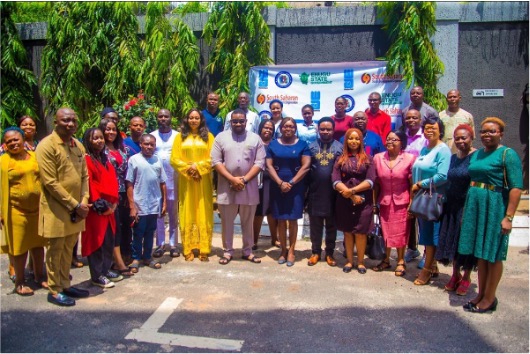
The project complemented the results of the first and second phases to drive hygiene promotion in response to COVID-19 using a behaviour-centered design approach leveraging the mass media, advocacy, and community-based approach to reach its target audience. As well as advocating for Water, Sanitation and Hygiene (WASH) prioritization.
The project successfully installed five handwashing facilities in schools across the state, established health clubs in 30 schools, and organized sensitization programs, radio and TV jingles, and a hygiene behavior campaign in Igbo-Eze North LGA that reached over 5,000 people. Certificates and awards were presented to the following stakeholders: Nigeria Breweries, JONAPWD, GHARF, Heroine Women Foundation, Ministry of Water Resources, Ministry of Health, Ministry of Education, and the Igbo Eze North LGA WASH unit.
SSDO, ActionAid Empowers Farmers Through Agroecology Training
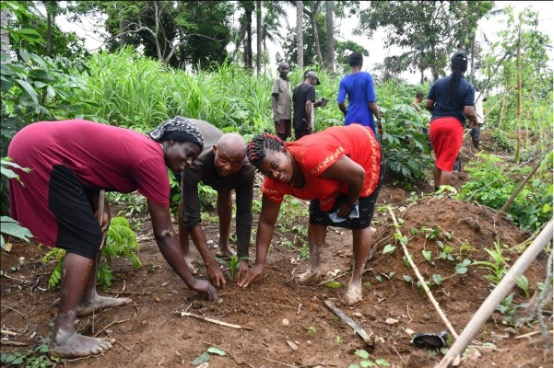
South Saharan Social Development Organization, in partnership with ActionAid Nigeria, through the Local Rights Programme and Strategic Partnership Agreement Phase II organized agroecology training and established model farms in four communities in Enugu state.
The training conducted enabled farmers to embrace sustainable practices, decrease reliance on harmful inputs, augment yields, and ultimately improve their incomes. This, in turn, paves the way for enhanced food security, improved rural livelihoods, and a more sustainable future for farming in the community.
Women’s Peer Education Training
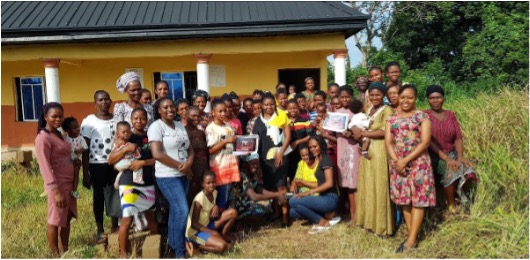
Through years of working on projects at the community level, we realize that women and girls are hugely disadvantaged. They have often been marginalized and segregated to the background on so many fronts in society. One of the primary reasons for marginalization is the inequality between men and women in accessing and controlling resources.
Understanding this, South Saharan Social Development Organization, in partnership with ActionAid Nigeria, organized a women’s peer education training in Igga community, Uzo Uwani LGA. The program seeks to foster women’s empowerment through peer education. This initiative aims to advocate for women’s rights and bridge women’s capacity deficiency at the community level.
The three-day training was facilitated by the project lead, Priye West, and SSDO’s Gender Officer, Blessing Uchendu. The training was executed using the Women Peer Education Resource Kit. It covered essential areas such as personal development, health, livelihood and survival, and inclusion. The women were taught the importance of body image, self-esteem, time management, hygiene, skill acquisition, and the dangers of gender-based violence. After the training, the women were better aware of their rights, and the group elected a President.
Tackling Open Defecation Through Policy Implementation
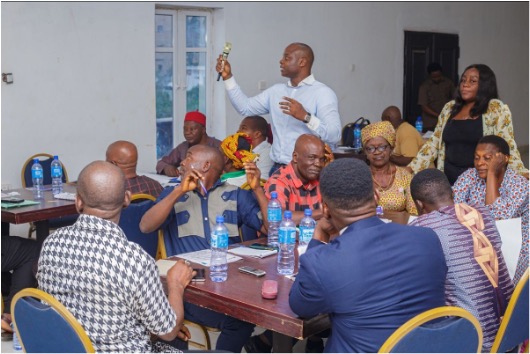
South Saharan Social Development Organization, SSDO, in partnership with WaterAid Nigeria, under the Bill and Melinda Gates Foundation project organized a 2-day Sanitation Advocacy Workshop to tackle open defecation. The workshop targeted six communities, precisely two communities per Local Government Area (Igbo Eze North, Nsukka and Udenu) in the Enugu North Senatorial zone of the state.
The workshop’s primary objective was to empower the communities and local government authorities (LGAs) to develop and implement an Anti-Open Defecation by-law to end open defecation in their communities. The workshop had a community- led approach and had leaders of the legislative council, president generals, women and youth leaders, WASH coordinators, and CSO partners in attendance.
Participants were enlightened on the pivotal role of community-led sanitation and hygiene initiatives, gaining insights into the historical evolution of sanitation practices in Enugu metropolis. Key concepts such as Community-Led Total Sanitation and Sanitation Marketing were elucidated, and the participating communities drafted their by-laws and accompanying action plans to guide future endeavors.