One way to improve the financial stability of a family is by creating a financial plan and following through with the process. Savings is one such habit that can help a family in dire times. It provides a financial backstop for life’s uncertainties and gives a feeling of security. It helps with emergencies and purchases and can be a good starting point to financial independence.
We understand the importance of savings to the stability of beneficiaries and as such encourage Village Savings and Loans (VSLA) in our catchment areas: Enugu South, Nkanu West, and Nkanu East LGAs. South Saharan Social Development Organization (SSDO) in partnership with the Catholic Caritas Foundation of Nigeria through the 4GATES Orphaned and Vulnerable Children Program empowers beneficiaries to make healthy decisions to improve stability.
It is not enough to offer quick, one-time donations to beneficiaries. Beyond the emergency period, there has to be a sustainable mechanism to ensure beneficiaries can generate income for themselves. One such avenue is leveraging VSLA.
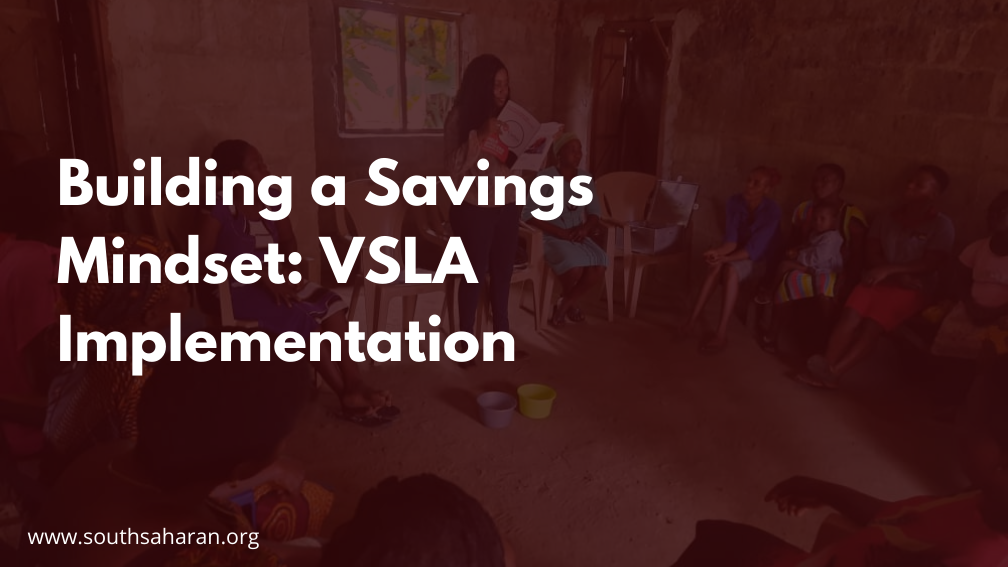
VSLA is a self-select savings group that uses members’ savings to lend to each other so they can grow their business. This way, members can increase their income, cultivate a savings habit, and imbibe an investment mindset.
This methodology enables members to save weekly or bi-weekly according to the agreed number of shares. It helps build savings that can be reinvested into the business or used to take care of emergencies or general household running.
Benefits of a VSLA
The savings scheme helps increase the income of a household head. When it is time for a savings group member to access loans, they can use the bulk payment to start or fund an existing business.
It teaches members the importance of frugality and the need for savings. Rather than being extravagant, they learn how to invest in business and agriculture.
Current Reality
Under the catchment areas that SSDO manages, there are 64 beneficiaries in three VSLA groups. And they run a cycle of 9 to 12 months.
The Household Economic Strengthening Officer is always on the ground during meetings to supervise the proceedings, monitor the progress, and offer psychosocial support.
Research carried out by UNICEF in 2015 shows that 1 in 4 girls and 1 in 10 boys in Nigeria have experienced sexual violence before the age of 18. With the drastic increase in the rate of violence against women and girls during the lockdown, you can be sure these numbers have increased. Before the pandemic, one in three women experiences physical violence by a partner.
According to a report by the Center for Global Development, violence against women and children quadrupled during the pandemic. Children have always been a target for pedophiles because of their innocence and vulnerability. Often, these predators ride on the naivety of the children and compel them not to talk. Many of who live with the guilt for the rest of their life.
Sometimes, the children blame themselves for the incident or, in some other cases, care for their abusers and do not want them to get into trouble. It is imperative that parents and guardians are very observant and pay close attention to behavioral patterns in their wards. Signs to look out for include children being aggressive, withdrawn, clingy, or having difficulties sleeping.
Some children suddenly become very wary and avoid specific people for no obvious reason. Others might illicit inappropriate sexual behaviors not expected of someone of that age. The child might also sustain a physical injury in the genital area. Children who are experiencing neglect and disabled children are at a higher risk of being abused.
These experiences result in guilt, anxiety, fear, and depression that could have a lasting effect on their future if not well handled. Understanding this situation, South Saharan Social Development Organization (SSDO) in partnership with Caritas Nigeria under the OVC project created a Child Protection Committee (CPC).
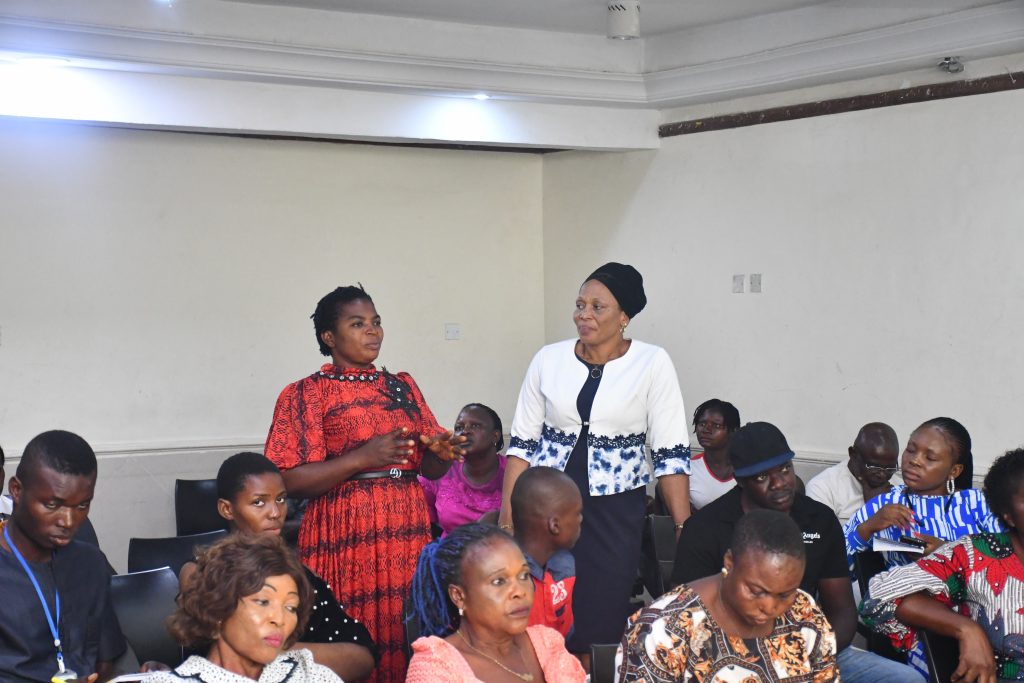
This committee comprises lawyers, social workers, healthcare officials, police officers, case managers, and children. The community-based committee works to protect the rights of children and is equipped to address issues of child rights violations. In the case of any violation, they’re on hand in the community to take up such cases and ensure the child gets the best attention. The unique composition of the group makes them sufficient to tackle various issues.
When abused children need psychological support, the social workers are on hand to provide it. In the instance of physical altercations, the healthcare officials take over. And when abusers need to be dealt with according to the law, law enforcement officials and lawyers are also a part of the committee and do just that.
For efficient role delivery, SSDO organized training sessions on sexual exploitation and child abuse management. Subject experts enlightened the professionals on how best to prevent child sexual abuse and how to effectively work seamlessly as a team to manage any such issues.
The Need for the Child Protection Committee
Education on Sexuality
The committee members are trained on a range of topics that will make them effective first responders. They were trained on how to identify vulnerable children, how to be of help, and how to appropriately escalate issues. In this way, they will be better positioned to help parents understand the need to teach their wards sex education. This way, kids know the danger signs and can react accordingly. Abusers thrive on the naivety of the kids. If kids are taught how to respond, perpetrators’ activities will reduce.
Accelerated Child Abuse Litigation
Evil thrives when the culprit assumes they will get away with the act. When abusers are prosecuted immediately after been convicted, it will serve as a deterrent to those who might be nursing such evil ambition. This is one thing, the committee looks to provide. With proper legal representation by lawyers, identified cases will be immediately handed over to the security officials and followed up to ensure justice is served.
Offers Professional Help
Victims usually repress thoughts of the abuse. For some, this often leads to depression or aggressive behavior towards the opposite gender. Some suffer from post-traumatic stress disorder. However, with the right professional guidance by the team of social workers, and healthcare officials, children can look to have a better future.
Education At The Core
The committee is designed to help raise awareness on child abuse and sexual harassment. This way, in the long run, such cases can be prevented. Affording children the opportunity to grow up in a safe environment. They are also equipped to handle issues when they arise. Helping the kids live life the best way possible barring any health or mental issues that may mar their future.
For many of these kids, they need to be guided to channel their energy to more rewarding and satisfying activities such as sports, exercise, and extra-curricular activities. And in the fullness of time, their past will truly become history. Then they can live out their full potential.
“I can’t go to the farm anymore. You don’t know where or when they will attack,” Chigozie explains.
This has been the situation of farmers in communities in Uzo-Uwani LGA, Enugu State. On the 25th of July 2021, herders attacked Obie Akwu farm camp where few people died and many were injured. This has disrupted the normal proceedings of the communities whose chief occupation is farming. Now, farmers are scared to return to the farms for fear of being attacked.
The herders-farmers crisis has been an ongoing issue in the country and has recently become a cause of concern in the Southeast. As remote communities have been frequently attacked in recent months.
“I buy farm products from farmers to sell in the market. Since the attack there’s been little activity from the farmers,” Onyinye, a fruit seller said.
Many women in Uzo-Uwani communities are traders. Some buy farm produce from farmers and sell it in the market. Other women engage in farming and proceed to sell the products themselves. Thus, raising money to fend for themselves and support their families.
However, many of these women deal in small quantities. Buying and selling as much as they can to break even and stay afloat. There is a limit to how they can support their family and look to attain financial independence.
Women like Onyinye abound across communities in Enugu and the country at large who make barely enough to cater to their needs. Coupled with the insecurity the communities in Uzo-Uwani face, it is worse off.
“I barely make enough profit to buy books and clothes for my kids, talk less of taking care of myself,” Onyinye said.
In 2019, Onyinye came in contact with South Saharan Social Development Organization (SSDO) during one of their community outreaches to Uzo-Uwani.
“I met some officials from SSDO and they told me I could access loans from their organization to grow my business. I was so excited.”
SSDO through its Jacob’s Well initiative aims at improving the quality of life for women in Enugu state by providing micro-credit facilities. The objective of the project is to empower women to gain financial independence, reduce poverty and over-dependency.
Recipients of the Micro-credit loan
Onyinye has been able to grow her business after acquiring some loans. She can now buy fruits in more quantities and expand her business.
“I use to buy fruits in small quantities before from those who buy from the farm. Some oranges, bananas, and a few watermelons. With the loans, I have been able to grow my business. I buy in bags directly from the farm. I am grateful to SSDO for the opportunity.”
These loans are made available with a cooperative as a third party. Only women who are duly registered with these cooperatives can benefit from the loans. Once a loan is cleared off, the women can reapply for another one. Thus, steadily growing their businesses.
Things have however changed, the recent attack has made it difficult for business activities to continue as normal. Not just that, female businesses that have been empowered through the Jacob’s Well Initiative might suffer as well. Women take loans from SSDO to grow their businesses then refund the loans gradually after making profit. With the level of insecurity, this might no longer be visible.
“With the current situation of things, I don’t know when I will be able to go the farm again. I also cannot take another loan because I’m not sure of how things will turn out”.
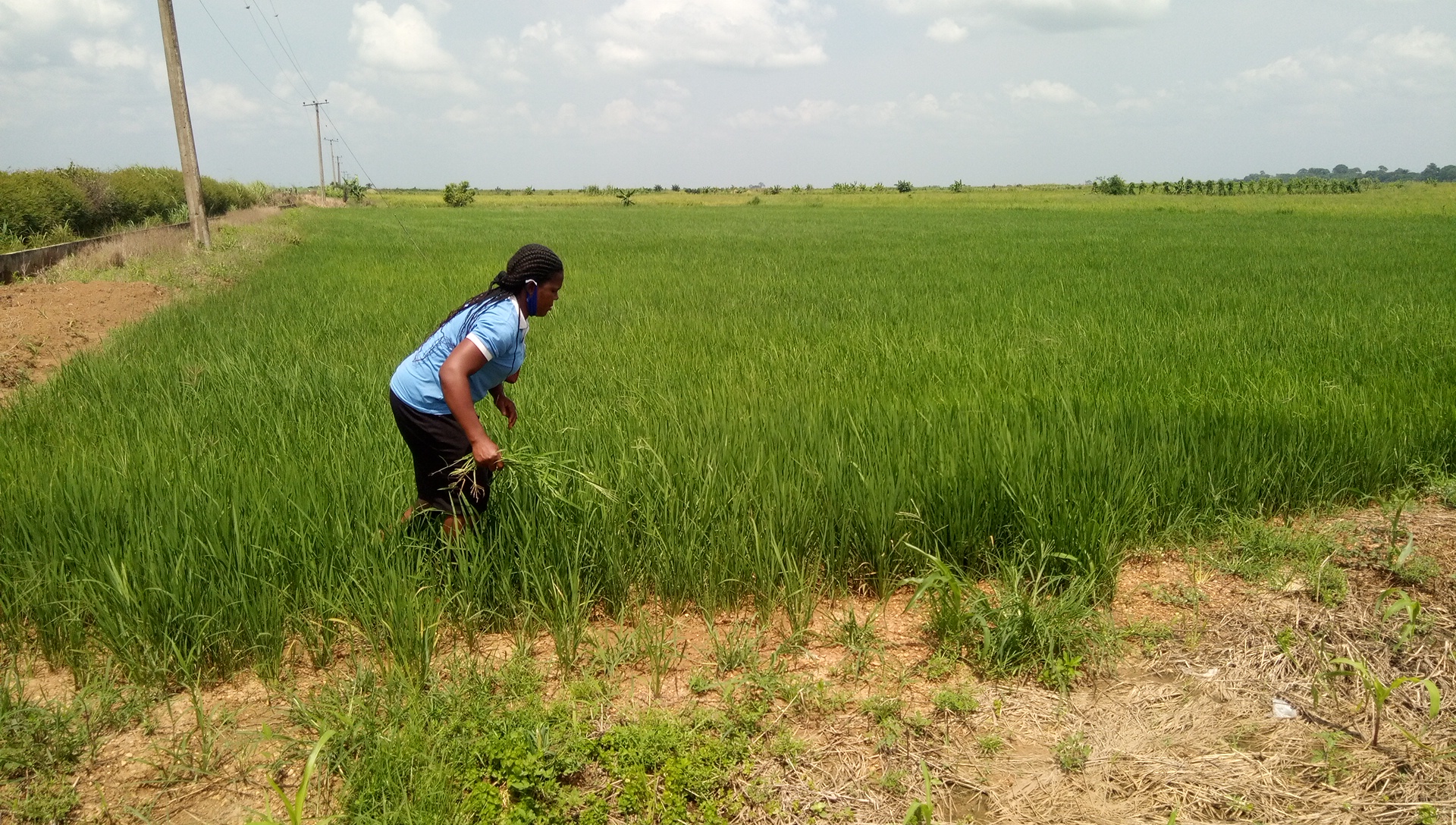
The same also can be said for Theresa a rice farmer in Adani community. She gets loans from SSDO and has scaled up her business. However, the current situation in the community has brought all activities to a standstill.
Beneficiaries sun-drying their rice.
“Since the incident, I’ve not been able to go to the farm. And that is where we carry out the parboiling and the sieving of the rice as well. So now we are stranded.”
This poses a new challenge for women in these communities. Access to funds was usually the problem but this new status quo looks to threaten the progress that has been made with women empowerment in these communities.
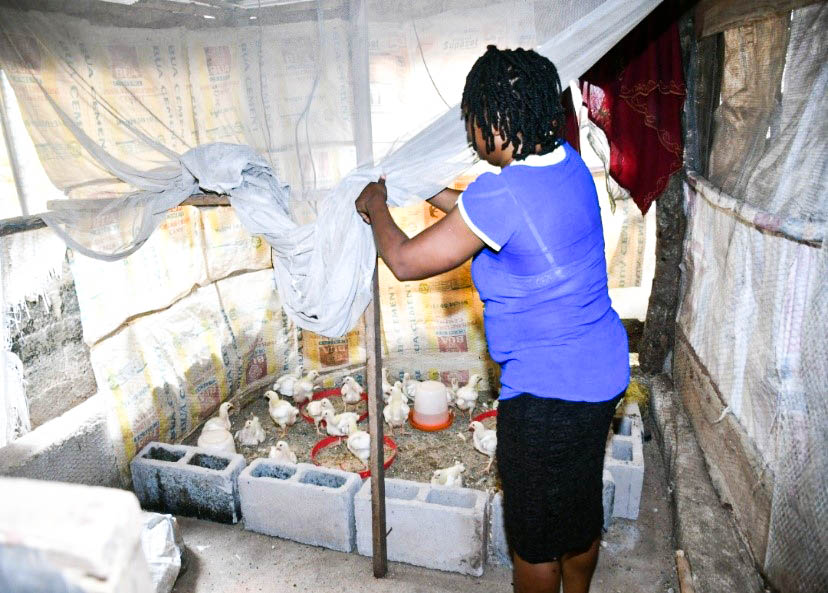
Chinasa's new chicks (gotten from the profit of the first set) -25 chicks
Feb. 23, 2021
“During the lockdown, it was impossible for me to support my family. My husband’s motorcycling repair job has been affected by the pandemic. I needed to do something about my family’s situation as feeding had become an issue. I anticipated receiving the money. I knew that with it I will be able to get my business running and my family going. The intervention was timely.”
Ngene Chinasa is a mother of five children. She lives in Ndibinagu Umunkwo community, Akegbe Ugwu LGA of Enugu state. Due to the Covid-19 pandemic, things became very difficult for her and her family to survive. Chinasa was unemployed. Her husband is a mechanic, who needs to work long hours daily to earn a living. Life was unbearable, feeding became a struggle.
The effect of the pandemic has been felt by every sector of the economy and every class of people. No one spared. Nigeria is largely dominated by the informal sector which accounts for 60% of the working population. The main characteristic of the informal economy is that money changes hands on a daily, and the survival of workers in this sector is based on them showing up for work every day.
Since the lockdown in March, it has become difficult for informal economy workers like Chinasa’s husband to keep up, seeing that they make money daily.
The complications of COVID-19 didn’t only affect their means of livelihood but also brought about an undue scarcity. She had to walk about 4km with her suckling child to the major road junction, in order to go into town. “You have to call bike men to come to pick you. When they come, you will pay for both trips,” she said. The remote location of the settlement made it unattractive for motorcyclists. This meant that they had to walk if they didn’t want to wait for hours to get transport.
Fortunately, Chinasa was opportune to be enrolled on the OVC project by a community volunteer early last year. In September 2020, Chinasa was one of the first beneficiaries under the OVC (Orphans and Vulnerable Children’s) program to benefit from the IGA (Income Generating Activity) intervention supported by the 4Gates project in Enugu state.
File Image: Receipt of the items for IGA -15 chicks
confirmed
File Image: Bags of feed and medication for the chicks.
confirmed
IGA is one of the implemented initiatives under Household Economic Strengthening, a domain of the OVC project. This initiative is aimed at helping beneficiaries attain economic stability by helping them establish businesses to support their families. “I have been thinking of how to scale through this pandemic. But with the cash, I will be able to provide for my children.”
Chinasa and other beneficiaries were trained on financial education to ensure that the businesses provided would be properly managed and utilized. After the training, she selected poultry as the business venture to embark on. “I had a poultry farm once but couldn’t sustain it due to funds,” she said.
She has taken full advantage of the initiative and has expanded the poultry business to include a piggery. “So far, there’s been no challenge, and I have been steadily growing the business,” she noted. Chinasa now has a farm with 25 chicks, 7 pigs, and has also started a nursery in her home.
File Image: Birds at 6weeks almost ready for sale.
confirmed
File Image: Chinasa's pig farm (gotten from the profit of the first set) -7 Pigs.
confirmed
“I make 6,000 Naira when I sell a chicken, and at least 50,000 Naira for a matured pig,” Chinasa stated. Her story has changed from what it used to be during the lockdown. She can now adequately support her family and have some savings.
35 people have been empowered so far by the initiative. The project is supported by CARITAS – 4GATES and implemented by South Saharan Social Development Organization (SSDO).