SSDO

Call for Bids: Solar-Powered Borehole Project in Bindawa and Kankia LGAs, Katsina State 

South Saharan Social Development Organization (SSDO) is pleased to announce an open call for bids from qualified contractors for the development of a solar-powered borehole project in Bindawa and Kankia Local Government Areas (LGAs), Katsina State. This project is part of SSDO’s ongoing efforts to improve access to clean and sustainable water for underserved communities, empowering them with improved health and economic opportunities. 

About the Project

Water is life, and access to clean water is a fundamental human right. The Bindawa and Kankia Borehole Project is a cornerstone initiative aimed at providing sustainable, solar-powered water supply systems to local communities. By integrating modern technology with eco-friendly solutions, this project is designed to ensure long-term water availability and reliability. 

The project will involve: 

– Borehole drilling up to a depth of 190 meters in Kankia and 170 meters in Bindawa. 

– Installation of solar-powered pumps and PV modules for sustainable energy. 

– Construction of public water fetching points for community use. 

– Comprehensive water quality testing to meet safety standards. 

– Security measures, including fencing and solar-powered lighting. 

Key Components of the BOQ 

The Bill of Quantity (BOQ) provides a detailed breakdown of the project requirements, including: 

1. Site Survey and Borehole Development: 

   – Geophysical survey and detailed reporting. 

   – Installation of UPVC casings, gravel packing, and backfill materials. 

2. Solar-Powered Water System: 

   – 1.5HP Grundfos solar pumps with control switches and anti-theft enclosures. 

   – Installation of high-quality PV panels and flexible DC wiring. 

3. Overhead Tank and Distribution: 

   – Construction of a 50,000-liter capacity GP tank on a reinforced stanchion. 

   – Plumbing for public fetching points with durable block wall structures. 

4. Community-Friendly Features: 

   – Borehole area fencing for safety and security. 

   – Integrated solar-powered streetlights for added security at fetching points. 

5. Water Quality Assurance: 

   – Multi-stage water quality tests, including bacteriological and physio-chemical analyses. 

   – Borehole and pump disinfection to meet health standards. 

Why Partner with SSDO? 

At SSDO, we believe in creating sustainable solutions that empower communities and drive development. This project represents an opportunity for contractors to work on an impactful initiative that combines technical excellence with social responsibility. By partnering with SSDO, you contribute to a brighter, healthier future for communities in Katsina State. 

How to Bid

Interested contractors can access the full Bill of Quantity (BOQ) here. Please ensure your bid submission includes detailed cost breakdowns, timelines, and evidence of relevant experience. 

Steps to Submit Your Bid: 

1. Download the BOQ document. 

2. Review the detailed project requirements. 

3. Submit your proposal to info@southsaharan.org.

Deadline 

November 27, 2024.  

Download the BOQ here.

Call for Bids: Solar-Powered Borehole Project in Nsukwa, Delta State

South Saharan Social Development Organization (SSDO) is pleased to announce an exciting opportunity for contractors and suppliers in the water infrastructure and renewable energy sectors. We invite qualified contractors to submit bids for the Nsukwa Solar-Powered Borehole Project. This transformative project aims to enhance clean water access and promote sustainable practices in Nsukwa, Delta State, by leveraging solar energy for water provision.

About the Project

Access to clean water is essential to health, hygiene, and economic growth. This borehole project, supported by SSDO, is strategically designed to address these needs through a sustainable and reliable source of water. By harnessing solar power, we are aligning with environmental goals and creating a resilient water source that will benefit the Nsukwa community in Delta state.

The Bill of Quantity (BOQ) for this project includes detailed descriptions, units, and specifications for each component involved in constructing and maintaining a solar-powered borehole system. Qualified contractors can download the BOQ document from our website and prepare to submit a competitive bid.

Scope of the Project

The Nsukwa Solar-Powered Borehole Project encompasses several key components and services designed to create a safe, long-lasting water supply. These include:

1. Site Preparation and Geophysical Surveying: Initial steps include a thorough geophysical site survey and evaluation to ensure the ideal placement and depth for borehole installation.

2. Borehole Drilling and Casing: The borehole will be drilled to an average depth of 120 meters, with specific requirements for casing pipes and backfill materials to ensure the borehole’s structural integrity and functionality.

3. Water Quality Testing: We prioritize the health of the community by conducting extensive water quality tests. This includes bacteriological, physio-chemical, and trace element testing to ensure that the water meets high-quality standards.

4. Solar-Powered Pump and Distribution: The project will include a 3HP solar pump installation with PVC riser pipes, control switches, and accessories to facilitate water distribution. Solar panels will power the pump system, ensuring a clean, reliable energy source.

5. Community Access and Security Features: Public water fetching points, equipped with battery taps and concrete pavements, will be strategically located for community convenience. Security measures, such as a fenced perimeter and integrated solar street lighting, are included to ensure the safety of both the infrastructure and community members.

6. Signage and Reporting: A durable signpost will describe the project and its sponsors, and contractors will be responsible for submitting detailed progress and completion reports at every stage.

Bid Requirements

Qualified contractors who are interested in being part of this impactful project can find the full BOQ on the SSDO website. The bid should detail all costs, including materials, labor, equipment, and overheads, in accordance with the BOQ specifications. Contractors are encouraged to submit competitive and comprehensive proposals showcasing their experience and commitment to quality.

Why Partner with SSDO?

South Saharan Social Development Organization has a longstanding commitment to enhancing the well-being of communities in Nigeria through sustainable projects and partnerships. By bidding on this project, contractors not only contribute to a life-changing initiative but also gain visibility as a partner in community transformation.

This project represents an opportunity to leverage innovation and expertise in sustainable infrastructure. As a contractor, your participation in the Nsukwa Borehole Project would reflect your dedication to impactful, sustainable work that directly benefits underserved communities.

How to Submit Your Bid

1. Download the BOQ document here.

2. Prepare your bid based on the detailed specifications in the BOQ.

3. Submit your proposal to info@southsaharan.org 

Deadline: November 27, 2024. 

Join Us in Making a Difference

If you’re a contractor with a track record in borehole construction, solar-powered installations, or community infrastructure, we invite you to bid on this important project. By joining SSDO in this endeavor, you contribute to a more sustainable future and bring life-changing water access to the Nsukwa community.

Together, let’s pave the way for sustainable development in Delta State and beyond.

Download the BOQ here

SSDO Partners with USAID Nigeria to Transform Water and Sanitation Access in Ilaje-Otumare

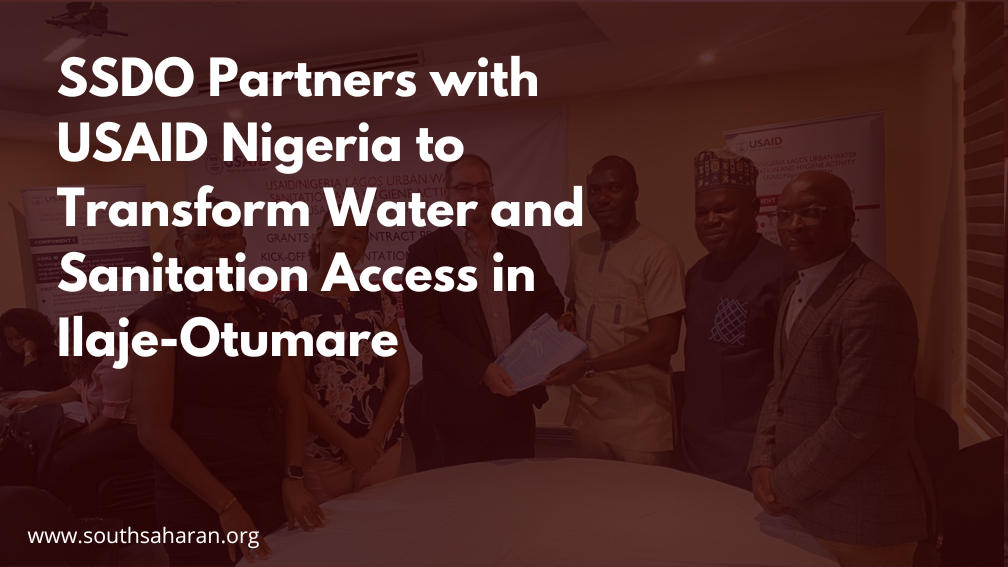
South Saharan Social Development Organization (SSDO) is thrilled to announce an exciting new chapter in our mission to improve lives across Nigeria! In partnership with USAID Nigeria’s Lagos Urban Water, Sanitation, and Hygiene (LUWASH) project, SSDO will spearhead critical WASH (Water, Sanitation, and Hygiene) interventions for the densely populated Ilaje-Otumare community in Lagos Mainland. This project stands as a testament to the power of collaboration, aiming to create lasting change in water access, hygiene practices, and public health for over 50,000 residents. 

Kick-Off and MoU Signing  

All I’s are dotted, and all T’s are crossed—SSDO is ready to make an impact! The SSDO team, led by our Executive Director, Dr. Stanley Ilechukwu, recently attended the LUWASH Kick-off and Orientation Workshop, where the official signing of the Memorandum of Understanding (MoU) took place. This workshop served as an essential step in laying the groundwork for the project, allowing stakeholders to align goals, establish clear objectives, and set the tone for a fruitful collaboration. With USAID Nigeria’s guidance and support, SSDO is now poised to implement a holistic approach to water, sanitation, and hygiene that addresses both the immediate cholera outbreak and the long-term needs of the community.

Why Ilaje-Otumare? 

Ilaje-Otumare, a riverine community within Lagos Mainland, faces severe challenges in accessing clean water and sanitation. Despite being close to the city’s center, Ilaje-Otumare has struggled with inadequate infrastructure, limited resources, and high vulnerability to waterborne diseases. In particular, the area has been hard-hit by the ongoing cholera outbreak, with contaminated water sources and a lack of hygiene facilities making residents highly susceptible to infection. By partnering with LUWASH, SSDO aims to address these urgent needs, bringing both immediate relief and sustainable solutions to the community.

Our Objectives  

Through this project, SSDO aims to bring impactful and sustainable WASH solutions to Ilaje-Otumare. Our objectives include:

1. Expanding Cholera Response  

   Targeted interventions will address the cholera outbreak, focusing on hotspot areas and providing essential hygiene supplies like soap, water purification tablets, and oral rehydration solutions to vulnerable households.

2. Improving WASH Infrastructure  

   SSDO will rehabilitate several boreholes in Ilaje-Otumare and enhance water quality through regular testing and treatment. Additionally, the project will install solar-powered boreholes to reduce costs and ensure a reliable, safe water supply.

3. Promoting Sustainable Hygiene Practices  

   Community outreach and educational campaigns will empower residents to adopt lasting hygiene practices. SSDO will distribute informational materials, organize training sessions, and engage local healthcare providers, water vendors, and food vendors to ensure proper hygiene standards are maintained across the community.

4. Strengthening Community Engagement and Capacity 

   SSDO believes that sustainable change comes from within. By working with Community Development Associations (CDAs), local leaders, and the unique networks within Ilaje-Otumare, we are building a foundation for the community to take ownership of its WASH infrastructure and practices, ensuring long-term impact.

Looking Ahead: A Sustainable Vision for Ilaje-Otumare  

At SSDO, we envision a future where clean water, safe sanitation, and good hygiene practices are accessible to everyone, regardless of their socioeconomic status or location. This project in Ilaje-Otumare, supported by USAID Nigeria’s LUWASH initiative, is more than just an infrastructure overhaul; it is about empowering a community with the resources, knowledge, and skills to create and sustain healthier lives.

Join Us on Our Journey 

SSDO’s journey with LUWASH in Ilaje-Otumare has only just begun, and we look forward to sharing updates, milestones, and success stories along the way. Follow our social media channels for the latest on this transformative project and learn how together we’re building a healthier, more resilient future for the communities of Nigeria. 

Conclusion

SSDO is ready to implement a project that brings hope, health, and resilience to Ilaje-Otumare. We are grateful for the trust and support of USAID Nigeria and excited to work hand-in-hand with the community toward a future where access to clean water and hygiene is a reality for all.

WASH OFFICER – LAGOS at South Saharan Social Development Organization

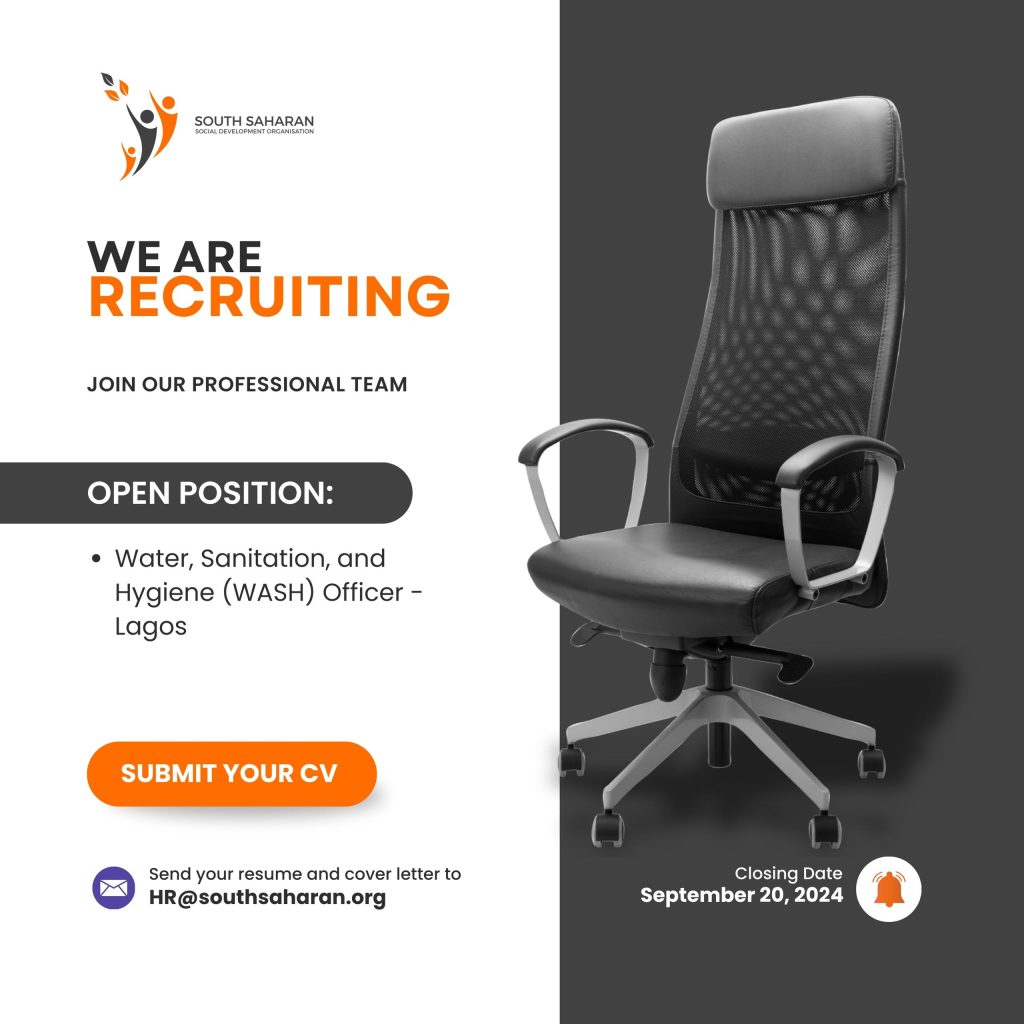
Job Vacancy: WASH Officer 

Location: Lagos 

Reporting to: Head of Programs, South Saharan Social Development Organization (SSDO) 

Duration: 12 months

About South Saharan Social Development Organization (SSDO)

South Saharan Social Development Organization (SSDO) is a non-profit organization focused on empowering women, youth, and marginalized communities in Sub-Saharan Africa. SSDO addresses cross-cutting governance issues, including health, education, livelihood, gender, climate change, and WASH (Water, Sanitation, and Hygiene). We aim to improve the quality of life for vulnerable groups and foster inclusive development.

Job Summary

The WASH Officer will lead the implementation of the Otumare LUWASH Project in Ilaje-Otumare, a densely populated riverine community in Lagos Mainland. This role involves managing WASH activities, promoting hygiene behavior change, coordinating cholera response efforts, and ensuring the rehabilitation of critical water infrastructure.

Key Responsibilities:

1. Project Implementation:

   – Implement WASH activities in line with project plans and objectives.

   – Oversee the rehabilitation of water points and sanitation facilities.

   – Ensure water quality testing and safe drinking water supply.

   – Supervise contractors and artisans to ensure quality work.

2. Hygiene Promotion:

   – Develop and execute hygiene promotion activities, including the distribution of hygiene kits and outreach programs.

   – Train community volunteers and stakeholders on best hygiene practices.

   – Conduct awareness campaigns and promote cholera prevention.

3. Monitoring and Evaluation:

   – Conduct regular field visits to monitor the progress of WASH interventions.

   – Collect and analyze data on WASH indicators for reporting to stakeholders.

   – Ensure timely reporting on activities, progress, and challenges.

4. Coordination and Collaboration:

   – Collaborate with local authorities, Community Development Associations (CDAs), and other stakeholders.

   – Participate in WASH sector coordination meetings and represent SSDO in relevant forums.

   – Work with private and public partners to ensure project sustainability.

5. Capacity Building:

   – Train healthcare providers, food vendors, and water vendors on WASH management and cholera response.

   – Build local capacity to maintain WASH infrastructure and promote hygiene practices.

6. Documentation and Reporting:

   – Maintain accurate records of WASH activities, project progress, and lessons learned.

   – Prepare regular reports, case studies, and success stories.

Qualifications and Experience: 

– A university degree in Public Health, Environmental Science, Civil Engineering, WASH, or a related field. Advanced degree in a related field is an added advantage. 

– Minimum 5 years of experience in the WASH sector, particularly in project implementation and cholera response. 

– Experience in community mobilization, hygiene promotion, and infrastructure rehabilitation. 

– Strong technical knowledge of WASH standards, guidelines, and best practices. 

– Must be resident in Lagos and familiarity with the local context is a plus. 

– Proficiency in Microsoft Office tools (Word, Excel, PowerPoint).

Key Competencies: 

– Strong project management, organizational, and problem-solving skills. 

– Ability to work independently and in a team environment. 

– Sensitivity to cultural and gender issues. 

– Excellent communication and interpersonal skills. 

– Resident in Lagos.

Method of Application 

Interested and qualified candidates should send their CV and cover letter to hr@southsaharan.org by November 7, 2024, stating “WASH Officer Application” in the subject line. Only shortlisted candidates will be contacted.

SSDO, Embassy of Switzerland in Nigeria Commissions Karonmajigi Water Project For PWD Settlement

In Nigeria, more than 60 million people do not have access to basic water supply. Over 12 million people lack access to toilet facilities. 29 percent of children do not have water to meet their daily needs. Thus affecting their ability to attend school and wash their hands properly to fight off diseases. For people living with disabilities, the impact is even more severe. 

The lack of access to water increases open defecation in communities. This pollutes the environment, contaminates water sources, and exposes the community to diseases like cholera, diarrhea, and dysentery. 

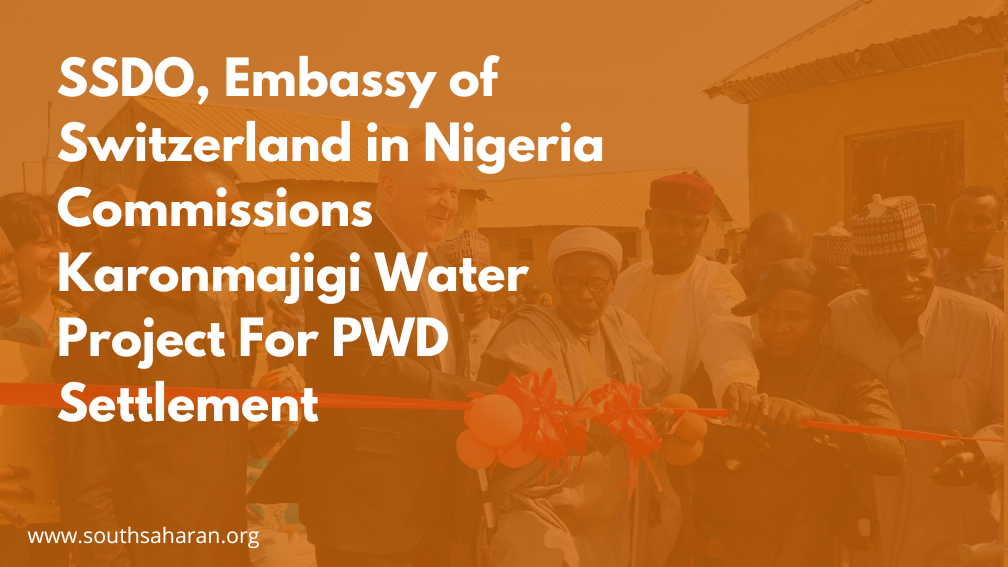
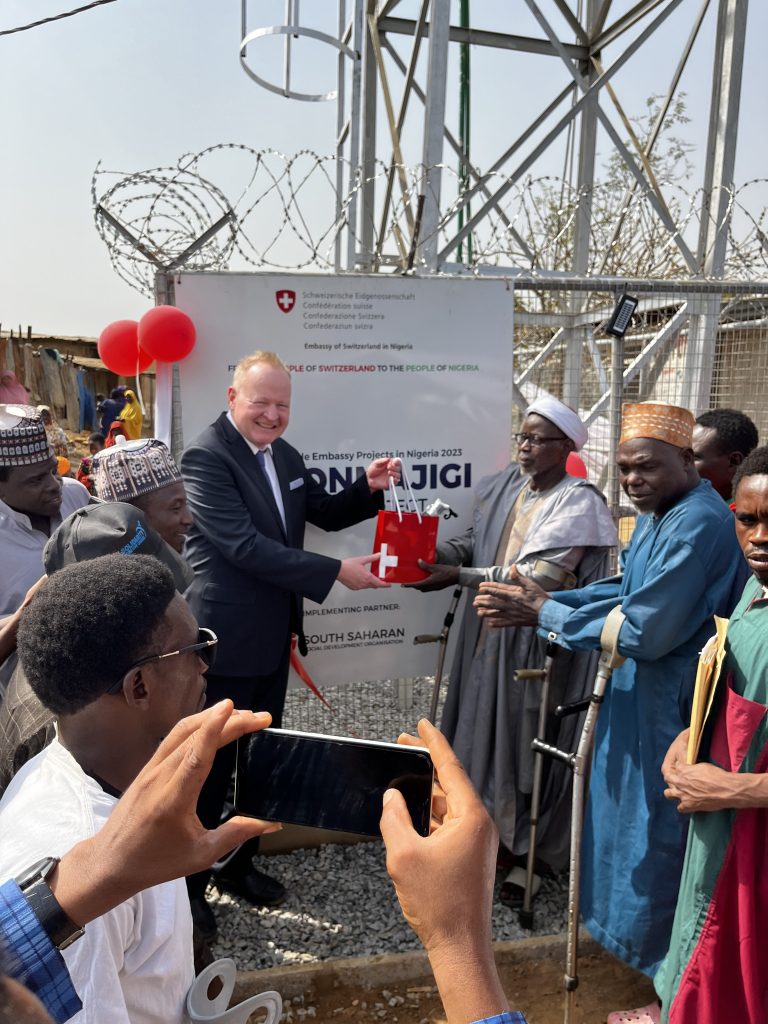
Understanding this problem, South Saharan Social Development Organization in partnership with the Embassy of Switzerland in Nigeria constructed a 10,000-liter solar-powered borehole for the Persons with Disabilities Settlement in Karonmajigi, Abuja. The project was commissioned on the 13th of February 2024 with the Deputy Head of Mission at Embassy of Switzerland in Nigeria, Lukas Schifferle, in attendance to open the project. 

The team also constructed a 380-meter drainage to help channel out wastewater and prevent stagnation. Thus improving sanitation and hygiene in the community. The project looks to provide water to over 5,000 residents of the community. The intervention will reduce the incidence of water-borne diseases like cholera and diarrhea.

Before now, the team conducted a two-day hygiene behavior change training for the community and inaugurated a WASH committee and voluntary hygiene promoters to guarantee the project’s sustainability. The WASHCOM which includes PWDs will manage the water resources and execute routine maintenance. 

As part of the hygiene behavior change endeavor, the community communicated a need for educational materials on hygiene promotion. In response, we organized a photo shoot of community leaders engaging in various hygiene behaviors. 

The photos were used to develop 20 permanent posters installed at various places around the community to serve as triggers for good hygiene.