SSDO

New Grant Alert: Driving Local Government Accountability in Enugu

South Saharan Social Development Organisation (SSDO) is proud to share that we have secured a sub-grant through the Nigeria Civil Society Situation Room to implement the Local Government Area Accountability Index (LAI) Project in Enugu State!

What This Means for Enugu

The LAI Project is designed to make local governance more transparent, inclusive, and accountable. Through this initiative, SSDO will:

✅ Develop the Enugu State Local Accountability Framework and Policy
✅ Pilot the LAI tool for tracking LGA performance
✅ Establish Accountability Committees in three pilot LGAs
✅ Launch a public dashboard for real-time transparency and citizen engagement

Why It Matters

Local governments are closest to the people, yet often face challenges of weak accountability and limited trust. By introducing a practical tool for measuring performance, strengthening citizen participation, and creating open platforms for transparency, the LAI Project will help restore public confidence in governance at the grassroots.

Powered by Partnerships

This innovation is supported through a sub-grant from Policy and Legal Advocacy Centre , funded by the UK Foreign, Commonwealth and Development Office .

Together, we are promoting accountability, stronger governance, and citizen trust in Enugu State, one local government at a time.

Enugu Youth Take the Lead: Launch of the State Youth Policy

On 21st August 2025, a new chapter opened for young people in Enugu State as the government formally launched the Enugu State Youth Policy – a blueprint designed to put youth at the heart of governance, innovation, and development.

A Collective Journey

This policy was not written behind closed doors. It was birthed through a participatory process that brought together government, civil society, and young people themselves.

South Saharan Social Development Organisation (SSDO), with funding support from ActionAid Nigeria under the SPA II Project, walked alongside the process from start to finish:

  • Formation of the Technical Working Group (TWG)
  • Stakeholder consultations across communities
  • Policy drafting with inputs from diverse voices
  • Final validation and adoption by the State

Every step reflected the power of inclusion, and the belief that when youth are meaningfully engaged, policies speak to real needs.

Why It Matters

The Youth Policy is more than a document. It is a vision for education, entrepreneurship, health, governance, and social justice that prioritizes young people as active drivers of development. It also creates structures for accountability, ensuring that the voices of youth continue to shape implementation.

What Comes Next

Launching the policy is only the beginning. Implementation is key. SSDO will continue to stand with Enugu youth, pushing for resources, structures, and opportunities that make the policy a living reality, not just on paper, but in everyday lives.

Together, we are building an Enugu where young people are not just beneficiaries of development but partners and leaders in shaping it🌍✊.

From Classroom to Community: Raising the Next Generation of Leaders

From Classroom to Community: Raising the Next Generation of Leaders

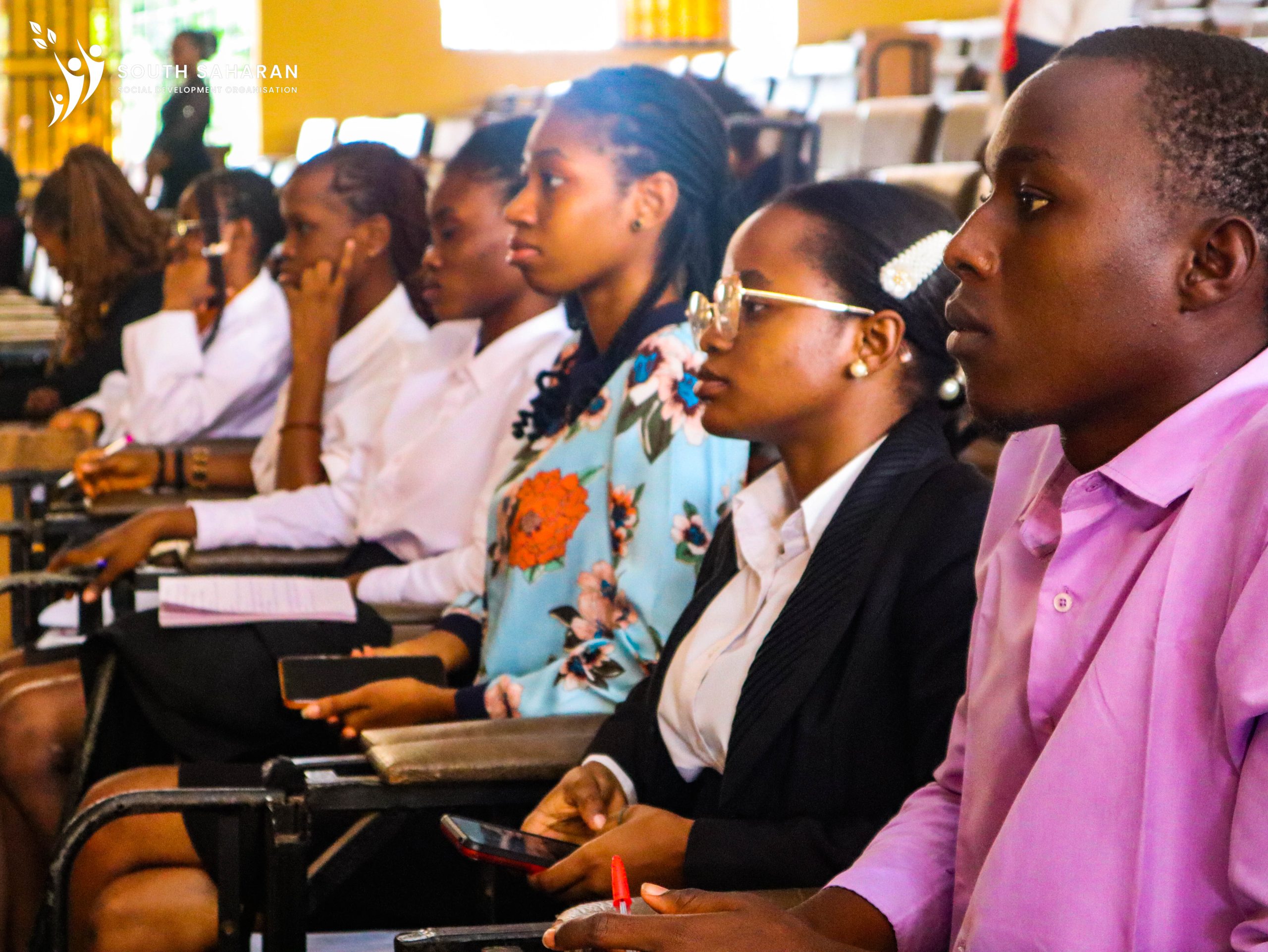
At the Federal University of Allied Sciences, Enugu, a room full of young people leaned in, eager to learn, question, and be inspired. The Civic Guardian Initiative, in partnership with South Saharan Social Development Organisation (SSDO), created a space through a workshop designed to prepare students to lead with purpose.

Why Leadership Matters

For many of these young participants, leadership had always looked distant reserved for people in power. But through conversations and practical sessions, they began to see leadership as something within reach, a chance to serve, to speak up, and to take responsibility. SSDO, true to its mission of empowering youth and promoting inclusive governance, helped shape these conversations, ensuring that students left with a deeper understanding of what it means to lead with courage and integrity.

Learning in Action

One moment stood out. When Udochukwu Egwim spoke about Good Governance, he asked the students a simple but powerful question: “What would accountability look like if you were the leader?” The room buzzed with responses. Later, Okechukwu Ajah’s session on Leadership Skills Development gave them practical tools from decision-making to conflict resolution to turn those ideas into action. You could almost see confidence forming in the way they shared their reflections.

From Knowledge to Impact

Workshops like these are more than lectures, they are seeds planted in fertile ground. With support from SSDO, young people are beginning to see themselves not as bystanders, but as future leaders of their communities. And as they left that room, one thing became clear: when youth lead with purpose, communities thrive.

Young Nigerians Take a Stand: Bold Demands at the Senate Public Hearing

At the just-concluded Senate Public Hearing on Constitutional Amendment, a new wave of civic leadership emerged as young Nigerians, mobilized under the Strategic Partnership Agreement (SPA II) Project, stepped forward with a clear message: We are not just asking for change, we are shaping it.

Backed by ActionAid Nigeria and supported by South Saharan Social Development Organisation (SSDO), the youth delegation submitted a powerful memo outlining their demands for a more inclusive, equitable, and participatory Nigeria.

Youth-Led Memo, Nation-Shaping Vision

The memo, which was formally presented during the hearing, calls for five key reforms that reflect the aspirations of Nigeria’s rising generation:

  • Free Basic Education & Social Security: As a right, not a privilege, ensuring that no child is left behind.
  • Diaspora Voting: Because every Nigerian voice, no matter where it resides, should count.
  • Independent Candidacy: To open the political space beyond party structures.
  • Youth Development Fund: A national mechanism to support the skills, innovation, and entrepreneurship of young people.
  • Inclusive Representation: 35% quota for women and 30% for youth in all political appointments and elective offices.

These demands were not abstract ideals. They were built on community consultations, data, and lived experiences, brought to the table by youth who understand what is at stake.

SSDO and ActionAid: Strengthening Youth Advocacy

At SSDO, we are proud to partner with ActionAid Nigeria to strengthen youth advocacy platforms that go beyond protest to policy. The SPA II project is designed to amplify grassroots voices, build civic capacity, and ensure that governance is not something done to young people, but done with and by them.

As the constitutional review process continues, SSDO will keep working alongside young leaders to ensure that these voices do not fade after the hearing. The memo has been submitted, but the movement is just beginning.

This is youth-led advocacy. This is what democracy looks like.
Japanese Government Expands Medical Waste Intervention in Enugu Through New Incinerator Project

South Saharan Social Development Organisation (SSDO), in partnership with the Embassy of Japan in Nigeria, is set to implement a major health infrastructure project to tackle hazardous waste disposal in Enugu State. Through the Grassroots Human Security Project (GGP), the Japanese Government is funding the installation of a medical waste incinerator at Abakpa Health Centre, strategically positioned to serve both public and private health facilities in Enugu East Local Government Area.

This intervention addresses long-standing challenges around waste management, improves infection control, and strengthens healthcare delivery systems across the LGA.

A Strategic Collaboration for Safer Healthcare

A high-level delegation from the Embassy of Japan in Nigeria, led by GGP Coordinators Wakana Deguchi and Kenechukwu Adibe, visited Enugu to assess the project’s implementation pathway. They were received by SSDO’s leadership, headed by Dr. Stanley Ilechukwu, and welcomed by health stakeholders across the state.

The visit included a courtesy meeting with the Enugu State Commissioner for Health, Dr. Emmanuel Ikechukwu Obi, along with Dr. Ifeyinwa Ani-Osheku, Executive Secretary of the Enugu State Primary Healthcare Development Agency, and Prof. Uche Agu, Hospital Administrator of the Enugu State Health Management Board.

All three expressed strong support for the project, noting that it would relieve facilities of the burden of transporting medical waste long distances to the state’s central cold store for incineration.

Why Abakpa Health Centre?

According to Dr. Ani-Osheku, the decision to site the incinerator at Abakpa Health Centre was strategic. The facility’s central location, heavy patient traffic, and proximity to over 20 other health centers made it the most suitable hub for the project. “This incinerator will not just serve Abakpa,” she noted. “It will offer a safe, accessible, and affordable waste disposal solution to surrounding clinics and hospitals, both public and private.”

Building on Past Success

As part of the visit, the team also toured Poly General Hospital, where SSDO and the Embassy of Japan had previously implemented a 56KVa solar power system under a 2020 GGP grant. Completed in 2021, that installation powered by 96 solar panels continues to run the hospital independently of the national grid, ensuring uninterrupted care.

This history of successful partnership set the tone for the current intervention, underscoring a shared commitment to sustainable, impactful development.

A Model for International-Local Partnership

This incinerator project demonstrates what is possible when global support aligns with local knowledge to solve specific, high-impact problems. It reflects SSDO’s commitment to bridging infrastructure gaps, one practical step at a time, and the Japanese Government’s consistent investment in grassroots health and human security.