Water scarcity, unequal access, or no access to water can cause tension, increase stress, and result in conflict in communities. As climate change impacts increase and the population grows, there is an urgent need to protect, conserve, and increase access to our most precious resource.
Public health, agriculture, economic productivity, and environmental integrity all rely on a well-functioning and equitably managed water cycle. Let us join hands and make water more accessible to all.
Understanding this challenge and the need to improve access to water in rural communities, South Saharan Social Development Organization in partnership with WaterAid Nigeria and the Enugu State Ministry of Water Resources through the Small Town Unit commenced the construction of a 20,000-gallon water scheme in Mboshi-Aji community, Igbo-Eze LGA funded by Latter Day-Saints Charity Project.
The foundation-laying ceremony signifies the outset of a transformative endeavor aimed at enhancing water accessibility and fostering community development. The water scheme will help to reduce open defecation and keep Enugu on course to achieve an open defecation-free status by 2030.
The project will help combat poor sanitation, infectious diseases, malnutrition, and help community children focus more on their education as the distraction of going long distances to draw water will be eliminated.
The Sister Guardian Initiative (SGI) is a South Saharan Social Development Organization‘s flagship project on reducing violence against women at the community level. The initiative provides the immediate support that female victims of violence require— safety, counseling, mediation, and referrals to other relevant agencies as the case may demand. The SGI is presently in 19 communities across Enugu and Anambra states.
International Women’s Day is a global day to celebrate women’s socioeconomic, cultural, and political achievement. It is also a unique opportunity for women to rally and advocate for equal treatment and representation. Since the inception of the SGI in 2016, SSDO has organized an educational event geared towards women’s empowerment. This year’s theme is “Inspire Inclusion” and “Invest in Women: Accelerate Progress.”
To commemorate the IWD celebration, South Saharan Social Development Organisation organized a radio sensitization program to celebrate the wins of Sister Guardians, to share their stories, challenges, and journey since they were elected to the traditional ruling councils in their communities. As well as to create awareness on the need for this to become the norm in other communities. The guest on the show were Mrs Roseline Egwuatu from Ihenyi community in IsiUzo LGA and Mrs Anthonia Anike from Umuode community in Nkanu East LGA, who are both part of the traditional ruling councils in their communities as a result of the efforts of SSDO through the Sister Guardian Inititaive project.
The women discussed how challenging it was before SSDO came in, how they struggled to be heard, and how women didn’t have an opinion on matters that affected their wellbeing.
“Women were always subjugated and relegated to the backgrounds through bad stereotypes and cultural norms that affected them. During disagreements, men take advantage of norms to ban women out of the home for as long as they want by barricading their kitchen with palm fronds which is a taboo in my community. This was put to a stop when women became elected to the traditional ruling council.” Mrs Roseline shared.
Mrs Anthonia explained, “Before now, we could not assess our palm kernel farm or either use the proceeds, the men would always collect it from us, but through the advocacy of the Sister Guardian Initiative this has stopped.”
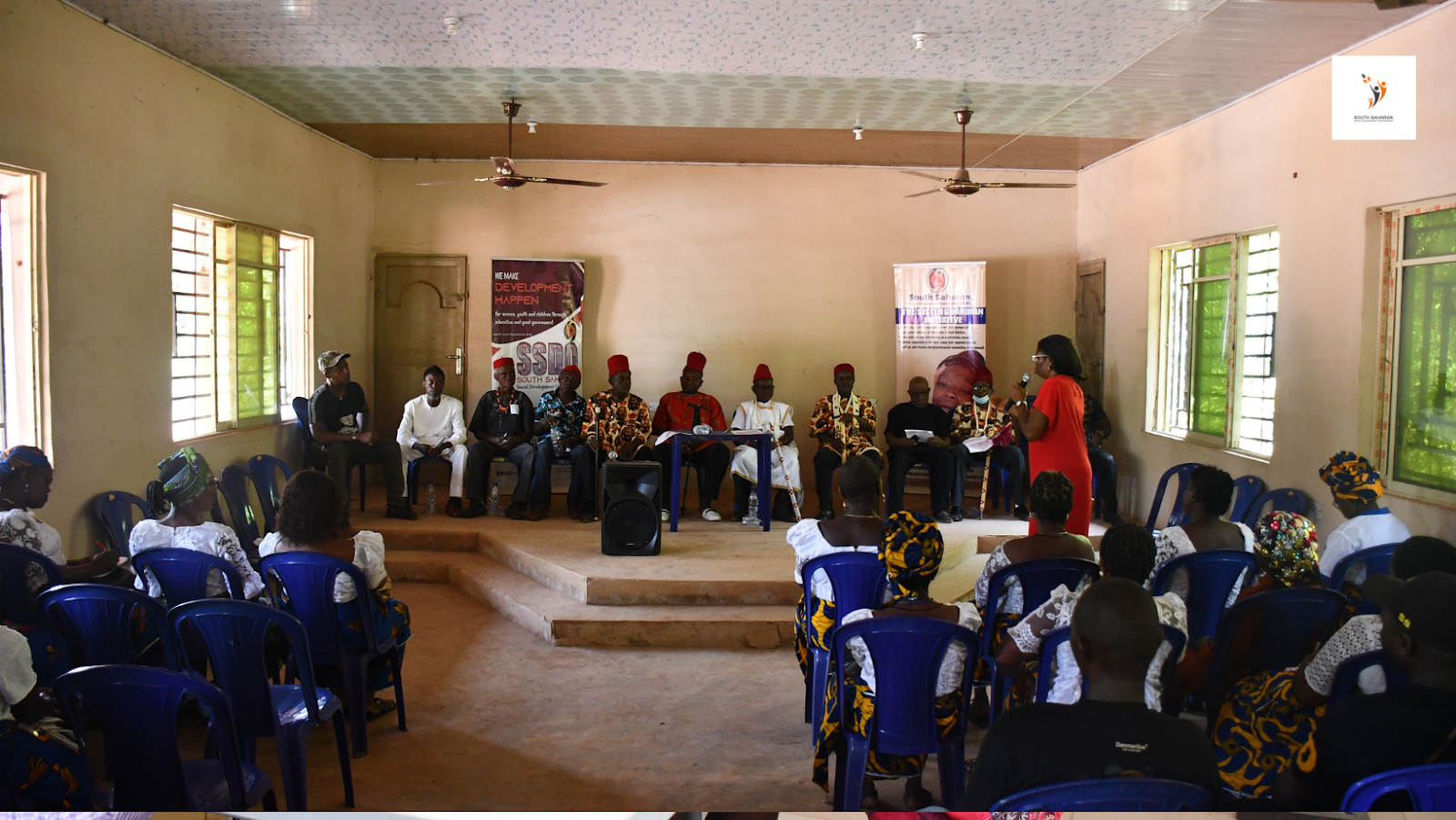
This year’s commemoration also served as an avenue to create more awareness on the year’s theme, on the need to increase women’s participation and diversify leadership, and rally relevant stakeholders on the need to enforce GBV laws.This was done through a community stakeholder engagement workshop held in Ezi-Nze community in Udi LGA. The workshop featured participants drawn from three communities– Ibute-Nze, Ezi-Nze, and Akpakwume community, Udi LGA Enugu State–where the initiative has been executed. They include traditional rulers, President Generals, women leaders, and community members.
Blessing Uchendu, Gender Protection Lead explained the importance and the need for increased inclusion and investment in women, particularly in the promotion of diversity in leadership and decision-making positions. “Women, especially those belonging to underrepresented groups, continue to face barriers when seeking leadership roles. By championing inclusion, organizations and communities can harness the full potential of diverse perspectives, leading to better decision-making and innovation.”
Studies have shown that increased women’s representation in leadership positions as helped to reduce marginalization and discrimination as women in power can better advocate and present the needs of other women. Understanding this fact, SSDO, has been working tirelessly to increase the number of women in the traditional ruling councils in project communities. So far, nine communities have included women in their traditional ruling councils. While not resting on our oars, the team is striving to see improved inclusion and women empowerment, hence the need for this workshop.
“Women face discrimination, harassment, inequality, and oppression. SSDO addresses all these and more through the guardians instituted in the communities. SSDO also strengthens these established institutions by building their capacity and financing them to carry out their programmatic activities. With more women in the cabinet in these communities, these incidences will be further ameliorated”
Jacob’s Well Project Officer, Stella Ani, also highlighted the importance of access to opportunities such as financial instruments as a viable way to invest in women. “We realize that marginalization and oppression lie at the heart of women’s poverty. This is why we introduced the micro-credit facility. To help women access loans, accelerate progress, and achieve financial independence.”
Having sensitized participants and stakeholders on the need for increased women’s participation and increased inclusion in decision-making processes at the community level, the team facilitated a breakout session where traditional rulers and Sister Guardians (women leaders) from the same community discussed and chose the three most pressing challenges that have plagued women the most in their communities.
Esther Ani, a participant shared, “I am excited about this workshop. The fact that we could sit with our traditional rulers and tell them our struggles and needs was important. Now we can plan and implement the solutions identified.”
These identified problems will be form the basis for intervention in the communities going forward. The women will advocate to public and private partners for speedy resolutions.
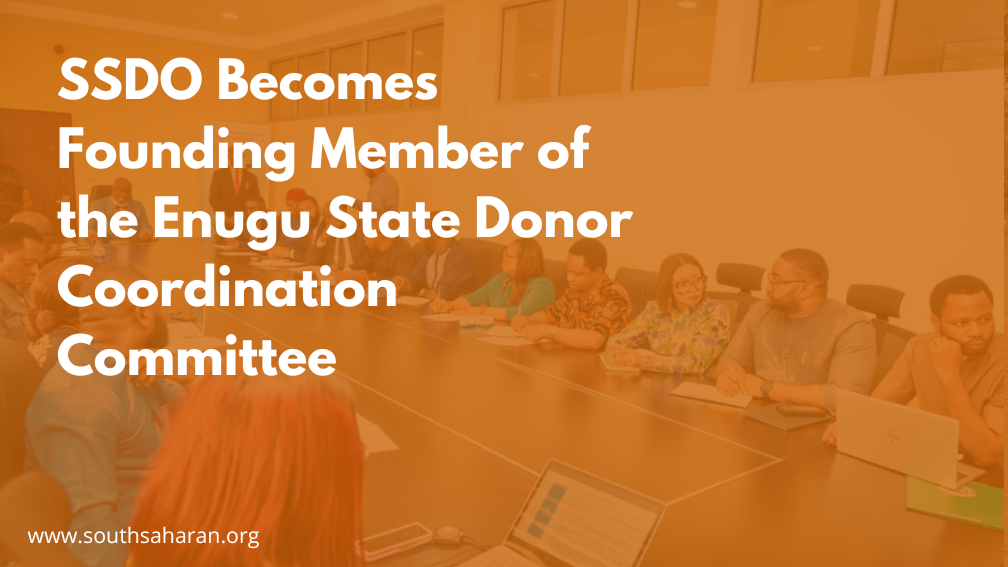
South Saharan Social Development Organisation, SSDO, was nominated as a worthy member of the Enugu State Donor Coordination Committee. At the inaugural meeting, Dr. Stanley Ilechukwu, SSDO’s Executive Director reiterated the organization’s commitment to align its key projects with the state’s priorities in an effort to optimize resource allocation. This will help limit overlaps, waste, underutilization of resources, and enhance desired development outcomes set forth by each of the donor agencies.
The committee would help to provide strategic guidance and oversight for donor-funded initiatives, ensure alignment of donor activities with the state’s development priorities and plans. The committee will also foster synergy and avoid duplication of efforts among donor agencies and partners, and assist in monitoring and evaluating the effectiveness and impact of donor-funded projects.
South Saharan Social Development Organization, in partnership with WaterAid Nigeria, organized a community engagement event under the Latter-Day Saints Charity Project (LDSC) III. The project’s goal is to improve access to clean water and hygienic sanitation in communities of Enugu state.
This event marked the initiation of the Hygiene Behavioral Change (HBC) campaign, a crucial component of the larger LDSC III project.
The campaign took place at the Community Primary School Mboshi-Aji, with active participation from various demographics within the Mboshi community.
The community engagement event was strategically divided into two groups, fostering effective interaction and engagement. It was an avenue to teach hygiene education.
This encompassed proper handwashing techniques, practices, and sanitation and waste management. Men, women, and children were well represented and contributed to the success of the event.
In Nigeria, more than 60 million people do not have access to basic water supply. Over 12 million people lack access to toilet facilities. 29 percent of children do not have water to meet their daily needs. Thus affecting their ability to attend school and wash their hands properly to fight off diseases. For people living with disabilities, the impact is even more severe.
The lack of access to water increases open defecation in communities. This pollutes the environment, contaminates water sources, and exposes the community to diseases like cholera, diarrhea, and dysentery.
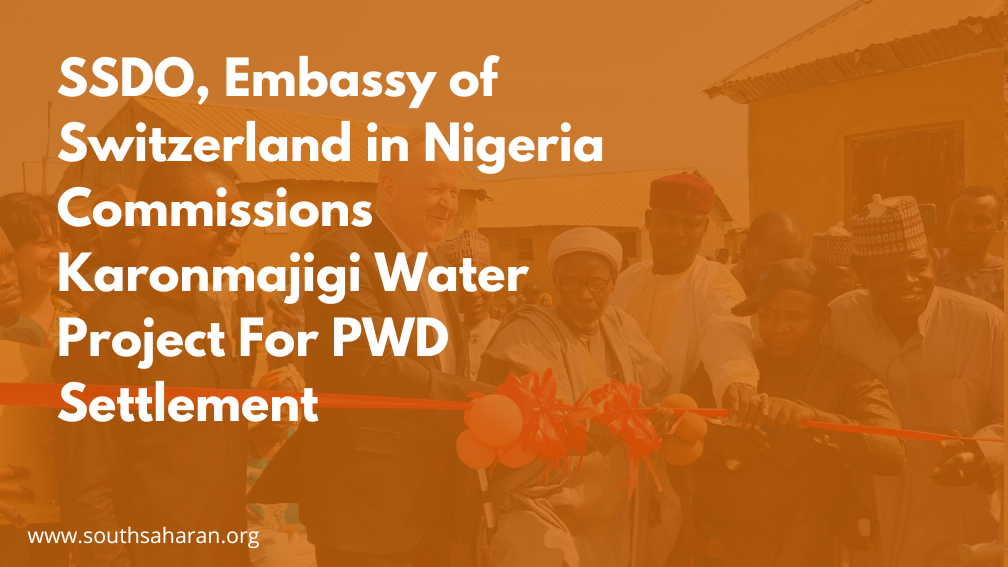
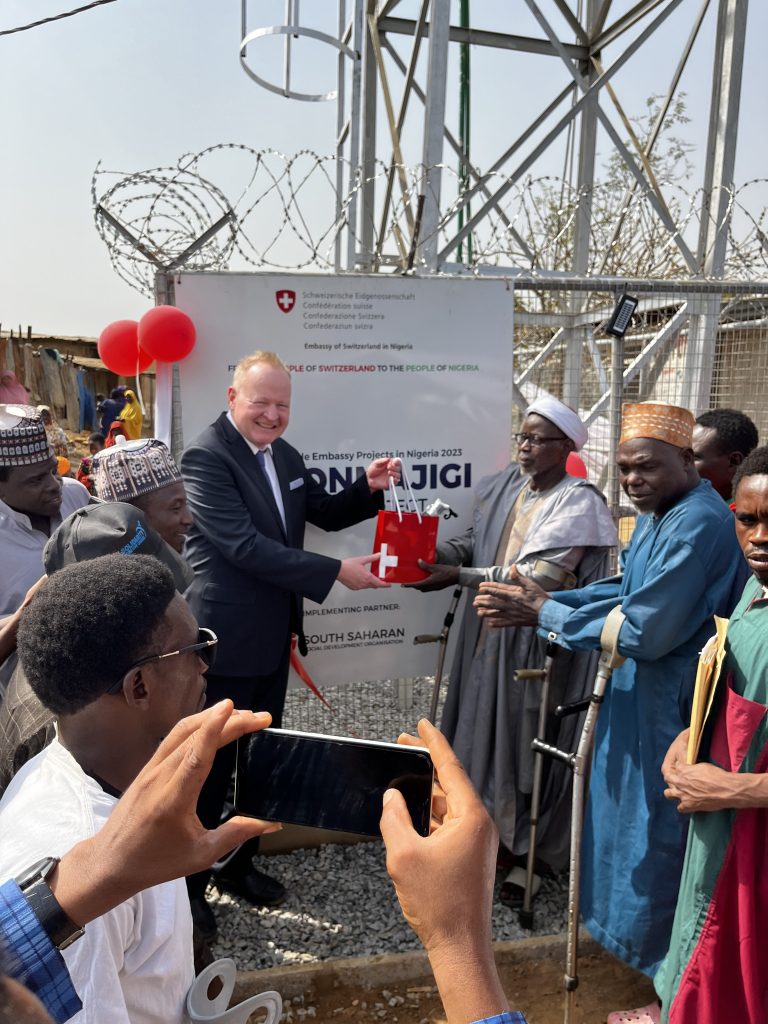
Understanding this problem, South Saharan Social Development Organization in partnership with the Embassy of Switzerland in Nigeria constructed a 10,000-liter solar-powered borehole for the Persons with Disabilities Settlement in Karonmajigi, Abuja. The project was commissioned on the 13th of February 2024 with the Deputy Head of Mission at Embassy of Switzerland in Nigeria, Lukas Schifferle, in attendance to open the project.
The team also constructed a 380-meter drainage to help channel out wastewater and prevent stagnation. Thus improving sanitation and hygiene in the community. The project looks to provide water to over 5,000 residents of the community. The intervention will reduce the incidence of water-borne diseases like cholera and diarrhea.
Before now, the team conducted a two-day hygiene behavior change training for the community and inaugurated a WASH committee and voluntary hygiene promoters to guarantee the project’s sustainability. The WASHCOM which includes PWDs will manage the water resources and execute routine maintenance.
As part of the hygiene behavior change endeavor, the community communicated a need for educational materials on hygiene promotion. In response, we organized a photo shoot of community leaders engaging in various hygiene behaviors.
The photos were used to develop 20 permanent posters installed at various places around the community to serve as triggers for good hygiene.