SSDO

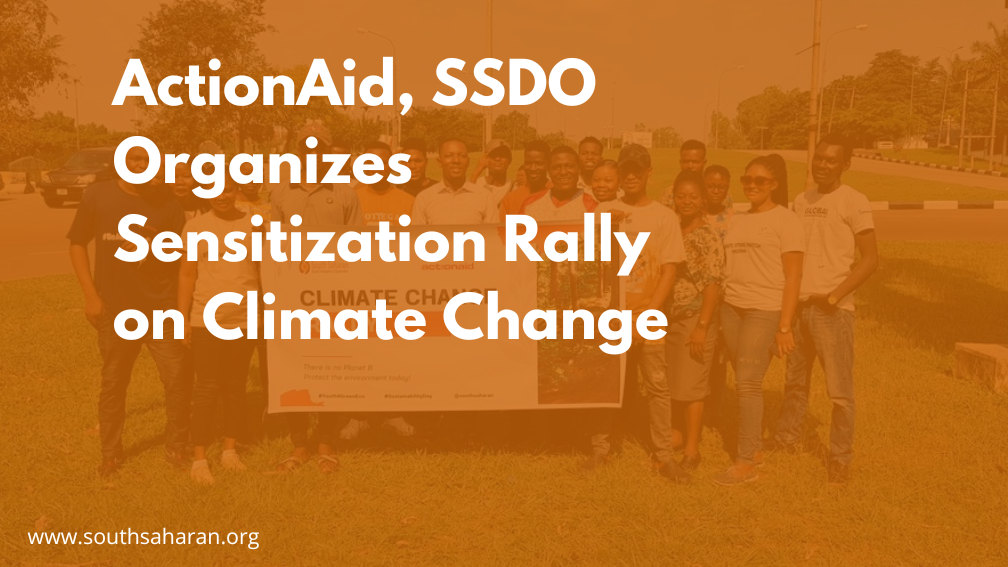
ActionAid, SSDO Organizes a Sensitization Rally on Climate Change

Nigeria’s climate has been changing: temperature increases; variable rainfall; rise in sea level and flooding; drought and desertification; land degradation; more frequent extreme weather events; affected freshwater resources, and loss of biodiversity. The durations and intensities of rainfall have increased, producing large runoffs and flooding in many places in Nigeria. 

Rainfall variation is projected to continue to increase. Precipitation in southern areas is expected to rise, and rising sea levels are expected to exacerbate flooding and submersion of coastal lands. Droughts have also become a constant in Nigeria and are expected to continue in Northern Nigeria, arising from a decline in precipitation and rise in temperature. Lake Chad and other lakes in the country are drying up and at risk of disappearing.

Floods are a recurring natural hazard in Nigeria and have become more frequent throughout the country in recent decades. Agriculture, health, infrastructure, the economy, and trade are all negatively impacted, as evidenced in 2012 when severe floods contributed to reduced economic growth in agriculture and trade. This is coupled with the trigger of the Lagba Dam in Cameroon which has drastically increased the level of flooding in the country affecting over ten states.

Increased flooding due to rising sea levels will negatively impact agriculture, the economy, coastal infrastructure, human health, coastal ecosystems, and human settlements. Sea levels have been rising along the coast of Nigeria, causing coastal erosion and some villages to be lost. It has been estimated that a 1-meter rise in sea level could cause 75% of the land in the Niger Delta to be lost.

Over the past few weeks, different states have felt the sting of the floods. In as much as the government has a role, we also have a part to play to ensure the earth is habitable and safe. The effect of human activities has a telling effect on the atmosphere. And nobody is exempted from these devastating effects. Hence, the need for sensitization to raise awareness about climate change. 

Understanding these effects, ActionAid Nigeria, in partnership with South Saharan Social Development Organization, is playing its part in creating awareness and sensitizing people on steps to take to combat climate change. The message was simple: “There is no planet B. Protect the environment today.” 

The rally also sensitized people on what they can do to protect the environment from their corner: 

– Cut down waste

– Conserve water

– Plant a tree

– Walk more

– Spread the word.
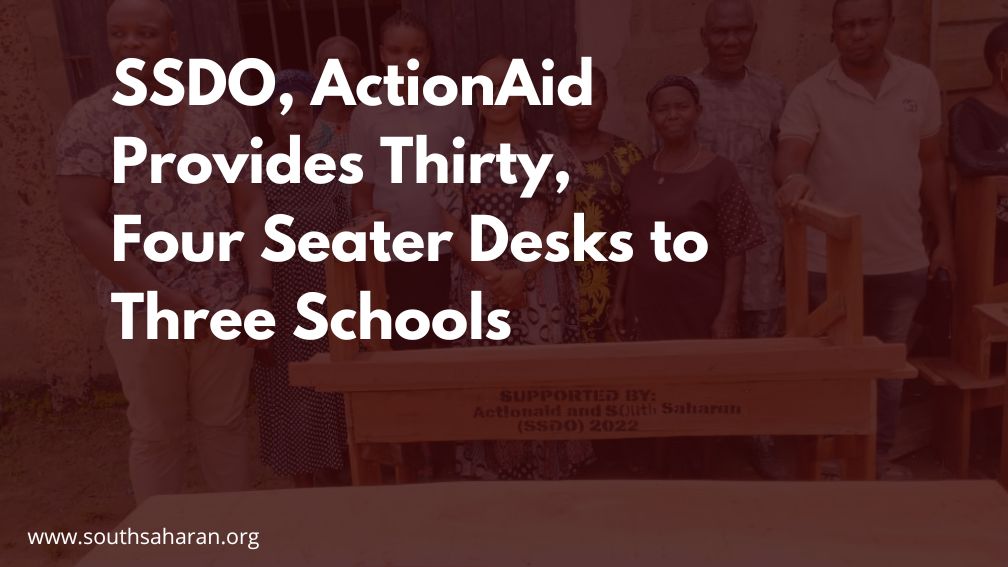
SSDO, ActionAid Provides Thirty Four-Seater Desks to Three Primary School

“Education is the most powerful weapon which you can use to change the world.” – Nelson Mandela

Marginalized communities are often characterized by a higher prevalence of poverty, lack of infrastructure, and low access to healthcare and education, of which the biggest victims are children. This affects their standard of living and quality of life. There has to be a deliberate focus to improve access to health and education for such communities to improve development. 

Often, children in these communities don’t have access to quality educational facilities. Putting them at a disadvantage when compared to their peers in urban areas. The lack of amenities like potable water and functional health centers also impact on their ability to learn and be productive in class.  

Understanding this need, South Saharan Social Development Organization, in partnership with ActionAid Nigeria through the Local Rights Programme, is doing its part to improve education in marginalized communities. The project provided ten 4-seater desks each for Divine Favour Nursery and Primary School Abor Isiala Community in Isi Uzo LGA, Community Primary School, Oduma Achara, Ani-nri LGA and Community primary school Nkume Community, Uzo Uwani LGA.

In a ceremony on the school premises on Friday, 30th of September 2022, the headmistress of Community Primary School expressed her gratitude by thanking the organizations for their effort. “You can see the joy and the way the kids danced. That says it all. We’re grateful to SSDO and ActionAid for this timely intervention.”

Stakeholders present include School Based Management Committee Chairman, Mr. Ovili, LGA Councilor, Mr. Amos Orji, SSDO’s Head of Programs, Udochukwu Egwim, SSDO’s LRP Project Lead, Perpetual Njoku, Parents and Teachers Association (PTA) chairpersons, teachers, and community representative of the schools amongst others. 

SSDO’s Head of programs, Udochukwu Egwim, stated that the importance of education cannot be overemphasized. “We as an organization will do our best to ensure that kids are in school and a lack of facilities would not be a stumbling block to their learning development.”

Through its child sponsorship mechanism, the project aims to reduce poverty by engaging with the poor and marginalized in selected communities.

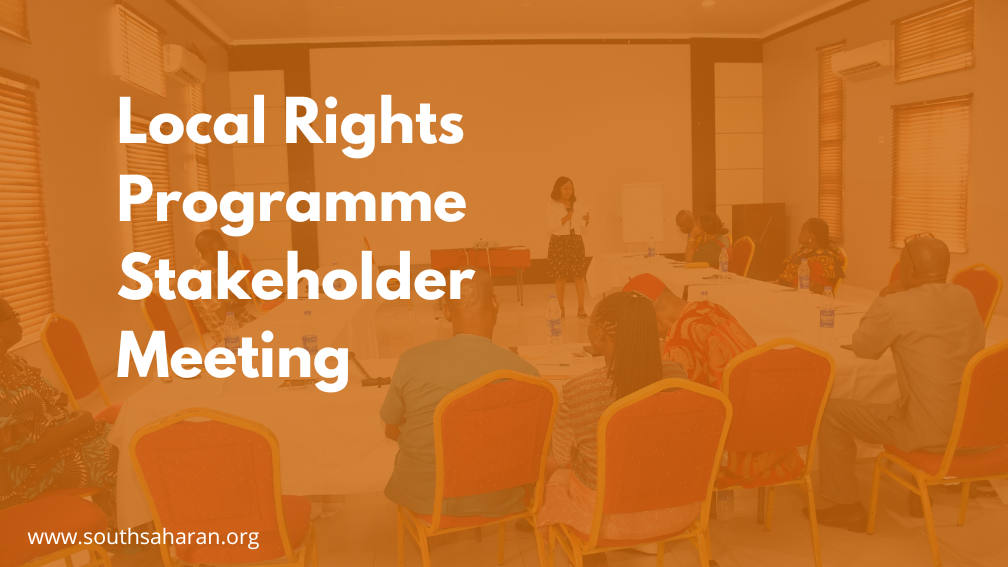
Local Rights Programme Stakeholder Meeting

To ensure a holistic and cross-cutting intervention, beneficiaries and stakeholders must be involved. They should have their say in evaluating the most pressing needs they have.

South Saharan Social Development Organization in partnership with ActionAid Nigeria organized a Local Rights Programme stakeholder meeting with representatives from the communities where the project is being implemented.

The meeting aimed to conduct a community appraisal for the involved communities. A pair-wise ranking system was used to determine the most pressing issues in the communities. This would help inform the approach the project takes in the communities.

Stakeholders present include traditional rulers, president-generals, women leaders, and a representative from the Enugu State Ministry of Rural Development.

A community charter document was also provided to the stakeholders to help guide them in upholding the rights of the local residents.

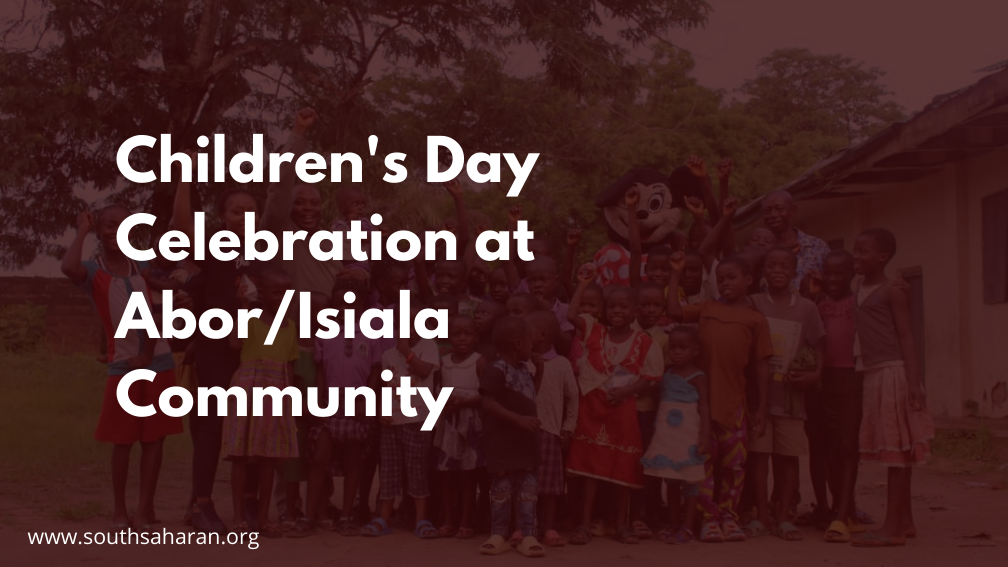
Children’s Day Celebration at Abor/Isiala Community

To celebrate Children’s Day, South Saharan Social Development Organization, SSDO in partnership with ActionAid Nigeria, visited Abor/Isiala community to continue its child message collection activity. There were gift and food items to engage and keep the kids entertained. There was also a session dedicated to teaching the children the importance of hygiene.

The Local Rights Programme is an initiative that aims to reduce poverty by engaging with the poor and marginalized in selected communities through its child sponsorship mechanisms. 

Some of the issues identified in the communities include the poverty, lack of education and poor access to healthcare, which are indicators of a deficient system, of which the biggest victims are children.

Having identified this problem, ActionAid Nigeria has partnered with SSDO to find ways to remediate the situation, particularly in Enugu state, through the implementation of the Local Rights Programme (LRP).

This initiative identifies vulnerable children aged 3 – 8 years and attaches them to sponsors. Selected communities include Oduma Achara in Aninri LGA, Igga and Nkume in Uzo Uwani LGA and Abor/Isiala in Isi Uzo LGA.

So far, since the start of the programme, over 500 children have been identified and the sponsorship mechanism initiated. 

Promoting Women’s Empowerment Through Peer Education

Through years of working on projects at the community level, we realize that women and girls are hugely disadvantaged. They have often been marginalized and segregated to the background on so many fronts in society. Especially politically and economically. We also observe that this marginalization has created a false consciousness in most women. 

Women are now satisfied with the status quo of swallowing their thoughts and ideas when it is clear that their input will make the difference. One of the primary reasons for marginalization is the inequality between men and women in accessing and controlling resources. But even more shocking is that in many communities, women don’t even have control over reproduction. 

The goal is to create an equal society where men and women can speak, and their voices matter. To see a world where women, youth, and children can develop in a politically and socioeconomically correct environment. Where gender equality is prioritized, and women have complete control over their resources and time. 

And as such South Saharan Social Development Organization, SSDO, in partnership with ActionAid Nigeria, seeks to foster women’s empowerment through peer education. This initiative aims to advocate for women’s rights and bridge women’s capacity deficiency at the community level. As well as meet the political, social, and economic needs of women. 

Peer Education Program

A peer education program is a scheme that involves people being taught by facilitators of similar backgrounds. This way, the message is easily absorbed, and the facilitator can communicate clearly on the same wavelength as the participant.

The program was facilitated by Osamudiamen Owens-Akinwale, Advisor Local Rights Programme, ActionAid Nigeria. The training was executed using the Women Peer Education Resource Kit. It covered essential areas such as personal development, health, livelihood and survival, and inclusion. The women were taught the importance of body image, self-esteem, time management, hygiene, skill acquisition, and the dangers of gender-based violence.   

The women’s peer education program was organized in Isiama Community, Oduma Achara, Aninri LGA, Enugu state. The intention is for the training to be cascaded down to other women in the community through the trained representatives. 

Correcting Wrong Notions

“I learned about how to care for the elderly and the importance of child spacing. I also learned that we have the right to stand and contest for election.” – Obodo Victoria. 

Women were better informed of their rights and responsibilities after the training. They were taught valuable life and soft skills to help them be more efficient in their homes and businesses. 

“Before, we believed that if a woman is not circumcised, she would be very promiscuous. I also didn’t see the need for a woman to undergo a cesarean section. But now, I know that female genital mutilation is dangerous to the sexual health of a woman. And that if a woman has labor difficulties that last too long without help, it can be really dangerous.” A woman from Isiama Community.

Importantly, we see that beyond the women learning about their rights, wrong notions which have been held on to for a long time were corrected. Now, the women have the right foundation to build on and groom young girls.