Research shows that over 90 million Nigerians live below the poverty line. A good percentage live in rural and marginalized communities. These communities are characterized by poor access to healthcare and education, lack of infrastructure, and low income levels. This affects their standard of living and quality of life, of which kids are the biggest victims.
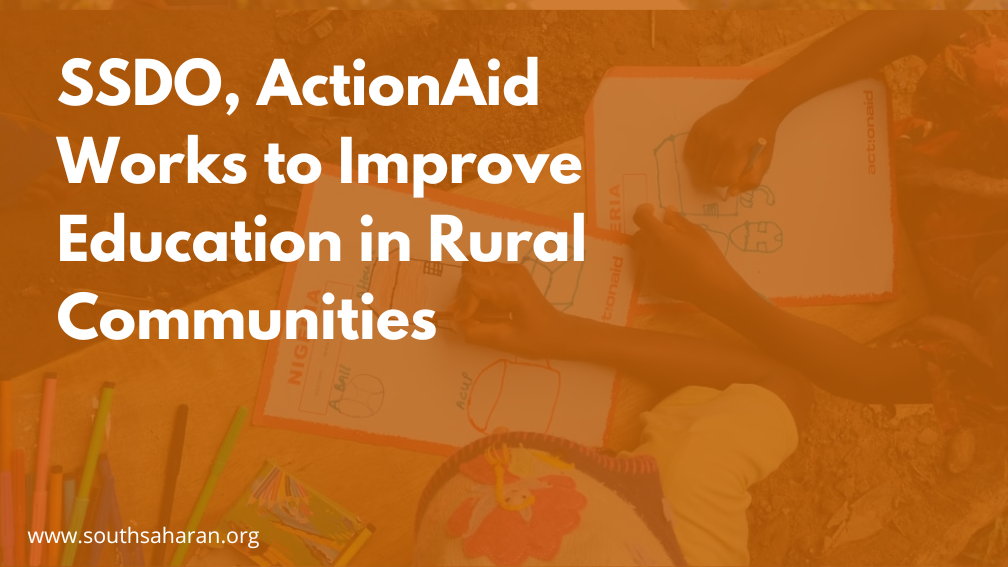
Understanding this reality, South Saharan Social Development Organization, in partnership with ActionAid Nigeria through the Local Rights Programme, is doing its part to improve education in marginalized communities.
The program aims to reduce poverty by increasing its engagement with the poor and marginalized in selected communities through its Child Sponsorship mechanisms. The child sponsorship initiative identifies vulnerable children aged 3 to 8 years and attaches them to sponsors.
Over the past collection period, the team collected over 740 child messages across eight communities. Our motivation is to see the children and the communities at large be all that they can be. This activity allowed the team to keep tabs on the kids and monitor their development process. As well as get feedback from the kids to the sponsors.
Nigeria’s youth make up about 60 percent of the country’s populace. Making it one of the world’s youngest populations. With such a vibrant demographic, you’d expect a thriving economy, innovation, creativity, accelerated human capital development, and long-term stability. But this is not directly the case. And the difference between where we are and where we ought to be as a nation is skills.
Understanding this challenge, South Saharan Social Development Organization, SSDO, in partnership with ActionAid Nigeria, under the Strategic Partnership Agreement Phase II, is playing its part in increasing the participation and skills of young people to thrive in a green economy.
The International Labour Organization (ILO) projected that green transition could create 8.4 million jobs for young individuals by 2030. To seize these opportunities, young people must be equipped with green skills to navigate the changing landscape effectively.
Recognizing the urgent need to address these issues, and in line with our commitment to empowering women and youths, SSDO commemorates International Youth Day 2023, tagged Green Skills for Youth: Towards a Sustainable World with a 1-day symposium.
Participants are now more knowledgeable about green skills and empowered to take action. Sessions covered waste management, recycling, agribusiness, agroecology, renewable energy, and using social media as an advocacy tool for sustainability.
Speakers and panelists at the event include Executive Director of Eco Cycler, Ogechi Nwoye, Special Adviser to the Enugu State Government on Agriculture, Hon. Mike Ogbuekwe, Director, Enugu State Ministry of Agriculture, Dr. Celestine Aga, Convener of Vibrant Generation Leadership Initiative, Wilfred Okeke, and Director of Cupid Motions, Daniel Okechukwu.
Gender-Based Violence (GBV) remains a significant issue in our society, especially in rural communities causing immense harm and violating the fundamental rights of individuals, particularly women and girls.
Women often cower in fear as their source of livelihood is tied to their abusive partners. Addressing GBV requires collaborative efforts from government agencies, community stakeholders, and civil society organizations.
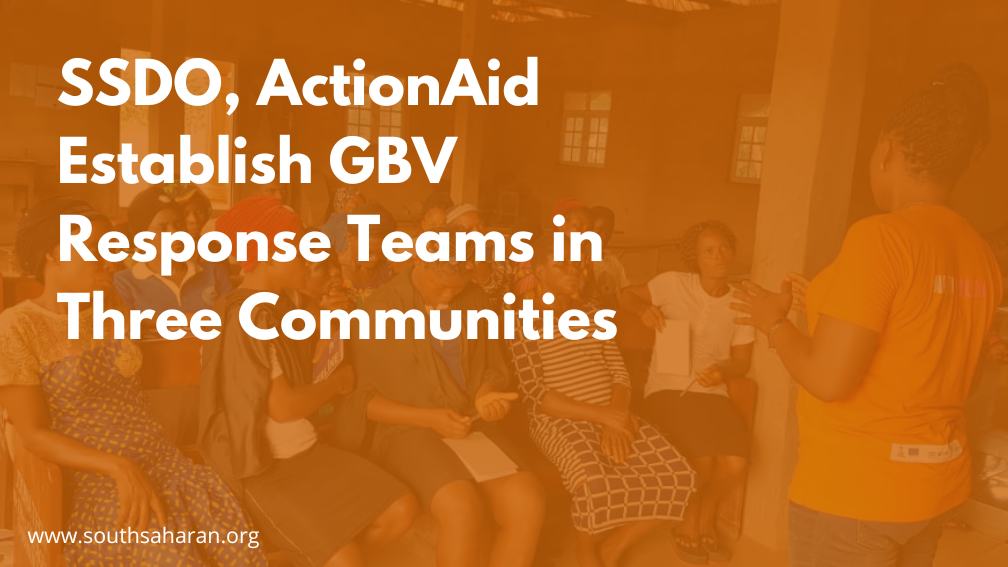
Understanding this challenge, South Saharan Social Development Organization, in partnership with ActionAid Nigeria, under the Local Rights Programme in Enugu State, established a GBV response team in three communities: Ihenyi and Orokoro communities in Isi-Uzo LGA and Igga community in Uzo Uwani LGA.
This committee of women, market leaders, and youth representatives will help raise awareness, prevent and quickly respond to GBV cases. As part of these efforts, an advocacy visit was conducted to community stakeholders in the three communities to get their buy-in.
The impact of climate change has never been more evident, especially on agriculture in Nigeria. Erratic rainfall, flooding of farmlands, rising temperature, and soil degradation reduce farmers’ output and increase food insecurity. However, Agroecology has been recognized as an essential solution to Nigeria’s food security and sustainability challenges. It offers numerous advantages in addressing environmental degradation and population growth.
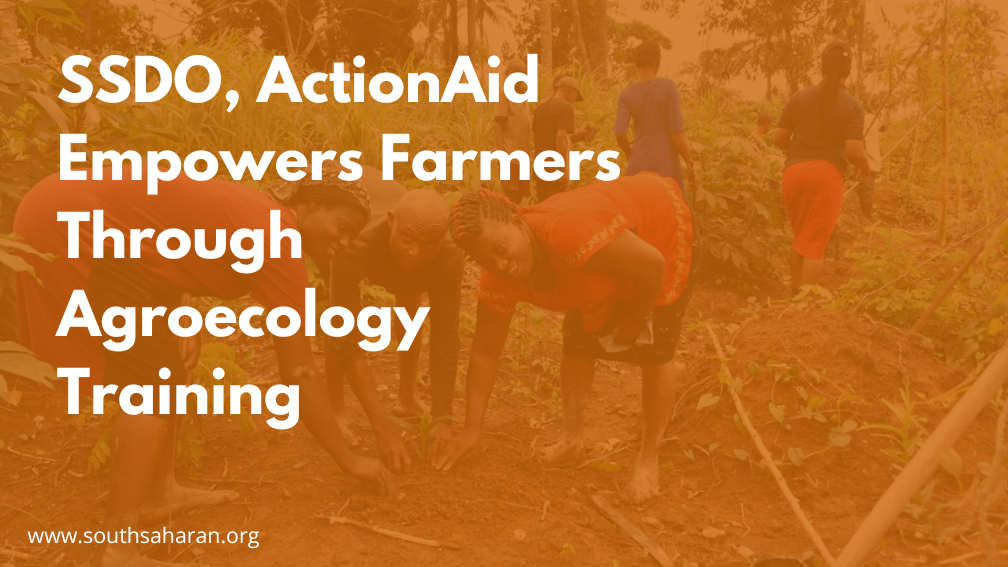
Understanding this challenge, South Saharan Social Development Organization, in partnership with ActionAid Nigeria, organized a 3-day Agroecology training and established model farms under the Strategic Partnership Agreement Programme in three communities in Enugu state: Oduma Achara in Aninri LGA, Ihenyi in Isi Uzo LGA, and Umuogili in Igbo Eze North LGA.
The Strategic Partnership Agreement (SPA II), a groundbreaking four-year initiative funded by the Danish International Development Agency (DANIDA), is making significant strides in promoting basic human rights, democratic values, and sustainable livelihoods for young individuals, particularly marginalized young women, within disaster-prone and protracted crisis areas in Nigeria.
By preserving soil health, reducing erosion, and minimizing reliance on synthetic inputs, this holistic approach promotes sustainable agriculture. The integration of agroecology practices enhances food security by increasing productivity and profitability, while simultaneously reducing the dependence on costly external resources. Additionally, it elevates rural livelihoods by bolstering incomes, improving living standards, stimulating economic growth, and alleviating poverty.
The training conducted enabled farmers to embrace sustainable practices, decrease reliance on harmful inputs, augment yields, and ultimately improve their incomes. This, in turn, paves the way for enhanced food security, improved rural livelihoods, and a more sustainable future for farming in the community.
The training was facilitated by Mr. Theophilus Ivoh and Dr. Agah Celestine from the Ministry of Agriculture, and It covered topics such as soil conservation, sustainable water management, reduction in the use of agrochemicals and composting, pest control, multiple cropping, rotation, and intercropping.
In a truly participatory approach, the community donated four plots of land and received 207 improved palm seedling for their model and personal farms. This would help improve the socioeconomic status of the households and communities. It will also help communities become more resilient to climate change through afforestation and improved seedlings.
The participants expressed their heartfelt gratitude to ActionAid Nigeria and SSDO for their commendable efforts in implementing this transformative project. They recognized the immense value of the training received and acknowledged the positive impact it will have on their farming practices and overall livelihoods.
The success of the agroecology workshop signifies a significant step forward in achieving the goals outlined in the Strategic Partnership Agreement (SPA II). As ActionAid Nigeria and SSDO continue to collaborate and empower marginalized communities, it is expected that their unwavering commitment to sustainable agriculture and livelihood improvement will yield lasting positive change for Nigeria’s farming sector and its resilient farmers.
Through years of working on projects at the community level, we realize that women and girls are hugely disadvantaged. They have often been marginalized and segregated to the background on so many fronts in society. One of the primary reasons for marginalization is the inequality between men and women in accessing and controlling resources.
Understanding this, South Saharan Social Development Organization, in partnership with ActionAid Nigeria, organized a women’s peer education training in Igga community, Uzo Uwani LGA. The program seeks to foster women’s empowerment through peer education. This initiative aims to advocate for women’s rights and bridge women’s capacity deficiency at the community level.
The three-day training was facilitated by the project lead, Priye West, and SSDO’s Gender Officer, Blessing Uchendu. The training was executed using the Women Peer Education Resource Kit.
During the training sessions, the women expressed how low self-esteem had previously affected their engagement in community activities. They also discussed issues that impacted their emotional well-being within their marriages, such as husbands using harsh words and taking their earnings. They were taught by the team how to identify opportunities provided by the government and how to position themselves to be beneficiaries.
Education and skill acquisition were discussed, with many young girls expressing concerns about their parents’ reluctance to send them to school, leading to early marriages within the community. This issue was recognized as critical and in need of addressing during advocacy meetings.
The concept of managing post-harvest losses was explained, although many participants lacked the necessary capital to expand their businesses. Climate change issues were addressed, focusing on harmful environmental practices that needed to be rectified. The participants were encouraged to promote inclusivity and support disabled individuals in the community, despite their community having few disabled persons.
The training also covered essential areas such as personal development, health, livelihood and survival, and inclusion. The women were taught the importance of body image, self-esteem, time management, hygiene, skill acquisition, and the dangers of gender-based violence. After the training, the group elected a President.