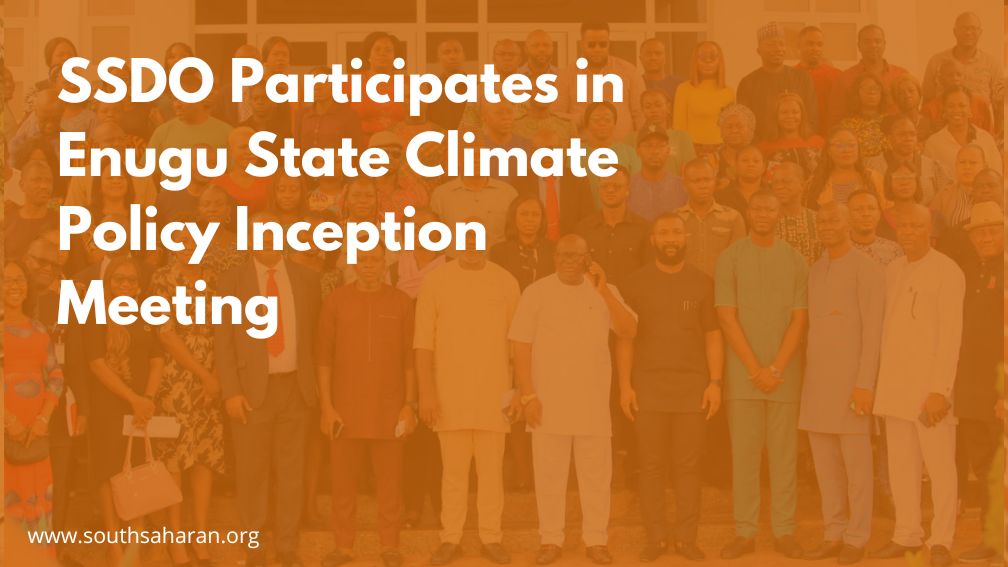
Last week Thursday, South Saharan Social Development Organization participated in the Inception Meeting and Stakeholders Engagement for Enugu State Climate Policy and Action Plan.
The meeting was an avenue for key stakeholders from government agencies, businesses, civil societies, and youth groups to discuss the domestication of the National climate strategies at the state level.
The goal is to develop a scientific-based climate policy and action plan that will help the state in transforming towards a green economy.
This collaborative effort would ensure that women, children, and people living with disability who are disproportionately affected by the action of climate change will be prioritized through mitigation and adaptation measures.
SSDO’s youth accountability group, Community Accountability Committee, represented by Uchechukwu Godswill, participated in the meeting as one of the invited youth groups representing the community, where they highlighted climate change challenges from the rural community’s perspective.
Across the globe, there’s a growing recognition of the vital role sustainable agriculture plays in tackling key issues like food security, climate change, and rural development. This emphasis is especially pertinent in Africa, where agriculture is the backbone of many livelihoods. With its abundant agricultural potential, Nigeria grapples with challenges such as low productivity, the adverse effects of climate change, and limited financial access for smallholder farmers.
Research shows that agriculture contributes about 25 percent to Nigeria’s GDP and employs nearly 70 percent of the country’s population. However, farmers still struggle with low productivity, the adverse effects of climate change, and limited financial access for smallholder farmers. This isn’t any different in Enugu state as farmers are plagued by limited resources and access to financial services, making it even more challenging for farmers to adopt sustainable farming practices.
The challenge of limited access to finance presents a significant obstacle for smallholder farmers aiming to adopt and maintain agroecological practices. The Central Bank of Nigeria reports that 36% of Nigeria’s adult population has access to formal financial services. This financial exclusion significantly limits farmers’ ability to invest in quality inputs, sustainable technologies, and essential equipment needed for agroecology.
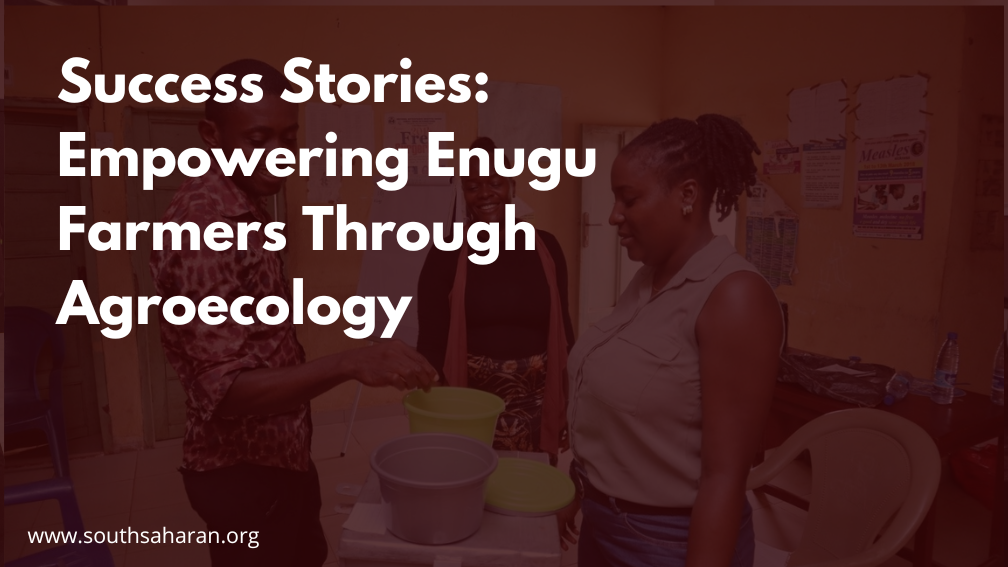
South Saharan Social Development Organization with support from ActionAid realizing this gap, established Village Savings and Loans Association, VSLA, in its three project communities: Umuogili, Oduma Achara, and Ihenyi to support young farmers. VSLA empowers farmers by offering a structured platform for savings, borrowing, and investment within their community.
Mrs. Lucy Odo, the Chairperson for Ihenyi VSLA group shared, “I am grateful to SSDO and ActionAid for this initiative. Getting loans from the bank is a long process for us, especially considering the distance. But with VSLA, I can access loans to start a poultry business.”
The groups have successfully drafted their constitution, ensuring structured and efficient operations. This includes membership criteria, savings and loan procedures, interest rates, repayment schedules, and conflict resolution mechanisms has also been clarified. The associations have collectively saved N375,000 since their inception and six people have accessed loans, a testament to their functionality and effectiveness in mobilizing local financial resources for agri-business.
“I have been wanting to expand my farm and cultivate more land to include new crops but funds have been a limiting factor. Now, I will be able to grow my business and increase my annual income.” Meschach Ayogu from Umuogili community shared.
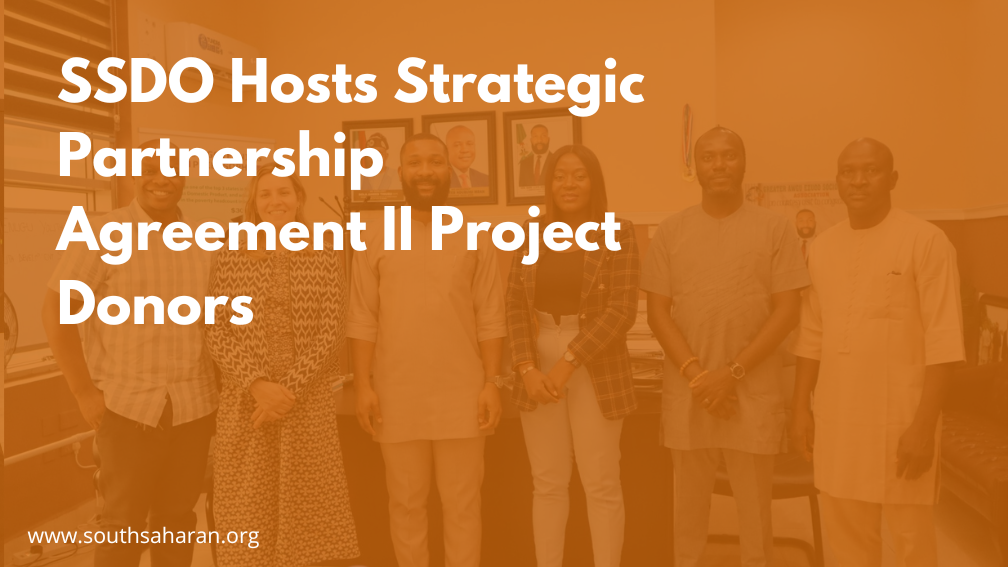
Over two impactful days, the South Saharan Social Development Organization (SSDO) welcomed its esteemed donors from ActionAid Nigeria and Mellemfolkeligt Samvirke / ActionAid Denmark. The visit was a significant opportunity to discuss our ongoing efforts around youth empowerment, climate change, and good governance, and to review the progress of the Strategic Partnership Agreement II (SPA II) project.
Day 1: Discussions on Youth, Climate Change, and Good Governance
On the first day, our donors were warmly received, marking the beginning of insightful discussions about our work and the broader context in which we operate.
The conversations centered on youth engagement, climate change initiatives, and the promotion of good governance. This initial meeting was crucial for aligning our objectives and ensuring that our efforts are impactful and sustainable.
Day 2: Empowering Youths and Strengthening Collaborations
The second day was equally dynamic and enriching. Our donors engaged directly with youths from various project communities. These young individuals enthusiastically shared how the SPA II project has expanded their perspectives and empowered them to take decisive actions in areas such as budget tracking, project monitoring, advocacy, and climate change initiatives.
This interaction highlighted the tangible benefits of the project and provided a platform to share learnings and identify areas for enhanced program effectiveness.
In addition to engaging with the youth, the team also had the opportunity to meet with key government officials. Visits to the Commissioner for Youth and Sports, Barr. Lloyd Ike Ekweremadu Jr., and the Commissioner for Environment, Professor Sam Ugwu, allowed for in-depth discussions about their work and policies that can benefit youth and bolster climate change responses in Enugu State.
These meetings were instrumental in fostering improved collaboration and exploring ways to leverage favorable policies for greater impact.
Moving Forward
The two-day visit was a testament to the strong partnership between SSDO, ActionAid Nigeria, and ActionAid Denmark. It underscored our shared commitment to empowering youth, addressing climate change, and promoting good governance. The insights gained and connections strengthened during these days will undoubtedly contribute to the continued success and effectiveness of the SPA II project.
We extend our heartfelt thanks to our donors for their unwavering support and dedication. Together, we are making significant strides towards a more empowered and sustainable future for the youth and communities we serve.
Plastic waste is a growing global concern, with millions of tons of plastic ending up in landfills, oceans, and the environment annually, with an estimated 300 million tons of plastic produced annually, half of which is designed for single use.
In Nigeria, 32 million tons of waste are generated annually, of which 2.5 million tons are plastic. In Enugu State, plastic waste is a significant contributor to environmental pollution, clogging waterways, and posing health risks to communities.
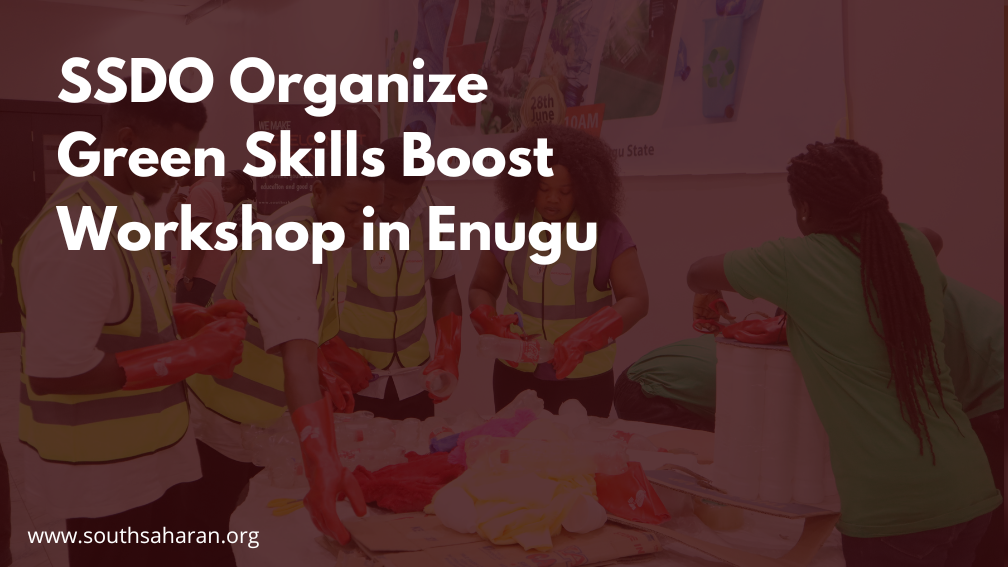
Understanding this challenge and the need to remediate it, South Saharan Social development Organization in partnership with ActionAid Nigeria organized a Green Skills Boost Workshop and Internship program. The initiative aims to address the dual challenge of youth unemployment and environmental degradation.
The training equipped youths with relevant knowledge on how to venture into the plastic recycling and upcycling sector. Youths were enlightened on the entire plastics waste-to-wealth value chain and how best to identify where they fit in.
By training youth in the plastics/rubber recycling and upcycling value chain, the program not only provides them with viable economic opportunities but also contributes to the reduction of plastic waste in Enugu state.
The workshop was facilitated by Ogechi Nwonye-Bernard, a plastic waste-to-wealth practitioner, and founder of Ecocyclers, Mr. Nnamdi Arum, Director of Climate Change, Ministry of Environment, and Udochukwu Egwim, SSDO Head of Programs.
Participants were engaged using a combination of lectures, practical and interactive sessions, and DIY method. To guarantee the sustainability and impact of the initiative, participants will be placed on a one-month internship program with recycling and upcycling companies in Enugu state.
Climate change, driven by greenhouse gas emissions from human activities, is a global crisis manifesting in rising temperatures, altered precipitation patterns, severe weather events, and sea level rise. These changes pose significant risks to ecosystems, human health, food security, water resources, and economic stability.
In Nigeria, the impacts of climate change are evident in desertification, land degradation, increased flooding, and reduced agricultural productivity. Enugu State faces challenges such as disrupted agricultural activities, soil erosion, land degradation, and an increased prevalence of waterborne diseases due to altered rainfall patterns and rising temperatures.
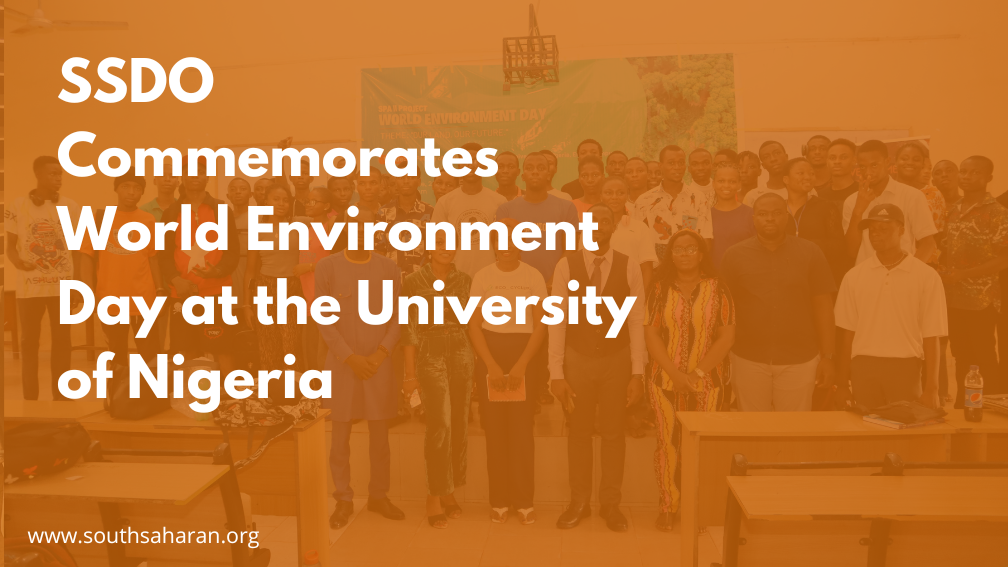
South Saharan Social Development Organization with support from ActionAid understanding this challenge took the initiative to implement a one-day sensitization outreach and climate policy dialogue session at the Faculty of Environmental Studies, University of Nigeria, Enugu Campus. The aim of the event was to enhance environmental sustainability, raise awareness, and encourage proactive environmental stewardship among students. This is crucial for promoting sustainable development and building resilience against the adverse impacts of climate change.
Participants were enlightened on how to protect the environment in their own way. They were educated on practical steps that would protect the environment such as recycling, tree planting, and animal breeding as a way to improve biological conservation of endangered species.
Okoh Happiness, a part 2 student shared, “Before now, I never thought I had a part to play in improving or supporting the environment. I always thought it was the government’s responsibility. But now, I see how I can improve environmental sustainability and biodiversity by breeding grasscutters rather than focusing on consumption.”
Okweye Blessed, a final year student shared, “I have been enlightened to how much impact planting trees have on our environment. Rather than looking for walls or boards to sign my name on, I could invest by planting a tree.”
Grace Okeke a third-year student shared, “I didn’t know plastics had so much impact on the environment. After the session, I realized that beyond even cleaning the environment, I could make money by the side doing it. I am grateful to SSDO and ActionAid for the training.
Because of SSDO and ActionAid’s intervention, more students participated in the dialogue session which provided more insights and recommendations from a youth perspective for the ongoing Enugu State Climate Change Policy. There’s also an increased involvement of students in environmental initiatives and activities on campus and in the wider community.
Ikechukwu Favour, the faculty president was excited about the impact of the initiative. “Because of the SPA II programme by ActionAid, we are proud we will be turning out more enlightened and empowered youths. They won’t just be looking for employment but are positioned to be employers of labor themselves.”
The students asked questions, got clarifications, and proffered solutions based on how climate issues affect them.