
SPA II
SSDO Organize Green Skills Boost Workshop
Plastic waste is a growing global concern, with millions of tons of plastic ending up in landfills, oceans, and the environment annually, with an estimated


Plastic waste is a growing global concern, with millions of tons of plastic ending up in landfills, oceans, and the environment annually, with an estimated

Gender-based violence (GBV) remains a pervasive issue in Nigeria, affecting countless women and girls across the country. Despite ongoing efforts to combat this scourge, many

Did you know that over 37 million women and girls of reproductive age in Nigeria lack access to menstrual hygiene products due to a lack
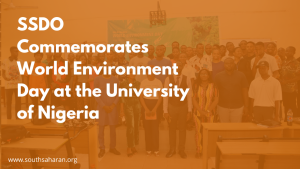
Climate change, driven by greenhouse gas emissions from human activities, is a global crisis manifesting in rising temperatures, altered precipitation patterns, severe weather events, and
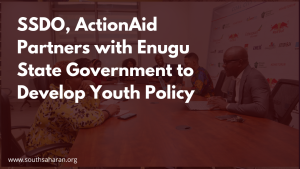
Research shows that about 60% of Enugu state population is under 30 with 23% specifically aged 15 to 29. This burgeoning demographic presents an opportunity
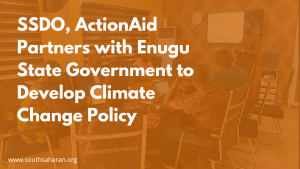
Climate change, driven by increased greenhouse gas emissions from human activities such as burning fossil fuels, deforestation, and industrial processes, is one of the most

On the 29th of May, 2024, the President of the Federal Republic of Nigeria, Bola Tinubu, passed the National Anthem Bill, a proposition to revert
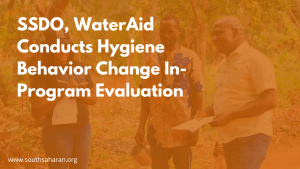
South Saharan Social Development Organization in partnership with WaterAid Nigeria conducted an in-program evaluation of the hygiene behavior change campaign to assess the progress, challenges,

We understand that poverty lies at the heart of unreported cases of Gender-based violence (GBV). Most women are often afraid they will lose their economic

We understand that poverty lies at the heart of unreported cases of Gender-based violence (GBV). Most women are often afraid they will lose their economic
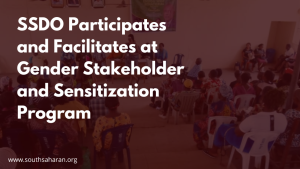
South Saharan Social Development Organization participated in a stakeholder meeting and sensitization visit organized by The Ministry of Gender Affairs and Social Development Enugu for
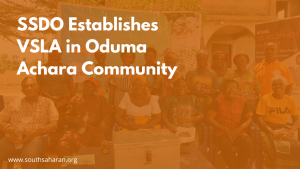
Research shows that agriculture contributes about 25 percent to Nigeria’s GDP and employs nearly 70 percent of the country’s population. However, farmers still struggle with