South Saharan Social Development Organization (SSDO) in partnership with Caritas Nigeria, CCFN, provided 30 desks each for Community Primary Schools in Ozalla and Umueze in Nkanu West LGA. The provision is part of a block grant in the Orphaned and Vulnerable Children (OVC) Program that will see 150 children benefit from the intervention.
In a ceremony in the school premises on Wednesday, 23rd of September 2022, the headteacher of Community Primary School Umueze expressed her gratitude by thanking the organizations for their effort. “We appreciate SSDO and CARITAS for this work. As we start the new academic session, the classrooms will be more conducive for the teachers and students alike.”
Stakeholders present include CCFN OVC Program Officer, Wisdom Uso, SSDO’s Head of Programs, Udochukwu Egwim, SSDO’s OVC Program Manager, Obinna Anyanwu, Parents and Teachers Association (PTA) chairpersons, teachers, and community representative of the schools amongst others.
The project aims to improve access to education for indigent and vulnerable children, which will also reduce the risk of violence and abuse. Also, ensuring that they are enrolled and remain in school.
A successful project requires applying skills, processes, methods, and experience to achieve the project’s objectives and goals. Thus, ensuring that the final deliverables are achieved. Throughout the project life cycle, there’s a need for constant monitoring and evaluation of determined milestones.
The case isn’t different for the 4GATES Orphaned and Vulnerable Children’s (OVC) Project. Federal Ministry of Women Affairs Heaquaters, Abuja. Enugu State Ministry of Gender Affairs and Social Development and Caritas Nigeria conducted a joint national assessment. The assessment was to determine progress made on the project, gather feedback for the various government agencies, and use the findings to shape the ministry’s effort toward women and children.
The assessment was an avenue to review the progress made on the OVC project in the year under review.
– Over 5,000 children have been registered and provided with food, emergency health, and transport support.
– 70 beneficiaries have received Income Generating Activity support.
– 13 beneficiaries received cash transfers.
– 24 adolescents have been enrolled for vocational training.
– 110 children enrolled in school.
Households of beneficiaries and facilities were also visited during the assessment.
Beyond health, we understand that all other facets of the beneficiary’s life matter in attaining wholeness. And as such, we do not just focus on their health but also their economic stability.
One way we cater to the needs of beneficiaries is through vocational training. Beneficiaries of the project are enrolled in training programs where participants learn vocational skills and become self-employed.
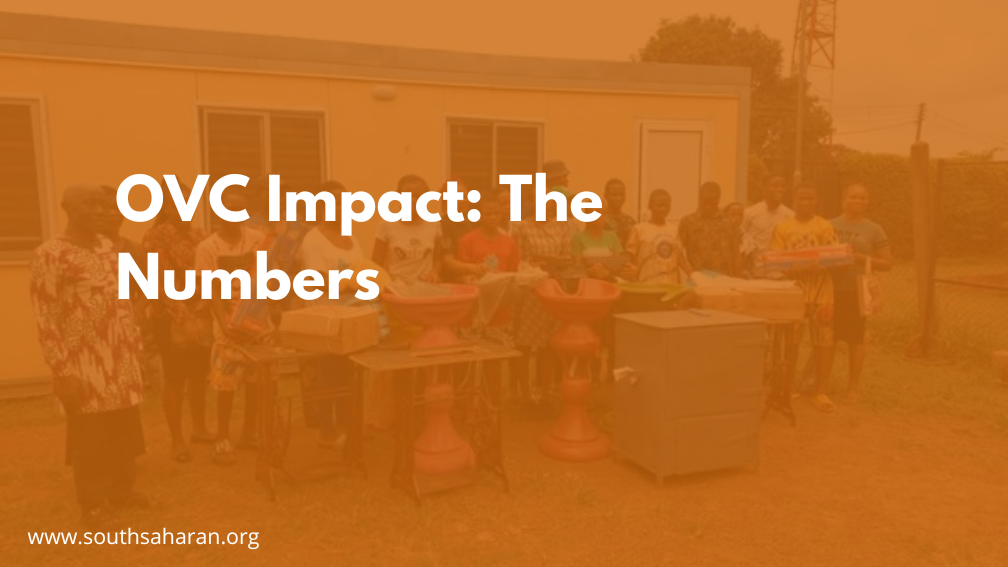
South Saharan Social Development Organization (SSDO), in partnership with Caritas Nigeria through the 4GATES Orphaned and Vulnerable Children (OVC) Project, is providing support to beneficiaries to enroll in vocational training. After the training, beneficiaries are provided with start-up kits to help get them on their journey to financial independence.
Enugu State OVC Technical Specialist, Mr. Edward Ugba, CCFN OVC Program Officer, Mrs. Wisdom Uso, CCFN HES OFFICER, Mrs. Chisom Iyidiobi, SSDO’s OVC Program Officer Obinna Anyanwu were on hand to facilitate the start-up kits presentation ceremony.
The names were changed to conceal the identity of the beneficiaries.
“I am tired. There is no one else I can go to. I don’t have any money. Where would I take her?”
Mrs. Ugobi blurted out after being told by the hospital she needed to cuff up more money for her granddaughter’s treatment. The elderly woman barely scraped her purse to gather the last ₦2,500 requested to buy drugs for Adaugo.
Adaugo is a 12-year-old child who lives in Enugu state. She is HIV positive. She was infected at birth (mother-to-child transmission) and this has totally altered her life.
Adaugo lost her parents to AIDS a few years after she was born. Ever since she has been living with her grandma, Mrs. Ugobi, alongside her cousins. Adaugo and her grandmother live hand-to-mouth. The elderly woman sells vegetables at a popular market in town to make ends meet. They can barely guarantee their next meal without going out to trade.
For a child of twelve, Adaugo was severely malnourished. It was clear her immune system was failing. The family could barely feed, and enrolling her in a hospital was out of the question. Until Adaugo started coughing.
It started mildly, but in a matter of days, it became severe, increasing in frequency. She coughed uncontrollably and bled when she did. She had difficulties breathing and could barely stand. Adaugo was struggling for life.
Mrs. Ugobi had to seek help or risk losing her granddaughter. She went to a nearby hospital where she was referred to Enugu State Teaching Hospital for Tuberculosis screening.
“I spent all I had, and it was barely enough. They asked me to get more drugs and my child wasn’t getting any better. I couldn’t handle seeing her in so much pain, it broke me down.”
Seeing how helpless she was, the facility referred Mrs. Ugobi to the Orphaned and Vulnerable Children (OVC) Project. The OVC project is a global action toward HIV epidemic control in sub-national units in Nigeria. It is an HIV care, prevention, and treatment program that identifies beneficiaries, link them to care and helps achieve viral load suppression. South Saharan Social Development Organization (SSDO) in partnership with the Catholic Caritas Foundation of Nigeria (CCFN) is the implementing partner.
The OVC project took responsibility for her care and facilitated her TB screening process. The results came out positive, and she was immediately linked to care in the state TB treatment program. She has begun TB medication and continued her HIV treatment. The organization also provided emergency food and health support to the family.
Research shows that poverty is inversely correlated with drug adherence. Part of the project’s objective is to help people like Adaugo by providing social and economic support. Families like Adaugo’s wouldn’t have been able to meet the financial demands of treating HIV and tuberculosis without the OVC program. Her journey to viral load suppression and TB treatment completion would have been stunted.
We can gladly report to you that Adaugo is doing much better and responding to treatment. Mrs. Ugobi’s joy knew no bounds and profusely thanked the team for the support.
“Only God can repay you. I don’t know what I would have done if you didn’t enroll her in the OVC project. It is because of you I didn’t lose my daughter.”
The hospital also screened other members of the family who have been in proximity to Adaugo for tuberculosis. Three returned positive and have been linked to treatment.
The 4GATES Orphaned and Vulnerable Children (OVC) project is a global action toward HIV epidemic control in sub-national units in Nigeria. It is a five-year comprehensive HIV care, treatment, and prevention program funded by the Center for Disease Control. With a mandate to work with non-profit organizations and healthcare facilities.
Enugu was one of the red states identified during the assessment and as such, the project is being currently implemented in the state. South Saharan Social Development Organization(SSDO) is an implementing partner alongside the Catholic Caritas Federation of Nigeria (CCFN). So far, the project has been able to reach over 10,000 beneficiaries. Linking them to treatment and monitoring their progress to attain viral load suppression.
Of all the positive beneficiaries enrolled, 96 percent have been able to attain viral load suppression. Reducing the amount of HIV in the blood to a very low level. This makes it possible for the immune system to function and reduces the risk of illnesses. But importantly, it also keeps the risk of transmission at a low.
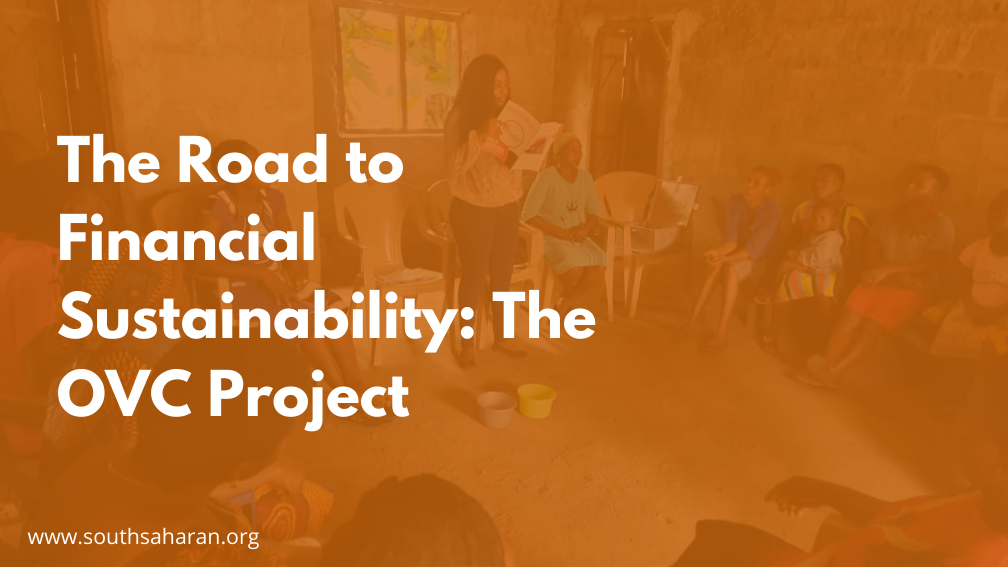
Through the project, SSDO has been able to support beneficiaries with cash transfers and other forms of support. Beyond health, we understand that other facets of the beneficiary’s life matter in attaining wholeness. For us, the goal is not just to see them attain health stability but also financial and psychosocial stability. Here’s how we’re empowering beneficiaries to be financially stable and economically viable citizens.
Income Generating Activities
IGA is a business model that offers beneficiaries the capital and support to improve their household income through livelihood diversification. We provide beneficiaries with financial support to startup small businesses. The goal of IGA is to ensure the financial sustainability of households. Some of the businesses include petty trading, chemical production, and agricultural byproduct sales.
We currently have 67 beneficiaries of IGA in the OVC project. They have been able to provide for their families and built a sustainable source of income. Another such initiative is cash transfer.
Cash Transfer
A cash transfer is a direct payment of money to a beneficiary who is in dire need. It could be temporary assistance for needy families, social security, or workers’ compensation. But in this case, it is made available to beneficiaries who have an urgent need for cash. Often, the beneficiaries are incapacitated or unable to run a business due to health or age factors. So far over 40 beneficiaries have benefitted from cash transfers.
Adolescent Vocational Training
Understanding that financial sustainability is a long-term endeavor, we focus on empowering adolescent beneficiaries with valuable life skills that can help them learn. Rather than wasting time after their secondary school before taking the tertiary entrance examinations, adolescents are enrolled to acquire skills. And for those who are unable to continue with tertiary education, it becomes a valuable path to economic sustainability.
To guarantee consistency and dedication, adolescents are allowed to choose skills of their choice from a wide range of options. They include welding, fashion designing, carpentry, plumbing among others. The training fees and startup kits are usually provided for beneficiaries. There are currently about 20 beneficiaries of this initiative.