SSDO

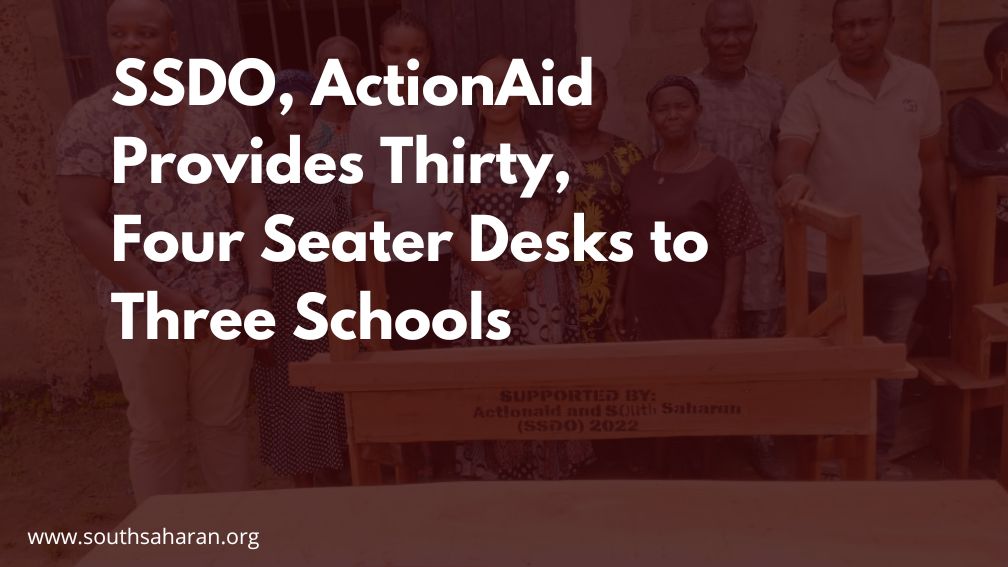
SSDO, ActionAid Provides Thirty Four-Seater Desks to Three Primary School

“Education is the most powerful weapon which you can use to change the world.” – Nelson Mandela

Marginalized communities are often characterized by a higher prevalence of poverty, lack of infrastructure, and low access to healthcare and education, of which the biggest victims are children. This affects their standard of living and quality of life. There has to be a deliberate focus to improve access to health and education for such communities to improve development. 

Often, children in these communities don’t have access to quality educational facilities. Putting them at a disadvantage when compared to their peers in urban areas. The lack of amenities like potable water and functional health centers also impact on their ability to learn and be productive in class.  

Understanding this need, South Saharan Social Development Organization, in partnership with ActionAid Nigeria through the Local Rights Programme, is doing its part to improve education in marginalized communities. The project provided ten 4-seater desks each for Divine Favour Nursery and Primary School Abor Isiala Community in Isi Uzo LGA, Community Primary School, Oduma Achara, Ani-nri LGA and Community primary school Nkume Community, Uzo Uwani LGA.

In a ceremony on the school premises on Friday, 30th of September 2022, the headmistress of Community Primary School expressed her gratitude by thanking the organizations for their effort. “You can see the joy and the way the kids danced. That says it all. We’re grateful to SSDO and ActionAid for this timely intervention.”

Stakeholders present include School Based Management Committee Chairman, Mr. Ovili, LGA Councilor, Mr. Amos Orji, SSDO’s Head of Programs, Udochukwu Egwim, SSDO’s LRP Project Lead, Perpetual Njoku, Parents and Teachers Association (PTA) chairpersons, teachers, and community representative of the schools amongst others. 

SSDO’s Head of programs, Udochukwu Egwim, stated that the importance of education cannot be overemphasized. “We as an organization will do our best to ensure that kids are in school and a lack of facilities would not be a stumbling block to their learning development.”

Through its child sponsorship mechanism, the project aims to reduce poverty by engaging with the poor and marginalized in selected communities.
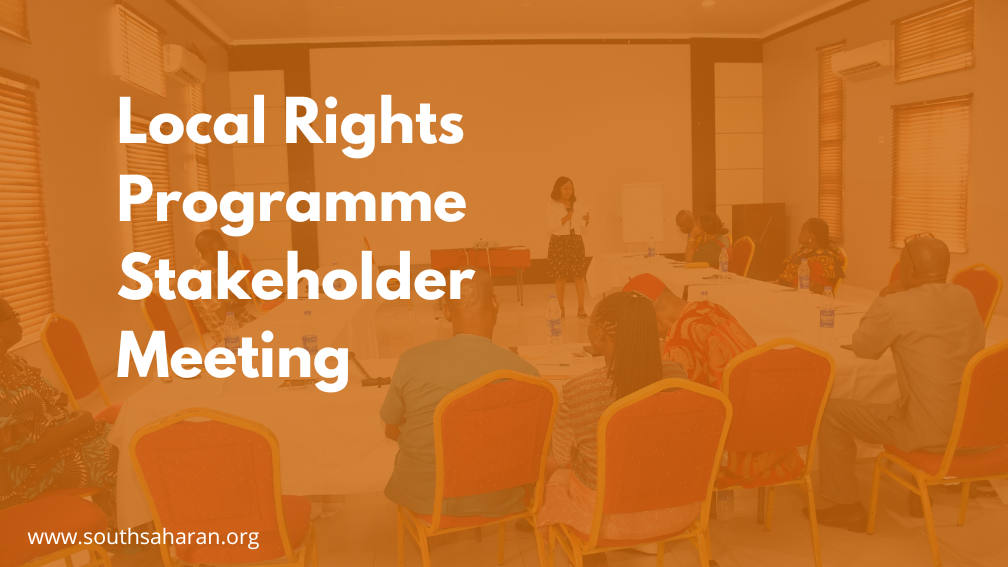
Local Rights Programme Stakeholder Meeting

To ensure a holistic and cross-cutting intervention, beneficiaries and stakeholders must be involved. They should have their say in evaluating the most pressing needs they have.

South Saharan Social Development Organization in partnership with ActionAid Nigeria organized a Local Rights Programme stakeholder meeting with representatives from the communities where the project is being implemented.

The meeting aimed to conduct a community appraisal for the involved communities. A pair-wise ranking system was used to determine the most pressing issues in the communities. This would help inform the approach the project takes in the communities.

Stakeholders present include traditional rulers, president-generals, women leaders, and a representative from the Enugu State Ministry of Rural Development.

A community charter document was also provided to the stakeholders to help guide them in upholding the rights of the local residents.

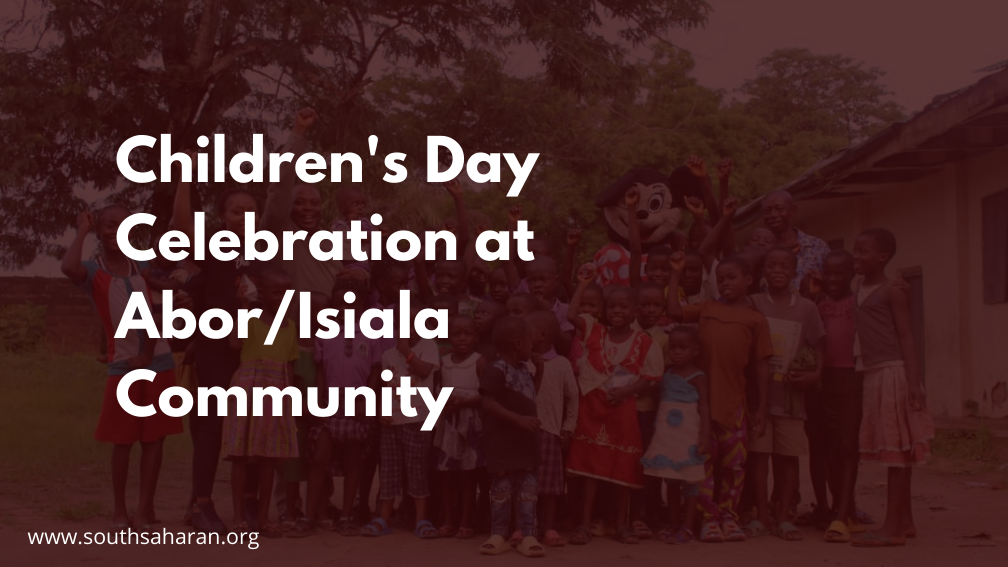
Children’s Day Celebration at Abor/Isiala Community

To celebrate Children’s Day, South Saharan Social Development Organization, SSDO in partnership with ActionAid Nigeria, visited Abor/Isiala community to continue its child message collection activity. There were gift and food items to engage and keep the kids entertained. There was also a session dedicated to teaching the children the importance of hygiene.

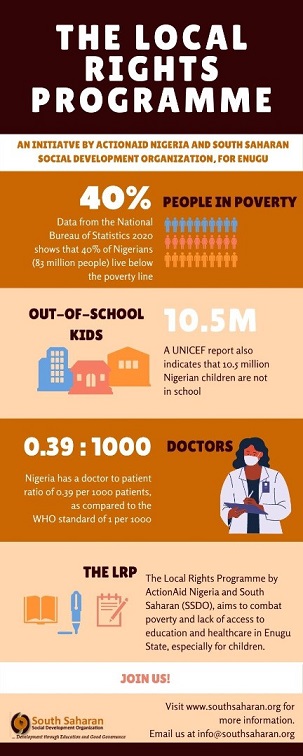
The Local Rights Programme is an initiative that aims to reduce poverty by engaging with the poor and marginalized in selected communities through its child sponsorship mechanisms. 

Some of the issues identified in the communities include the poverty, lack of education and poor access to healthcare, which are indicators of a deficient system, of which the biggest victims are children.

Having identified this problem, ActionAid Nigeria has partnered with SSDO to find ways to remediate the situation, particularly in Enugu state, through the implementation of the Local Rights Programme (LRP).

This initiative identifies vulnerable children aged 3 – 8 years and attaches them to sponsors. Selected communities include Oduma Achara in Aninri LGA, Igga and Nkume in Uzo Uwani LGA and Abor/Isiala in Isi Uzo LGA.

So far, since the start of the programme, over 500 children have been identified and the sponsorship mechanism initiated. 

Promoting Women’s Empowerment Through Peer Education

Through years of working on projects at the community level, we realize that women and girls are hugely disadvantaged. They have often been marginalized and segregated to the background on so many fronts in society. Especially politically and economically. We also observe that this marginalization has created a false consciousness in most women. 

Women are now satisfied with the status quo of swallowing their thoughts and ideas when it is clear that their input will make the difference. One of the primary reasons for marginalization is the inequality between men and women in accessing and controlling resources. But even more shocking is that in many communities, women don’t even have control over reproduction. 

The goal is to create an equal society where men and women can speak, and their voices matter. To see a world where women, youth, and children can develop in a politically and socioeconomically correct environment. Where gender equality is prioritized, and women have complete control over their resources and time. 

And as such South Saharan Social Development Organization, SSDO, in partnership with ActionAid Nigeria, seeks to foster women’s empowerment through peer education. This initiative aims to advocate for women’s rights and bridge women’s capacity deficiency at the community level. As well as meet the political, social, and economic needs of women. 

Peer Education Program

A peer education program is a scheme that involves people being taught by facilitators of similar backgrounds. This way, the message is easily absorbed, and the facilitator can communicate clearly on the same wavelength as the participant.

The program was facilitated by Osamudiamen Owens-Akinwale, Advisor Local Rights Programme, ActionAid Nigeria. The training was executed using the Women Peer Education Resource Kit. It covered essential areas such as personal development, health, livelihood and survival, and inclusion. The women were taught the importance of body image, self-esteem, time management, hygiene, skill acquisition, and the dangers of gender-based violence.   

The women’s peer education program was organized in Isiama Community, Oduma Achara, Aninri LGA, Enugu state. The intention is for the training to be cascaded down to other women in the community through the trained representatives. 

Correcting Wrong Notions

“I learned about how to care for the elderly and the importance of child spacing. I also learned that we have the right to stand and contest for election.” – Obodo Victoria. 

Women were better informed of their rights and responsibilities after the training. They were taught valuable life and soft skills to help them be more efficient in their homes and businesses. 

“Before, we believed that if a woman is not circumcised, she would be very promiscuous. I also didn’t see the need for a woman to undergo a cesarean section. But now, I know that female genital mutilation is dangerous to the sexual health of a woman. And that if a woman has labor difficulties that last too long without help, it can be really dangerous.” A woman from Isiama Community.

Importantly, we see that beyond the women learning about their rights, wrong notions which have been held on to for a long time were corrected. Now, the women have the right foundation to build on and groom young girls.  

SSDO – ActionAid Partnership: The Journey to Change

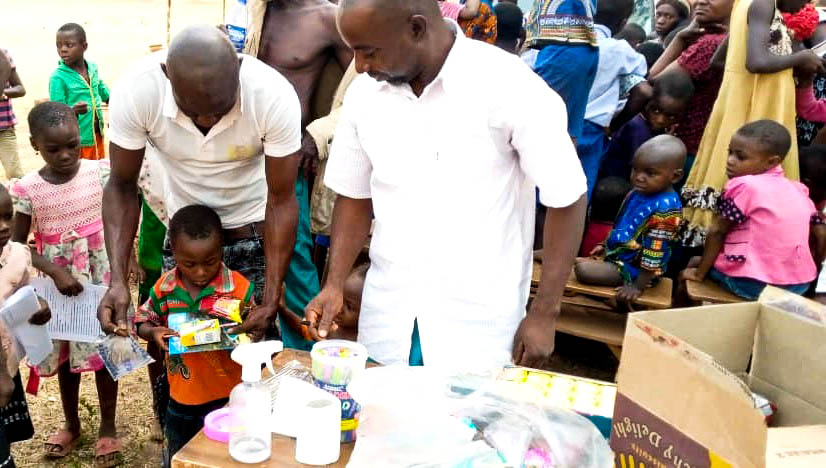
Community Volunteers administering educational materials and drugs to children in Odumachara Community in Enugu State.

Feb. 26, 2021

It was past 11am when the van pulled in to the community. The team spent over 2 hours on the road from Enugu Metropolis to Igga community in Uzo-Uwani LGA. The team was assigned to the only public school to carry out the child profile collection.

As typical with any southeastern rural settlement, the red earth was visible, houses sparsely located and striking was the fact that there was no access to potable water. Further conversation with community members revealed that there hasn’t been light in the community for years.

The community relies on the stream which is located over 2km away from the settlement for its needs. “We use water from the stream to bathe, cook, wash, and drink,” said a child when questioned. A similar scenario was also encountered across the five communities where there were obvious deficiencies of basic amenities. Interestingly, at Oduma Achara, Aninri LGA, two critical observations were made.

Firstly, the unusually high number of private schools in the community, precisely 3 opposes the norm seen in rural communities, and our fieldworker engaged a community member on the subject. “I don’t trust the quality of the government school. They lack teachers.” said a mother of 3 children.

The field worker asked whether she would use the government school if the situation improved, to which the woman answered, “Yes, I will. The private schools are expensive.” 

This initiative identifies vulnerable children aged 3 – 8 years and attaches them to sponsors. Selected communities include Oduma Achara in Aninri LGA, Igga and Nkume in Uzo Uwani LGA and Abor/Isiala in Isi Uzo LGA. 


Facts & Figures

The above issues highlight the problem of poverty, lack of education and healthcare, which are indicators of a deficient system, of which the biggest victims are children. 

Having identified this problem, ActionAid Nigeria has partnered with South Saharan Social Development Organization to find ways to remediate the situation, particularly in Enugu state, through the implementation of the Local Rights Programme (LRP).

The initiative aims to reduce poverty by engaging with the poor and marginalized in selected communities through its child sponsorship mechanisms. 


Community Selection

The aim of the initiative guides the selection of communities. The selection of communities is based on reliable data from the National Bureau of Statistics indicating the poorest geo-political zones in the country. This is then narrowed down to the poorest states and then cascaded to the poorest local governments and communities.

This initiative was first implemented in Ebonyi state. Having achieved success in the state, Enugu state became the next port of call. Before entry into these communities, ActionAid liaises with the appropriate government authorities for ease of access.


File Image: A dilapidated classroom in Oduma-Achara community where pupils learn daily.

confirmed

Disparity in English language proficiency

The second observation made by the team in Oduma Achara, based on interactions with the children, was that most children in the community barely understood or spoke the English Language. Further interaction with the parents showed that they spoke and understood English Language better than the children. Another negation to the norm seen in other rural communities where the children had better fluency in English than the adults.

This observation led to further inquiries using the key informant interview system. Community members and teachers were interviewed and the following reasons were deduced.

The key reason attributed to this observation is that children were predominantly taught in the Igbo language. It is not certain whether this is to aid easy assimilation on the part of the children, or a lack of confidence on the part of the teachers to deliver in English Language.

It was also elucidated that the parents have traveled more. Some adults had contact with the cities at a young age. Some schooled there, and some trade there. Thus, leaving them no choice but to communicate in English which is more predominant in urban areas. Whereas, the children have lived all through in the community.

This observation begs more questions than it gives answers. Is teaching in the local dialect a more effective form? Is there a correlation between language and future success? These and more are questions that we would look to answer in our subsequent publication.

These communities afford us the much-needed opportunity to educate, inform, and advocate for their basic human rights. As well as to point the spotlight on these communities, which would, in turn, get the government to take more decisive actions. We are excited about the possibilities! 


By Oduguwa Olusomi